


[Reading level: B2 – Upper Intermediate]
The belief that “parents support their children when they are young, and children support their parents when they are old” has long been deeply rooted in many Vietnamese families. However, as society changes, many older people find themselves having to continue working because their children are no longer financially able to care for them.
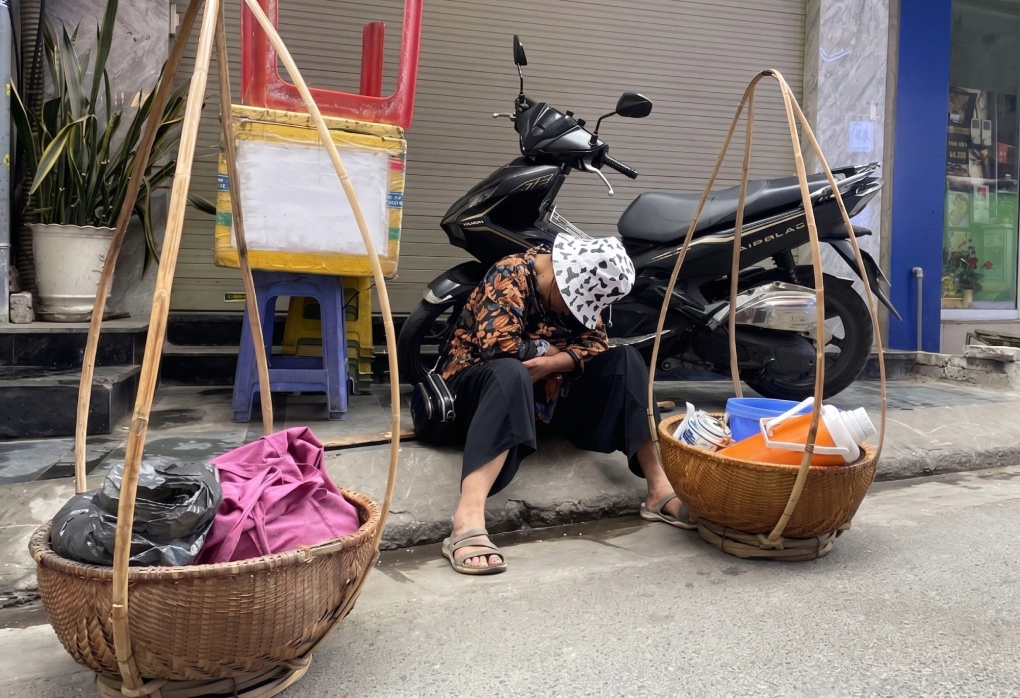
Around noon on a day in June, Mrs. Hoa, 70, set down her basket of cakes on the sidewalk along a street by the To Lich River and quietly looked across at the house on the other side of the road. “That used to be my home,” she said with emotion.
Her husband passed away half a century ago, leaving her to raise their two sons on her own. When they got married, she handed over everything she had saved throughout her life. She divided her 70-square-metre plot of land between them so they could build houses, believing that her old age would be peaceful with her children and grandchildren.
Then the Covid-19 pandemic turned everything upside down. Her sons’ businesses suffered heavy losses, forcing them to sell their houses to repay debts. Within a short time, the entire family ended up losing everything and scattered in different places.
Not wanting to become a burden on her children, who were already struggling financially, Mrs. Hoa rented a small room and continued working as a street vendor to support herself. In the mornings, she sold her goods opposite her former home; in the afternoons, she moved to the gate of a nearby school. On good days, she earned around 200,000 VND. When the rent increased, she gave up the room and moved in with relatives. Despite her difficult circumstances, she still tried to save money so that her children would not have to worry about her in the future.
In Nghe An Province, the situation of Mr. Toan, 90, is equally heartbreaking. After suffering a stroke in 2019, he has had difficulty walking and can no longer take care of himself. His lifelong assets consist of only a small single-storey house. He has neither a pension nor any savings. His only income comes from a monthly elderly allowance of 500,000 VND and rent from a few small plots of farmland.
At the beginning of June, his nine children agreed to draw up a schedule under which each of them would take him in and care for him for one month before passing the responsibility to the next sibling.
His eldest son said that he had personally cared for his father since 2019 under the condition that he could continue living in the family house to maintain the ancestral altar and that the house could not be sold. However, disputes later arose among the siblings over the land-use rights. As a result, the family decided to share the responsibility of caring for their father equally, while the land would be divided according to inheritance laws by the authorities.
For a 90-year-old man in poor health with limited mobility, moving from one child’s home to another is far from easy. Even so, all of his children believe this is the only workable solution under the current circumstances.
The gap behind filial piety
The stories of Mrs. Hoa and Mr. Toan show that growing old is no longer guaranteed simply by having children. In the past, many Vietnamese families lived under one roof across several generations. Parents owned the family’s land and property and played the central role in the household, while adult children remained closely connected to their hometown and family land. In that context, the idea that “parents care for children when they are young, and children care for parents when they are old” functioned as a relatively stable form of natural social security.
Today, however, modern society is changing that model. Vietnam is now one of the fastest-ageing countries in the world. According to the General Statistics Office, the country currently has nearly 15 million older people. This figure is projected to rise to 18 million by 2030 and reach 21.5 million by 2035. On average, around 700,000 people join the elderly population every year.
According to Professor Giang Thanh Long of the National Economics University, Vietnam’s social security system is still not strong enough to cope with this wave of population ageing. He said that although coverage has expanded, the level of benefits remains too low to ensure an adequate standard of living.
At the same time, the traditional model of three generations living under one roof is gradually disappearing. A 2021 report by the United Nations Population Fund (UNFPA) found that around 4.5 million older Vietnamese are living alone or in households without younger generations.
The 2022 Vietnam Aging Survey (VNAS) found that nearly 60% of older people’s spending is still financed by their own work and financial support from their children, while pensions and social assistance account for only about 15%.
More than 10 million older people in Vietnam are still outside the country’s social security system. Most rely on limited savings or support from family members. Notably, over 60% of them continue working, mainly in agriculture or unstable informal jobs.

According to Dr. Kumarashvari Subramaniam of the British University Vietnam (BUV), this trend has also been observed in other ageing Asian societies such as Japan, South Korea and China. She noted that the expectation that children should bear full financial responsibility for their parents is gradually declining. Urbanisation, migration, low birth rates, soaring housing prices and rising living costs have all made complete dependence on children far less realistic than it once was.
Source: Vnexpress
WORD BANK:
deeply rooted in sth /ˈdiːp.li ˈruː.t̬ɪd/ [C1] (adj): ăn sâu vào cái gì
basket /ˈbæs.kɪt/ [A2] (n): cái giỏ, cái gánh
sidewalk /ˈsaɪd.wɑːk/ [B1] (n): vỉa hè
pass away /ˌpæs əˈweɪ/ [B2] (v): qua đời
hand over sth to sb /ˌhænd ˈoʊ.vɚ/ [B2] (v): trao, giao cái gì cho ai
plot of land (n): mảnh đất
turn sth upside down /ˌtɝːn ˌʌp.saɪd ˈdaʊn/ [C1] (v): đảo lộn hoàn toàn
end up doing sth /ˌend ˈʌp/ [B1] (v): cuối cùng lại làm gì
scattered /ˈskæt̬.ɚd/ [C1] (adj): tản mát, ly tán
struggle /ˈstrʌɡ.əl/ [B2] (v): vật lộn, chật vật
street vendor /ˈstriːt ˌven.dɚ/ (n): người bán hàng rong
relative /ˈrel.ə.t̬ɪv/ [B1] (n): họ hàng, người thân
circumstance /ˈsɝː.kəm.stæns/ [B2] (n): hoàn cảnh
heartbreaking /ˈhɑːrtˌbreɪ.kɪŋ/ [C1] (adj): đau lòng
stroke /stroʊk/ [B2] (n): đột quỵ
asset /ˈæs.et/ [B2] (n): tài sản
single-storey house /ˌsɪŋ.ɡəl ˈstɔːr.i haʊs/ (n): nhà cấp bốn
pension /ˈpen.ʃən/ [B2] (n): lương hưu
savings /ˈseɪ.vɪŋz/ [B1] (n): tiền tiết kiệm
allowance /əˈlaʊ.əns/ [B2] (n): trợ cấp
draw up (a schedule) [C1] (v): lập (lịch trình, kế hoạch)
take sb in /ˌteɪk ˈɪn/ [B2] (v): đón ai về ở
sibling /ˈsɪb.lɪŋ/ [C1] (n): anh chị em ruột
ancestral /ænˈses.trəl/ [C1] (adj): thuộc tổ tiên
altar /ˈɑːl.tɚ/ [C1] (n): bàn thờ
dispute /dɪˈspjuːt/ [B2] (n): tranh chấp
land-use rights /ˈlænd juːs raɪts/ (n): quyền sử dụng đất
inheritance laws /ɪnˈher.ɪ.t̬əns lɔːz/ (n): luật thừa kế
the authorities /əˈθɔːr.ə.t̬iz/ [B2] (n): chính quyền, cơ quan chức năng
mobility /moʊˈbɪl.ə.t̬i/ [C1] (n): khả năng đi lại, tính cơ động
workable /ˈwɝː.kə.bəl/ [C1] (adj): khả thi
guarantee /ˌɡer.ənˈtiː/ [B2] (v): bảo đảm
filial piety /ˌfɪl.i.əl ˈpaɪ.ə.t̬i/ (n): lòng hiếu thảo
live under one roof (v): sống chung dưới một mái nhà
ageing /ˈeɪ.dʒɪŋ/ [B2] (adj): già hóa
project /prəˈdʒekt/ [B2] (v): dự báo
on average /ˌɑːn ˈæv.ɚ.ɪdʒ/ [B1] (adv): trung bình
adequate /ˈæd.ə.kwət/ [B2] (adj): đầy đủ, phù hợp
finance /ˈfaɪ.næns/ [C1] (v): tài trợ, chi trả
social assistance /ˌsoʊ.ʃəl əˈsɪs.təns/ (n): trợ giúp xã hội
informal job /ɪnˈfɔːr.məl dʒɑːb/ (n): công việc phi chính thức
bear responsibility for sb/sth /ˌber rɪˌspɑːn.səˈbɪl.ə.t̬i/ [C1] (v): chịu trách nhiệm về ai/cái gì
migration /maɪˈɡreɪ.ʃən/ [B2] (n): sự di cư
soar /sɔːr/ [C1] (v): tăng vọt
ỦNG HỘ READ TO LEAD!
Chào bạn! Có thể bạn chưa biết, Read to Lead là một trang giáo dục phi lợi nhuận với mục đích góp phần phát triển cộng đồng người học tiếng Anh tại Việt Nam. Chúng tôi không yêu cầu người đọc phải trả bất kỳ chi phí nào để sử dụng các sản phẩm của mình để mọi người đều có cơ hội học tập tốt hơn. Tuy nhiên, nếu bạn có thể, chúng tôi mong nhận được sự hỗ trợ tài chính từ bạn để duy trì hoạt động của trang và phát triển các sản phẩm mới.
Bạn có thể ủng hộ chúng tôi qua 1 trong 2 cách dưới đây.
– Cách 1: Chuyển tiền qua tài khoản Momo.
Số điện thoại 0947.886.865 (Chủ tài khoản: Nguyễn Tiến Trung)
Nội dung chuyển tiền: Ủng hộ Read to Lead
hoặc
– Cách 2: Chuyển tiền qua tài khoản ngân hàng.
Ngân hàng VIB chi nhánh Hải Phòng
Số tài khoản: 012704060048394 (Chủ tài khoản: Nguyễn Tiến Trung)
Nội dung chuyển tiền: Ủng hộ Read to Lead
Lớp luyện thi IELTS online
Bạn đang có nhu cầu thi chứng chỉ IELTS cho đầu vào đại học, đi du học, xin việc hay xin cư trú và đang phân vân chưa biết học ở đâu?
Nếu bạn đang tìm kiếm dịch vụ luyện thi IELTS online với giáo viên uy tín và chất lượng, cũng như học phí phải chăng, thì thầy Trung và Cô Thủy (Admin và dịch giả chính của Read to Lead) có thể là một lựa chọn phù hợp dành cho bạn.
Hãy liên hệ (nhắn tin) tới trang Facebook cá nhân của mình (https://www.facebook.com/nguyen.trung.509) để tìm hiểu về lớp học và được tư vấn cũng như được học thử nha!


