


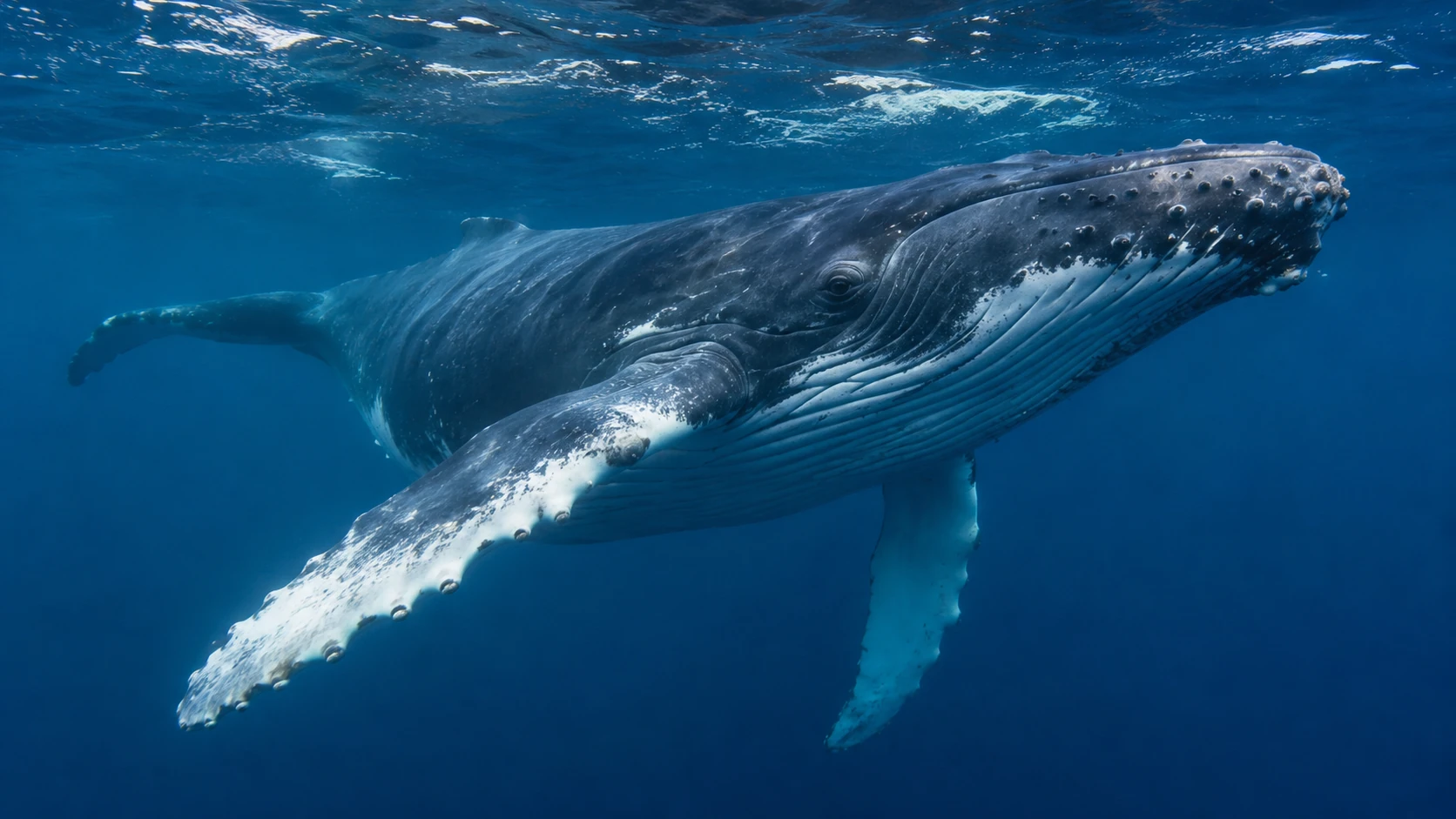
One of the most exciting scientific findings of the past half century has been the discovery of widespread trophic cascades. A trophic cascade is an ecological process which starts at the top of the food chain and tumbles all the way down to the bottom.
We all know that whales eat fish and krill. And some people – certain politicians in Japan for instance – have argued that killing whales is good for human beings as it boosts the food available for us to eat – and so you would think.
But as the great whales declined, so did the numbers of fish and krill. It seems counterintuitive – surely their numbers would rise as their major predators disappeared – but it now turns out that whales not only eat these animals, they also keep them alive.
In fact, they help to sustain the entire living system of the ocean.
Whales feed at depth in waters that are often pitch dark and then they return to the surface to the photic zone where there’s enough light for photosynthesis to happen.
There they release what biologists call fecal plumes – vast outpourings of poo – poonamis! These plumes are rich in iron and nitrogen – nutrients which are often very scarce in the surface waters.
And these nutrients fertilize the plant plankton that lives in the only place where plants can survive – the photic zone.
Fertilizing the surface waters isn’t the only thing the whales do. By plunging up and down through the water column, they also keep kicking the plankton back up into the photic zone giving it more time to reproduce before it sinks into the abyss.
Even today, the whale populations have been greatly reduced, the vertical mixing of water caused by movements of animals up and down through the column of the oceans is astonishingly roughly the same as the amount of mixing caused by all the world’s wind and waves and tides.
More plant plankton means more animal plankton on which a larger creatures then feed. In other words, more whales means more fish and krill.
But the story doesn’t end here because plant plankton not only feeds the animals of the sea, it also absorbs carbon dioxide from the atmosphere. When eventually it sinks to the ocean floor, it takes this carbon out of circulation down to a place where it remains for thousands of years.
The more whales there are, the more plankton there is. The more plankton there is, the more carbon is drawn out of the air.
When whales were at their historical populations, before great numbers of them were killed, it seems that they might have been responsible for removing tens of millions of tons of carbon from the atmosphere every year.
Whales change the climate.
The return of the great whales, if they’re allowed to recover could be seen as a benign form of geoengineering. It could undo some of the damage we’ve done both to the living systems of the sea and to the atmosphere.
Source: Sustainable Human
WORD BANK:
widespread /ˈwaɪd.spred/ [B2] (adj): lan rộng, phổ biến trên diện rộng
trophic cascade /ˈtroʊ.fɪk kæˈskeɪd/ (n): hiệu ứng dây chuyền trong chuỗi thức ăn
tumble /ˈtʌm.bəl/ (v): rơi, lăn, nhào lộn
tumble all the way down to the bottom (v): rơi xuống tận đáy
krill /krɪl/ (n): động vật nhuyễn thể nhỏ giống tôm, nhuyễn thể krill
politician /ˌpɑː.ləˈtɪʃ.ən/ [B1] (n): chính trị gia
counterintuitive /ˌkaʊn.t̬ɚ.ɪnˈtuː.ə.t̬ɪv/ (adj): trái với trực giác, trái với suy nghĩ thông thường
predator /ˈpred.ə.t̬ɚ/ [C1] (n): động vật săn mồi
it turns out that … /ɪt tɝːnz aʊt ðæt/ (phr): hóa ra là…
sustain sth /səˈsteɪn/ [C1] (v): duy trì, nuôi dưỡng
at depth /æt depθ/ (phr): ở dưới sâu
pitch dark /ˌpɪtʃ ˈdɑːrk/ (adj): tối đen như mực
photic zone /ˈfoʊ.t̬ɪk zoʊn/ (n): tầng nước có ánh sáng
photosynthesis /ˌfoʊ.t̬oʊˈsɪn.θə.sɪs/ (n): quá trình quang hợp
fecal /ˈfiː.kəl/ (adj): thuộc về phân
plume /pluːm/ (n): luồng, đám vật chất lan tỏa trong nước hoặc không khí
vast /væst/ [B2] (adj): rộng lớn, bao la
an outpouring of sth /ˈaʊtˌpɔːr.ɪŋ/ (n): sự tuôn ra một lượng lớn cái gì
poo /puː/ (n): phân (cách nói thân mật)
nitrogen /ˈnaɪ.trə.dʒən/ (n): nitơ
nutrient /ˈnuː.tri.ənt/ [C1] (n): chất dinh dưỡng
scarce /skers/ [C1] (adj): khan hiếm
fertilize /ˈfɝː.t̬əl.aɪz/ (v): bón phân, cung cấp chất dinh dưỡng
plant plankton /plænt ˈplæŋk.tən/ (n): thực vật phù du
plunge /plʌndʒ/ [C1] (v): lao xuống, đâm xuống
plunge up and down /plʌndʒ ʌp ən daʊn/ (v): lao lên lao xuống
abyss /əˈbɪs/ (n): vực sâu, vực thẳm
vertical /ˈvɝː.t̬ɪ.kəl/ [B2] (adj): thẳng đứng, theo chiều dọc
astonishingly /əˈstɑː.nɪ.ʃɪŋ.li/ (adv): đáng kinh ngạc
roughly /ˈrʌf.li/ [B2] (adv): xấp xỉ, khoảng chừng
tide /taɪd/ [B2] (n): thủy triều
animal plankton /ˈæn.ə.məl ˈplæŋk.tən/ (n): động vật phù du
feed /fiːd/ [B1] (v): ăn, kiếm ăn; cho ăn
absorb sth /əbˈzɔːrb/ [B2] (v): hấp thụ cái gì
circulation /ˌsɝː.kjəˈleɪ.ʃən/ (n): sự lưu thông, tuần hoàn
draw sth out of sth /drɑː/ (phr v): rút, lấy cái gì ra khỏi cái gì
benign /bɪˈnaɪn/ (adj): lành tính, không gây hại
geoengineering /ˌdʒiː.oʊˌen.dʒɪˈnɪr.ɪŋ/ (n): kỹ thuật can thiệp vào hệ thống tự nhiên của Trái Đất
undo sth /ʌnˈduː/ [C1] (v): đảo ngược, xóa bỏ tác động của cái gì
ỦNG HỘ READ TO LEAD!
Chào bạn! Có thể bạn chưa biết, Read to Lead là một trang giáo dục phi lợi nhuận với mục đích góp phần phát triển cộng đồng người học tiếng Anh tại Việt Nam. Chúng tôi không yêu cầu người đọc phải trả bất kỳ chi phí nào để sử dụng các sản phẩm của mình để mọi người đều có cơ hội học tập tốt hơn. Tuy nhiên, nếu bạn có thể, chúng tôi mong nhận được sự hỗ trợ tài chính từ bạn để duy trì hoạt động của trang và phát triển các sản phẩm mới.
Bạn có thể ủng hộ chúng tôi qua 1 trong 2 cách dưới đây.
– Cách 1: Chuyển tiền qua tài khoản Momo.
Số điện thoại 0947.886.865 (Chủ tài khoản: Nguyễn Tiến Trung)
Nội dung chuyển tiền: Ủng hộ Read to Lead
hoặc
– Cách 2: Chuyển tiền qua tài khoản ngân hàng.
Ngân hàng VIB chi nhánh Hải Phòng
Số tài khoản: 012704060048394 (Chủ tài khoản: Nguyễn Tiến Trung)
Nội dung chuyển tiền: Ủng hộ Read to Lead
Lớp luyện thi IELTS online
Bạn đang có nhu cầu thi chứng chỉ IELTS cho đầu vào đại học, đi du học, xin việc hay xin cư trú và đang phân vân chưa biết học ở đâu?
Nếu bạn đang tìm kiếm dịch vụ luyện thi IELTS online với giáo viên uy tín và chất lượng, cũng như học phí phải chăng, thì thầy Trung và Cô Thủy (Admin và dịch giả chính của Read to Lead) có thể là một lựa chọn phù hợp dành cho bạn.
Hãy liên hệ (nhắn tin) tới trang Facebook cá nhân của mình (https://www.facebook.com/nguyen.trung.509) để tìm hiểu về lớp học và được tư vấn cũng như được học thử nha!


