


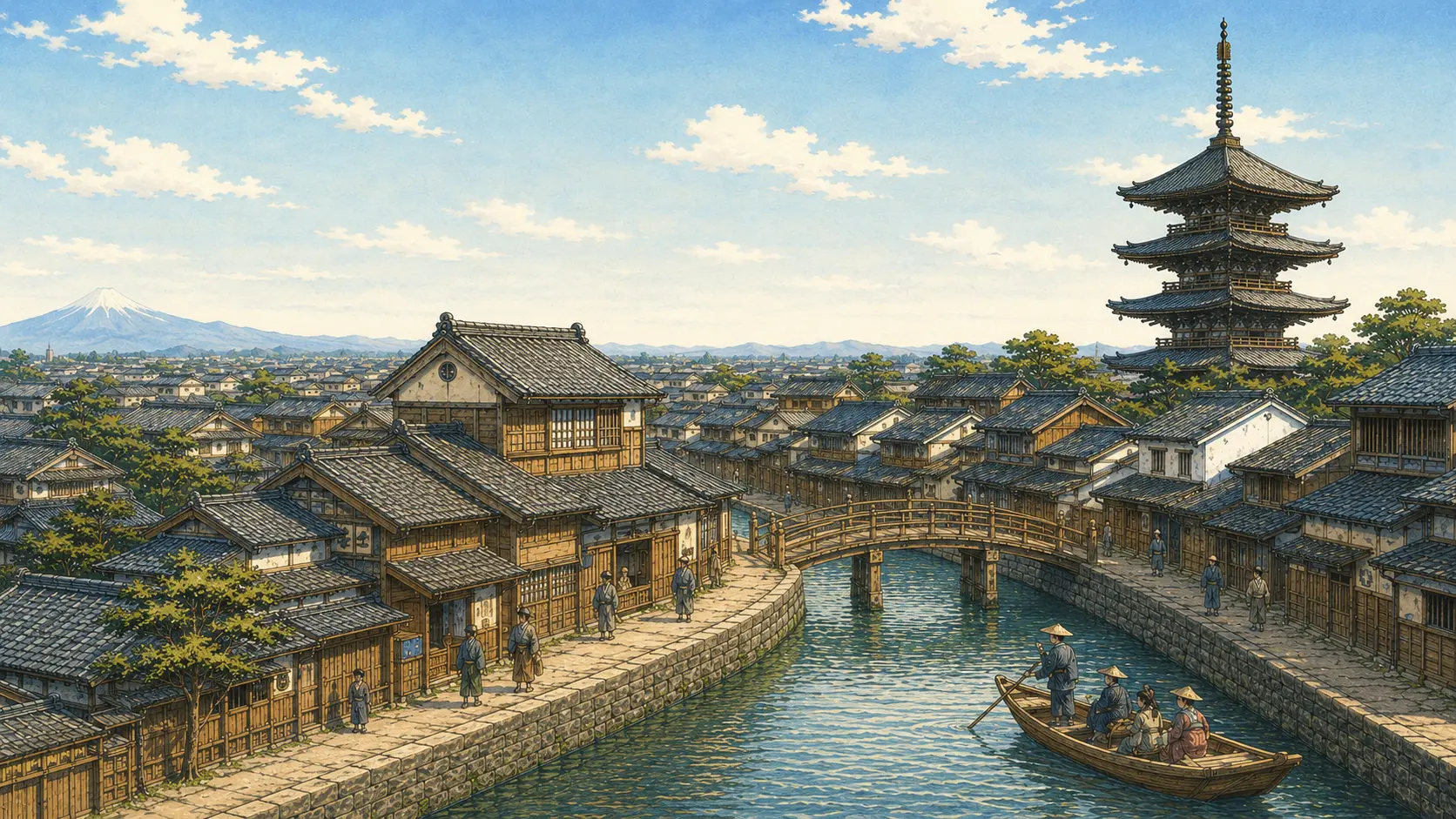
400 years ago, modern-day Tokyo was known as Edo, and it was already one of the biggest cities in the world, with a population approaching 1 million. However, it was on the verge of ecological collapse. Years of intense logging had led to massive deforestation. The city now faced timber shortages and the impacts of severe erosion and frequent flooding that threatened food supplies.
But over just a few decades, Edo would transform and become one of the most sustainable and efficient cities in history. So, how did this city that wasted nothing come about?
In 1467, Japan entered a series of continuous bloody civil wars that would last over a century. But in 1600, Tokugawa Ieyasu defeated his warlord rivals and unified Japan under his rule. This marked the beginning of the Tokugawa shogunate’s reign, which lasted from 1603 through 1867.
During this time, Ieyasu and the shoguns who succeeded him enacted a series of sweeping reforms that reshaped the country’s economy, landscape, and culture. Concerned over the growing influence of outside powers, the shoguns imposed severe limitations on foreign relations. They banned foreign traders from entering the country, and heavily restricted citizens from leaving.
To make up for the sudden decrease in imported goods, the Tokugawa shoguns invested heavily in increasing internal production while decreasing consumption and waste. These practices were not entirely new — they drew upon the Buddhist concept of mottainai, which emphasized not wasting resources and being satisfied with “just enough.”
Realizing the extent of ecological destruction impacting the capital city, Edo, the Tokugawa shoguns introduced limitations on logging and launched sprawling reforestation programs. Local villagers were required— and later paid— to plant millions of trees.
To curb demands for timber, strict rationing rules were introduced, and houses were built with standardized wooden components that could be disassembled and reused. Soon, entire industries grew around eliminating the city’s waste.
Residents used agricultural byproducts, like rice straw, to make rope and packaging material. Candle wax drippings were saved and remolded. Craftsmen repaired old umbrellas and worn-out sandals rather than tossing them. Even human waste was collected and turned into fertilizer.
Within households, families developed techniques to reuse or repurpose items rather than discarding them. Kimonos were continuously mended. When the fabric was too frayed for repair, it was used to cover futons, then cut into diapers or cleaning cloths, before finally being burned as fuel.
Artisans deftly repaired ceramics using kintsugi, where broken pieces are plastered together, and the fracture lines brushed with gold lacquer. A tradition known as boro developed, in which fragments of old cloth were sewn together to create beautifully patchworked garments that were then passed down for generations.
Meanwhile, poetry, theater, and literature flourished, as did the study of Chinese Confucianism and European scientific texts— which were welcomed in the country even as their authors were not.
Yet, while the Tokugawa period was marked by achievements in sustainability and art, it wasn’t without its flaws. Strict laws and regulations were enforced by harsh authoritarian rule. It was a feudal society, rife with social and economic inequality.
The majority peasant population, for example, was forced to pay an often-crippling rice tax, called nengu, to regional lords known as daimyo. And by the second half of the 19th century, the country faced rising inflation, destabilizing its economy and increasing external pressure, including the United States’ use of military power.
All of this forced Japan to reopen its doors to foreign trade and influence, and ultimately led to the end of the Tokugawa shogunate’s reign.
Despite these challenges, this period can serve as a powerful lesson. Edo’s transformation from a city teetering on ecological collapse to a thriving cultural epicenter shows us that what’s broken can be repaired, and by doing so, we can create something even more beautiful.
Today, at a time when only 7% of the global economy is circular, Edo’s history also reminds us that we can create economies driven not by consumption and waste, but rather by making the most of limited resources.
Source: TED-Ed
WORD BANK:
approach sth /əˈproʊtʃ/ [B2] (v): gần đạt tới mức
on the verge of sth /ɑːn ðə vɝːdʒ əv/ (phr): trên bờ vực của
collapse /kəˈlæps/ [B2] (n, v): sự sụp đổ; sụp đổ
intense /ɪnˈtens/ [B2] (adj): dữ dội, mãnh liệt
logging /ˈlɑː.ɡɪŋ/ (n): hoạt động khai thác gỗ
massive /ˈmæs.ɪv/ [B2] (adj): khổng lồ, nghiêm trọng
deforestation /diːˌfɔːr.əˈsteɪ.ʃən/ [C1] (n): nạn phá rừng
timber /ˈtɪm.bɚ/ (n): gỗ
shortage /ˈʃɔːr.t̬ɪdʒ/ [B2] (n): sự thiếu hụt
erosion /ɪˈroʊ.ʒən/ [C1] (n): sự xói mòn
threaten sth /ˈθret.ən/ [B1] (v): đe dọa cái gì
sustainable /səˈsteɪ.nə.bəl/ [B2] (adj): bền vững
come about /kʌm əˈbaʊt/ (phr v): xảy ra, hình thành
bloody /ˈblʌd.i/ (adj): đẫm máu
civil war /ˌsɪv.əl ˈwɔːr/ (n): nội chiến
defeat sb /dɪˈfiːt/ [B2] (v): đánh bại ai
warlord /ˈwɔːr.lɔːrd/ (n): lãnh chúa quân phiệt
rival /ˈraɪ.vəl/ [B2] (n): đối thủ
under one’s rule /ˈʌn.dɚ wʌnz ruːl/ (phr): dưới sự cai trị của ai
reign /reɪn/ (n, v): triều đại; trị vì
shogun /ˈʃoʊ.ɡʌn/ (n): tướng quân Nhật Bản
shogunate /ˈʃoʊ.ɡə.nət/ (n): chế độ Mạc phủ
succeed sb /səkˈsiːd/ [B2] (v): kế vị ai
sweeping /ˈswiː.pɪŋ/ (adj): toàn diện, sâu rộng
impose sth on sb/sth /ɪmˈpoʊz/ [C1] (v): áp đặt cái gì lên ai/cái gì
restrict /rɪˈstrɪkt/ [B2] (v): hạn chế
make up for /meɪk ʌp fɔːr/ (phr v): bù đắp cho
sprawling /ˈsprɑː.lɪŋ/ (adj): trải rộng
reforestation /ˌriː.fɔːr.əˈsteɪ.ʃən/ (n): sự tái trồng rừng
curb sth /kɝːb/ [C1] (v): kiềm chế, hạn chế cái gì
rationing /ˈræʃ.ən.ɪŋ/ (n): sự phân phối theo khẩu phần
standardized /ˈstæn.dɚ.daɪzd/ (adj): được tiêu chuẩn hóa
disassemble sth /ˌdɪs.əˈsem.bəl/ (v): tháo rời cái gì
eliminate sth /ɪˈlɪm.ə.neɪt/ [B2] (v): loại bỏ cái gì
byproduct /ˈbaɪˌprɑː.dʌkt/ (n): sản phẩm phụ
straw /strɔː/ (n): rơm
candle wax /ˈkæn.dəl wæks/ (n): sáp nến
dripping /ˈdrɪp.ɪŋ/ (n): giọt chảy xuống
remold /ˌriːˈmoʊld/ (v): đúc/khuôn lại
craftsmen /ˈkræfts.mən/ (n): thợ thủ công
worn-out /ˌwɔːrn ˈaʊt/ (adj): cũ mòn
toss sth /tɔːs/ (v): vứt cái gì
fertilizer /ˈfɝː.t̬əl.aɪ.zɚ/ (n): phân bón
discard sth /dɪˈskɑːrd/ [C1] (v): vứt bỏ cái gì
mend /mend/ (v): vá, sửa
frayed /freɪd/ (adj): sờn rách
diaper /ˈdaɪ.pɚ/ (n): tã lót
deftly /ˈdeft.li/ (adv): khéo léo
plaster /ˈplæs.tɚ/ (v): trát, bó bột
fracture /ˈfræk.tʃɚ/ (n, v): vết gãy; làm gãy
brush sth with sth /brʌʃ wɪð/ (v): quét/phủ cái gì bằng cái gì
lacquer /ˈlæk.ɚ/ (n): sơn mài
fragment /ˈfræɡ.mənt/ (n): mảnh vỡ
sow (past participle: sewn) /soʊ/ (v): khâu
patchworked /ˈpætʃ.wɝːkt/ (adj): chắp vá
poetry /ˈpoʊ.ə.tri/ [B1] (n): thơ ca
flourish /ˈflɝː.ɪʃ/ [C1] (v): phát triển mạnh
Confucianism /kənˈfjuː.ʃə.nɪ.zəm/ (n): Nho giáo
sustainability /səˌsteɪ.nəˈbɪl.ə.t̬i/ [C1] (n): tính bền vững
flaw /flɔː/ [B2] (n): khuyết điểm
authoritarian /əˌθɔːr.əˈter.i.ən/ (adj): độc đoán
feudal /ˈfjuː.dəl/ (adj): phong kiến
rife with sth /raɪf wɪð/ (phr): đầy rẫy cái gì
peasant /ˈpez.ənt/ (n): nông dân
crippling /ˈkrɪp.əl.ɪŋ/ (adj): nghiêm trọng đến mức làm tê liệt
inflation /ɪnˈfleɪ.ʃən/ [B2] (n): lạm phát
destabilize sth /diːˈsteɪ.bə.laɪz/ (v): làm mất ổn định cái gì
ultimately /ˈʌl.t̬ə.mət.li/ [B2] (adv): cuối cùng
serve as sth /sɝːv æz/ (v): đóng vai trò là
teeter on sth /ˈtiː.t̬ɚ ɑːn/ (v): chao đảo trên bờ vực gì đó
epicenter /ˈep.iˌsen.t̬ɚ/ (n): tâm điểm
circular /ˈsɝː.kjə.lɚ/ [B2] (adj): tuần hoàn, hình tròn
make the most of sth /meɪk ðə moʊst əv/ (phr): tận dụng tối đa cái gì
ỦNG HỘ READ TO LEAD!
Chào bạn! Có thể bạn chưa biết, Read to Lead là một trang giáo dục phi lợi nhuận với mục đích góp phần phát triển cộng đồng người học tiếng Anh tại Việt Nam. Chúng tôi không yêu cầu người đọc phải trả bất kỳ chi phí nào để sử dụng các sản phẩm của mình để mọi người đều có cơ hội học tập tốt hơn. Tuy nhiên, nếu bạn có thể, chúng tôi mong nhận được sự hỗ trợ tài chính từ bạn để duy trì hoạt động của trang và phát triển các sản phẩm mới.
Bạn có thể ủng hộ chúng tôi qua 1 trong 2 cách dưới đây.
– Cách 1: Chuyển tiền qua tài khoản Momo.
Số điện thoại 0947.886.865 (Chủ tài khoản: Nguyễn Tiến Trung)
Nội dung chuyển tiền: Ủng hộ Read to Lead
hoặc
– Cách 2: Chuyển tiền qua tài khoản ngân hàng.
Ngân hàng VIB chi nhánh Hải Phòng
Số tài khoản: 012704060048394 (Chủ tài khoản: Nguyễn Tiến Trung)
Nội dung chuyển tiền: Ủng hộ Read to Lead
Lớp luyện thi IELTS online
Bạn đang có nhu cầu thi chứng chỉ IELTS cho đầu vào đại học, đi du học, xin việc hay xin cư trú và đang phân vân chưa biết học ở đâu?
Nếu bạn đang tìm kiếm dịch vụ luyện thi IELTS online với giáo viên uy tín và chất lượng, cũng như học phí phải chăng, thì thầy Trung và Cô Thủy (Admin và dịch giả chính của Read to Lead) có thể là một lựa chọn phù hợp dành cho bạn.
Hãy liên hệ (nhắn tin) tới trang Facebook cá nhân của mình (https://www.facebook.com/nguyen.trung.509) để tìm hiểu về lớp học và được tư vấn cũng như được học thử nha!


