


[Reading level: B2 – Upper Intermediate]
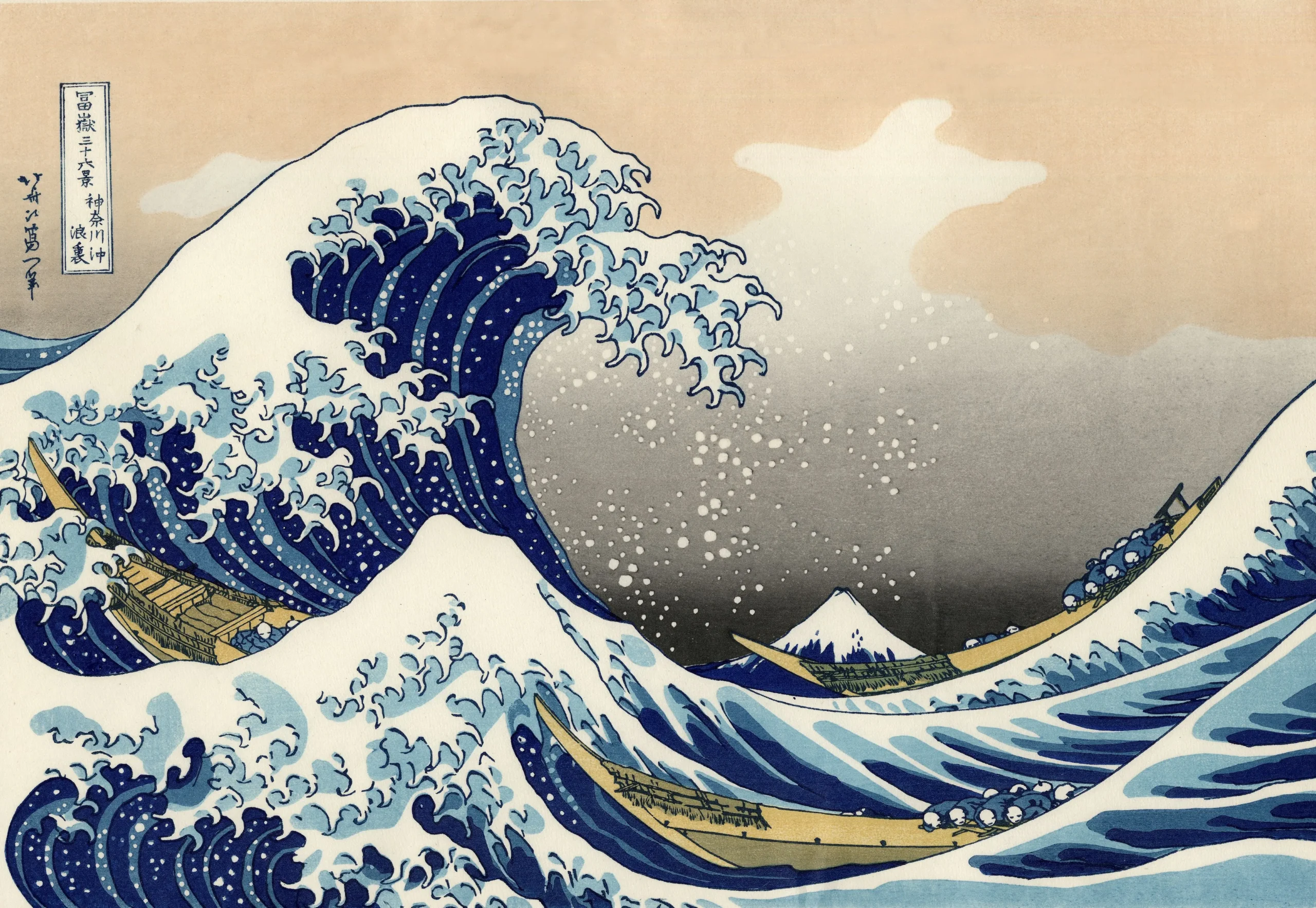
The work The Great Wave off Kanagawa by Katsushika Hokusai is one of the most famous images in the history of world art, not only because of its visual beauty but also because of its depth of meaning and lasting influence.
Created in the early 19th century, the painting belongs to the series Thirty-Six Views of Mount Fuji, in which Mount Fuji is considered a spiritual and cultural symbol of Japan. However, what makes this work truly special is not the mountain at the center, but the gigantic wave in the foreground—an image that is both magnificent and terrifying, almost overwhelming everything around it.
At first glance, viewers are drawn in by the powerful composition: a huge wave rising up, forming a curved arc as if about to swallow the small boats below. The crests of the wave break into white “claws,” creating the impression of a living creature attacking humans. Meanwhile, the boats carrying workers appear small and fragile, placed in a completely helpless position before the force of nature.
In the distance, Mount Fuji appears small, calm, and almost unaffected by the raging wave. This contrast creates a striking visual effect: the large element (the wave) is temporary and dangerous, while the small one (Mount Fuji) symbolizes stability and permanence.
In addition to composition, Hokusai’s technique also plays an important role in the success of the work. He used Prussian blue, a newly introduced pigment in Japan at that time, which gives the painting depth and a freshness that differs from traditional artworks.
At the same time, the treatment of space in the painting shows the influence of Western art, particularly perspective, while still maintaining the minimalism and refinement of the ukiyo-e woodblock print style. This harmonious combination of tradition and innovation makes the work both familiar and groundbreaking.
In terms of meaning, The Great Wave is not simply a seascape. It clearly expresses the relationship between humans and nature, in which humans appear small and vulnerable in the face of forces beyond their control. At the same time, the painting evokes a sense of unease and impermanence—a characteristic of Japanese aesthetic thought, where beauty is often associated with fragility and transience. Some critics also suggest that the giant wave symbolizes the social and historical changes that Japan was experiencing at the time, as the country gradually moved from isolation to greater contact with the outside world.
Another important factor that contributed to the work’s fame is its accessibility from the very beginning. As a woodblock print, The Great Wave could be mass-produced at low cost, allowing it to reach a wide audience, not only the elite but also ordinary people. This meant that the work was not confined to the realm of high art but became part of popular culture. Later, when it arrived in Europe, the painting had a strong influence on many Western artists, contributing to the rise of Japonisme and impacting movements such as Impressionism.
WORD BANK:
spiritual /ˈspɪr.ɪ.tʃu.əl/ [B2] (adj): thuộc về tinh thần, tâm linh
gigantic /dʒaɪˈɡæn.tɪk/ [B2] (adj): khổng lồ
the foreground /ˈfɔːr.ɡraʊnd/ (n): tiền cảnh
magnificent /mæɡˈnɪf.ə.sənt/ [B2] (adj): tráng lệ, hùng vĩ
terrifying /ˈter.ə.faɪ.ɪŋ/ [B2] (adj): đáng sợ
overwhelm sb/sth /ˌoʊ.vɚˈwelm/ [C1] (v): áp đảo, làm cho choáng ngợp
composition /ˌkɑːm.pəˈzɪʃ.ən/ [B2] (n): bố cục
a curved arc /ə kɝːvd ɑːrk/ (n): một đường cong hình vòng cung
swallow sth /ˈswɑː.loʊ/ [B2] (v): nuốt chửng
crest /krest/ [C2] (n): đỉnh (sóng)
claw /klɔː/ (n): móng vuốt
fragile /ˈfrædʒ.aɪl/ [B2] (adj): mong manh
helpless /ˈhelp.ləs/ [B2] (adj): bất lực
raging /ˈreɪ.dʒɪŋ/ (adj): dữ dội, cuồng nộ
striking /ˈstraɪ.kɪŋ/ [B2] (adj): nổi bật, ấn tượng
element /ˈel.ə.mənt/ [B1] (n): yếu tố
temporary /ˈtem.pə.rer.i/ [B1] (adj): tạm thời
permanence /ˈpɝː.mə.nəns/ [C1] (n): sự vĩnh viễn
Prussian blue /ˈprʌʃ.ən bluː/ (n): màu xanh Phổ
pigment /ˈpɪɡ.mənt/ [C1] (n): sắc tố
minimalism /ˈmɪn.ə.mə.lɪ.zəm/ [C1] (n): chủ nghĩa tối giản
refinement /rɪˈfaɪn.mənt/ (n): sự tinh tế, tinh luyện
woodblock print /ˈwʊd.blɑːk prɪnt/ (n): tranh in khắc gỗ
groundbreaking /ˈɡraʊndˌbreɪ.kɪŋ/ [C1] (adj): mang tính đột phá
seascape /ˈsiː.skeɪp/ (n): tranh phong cảnh biển
vulnerable /ˈvʌl.nɚ.ə.bəl/ [B2] (adj): dễ bị tổn thương
in the face of sth /ɪn ðə feɪs əv/ (phr): đối mặt với
evoke sth /ɪˈvoʊk/ [C1] (v): gợi lên
a sense of unease /ə sens əv ʌnˈiːz/ (n): cảm giác bất an
impermanence /ˌɪmˈpɝː.mə.nəns/ (n): tính vô thường
aesthetic thought /iːsˈθet.ɪk θɔːt/ (n): tư duy thẩm mỹ
fragility /frəˈdʒɪl.ə.t̬i/ (n): sự mong manh
transience /ˈtræn.zi.əns/ (n): sự thoáng qua, tạm thời
isolation /ˌaɪ.səˈleɪ.ʃən/ [B2] (n): sự cô lập
accessibility /əkˌses.əˈbɪl.ə.t̬i/ [C1] (n): khả năng tiếp cận
mass-produce /ˌmæs prəˈduːs/ (v): sản xuất hàng loạt
the elite /ðə eɪˈliːt/ (n): tầng lớp tinh hoa
ordinary /ˈɔːr.də.ner.i/ [B1] (adj): bình thường
confined to sth /kənˈfaɪnd tuː/ (adj): bị giới hạn trong
the realm of sth /ðə relm əv/ (n): lĩnh vực của
high art /haɪ ɑːrt/ (n): nghệ thuật cao cấp
impressionism /ɪmˈpreʃ.ən.ɪ.zəm/ (n): trường phái ấn tượng
ỦNG HỘ READ TO LEAD!
Chào bạn! Có thể bạn chưa biết, Read to Lead là một trang giáo dục phi lợi nhuận với mục đích góp phần phát triển cộng đồng người học tiếng Anh tại Việt Nam. Chúng tôi không yêu cầu người đọc phải trả bất kỳ chi phí nào để sử dụng các sản phẩm của mình để mọi người đều có cơ hội học tập tốt hơn. Tuy nhiên, nếu bạn có thể, chúng tôi mong nhận được sự hỗ trợ tài chính từ bạn để duy trì hoạt động của trang và phát triển các sản phẩm mới.
Bạn có thể ủng hộ chúng tôi qua 1 trong 2 cách dưới đây.
– Cách 1: Chuyển tiền qua tài khoản Momo.
Số điện thoại 0947.886.865 (Chủ tài khoản: Nguyễn Tiến Trung)
Nội dung chuyển tiền: Ủng hộ Read to Lead
hoặc
– Cách 2: Chuyển tiền qua tài khoản ngân hàng.
Ngân hàng VIB chi nhánh Hải Phòng
Số tài khoản: 012704060048394 (Chủ tài khoản: Nguyễn Tiến Trung)
Nội dung chuyển tiền: Ủng hộ Read to Lead
Lớp luyện thi IELTS online
Bạn đang có nhu cầu thi chứng chỉ IELTS cho đầu vào đại học, đi du học, xin việc hay xin cư trú và đang phân vân chưa biết học ở đâu?
Nếu bạn đang tìm kiếm dịch vụ luyện thi IELTS online với giáo viên uy tín và chất lượng, cũng như học phí phải chăng, thì thầy Trung và Cô Thủy (Admin và dịch giả chính của Read to Lead) có thể là một lựa chọn phù hợp dành cho bạn.
Hãy liên hệ (nhắn tin) tới trang Facebook cá nhân của mình (https://www.facebook.com/nguyen.trung.509) để tìm hiểu về lớp học và được tư vấn cũng như được học thử nha!


