


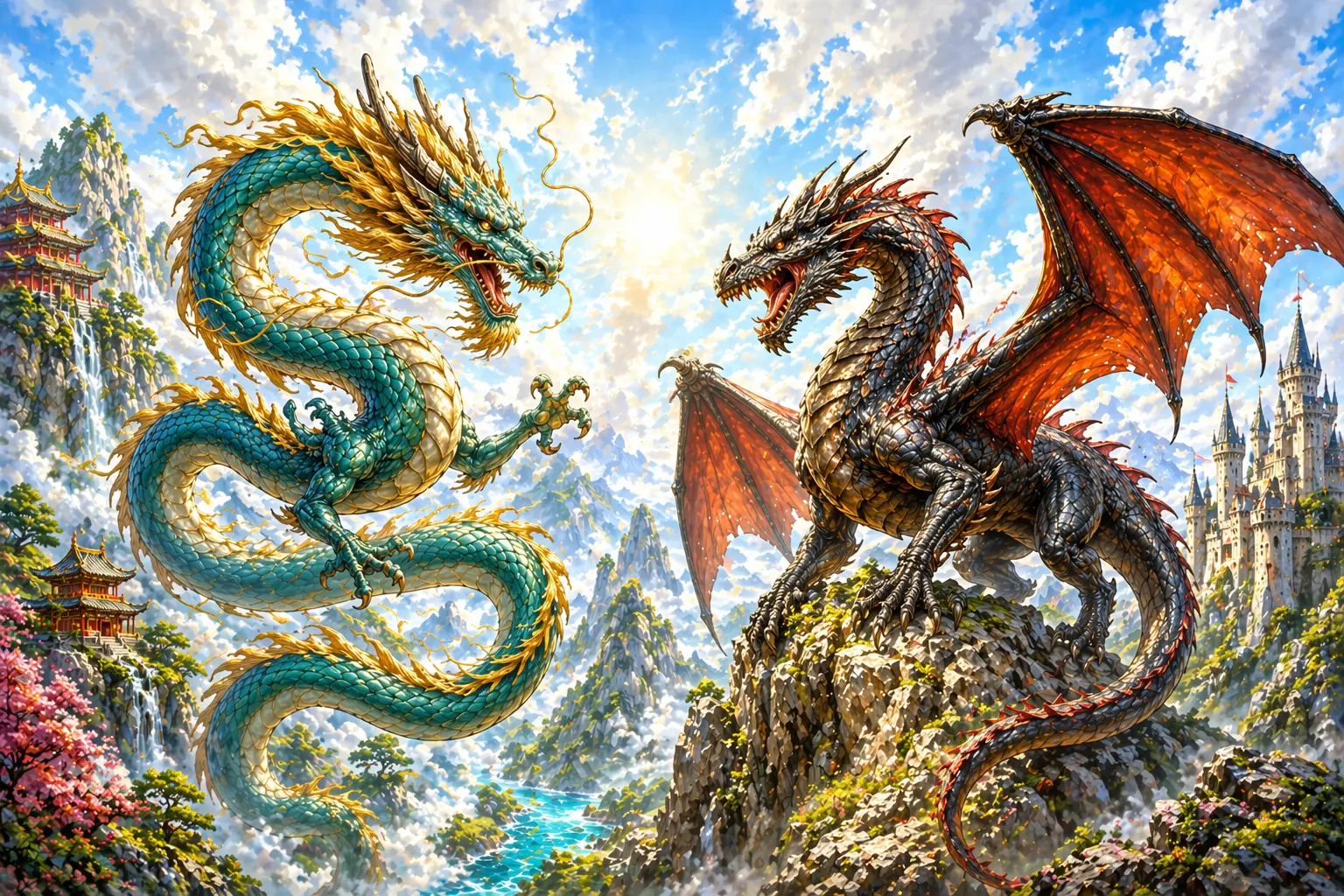
From the Chinese Loong to the Filipino Bakunawa, the Scottish Beithir to the Greek Hydra, dragons have inflamed imaginations for millennia. Their ubiquity across world mythology has led many scholars to ponder their possible origins.
Could it be that tales of dragons were crafted to make sense of violent weather events like storms or tornadoes? Did ancient peoples interpret volcanic eruptions or the unearthing of strange-looking bones as evidence that fire-breathing beasts lurked nearby?
Questions like these are central to geomythology, which examines the connections between myths and the geology of the regions where they originated. It’s based on the idea that legends are more than just fiction; they’re also preserved records of the past.
And these stories can contain valuable insights into our ancestors’ understanding of the natural world. Beyond questioning the origins of mythical beasts like griffins, minotaurs, and dragons, geomythology can be a catalyst for scientific discovery.
In Australia, for instance, researchers followed the clues in an ancient Indigenous Dreamtime legend, which recounts a star falling into a waterhole, to locate a previously uncharted meteor impact site. And the field has also helped to correct geological timelines.
Stories of Pele, the Hawaiian goddess of volcanoes, for example, led scientists to rethink the natural history of the Kīlauea volcano. Following the events in the goddess’s journey, they recalibrated when it’s believed the volcano first collapsed, forming the vast active caldera still present today.
So, what has geomythology uncovered about dragons? As far as we know, fire-breathing reptilian creatures never existed. And while it’s unlikely that this diverse set of creatures shares a single origin, it’s believed that some tales might be tied to the fossils of prehistoric animals.
One such story is the Greek myth of Cadmus who, according to legend, defeated a fierce water dragon and sowed its jagged teeth into soil. It’s known that the remains of mastodons, including their large and pointy molars, are abundantly scattered across Europe.
This has led some to suggest that ancient storytellers may have crafted Cadmus’ tale after unearthing these mastodon fossils. Paleontologists have similarly dug up mastodon bones in Chios, a Greek island that was once said to have been terrorized by another jagged-toothed dragon.
What’s even more compelling is that the distinct physical features of dragons from different regions often mirror local fossil finds. The antlers of the auspicious and celebrated Chinese Loong may have been influenced by fossilized Pliocene deer skulls, which are commonly found in northern China.
In the Siwalik Hills of Pakistan, legends of dragons with unique jeweled crests may have been inspired by the calcite crystals often embedded in local fossils, such as the Sivatherium, an extinct giraffe species.
Other beastly characteristics, like flame blowing, may have been connected to geothermal features like volcanoes and hot springs. Take the Chimera, a hybrid of a lion, goat, and dragon, supposedly originating in what’s now Turkey.
According to legend, the beast was slain by the hero Bellerophon, who thrust a block of lead into its fiery throat, choking it. Some scholars hypothesize that the fire-spitting natural gas vents in southern Turkey may have sparked stories of this flame-blowing beast.
Similarly, the seemingly burnt landscapes of western Turkey, which are the result of ancient volcanic activity, could have stirred stories of the epic clash of Zeus and the hundred-headed Typhon. In fact, some tellings say the land itself was scorched by Zeus’ bolts during their deadly duel.
And more can be gleaned from dragon myths than just their possible origins. In China, paleontologists often plan digs in regions well known for their supposed “dragon bone deposits.”
In fact, one of the richest areas in the world for finding dinosaur tracks is called Huanglonggou, which translates to Yellow Dragon Valley. So while these mythical beasts may never have prowled our caves, skies, or seas, their tales continue to be a source of inspiration—in both fantasy and science alike.
Source: TED-Ed
WORD BANK:
inflame sth /ɪnˈfleɪm/ (v): kích động, làm bùng lên
millennia /mɪˈlen.i.ə/ (n): hàng nghìn năm
ubiquity /juːˈbɪk.wə.t̬i/ [C2] (n): sự phổ biến khắp nơi
mythology /mɪˈθɑː.lə.dʒi/ [B2] (n): thần thoại học
ponder /ˈpɑːn.dɚ/ [C1] (v): suy ngẫm
tale /teɪl/ [B1] (n): câu chuyện
craft /kræft/ (v): chế tác, tạo ra, bịa ra (câu chuyện)
make sense of sth /meɪk sens əv/ [B2] (v): hiểu được cái gì
tornado /tɔːrˈneɪ.doʊ/ (n): lốc xoáy
interpret sth /ɪnˈtɝː.prɪt/ [B2] (v): giải thích
volcanic eruption /vɑːlˈkæn.ɪk ɪˈrʌp.ʃən/ (n): sự phun trào núi lửa
unearth sth /ʌnˈɝːθ/ (v): khai quật
strange-looking /streɪndʒ ˈlʊk.ɪŋ/ (adj): trông kỳ lạ
fire-breathing /ˈfaɪr ˌbriː.ðɪŋ/ (adj): phun lửa
beast /biːst/ [B2] (n): con thú
lurk /lɝːk/ (v): ẩn nấp
geomythology /ˌdʒiː.oʊ.mɪˈθɑː.lə.dʒi/ (n): địa thần thoại học
fiction /ˈfɪk.ʃən/ [B1] (n): truyện hư cấu
insights into sth /ˈɪn.saɪts ˈɪn.tuː/ (n): sự hiểu biết sâu sắc về
griffin /ˈɡrɪf.ɪn/ (n): sinh vật đầu đại bàng thân sư tử
minotaur /ˈmɪn.ə.tɔːr/ (n): quái vật đầu bò thân người
a catalyst for sth /ˈkæt̬.əl.ɪst fɔːr/ (n): chất xúc tác cho
clue /kluː/ [B1] (n): manh mối
indigenous /ɪnˈdɪdʒ.ə.nəs/ [C1] (adj): bản địa
recount sth /rɪˈkaʊnt/ (v): kể lại
uncharted /ʌnˈtʃɑːr.t̬ɪd/ (adj): chưa được khám phá
meteor /ˈmiː.t̬i.ɔːr/ (n): thiên thạch
meteor impact /ˈmiː.t̬i.ɔːr ˈɪm.pækt/ (n): va chạm thiên thạch
goddess /ˈɡɑː.dəs/ (n): nữ thần
recalibrate /ˌriːˈkæl.ə.breɪt/ (v): điều chỉnh lại
caldera /kælˈder.ə/ (n): miệng núi lửa lớn
reptilian /repˈtɪl.i.ən/ (adj): thuộc loài bò sát
tied to sth /taɪd tuː/ (adj): liên quan đến
fossil /ˈfɑː.səl/ [B2] (n): hóa thạch
prehistoric /ˌpriː.hɪˈstɔːr.ɪk/ (adj): thời tiền sử
fierce /fɪrs/ [B2] (adj): hung dữ
sow sth /soʊ/ (v): gieo (hạt), rắc (mầm)
jagged /ˈdʒæɡ.ɪd/ (adj): lởm chởm
remains /rɪˈmeɪnz/ (n): tàn tích
pointy /ˈpɔɪn.t̬i/ (adj): nhọn
molar /ˈmoʊ.lɚ/ (n): răng hàm
abundant /əˈbʌn.dənt/ [C1] (adj): dồi dào
scattered /ˈskæt̬.ɚd/ (adj): rải rác
paleontologists /ˌpeɪ.li.ɑːnˈtɑː.lə.dʒɪsts/ (n): các nhà cổ sinh vật học
mastodon /ˈmæs.tə.dɑːn/ (n): voi ma mút (động vật thời tiền sử)
terrorize /ˈter.ə.raɪz/ (v): khủng bố, gây sợ hãi
compelling /kəmˈpel.ɪŋ/ [C1] (adj): thuyết phục
mirror /ˈmɪr.ɚ/ (v): phản ánh
antler /ˈænt.lɚ/ (n): gạc (hươu)
auspicious /ɔːˈspɪʃ.əs/ (adj): điềm lành
celebrated /ˈsel.ə.breɪ.t̬ɪd/ (adj): được tôn vinh
jeweled /ˈdʒuː.əld/ (adj): được đính đá quý
crest /krest/ (n): mào
inspired by sth /ɪnˈspaɪrd baɪ/ (adj): lấy cảm hứng từ
calcite crystal /ˈkæl.saɪt ˈkrɪs.təl/ (n): tinh thể canxit
embedded /ɪmˈbed.ɪd/ (adj): gắn chặt
extinct /ɪkˈstɪŋkt/ [B2] (adj): tuyệt chủng
giraffe /dʒəˈræf/ (n): hươu cao cổ
geothermal /ˌdʒiː.oʊˈθɝː.məl/ (adj): địa nhiệt
hybrid /ˈhaɪ.brɪd/ (n): sinh vật lai
slay (past participle: slain) /sleɪ/ (v): giết
thrust /θrʌst/ (v): đâm mạnh
fiery /ˈfaɪr.i/ (adj): bốc lửa
choking /ˈtʃoʊ.kɪŋ/ (adj): nghẹt thở
hypothesize /haɪˈpɑː.θə.saɪz/ (v): đưa ra giả thuyết
vent /vent/ (n): miệng phun
spark sth /spɑːrk/ (v): khơi dậy
stir sth /stɝː/ (v): khuấy động
epic /ˈep.ɪk/ (adj): hoành tráng
clash /klæʃ/ (n): cuộc đụng độ
scorch /skɔːrtʃ/ (v): thiêu đốt
bolt /boʊlt/ (n): tia sét
duel /ˈduː.əl/ (n): trận đấu tay đôi
glean /ɡliːn/ (v): thu thập
deposits /dɪˈpɑː.zɪts/ (n): trầm tích
prowl /praʊl/ (v): rình rập
ỦNG HỘ READ TO LEAD!
Chào bạn! Có thể bạn chưa biết, Read to Lead là một trang giáo dục phi lợi nhuận với mục đích góp phần phát triển cộng đồng người học tiếng Anh tại Việt Nam. Chúng tôi không yêu cầu người đọc phải trả bất kỳ chi phí nào để sử dụng các sản phẩm của mình để mọi người đều có cơ hội học tập tốt hơn. Tuy nhiên, nếu bạn có thể, chúng tôi mong nhận được sự hỗ trợ tài chính từ bạn để duy trì hoạt động của trang và phát triển các sản phẩm mới.
Bạn có thể ủng hộ chúng tôi qua 1 trong 2 cách dưới đây.
– Cách 1: Chuyển tiền qua tài khoản Momo.
Số điện thoại 0947.886.865 (Chủ tài khoản: Nguyễn Tiến Trung)
Nội dung chuyển tiền: Ủng hộ Read to Lead
hoặc
– Cách 2: Chuyển tiền qua tài khoản ngân hàng.
Ngân hàng VIB chi nhánh Hải Phòng
Số tài khoản: 012704060048394 (Chủ tài khoản: Nguyễn Tiến Trung)
Nội dung chuyển tiền: Ủng hộ Read to Lead
Lớp luyện thi IELTS online
Bạn đang có nhu cầu thi chứng chỉ IELTS cho đầu vào đại học, đi du học, xin việc hay xin cư trú và đang phân vân chưa biết học ở đâu?
Nếu bạn đang tìm kiếm dịch vụ luyện thi IELTS online với giáo viên uy tín và chất lượng, cũng như học phí phải chăng, thì thầy Trung và Cô Thủy (Admin và dịch giả chính của Read to Lead) có thể là một lựa chọn phù hợp dành cho bạn.
Hãy liên hệ (nhắn tin) tới trang Facebook cá nhân của mình (https://www.facebook.com/nguyen.trung.509) để tìm hiểu về lớp học và được tư vấn cũng như được học thử nha!


