


[Reading level: C1 – Advanced]
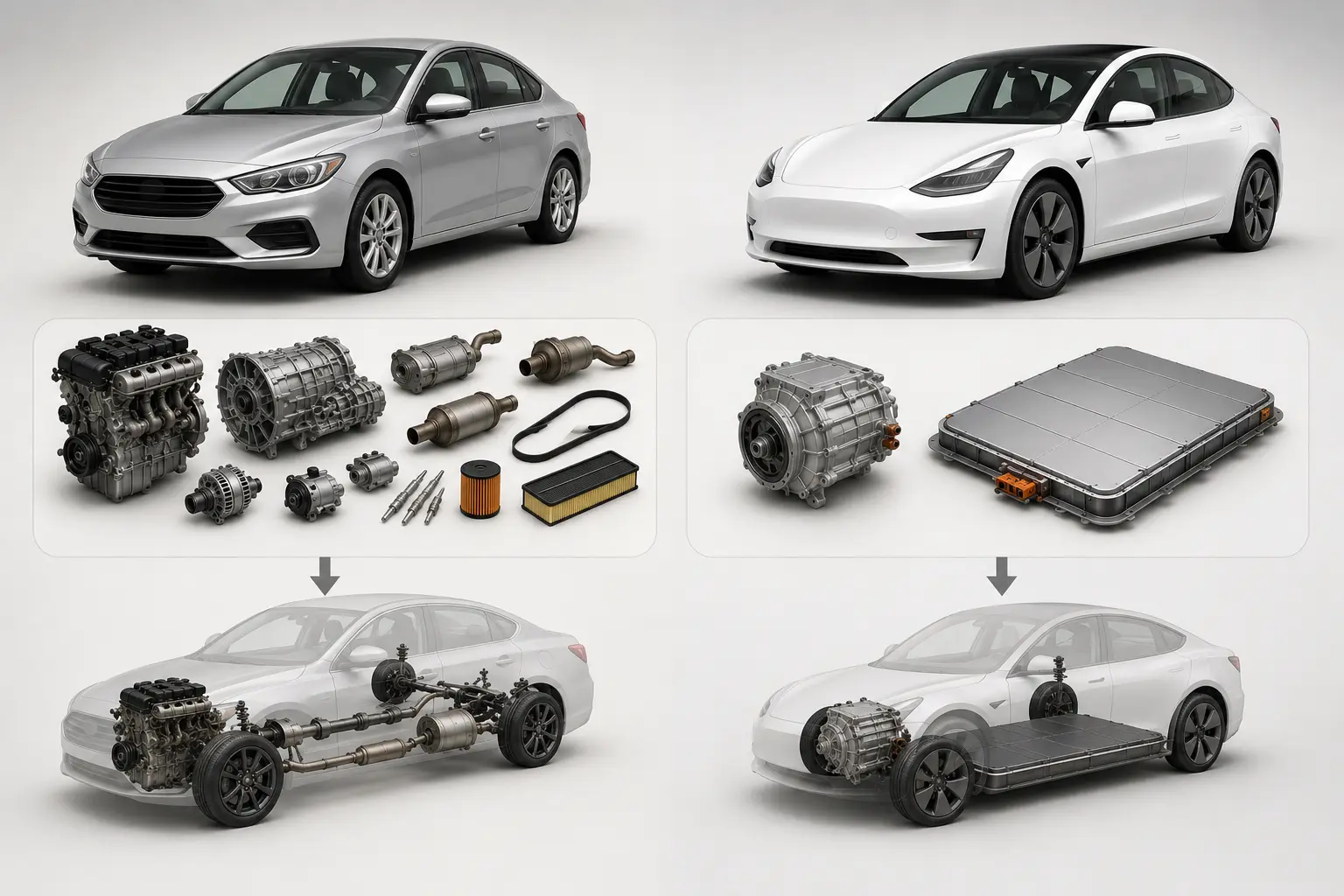
Many people believe that electric cars should be much cheaper than gasoline-powered cars. The reasoning sounds quite logical: electric vehicles do not have complicated internal combustion engines, multi-speed gearboxes, exhaust systems, engine oil changes, spark plugs, or air filters. At first glance, an electric car seems to be nothing more than a motor spinning with electricity. So why are electric cars today still often priced similarly to, or even higher than, gasoline cars in the same segment?
The answer lies in this: electric cars are mechanically simpler, but technologically far more complex.
A traditional gasoline-powered car has, on average, around 30,000 individual parts. This number includes everything from tiny screws, wires, and rubber gaskets to massive mechanical assemblies. The most complicated part is the internal combustion engine itself. The engine alone contains thousands of components such as pistons, piston rings, crankshafts, camshafts, valves, fuel injectors, fuel pumps, cooling systems, and lubrication systems.
Then there is the transmission, which contains hundreds of gears, shafts, clutches, and torque converters. The exhaust system also consists of many components such as catalytic converters, oxygen sensors, and mufflers. All of these are mechanical parts that constantly move, constantly experience friction, and gradually wear out over time.
Because of this enormous number of mechanical components, gasoline cars have extremely complex structures. If one part fails, it can easily affect many other parts as well.
In contrast, electric cars are much simpler mechanically. The total number of components in an electric vehicle is usually only around 15 thousand to 20 thousand parts. Electric vehicles eliminate almost the entire internal combustion engine system and the complicated transmission system. Electric motors do not require pistons moving up and down, fuel combustion processes, or traditional lubrication systems. Many electric cars use only a single-speed gearbox, meaning there is no gear shifting like in gasoline cars.
As a result, electric vehicles have fewer moving parts, less mechanical wear, and simpler maintenance.
However, the mechanical components that are removed are replaced by something even more expensive: electronics and high technology.
The most expensive component in an electric car is the battery pack. If the car were compared to a human body, the battery would be its heart. And this “heart” is extremely expensive. A battery pack can account for 30% to 50% of the total value of the vehicle.
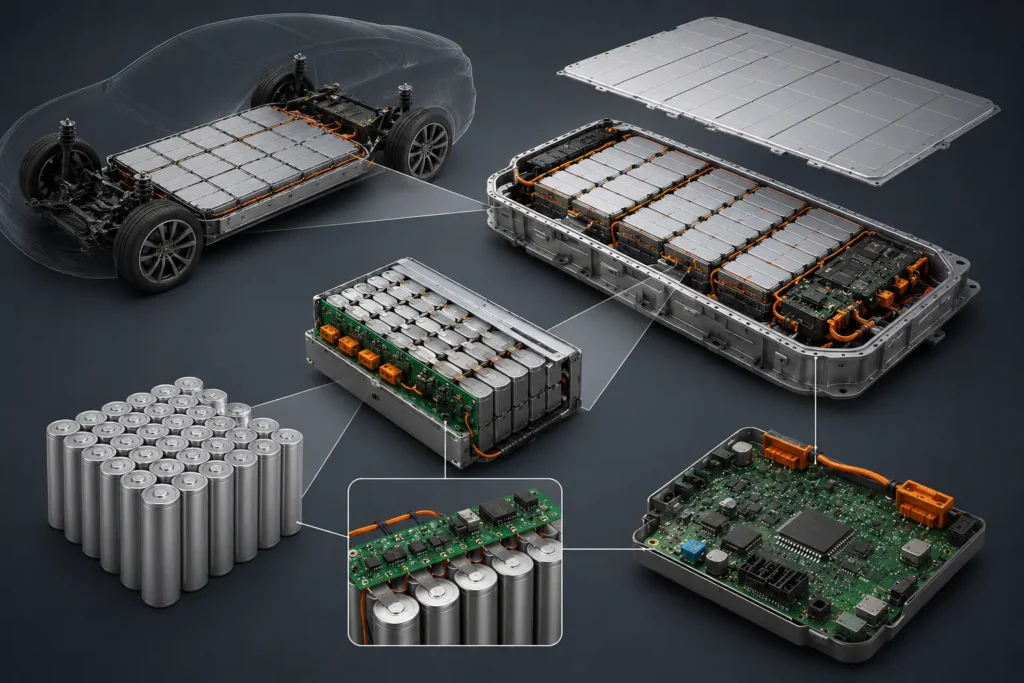
Inside the battery pack is not simply one large battery block. It consists of thousands of small battery cells assembled into modules, which are then assembled into large battery packs. Each module has its own sensors to monitor temperature and voltage. Everything is managed by a battery management system, commonly known as the BMS (Battery Management System).
This system is critically important because lithium-ion batteries are highly sensitive to temperature and electrical current. If not properly controlled, the battery can overheat or even catch fire. That is why electric cars require cooling systems, current control systems, and numerous safety sensors.
In addition, the materials used to produce batteries are also very expensive. Lithium, nickel, and cobalt are all high-value metals, and their supply depends heavily on a limited number of countries. When raw material prices rise, battery prices rise as well.
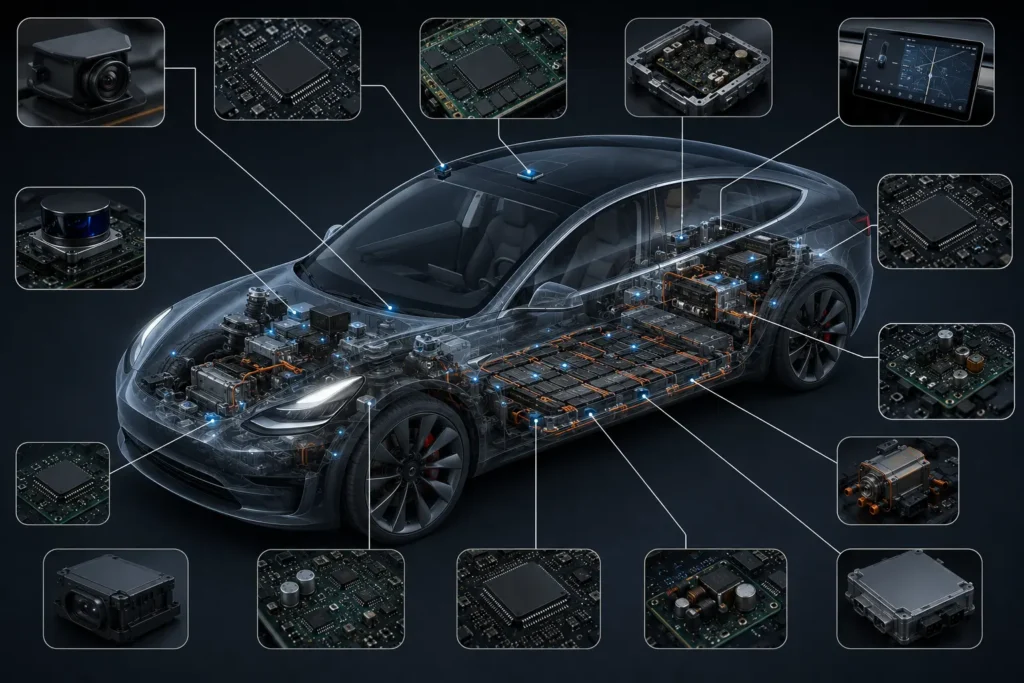
Not only do electric vehicles have expensive batteries, but they also contain a huge number of electronic chips. A modern electric car may use anywhere from dozens to more than one hundred different chips. Some chips process images from cameras, some control the motor, others manage the battery, operate the infotainment system, or support driver assistance systems.
When the driver presses the accelerator, the car does not simply send electricity to the motor. The system must precisely calculate how much power should be delivered so the vehicle accelerates smoothly without wasting battery energy. If the driver suddenly presses harder on the accelerator, the system must also control wheel traction to prevent slipping.
Even turning on the air conditioner involves numerous calculations. If the battery is running low, the vehicle may automatically reduce air conditioning power to conserve energy. If the battery becomes too hot, the cooling system immediately activates. All of these operations are processed within milliseconds by chips and software.
Another important technology in electric vehicles is regenerative braking. When the driver releases the accelerator or presses the brake pedal, the car does not simply slow down; it also recovers energy and sends it back into the battery. To achieve this, the system must calculate everything with extreme precision so that the deceleration feels natural and does not create uncomfortable jerking motions for passengers.
This shows that electric cars are no longer simply mechanical machines. They are increasingly becoming high-tech devices.
If a gasoline-powered car is like a finely crafted mechanical watch filled with gears and springs, then an electric car is like a smartwatch — containing fewer mechanical parts but far more complex batteries, chips, and software.
Today, buying an electric car is somewhat like buying a giant smartphone with four wheels attached to it. Many electric vehicles feature screens as large as tablets, their own operating systems, and the ability to receive software updates over the internet. Manufacturers can send updates that improve acceleration, optimize battery performance, or even add entirely new features without changing the hardware.
But in order to build such systems, automakers must hire thousands of software engineers to write code, test systems, and continuously fix bugs. The software inside an electric car must be extremely stable because if the system crashes while the vehicle is moving, the consequences could be catastrophic.
Besides technology, electric vehicles today still have not reached the same production scale as gasoline-powered cars. Gasoline cars have benefited from more than a century of development, highly streamlined manufacturing lines, and massive economies of scale. Electric vehicles, meanwhile, have only experienced major growth during roughly the past decade. As production volume remains lower, the cost per vehicle will also remain high.
In conclusion, electric cars truly do have fewer mechanical parts than gasoline cars. However, that does not automatically mean they will be significantly cheaper. The cost has simply shifted away from steel, gears, and pistons toward batteries, chips, software, and advanced technology.
WORD BANK:
reasoning /ˈriː.zən.ɪŋ/ [B2] (n): lập luận, lý luận
complicated /ˈkɑːm.pləˌkeɪ.t̬ɪd/ [B1] (adj): phức tạp
internal combustion engine /ɪnˈtɝː.nəl kəmˈbʌs.tʃən ˈen.dʒɪn/ (n): động cơ đốt trong
multi-speed gearbox /ˌmʌl.tiˈspiːd ˈɡɪr.bɑːks/ (n): hộp số nhiều cấp
exhaust system /ɪɡˈzɑːst ˈsɪs.təm/ (n): hệ thống xả
spark plug /ˈspɑːrk ˌplʌɡ/ (n): bugi
air filter /er ˈfɪl.tɚ/ (n): bộ lọc không khí
at first glance /æt fɝːst ɡlæns/ (phr): thoạt nhìn
spin /spɪn/ [B2] (v): quay
segment /ˈseɡ.mənt/ [B2] (n): phần, bộ phận
mechanically /məˈkæn.ɪ.kəl.i/ (adv): về mặt cơ học
on average /ɑːn ˈæv.ɚ.ɪdʒ/ (adv): trung bình
tiny /ˈtaɪ.ni/ [B1] (adj): nhỏ xíu
screw /skruː/ (n): ốc vít
rubber gasket /ˈrʌb.ɚ ˈɡæs.kɪt/ (n): gioăng cao su
mechanical assembly /məˈkæn.ɪ.kəl əˈsem.bli/ (n): cụm cơ khí
piston /ˈpɪs.tən/ (n): pít-tông
piston ring /ˈpɪs.tən rɪŋ/ (n): vòng pít-tông
crankshaft /ˈkræŋk.ʃæft/ (n): trục khuỷu
camshaft /ˈkæm.ʃæft/ (n): trục cam
valve /vælv/ (n): van
fuel injector /ˈfjuː.əl ɪnˌdʒek.tɚ/ (n): kim phun nhiên liệu
lubrication /ˌluː.brɪˈkeɪ.ʃən/ (n): sự bôi trơn
transmission /trænzˈmɪʃ.ən/ (n): hộp số, bộ truyền động
gear /ɡɪr/ (n): bánh răng
clutch /klʌtʃ/ (n): bộ ly hợp
torque converter /tɔːrk kənˈvɝː.t̬ɚ/ (n): bộ biến mô
catalytic converter /ˌkæt̬.əˈlɪt̬.ɪk kənˈvɝː.t̬ɚ/ (n): bộ chuyển đổi xúc tác
sensor /ˈsen.sɚ/ (n): cảm biến
muffler /ˈmʌf.lɚ/ (n): bộ giảm thanh
friction /ˈfrɪk.ʃən/ [B2] (n): ma sát
wear out /wer aʊt/ (v): bị mòn, hỏng do sử dụng
enormous /ɪˈnɔːr.məs/ [B2] (adj): khổng lồ
eliminate /ɪˈlɪm.ə.neɪt/ [B2] (v): loại bỏ
lubrication /ˌluː.brɪˈkeɪ.ʃən/ (n): sự bôi trơn
gear shifting /ɡɪr ˈʃɪf.tɪŋ/ (n): việc chuyển số
maintenance /ˈmeɪn.tə.nəns/ [B2] (n): bảo trì
battery pack /ˈbæt̬.ɚ.i pæk/ (n): bộ pin
battery cell /ˈbæt̬.ɚ.i sel/ (n): tế bào pin
assemble /əˈsem.bəl/ [B2] (v): lắp ráp
voltage /ˈvoʊl.t̬ɪdʒ/ (n): điện áp
sensitive to sth /ˈsen.sə.t̬ɪv tə ˌsʌm.θɪŋ/ (adj): nhạy cảm với cái gì
electrical current /ɪˈlek.trɪ.kəl ˈkɝː.ənt/ (n): dòng điện
lithium /ˈlɪθ.i.əm/ (n): liti
nickel /ˈnɪk.əl/ (n): niken
cobalt /ˈkoʊ.bɑːlt/ (n): coban
anywhere from sth to sth (phr): dao động từ … đến …
infotainment system /ˌɪn.foʊˈteɪn.mənt ˈsɪs.təm/ (n): hệ thống giải trí và thông tin
driver assistance /ˈdraɪ.vɚ əˈsɪs.təns/ (n): hỗ trợ lái xe
accelerator /əkˈsel.ə.reɪ.t̬ɚ/ (n): bàn đạp ga
press the accelerator (v): đạp ga
precisely /prɪˈsaɪs.li/ [B2] (adv): chính xác
traction /ˈtræk.ʃən/ (n): độ bám đường
slipping /ˈslɪp.ɪŋ/ (n): sự trượt
conserve sth /kənˈsɝːv/ [B2] (v): tiết kiệm, bảo tồn cái gì
regenerative braking /rɪˈdʒen.ər.ə.t̬ɪv ˈbreɪ.kɪŋ/ (n): phanh tái tạo năng lượng
brake pedal /ˈbreɪk ˌped.əl/ (n): bàn đạp phanh
press the brake pedal (v): đạp phanh
deceleration /diːˌsel.əˈreɪ.ʃən/ (n): sự giảm tốc
jerking /ˈdʒɝː.kɪŋ/ (n): sự giật cục
finely crafted /ˈfaɪn.li ˈkræf.tɪd/ (adj): được chế tác tinh xảo
mechanical watch /məˈkæn.ɪ.kəl wɑːtʃ/ (n): đồng hồ cơ
spring /sprɪŋ/ (n): lò xo
operating system /ˈɑː.pəˌreɪ.t̬ɪŋ ˈsɪs.təm/ (n): hệ điều hành
optimize sth /ˈɑːp.tə.maɪz/ [C1] (v): tối ưu hóa cái gì
streamline sth /ˈstriːm.laɪn/ [C1] (v): tinh giản, tối ưu hóa cái gì
economies of scale /ɪˈkɑː.nə.miz əv skeɪl/ (n): lợi thế kinh tế theo quy mô
roughly /ˈrʌf.li/ [B2] (adv): khoảng, xấp xỉ
ỦNG HỘ READ TO LEAD!
Chào bạn! Có thể bạn chưa biết, Read to Lead là một trang giáo dục phi lợi nhuận với mục đích góp phần phát triển cộng đồng người học tiếng Anh tại Việt Nam. Chúng tôi không yêu cầu người đọc phải trả bất kỳ chi phí nào để sử dụng các sản phẩm của mình để mọi người đều có cơ hội học tập tốt hơn. Tuy nhiên, nếu bạn có thể, chúng tôi mong nhận được sự hỗ trợ tài chính từ bạn để duy trì hoạt động của trang và phát triển các sản phẩm mới.
Bạn có thể ủng hộ chúng tôi qua 1 trong 2 cách dưới đây.
– Cách 1: Chuyển tiền qua tài khoản Momo.
Số điện thoại 0947.886.865 (Chủ tài khoản: Nguyễn Tiến Trung)
Nội dung chuyển tiền: Ủng hộ Read to Lead
hoặc
– Cách 2: Chuyển tiền qua tài khoản ngân hàng.
Ngân hàng VIB chi nhánh Hải Phòng
Số tài khoản: 012704060048394 (Chủ tài khoản: Nguyễn Tiến Trung)
Nội dung chuyển tiền: Ủng hộ Read to Lead
Lớp luyện thi IELTS online
Bạn đang có nhu cầu thi chứng chỉ IELTS cho đầu vào đại học, đi du học, xin việc hay xin cư trú và đang phân vân chưa biết học ở đâu?
Nếu bạn đang tìm kiếm dịch vụ luyện thi IELTS online với giáo viên uy tín và chất lượng, cũng như học phí phải chăng, thì thầy Trung và Cô Thủy (Admin và dịch giả chính của Read to Lead) có thể là một lựa chọn phù hợp dành cho bạn.
Hãy liên hệ (nhắn tin) tới trang Facebook cá nhân của mình (https://www.facebook.com/nguyen.trung.509) để tìm hiểu về lớp học và được tư vấn cũng như được học thử nha!


