


[Reading level: B2 – Upper Intermediate]
Many people think that banning addictive substances is mainly a matter of morality or public health. But from an economic perspective, the story goes much deeper than that.
A country is not only afraid of the harm these substances cause to the human body, but also of the weakening of its labor force, the outflow of money, and the enormous social costs that addictive substances leave behind.
To see this clearly, let’s have a look at the Opium War in the 19th century.
In the late 18th and early 19th centuries, the Qing dynasty was one of the largest economies in the world. At that time, Europe was especially fond of three Chinese products: tea, silk, and porcelain. The United Kingdom alone imported tens of millions of pounds of tea from China every year.
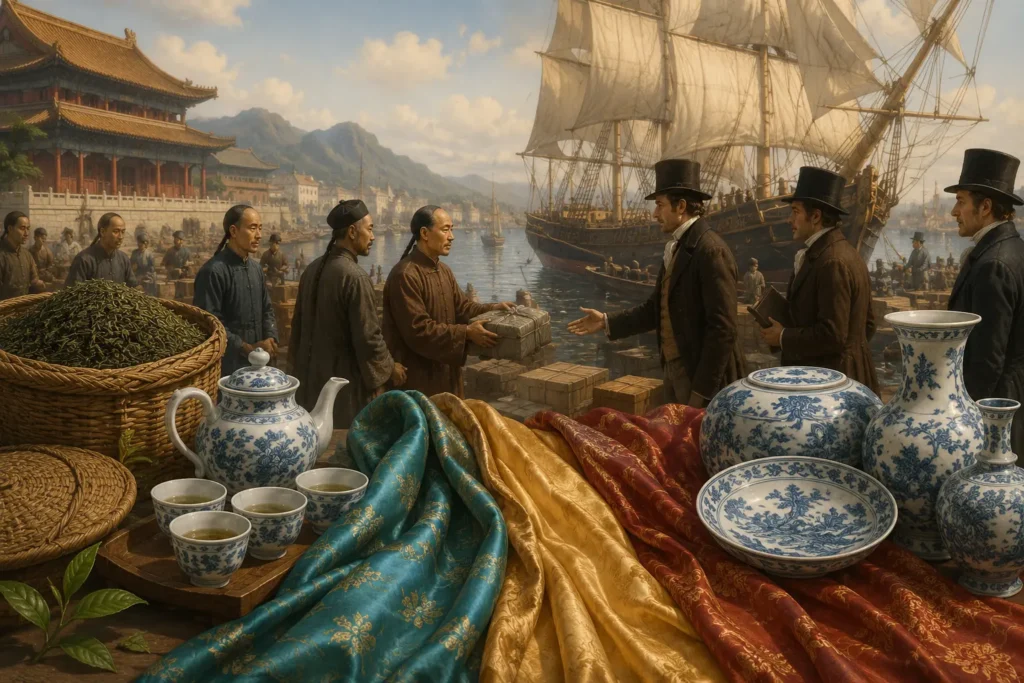
The problem was that China had very little interest in buying goods from the West. The Qing dynasty possessed a massive domestic production system and embraced the ideology of being the “Celestial Empire,” believing that it did not need to depend on foreign goods. As a result, the British had to pay for Chinese tea and silk with silver.
Consequently, an enormous amount of silver continuously flowed from Europe into China.
In economics, this is known as a trade deficit. In other words, one side spends a great deal of money buying goods from the other side while selling very little in return. For Britain, this created tremendous pressure on trade and finance.
At that point, the British began searching for a way to reverse the flow of money.
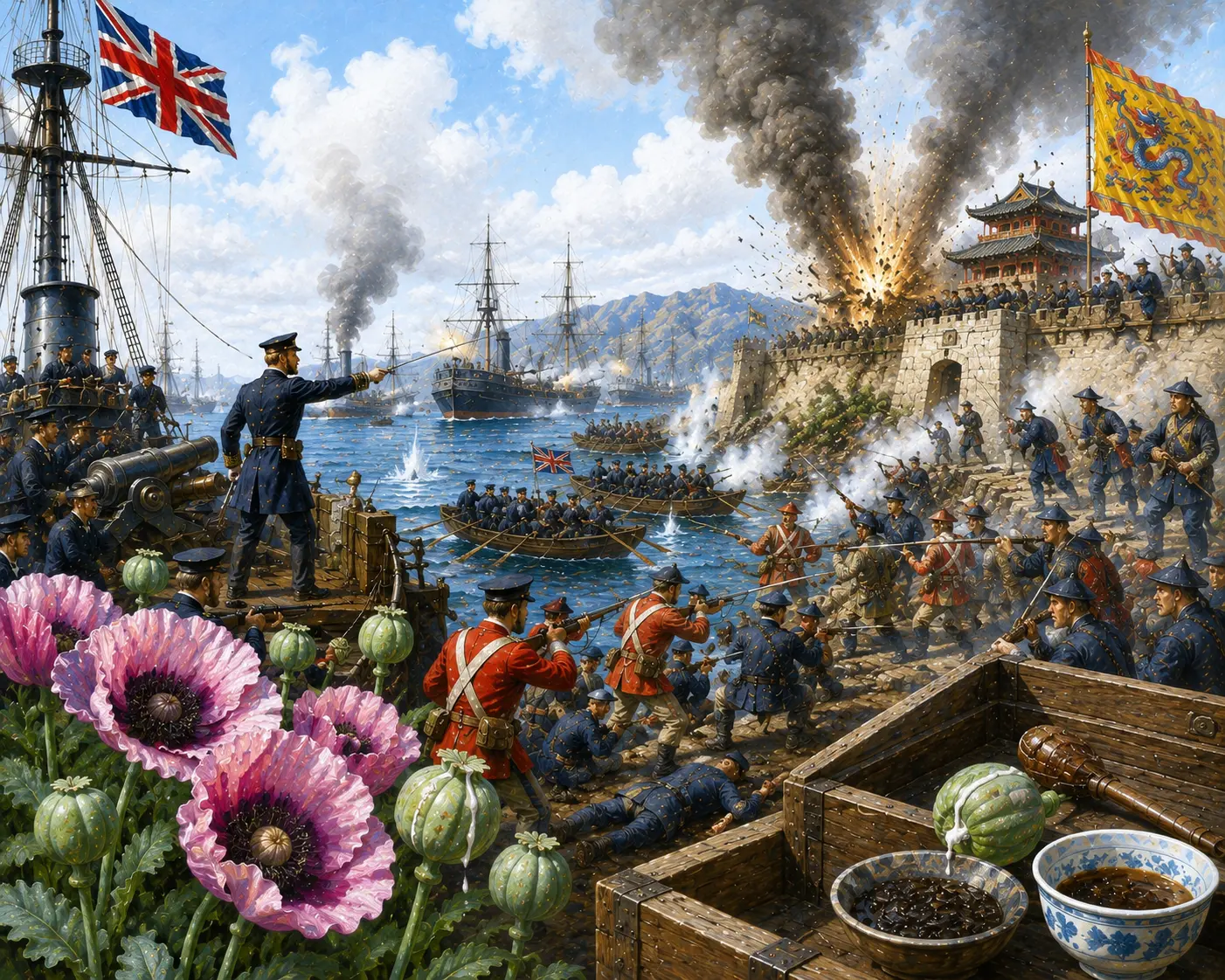
They possessed a vast colony in India, where large quantities of poppies could be cultivated to produce opium. And they realized that if they could sell this product in China, then the Chinese would have to spend money back on them.
This is an extremely noteworthy point from an economic perspective.
Opium was a product with relatively inelastic demand. That means even when prices rose, those who had become dependent on it would still continue trying to buy it. Unlike ordinary goods, demand for addictive substances does not decrease sharply when prices increase.
Once dependency forms, the flow of money becomes remarkably stable and long-lasting.
As opium spread throughout China, silver began flowing outward. British merchants accumulated enormous amounts of silver and then used that same silver to purchase tea, silk, and porcelain from the Qing dynasty.
The financial flow completely reversed.
But the truly frightening part was not just the money. The greatest danger was the weakening of human capital.
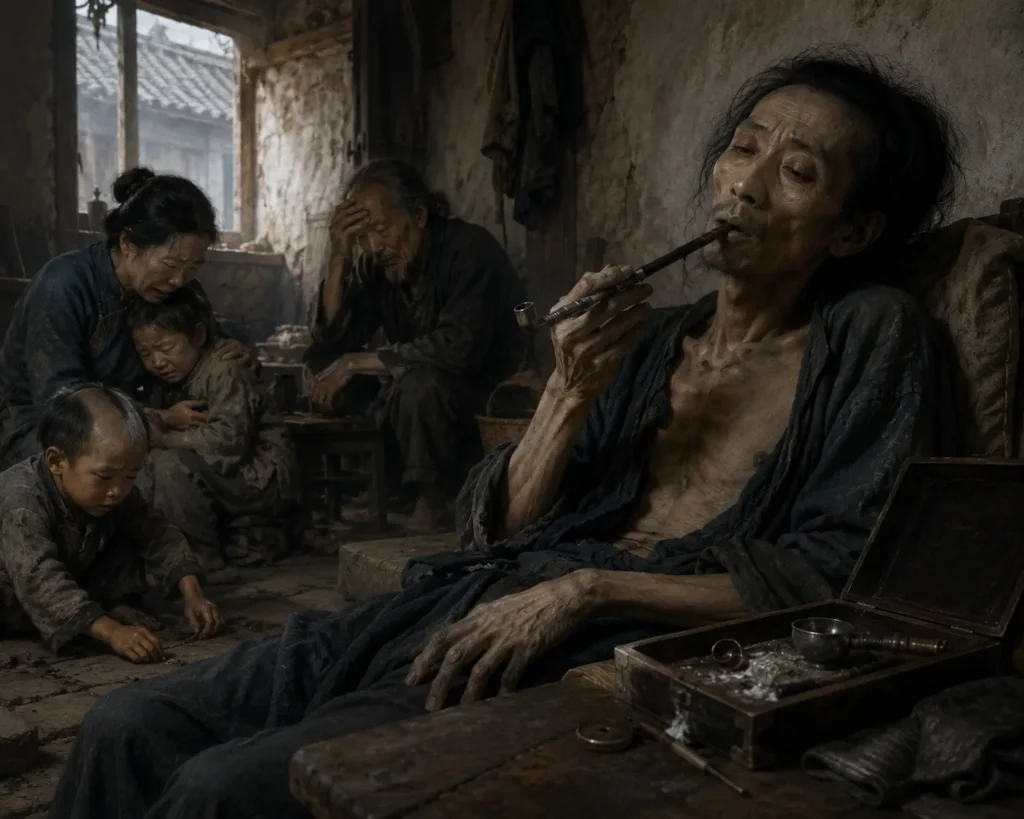
A strong economy requires workers who are healthy, clear-minded, disciplined, and capable of maintaining high productivity. But as addiction spread, many people gradually lost their ability to work effectively. Countless families fell into ruin as their money was poured into opium. Some government officials and soldiers were also affected, causing the administrative and military systems to weaken as well.
In economics, this is called a negative externality.
That means an individual’s behavior does not only harm themselves, but also creates costs for society as a whole. The government must spend more on security, healthcare, crime control, and dealing with the consequences of widespread addiction.
In other words, the damage does not stop with the users themselves; it spreads throughout the entire economy.
Recognizing the growing danger, in 1839 the Qing court appointed Lin Zexu to Guangzhou to suppress the opium trade. He ordered the confiscation and destruction of more than 20,000 chests of opium at Humen.
But that action directly threatened British commercial interests.
Not long afterward, First Opium War broke out.
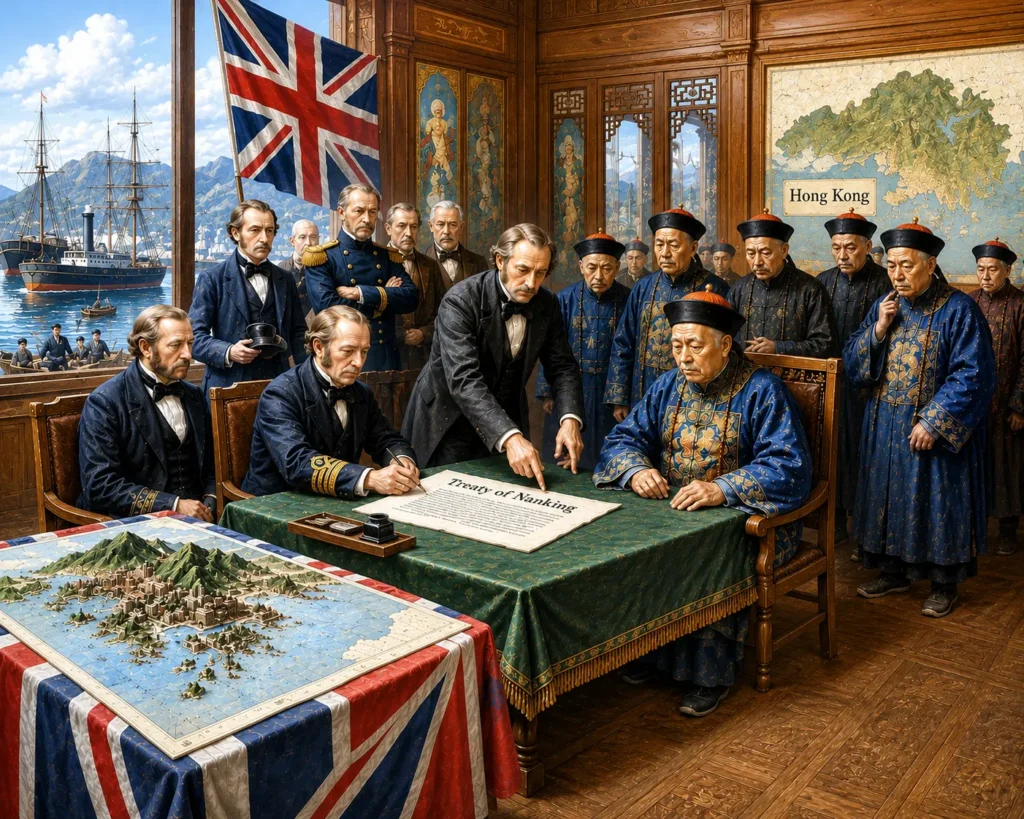
As a result, the Qing dynasty was defeated and forced to sign the Treaty of Nanking. Under the treaty, China had to cede Hong Kong to Britain, open additional trading ports, and pay a massive silver indemnity.
Many historians regard this as the beginning of the Qing dynasty’s prolonged decline throughout the 19th century.
Of course, China’s decline was not caused by opium alone. At the time, the Qing dynasty was also facing corruption, population pressures, domestic uprisings, and increasing pressure from Western powers. Nevertheless, the Opium War remains a striking example of how an addictive substance can affect an economy, a financial system, and the stability of society on a massive scale.
Therefore, from an economic perspective, controlling addictive substances is not merely about protecting public health. It is also a way for a nation to protect its flow of money, its labor productivity, its national budget, and the long-term stability of its society.
WORD BANK:
addictive substance /əˈdɪk.tɪv ˈsʌb.stəns/ (n): chất gây nghiện
morality /məˈræl.ə.t̬i/ [C1] (n): đạo đức
from an economic perspective (phr): dưới góc độ kinh tế học
the outflow of sth /ˈaʊt.floʊ/ (n): sự chảy ra ngoài của cái gì
opium /ˈoʊ.pi.əm/ (n): thuốc phiện
dynasty /ˈdaɪ.nə.sti/ [C2] (n): triều đại
porcelain /ˈpɔːr.səl.ɪn/ (n): đồ sứ
possess sth /pəˈzes/ [B2] (v): sở hữu cái gì
embrace sth /ɪmˈbreɪs/ [B2] (v): chấp nhận, theo đuổi cái gì
ideology /ˌaɪ.diˈɑː.lə.dʒi/ [C1] (n): hệ tư tưởng
celestial /səˈles.tʃəl/ (adj): thuộc về thiên giới, thiên quốc
empire /ˈem.paɪɚ/ [B2] (n): đế chế
trade deficit /ˈtreɪd ˌdef.ə.sɪt/ (n): thâm hụt thương mại
tremendous /trəˈmen.dəs/ [B2] (adj): rất lớn, khổng lồ
reverse sth /rɪˈvɝːs/ [B2] (v): đảo ngược cái gì
colony /ˈkɑː.lə.ni/ [B2] (n): thuộc địa
poppy /ˈpɑː.pi/ (n): cây anh túc
cultivate sth /ˈkʌl.tə.veɪt/ [C1] (v): trồng, canh tác cái gì
noteworthy /ˈnoʊtˌwɝː.ði/ [C1] (adj): đáng chú ý
elastic /iˈlæs.tɪk/ (adj): co giãn
relatively inelastic demand /ˈrel.ə.t̬ɪv.li ˌɪn.ɪˈlæs.tɪk dɪˈmænd/ (n): nhu cầu tương đối kém co giãn
ordinary /ˈɔːr.dən.er.i/ [B1] (adj): thông thường
long-lasting /ˌlɔːŋˈlæs.tɪŋ/ (adj): lâu dài
outward /ˈaʊt.wɚd/ (adv): ra bên ngoài
merchant /ˈmɝː.tʃənt/ [B2] (n): thương nhân
accumulate sth /əˈkjuː.mjə.leɪt/ [C1] (v): tích lũy cái gì
human capital /ˌhjuː.mən ˈkæp.ə.t̬əl/ (n): vốn nhân lực
clear-minded /ˌklɪrˈmaɪn.dɪd/ (adj): tỉnh táo, minh mẫn
fall into ruin /fɔːl ˈɪn.t̬uː ˈruː.ɪn/ (v): rơi vào cảnh khánh kiệt
pour sth into sth /pɔːr ˌsʌm.θɪŋ ˈɪn.t̬uː ˌsʌm.θɪŋ/ (v): đổ cái gì vào cái gì
administrative /ədˈmɪn.ə.streɪ.t̬ɪv/ [C1] (adj): thuộc hành chính
a negative externality /ə ˈneɡ.ə.t̬ɪv ˌek.stɝːˈnæl.ə.t̬i/ (n): ngoại ứng tiêu cực
appoint sb to do sth /əˈpɔɪnt/ [B2] (v): bổ nhiệm ai làm gì
suppress sth /səˈpres/ [C1] (v): đàn áp, ngăn chặn cái gì
confiscation /ˌkɑːn.fəˈskeɪ.ʃən/ (n): sự tịch thu
chest /tʃest/ (n): rương, thùng
interest /ˈɪn.trəst/ [B1] (n): lợi ích
break out /ˈbreɪk ˌaʊt/ [B2] (v): bùng nổ
treaty /ˈtriː.t̬i/ [C1] (n): hiệp ước
cede sth to sb /siːd/ (v): nhượng cái gì cho ai
indemnity /ɪnˈdem.nə.t̬i/ (n): khoản bồi thường
prolonged /prəˈlɔːŋd/ [C1] (adj): kéo dài
decline /dɪˈklaɪn/ [B2] (n): sự suy yếu, suy giảm
corruption /kəˈrʌp.ʃən/ [C1] (n): tham nhũng
uprising /ˈʌpˌraɪ.zɪŋ/ (n): cuộc nổi dậy
a striking example of sth (n): một ví dụ điển hình về cái gì
scale /skeɪl/ [B2] (n): quy mô
ỦNG HỘ READ TO LEAD!
Chào bạn! Có thể bạn chưa biết, Read to Lead là một trang giáo dục phi lợi nhuận với mục đích góp phần phát triển cộng đồng người học tiếng Anh tại Việt Nam. Chúng tôi không yêu cầu người đọc phải trả bất kỳ chi phí nào để sử dụng các sản phẩm của mình để mọi người đều có cơ hội học tập tốt hơn. Tuy nhiên, nếu bạn có thể, chúng tôi mong nhận được sự hỗ trợ tài chính từ bạn để duy trì hoạt động của trang và phát triển các sản phẩm mới.
Bạn có thể ủng hộ chúng tôi qua 1 trong 2 cách dưới đây.
– Cách 1: Chuyển tiền qua tài khoản Momo.
Số điện thoại 0947.886.865 (Chủ tài khoản: Nguyễn Tiến Trung)
Nội dung chuyển tiền: Ủng hộ Read to Lead
hoặc
– Cách 2: Chuyển tiền qua tài khoản ngân hàng.
Ngân hàng VIB chi nhánh Hải Phòng
Số tài khoản: 012704060048394 (Chủ tài khoản: Nguyễn Tiến Trung)
Nội dung chuyển tiền: Ủng hộ Read to Lead
Lớp luyện thi IELTS online
Bạn đang có nhu cầu thi chứng chỉ IELTS cho đầu vào đại học, đi du học, xin việc hay xin cư trú và đang phân vân chưa biết học ở đâu?
Nếu bạn đang tìm kiếm dịch vụ luyện thi IELTS online với giáo viên uy tín và chất lượng, cũng như học phí phải chăng, thì thầy Trung và Cô Thủy (Admin và dịch giả chính của Read to Lead) có thể là một lựa chọn phù hợp dành cho bạn.
Hãy liên hệ (nhắn tin) tới trang Facebook cá nhân của mình (https://www.facebook.com/nguyen.trung.509) để tìm hiểu về lớp học và được tư vấn cũng như được học thử nha!


hayyyy
Thanks a lot for your effort to provide a very interesting and sophisticated newspaper for Vietnamese people to read and learn more!!!!!