


[Reading level: B2 – Upper Intermediate]
Frying fish may seem simple, but many people have experienced fish sticking firmly to the pan, with the skin peeling off and the flesh breaking apart when flipped.
Many assume that the problem lies in the quality of the pan. However, the real issue is often related to moisture on the fish’s skin and changes in proteins under the influence of heat.
According to some chefs, there are two main reasons why fish tends to stick to the pan.
The first reason is that the fish’s skin is too moist. When fish is placed in a hot pan, the water on its surface must evaporate first, temporarily keeping the temperature at around 100°C. This slows down the Maillard reaction – a chemical reaction that produces the golden-brown color and appealing flavors of food when heated. Meanwhile, proteins in the fish’s skin can stick to the metal surface, making the skin more likely to tear when the fish is flipped.
The second reason is the uneven contraction of proteins. Fish skin contains a large amount of collagen, a type of protein that contracts when exposed to high temperatures. When the skin contracts faster than the flesh, the fish tends to curl up, causing uneven contact with the pan and making it more likely to stick.
To prevent this problem, cooks can follow four simple steps:
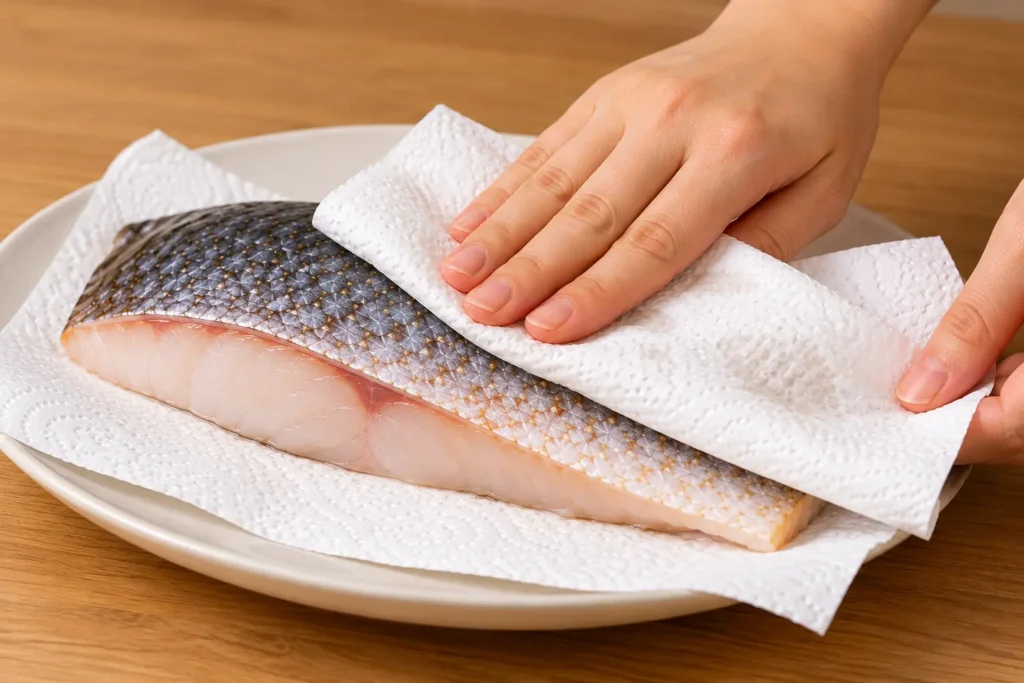
Step 1: Dry the fish before frying. Use kitchen paper towels to thoroughly dry the surface of the fish, especially the skin. You can also place the fish uncovered in the refrigerator for about 30 minutes to allow the surface to dry further. The drier the skin, the easier it is for a golden, crispy crust to form.
Step 2: Control the temperature. Cast-iron or stainless-steel pans are recommended. Heat the pan, add oil, and wait until the oil begins to shimmer slightly but has not started smoking. If the pan is not hot enough, the fish is more likely to stick, while excessively high temperatures can burn the skin.
Step 3: Keep the fish flat. When placing the fish in the pan, put the skin side down first. Use a spatula to gently press down on the fish for the first 10–15 seconds to prevent the skin from contracting and causing the fish to curl up. This helps distribute heat evenly.
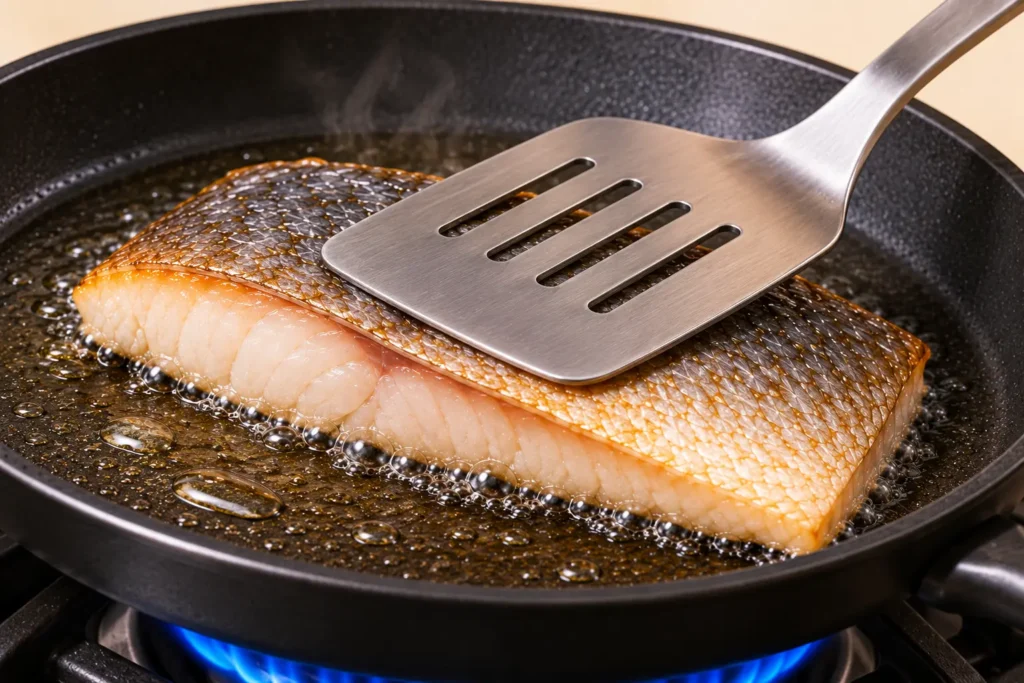
Step 4: Be patient and wait for the fish to release naturally from the pan. Avoid moving or flipping the fish too early. Before the skin becomes sufficiently crispy, proteins may still stick firmly to the pan’s surface. Wait until the skin turns golden brown and develops a crispy crust. At this point, the fish will usually release more easily from the pan and can be gently flipped without breaking apart.
In short, the secret to frying fish without it sticking to the pan does not necessarily lie in having an expensive pan. Simply by drying the fish’s skin, controlling the temperature, keeping the fish flat, and patiently waiting for a crispy crust to form, home cooks can prepare perfectly fried fish that is golden and crispy on the outside while remaining tender and moist on the inside.
Source: vnexpress.net
WORD BANK:
stick firmly to sth /stɪk ˈfɝːm.li/ (v): dính chặt vào cái gì
peel off /piːl ɑːf/ (phr.v): bong ra, tróc ra
flesh /fleʃ/ (n): thịt (của cá, động vật, trái cây)
break apart /breɪk əˈpɑːrt/ (phr.v): vỡ ra, tách thành nhiều mảnh
flip /flɪp/ (v): lật, trở mặt
moisture /ˈmɔɪs.tʃɚ/ [B2] (n): độ ẩm, hơi ẩm
chef /ʃef/ [A2] (n): đầu bếp chuyên nghiệp
moist /mɔɪst/ (adj): ẩm, hơi ướt
evaporate /ɪˈvæp.ə.reɪt/ (v): bay hơi
temporarily /ˌtem.pəˈrer.əl.i/ [B2] (adv): tạm thời
golden-brown color /ˌɡoʊl.dən ˈbraʊn ˈkʌl.ɚ/ (n): màu vàng nâu
appealing /əˈpiː.lɪŋ/ [B2] (adj): hấp dẫn, thu hút
tear /ter/ [B1] (v): làm rách, xé rách
uneven contraction /ʌnˈiː.vən kənˈtræk.ʃən/ (n): sự co rút không đồng đều
collagen /ˈkɑː.lə.dʒən/ (n): collagen, protein cấu trúc trong da và mô liên kết
contract /kənˈtrækt/ [C1] (v): co lại, co rút
exposed to sth /ɪkˈspoʊzd/ (adj): tiếp xúc với, chịu tác động của cái gì
curl up /kɝːl ʌp/ (phr.v): cong lên, cuộn lại
contact with sth /ˈkɑːn.tækt/ [B1] (n): sự tiếp xúc với cái gì
towel /ˈtaʊ.əl/ [A2] (n): khăn
thoroughly /ˈθɝː.ə.li/ [B2] (adv): kỹ lưỡng, hoàn toàn
uncovered /ʌnˈkʌv.ɚd/ (adj): không được che đậy, không được bọc kín
crispy /ˈkrɪs.pi / (adj): giòn
cast-iron /ˌkæst ˈaɪ.ɚn/ (adj): làm bằng gang
stainless-steel /ˌsteɪn.ləs ˈstiːl/ (adj): làm bằng thép không gỉ
shimmer slightly /ˈʃɪm.ɚ ˈslaɪt.li/ (v): gợn sóng nhẹ, lấp lánh nhẹ
crust /krʌst/ (n): lớp vỏ cứng hoặc giòn bên ngoài
home cook /ˌhoʊm ˈkʊk/ (n): người nấu ăn tại nhà, người nội trợ
tender /ˈten.dɚ/ [B2] (adj): mềm, dễ nhai (thịt, cá)
ỦNG HỘ READ TO LEAD!
Chào bạn! Có thể bạn chưa biết, Read to Lead là một trang giáo dục phi lợi nhuận với mục đích góp phần phát triển cộng đồng người học tiếng Anh tại Việt Nam. Chúng tôi không yêu cầu người đọc phải trả bất kỳ chi phí nào để sử dụng các sản phẩm của mình để mọi người đều có cơ hội học tập tốt hơn. Tuy nhiên, nếu bạn có thể, chúng tôi mong nhận được sự hỗ trợ tài chính từ bạn để duy trì hoạt động của trang và phát triển các sản phẩm mới.
Bạn có thể ủng hộ chúng tôi qua 1 trong 2 cách dưới đây.
– Cách 1: Chuyển tiền qua tài khoản Momo.
Số điện thoại 0947.886.865 (Chủ tài khoản: Nguyễn Tiến Trung)
Nội dung chuyển tiền: Ủng hộ Read to Lead
hoặc
– Cách 2: Chuyển tiền qua tài khoản ngân hàng.
Ngân hàng VIB chi nhánh Hải Phòng
Số tài khoản: 012704060048394 (Chủ tài khoản: Nguyễn Tiến Trung)
Nội dung chuyển tiền: Ủng hộ Read to Lead
Lớp luyện thi IELTS online
Bạn đang có nhu cầu thi chứng chỉ IELTS cho đầu vào đại học, đi du học, xin việc hay xin cư trú và đang phân vân chưa biết học ở đâu?
Nếu bạn đang tìm kiếm dịch vụ luyện thi IELTS online với giáo viên uy tín và chất lượng, cũng như học phí phải chăng, thì lớp học online của thầy Trung (Admin và dịch giả chính của Read to Lead) có thể là một lựa chọn phù hợp dành cho bạn.
Hãy liên hệ (nhắn tin) tới trang Facebook cá nhân của mình (https://www.facebook.com/nguyen.trung.509) để tìm hiểu về lớp học và được tư vấn cũng như được học thử nha!


