


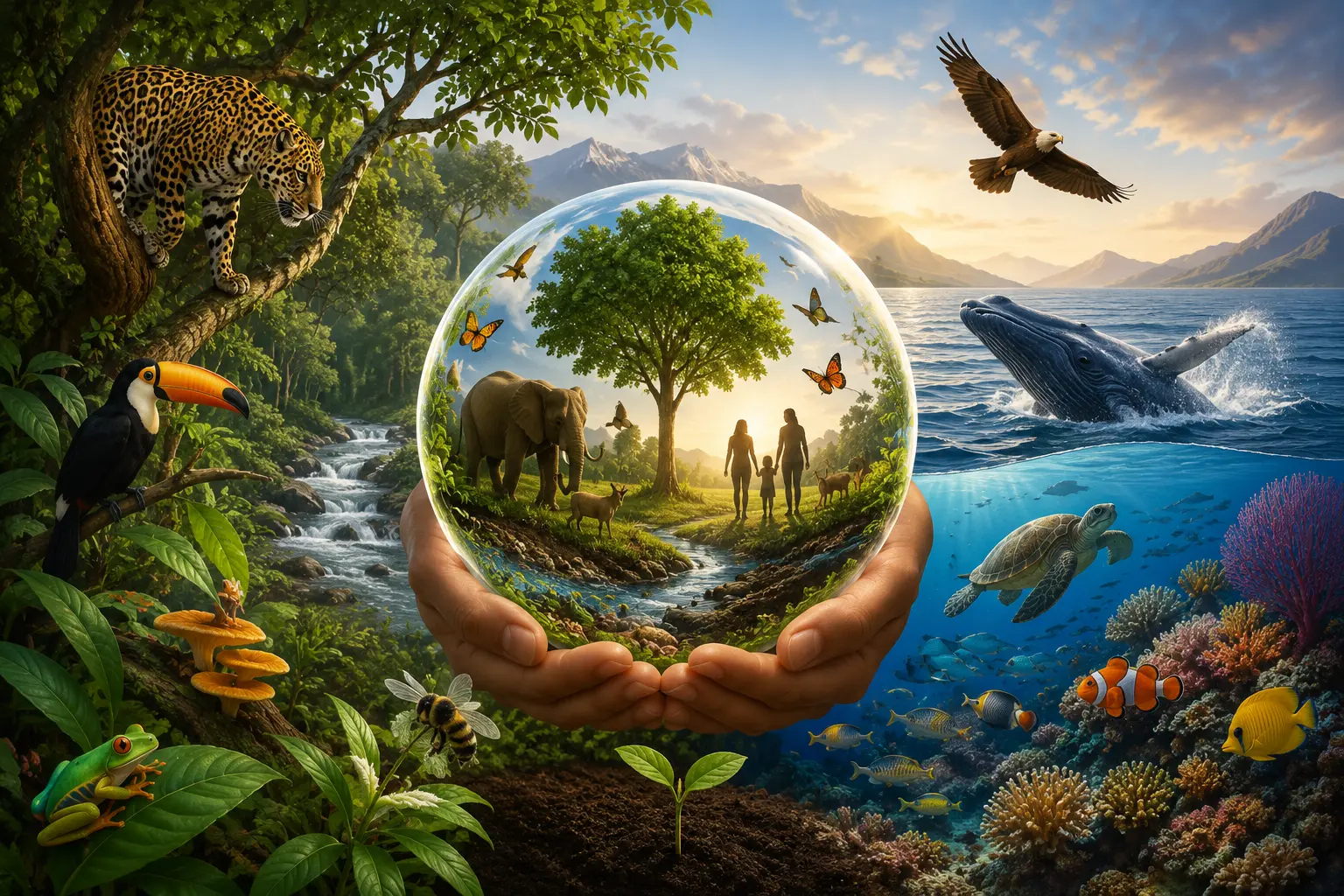
Our planet’s diverse thriving ecosystems may seem like permanent fixtures, but they’re actually vulnerable to collapse. Jungles can become deserts, and reefs can become lifeless rocks, even without cataclysmic events, like volcanoes and asteroids.
What makes one ecosystem strong and another weak in the face of change? The answer, to a large extent, is biodiversity.
Biodiversity is built out of three intertwined features: ecosystem diversity, species diversity, and genetic diversity. The more intertwining there is between these features, the denser and more resilient the weave becomes.
Take the Amazon rainforest, one of the most biodiverse regions on Earth due to its complex ecosystems, huge mix of species, and the genetic variety within those species.
Here are tangled liana vines, which crawl up from the forest floor to the canopy, intertwining with treetops and growing thick wooden stems that support these towering trees. Helped along by the vines, trees provide the seeds, fruits and leaves to herbivores, such as the tapir and the agouti, which disperse their seeds throughout the forest so they can grow.
Leftovers are consumed by the millions of insects that decompose and recycle nutrients to create rich soil.
The rainforest is a huge system filled with many smaller systems, like this, each packed with interconnected species. Every link provides stability to the next, strengthening biodiversity’s weave.
That weave is further reinforced by the genetic diversity within individual species, which allows them to cope with changes. Species that lack genetic diversity due to isolation or low population numbers, are much more vulnerable to fluctuations caused by climate change, disease or habitat fragmentation.
Whenever a species disappears because of its weakened gene pool, a knot is untied and parts of the net disintegrate.
So, what if we were to remove one species from the rainforest? Would the system fall apart?
Probably not. The volume of species, their genetic diversity, and the complexity of the ecosystems form such rich biodiversity in this forest that one species gap in the weave won’t cause it to unravel. The forest can stay resilient and recover from change.
But that’s not true in every case. In some environments, taking away just one important component can undermine the entire system.
Take coral reefs for instance. Many organisms in a reef are dependent on the coral. It provides key microhabitats, shelter and breeding grounds for thousands of species of fish, crustaceans and mollusks.
Corals also form interdependent relationships with fungi and bacteria. The coral itself is a loom that allows the tangled net of biodiversity to be woven. That makes coral a keystone organism, one that many others depend on for their survival.
So what happens when destructive fishing practices, pollution and ocean acidification weaken coral or even kill it altogether?
Exactly what you might think. The loss of this keystone species leaves its dependents at a loss, too, threatening the entire fabric of the reef.
Ecosystem, species and genetic diversity together form the complex tangled weave of biodiversity that is vital for the survival of organisms on Earth. We humans are woven into this biodiversity, too.
When just a few strands are lost, our own well-being is threatened. Cut too many links, and we risk unraveling it all.
What the future brings is unpredictable, but biodiversity can give us an insurance policy, Earth’s own safety net to safeguard our survival.
Source: TED-Ed
WORD BANK:
permanent /ˈpɝː.mə.nənt/ [B1] (adj): lâu dài, vĩnh viễn
fixture /ˈfɪks.tʃɚ/ [C1] (n): vật cố định; điều quen thuộc
vulnerable to sth /ˈvʌl.nɚ.ə.bəl/ [B2] (adj): dễ bị ảnh hưởng, dễ tổn thương bởi cái gì
collapse /kəˈlæps/ [B2] (v/n): sụp đổ; sự sụp đổ
jungle /ˈdʒʌŋ.ɡəl/ [B2] (n): rừng nhiệt đới rậm rạp
reef /riːf/ [B2] (n): rạn san hô
cataclysmic /ˌkæt.əˈklɪz.mɪk/ [C2] (adj): mang tính thảm họa
asteroid /ˈæs.tə.rɔɪd/ [C1] (n): tiểu hành tinh
out of sth /aʊt əv/ (pre): từ cái gì
intertwined /ˌɪn.tɚˈtwaɪnd/ [C1] (adj): đan xen, gắn kết chặt chẽ
genetic /dʒəˈnet̬.ɪk/ [B2] (adj): thuộc di truyền
denser /ˈden.sɚ/ (adj): dày đặc hơn
resilient /rɪˈzɪl.jənt/ [C1] (adj): kiên cường, có khả năng phục hồi
tangled /ˈtæŋ.ɡəld/ [B2] (adj): rối, đan chằng chịt
vine /vaɪn/ (n): dây leo
crawl /krɔːl/ [B1] (v): bò, trườn
canopy /ˈkæn.ə.pi/ [C1] (n): tán cây
treetop /ˈtriː.tɑːp/ (n): ngọn cây
stem /stem/ [B2] (n): thân cây, cuống
towering /ˈtaʊ.ɚ.ɪŋ/ [C1] (adj): cao vút, đồ sộ
herbivore /ˈɝː.bə.vɔːr/ [C1] (n): động vật ăn cỏ
tapir /ˈteɪ.pɚ/ (n): con lợn vòi
disperse sth /dɪˈspɝːs/ [C1] (v): phân tán, phát tán cái gì
leftover /ˈleftˌoʊ.vɚ/ [B1] (adj/n): còn lại; phần còn thừa
decompose /ˌdiː.kəmˈpoʊz/ [C1] (v): phân hủy
packed with sth /pækt wɪð/ [B2] (adj): chứa đầy cái gì
weave /wiːv/ (n): mạng lưới, kết cấu đan xen
weave /wiːv/ (v): đan, dệt
woven /ˈwoʊ.vən/ (v, past participle): dạng quá khứ phân từ của weave
isolation /ˌaɪ.səˈleɪ.ʃən/ [B2] (n): sự cô lập
fluctuation /ˌflʌk.tʃuˈeɪ.ʃən/ [C1] (n): sự biến động
habitat fragmentation /ˈhæb.ɪ.tæt ˌfræɡ.mənˈteɪ.ʃən/ (n): sự phân mảnh môi trường sống
gene pool /ˈdʒiːn puːl/ (n): vốn gen
knot /nɑːt/ [B2] (n): nút thắt
untie /ʌnˈtaɪ/ [B2] (v): tháo, cởi nút
disintegrate /dɪsˈɪn.t̬ə.ɡreɪt/ [C1] (v): tan rã, phân rã
be to do sth /biː tə duː/ (v): được định là, sẽ làm gì
fall apart /fɔːl əˈpɑːrt/ [C1] (v): tan vỡ, sụp đổ
complexity /kəmˈplek.sə.t̬i/ [B2] (n): sự phức tạp
unravel /ʌnˈræv.əl/ [C1] (v): tháo gỡ; dần sụp đổ
component /kəmˈpoʊ.nənt/ [B2] (n): thành phần, bộ phận
undermine /ˌʌn.dɚˈmaɪn/ [C1] (v): làm suy yếu
shelter /ˈʃel.tɚ/ [B1] (n/v): nơi trú ẩn; che chở
breeding ground /ˈbriː.dɪŋ ɡraʊnd/ (n): nơi sinh sản; môi trường thuận lợi cho sự phát triển
crustacean /krʌˈsteɪ.ʃən/ (n): động vật giáp xác
mollusk /ˈmɑː.ləsk/ (n): động vật thân mềm
fungi /ˈfʌn.dʒaɪ/ (n): nấm (số nhiều của fungus)
loom /luːm/ (n): khung dệt
keystone /ˈkiː.stoʊn/ [C2] (adj): then chốt, chủ chốt
destructive /dɪˈstrʌk.tɪv/ [B2] (adj): mang tính phá hoại
acidification /əˌsɪd.ə.fəˈkeɪ.ʃən/ (n): sự axit hóa
strand /strænd/ [C1] (v): làm mắc cạn, khiến bị cô lập
insurance policy /ɪnˈʃʊr.əns ˌpɑː.lə.si/ (n): hợp đồng bảo hiểm
safeguard sth /ˈseɪf.ɡɑːrd/ [C1] (v): bảo vệ, gìn giữ cái gì
ỦNG HỘ READ TO LEAD!
Chào bạn! Có thể bạn chưa biết, Read to Lead là một trang giáo dục phi lợi nhuận với mục đích góp phần phát triển cộng đồng người học tiếng Anh tại Việt Nam. Chúng tôi không yêu cầu người đọc phải trả bất kỳ chi phí nào để sử dụng các sản phẩm của mình để mọi người đều có cơ hội học tập tốt hơn. Tuy nhiên, nếu bạn có thể, chúng tôi mong nhận được sự hỗ trợ tài chính từ bạn để duy trì hoạt động của trang và phát triển các sản phẩm mới.
Bạn có thể ủng hộ chúng tôi qua 1 trong 2 cách dưới đây.
– Cách 1: Chuyển tiền qua tài khoản Momo.
Số điện thoại 0947.886.865 (Chủ tài khoản: Nguyễn Tiến Trung)
Nội dung chuyển tiền: Ủng hộ Read to Lead
hoặc
– Cách 2: Chuyển tiền qua tài khoản ngân hàng.
Ngân hàng VIB chi nhánh Hải Phòng
Số tài khoản: 012704060048394 (Chủ tài khoản: Nguyễn Tiến Trung)
Nội dung chuyển tiền: Ủng hộ Read to Lead
Lớp luyện thi IELTS online
Bạn đang có nhu cầu thi chứng chỉ IELTS cho đầu vào đại học, đi du học, xin việc hay xin cư trú và đang phân vân chưa biết học ở đâu?
Nếu bạn đang tìm kiếm dịch vụ luyện thi IELTS online với giáo viên uy tín và chất lượng, cũng như học phí phải chăng, thì thầy Trung và Cô Thủy (Admin và dịch giả chính của Read to Lead) có thể là một lựa chọn phù hợp dành cho bạn.
Hãy liên hệ (nhắn tin) tới trang Facebook cá nhân của mình (https://www.facebook.com/nguyen.trung.509) để tìm hiểu về lớp học và được tư vấn cũng như được học thử nha!


