


[Reading level: C1 – Advanced]
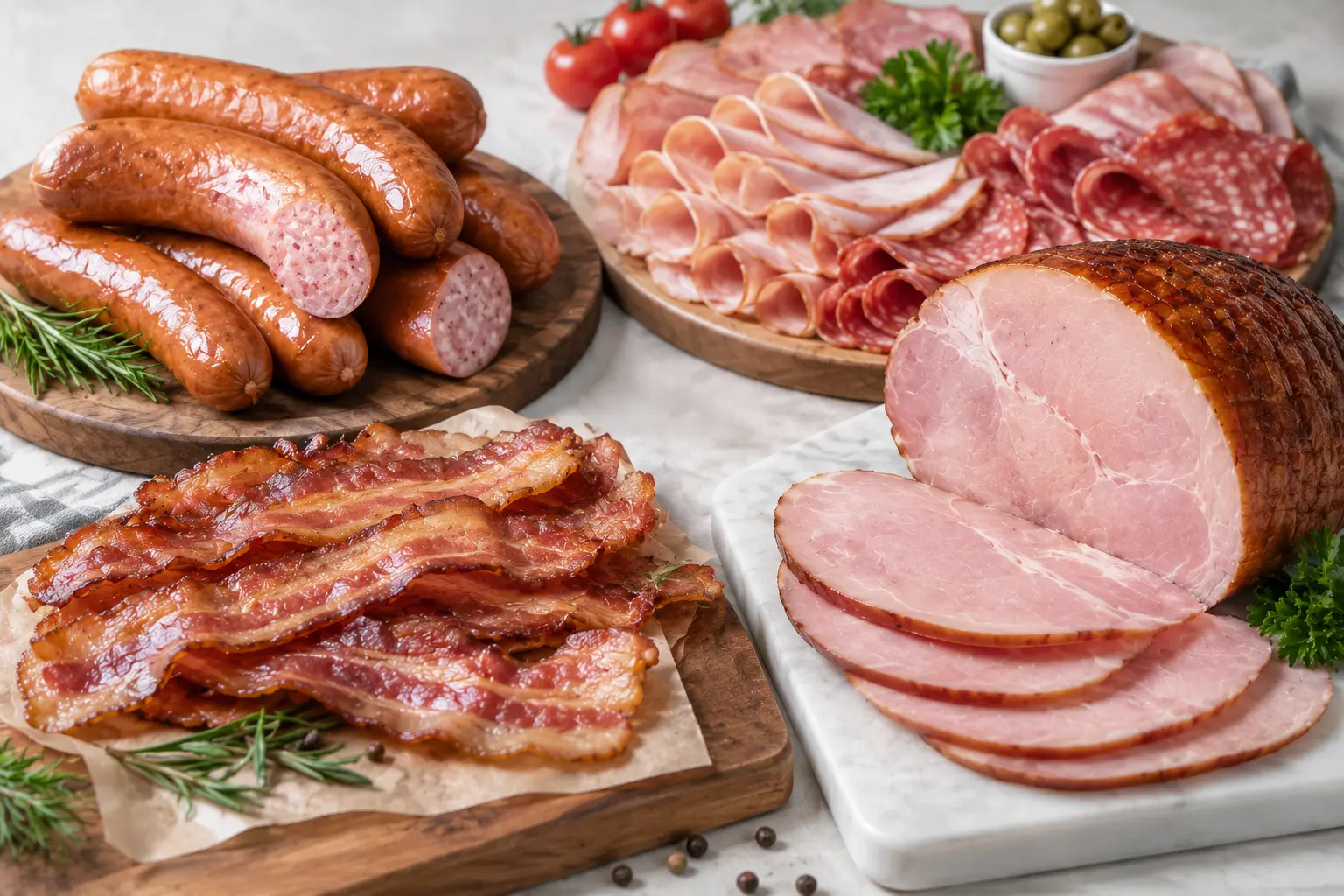
Sausages, cold cuts, bacon, ham, and Chinese sausages all have one thing in common: they have gone through processes such as salting, smoking, fermentation, or the use of preservatives to improve their flavor and extend their shelf life. Their convenience means that these foods appear quite frequently in many people’s diets.
However, eating large amounts of processed meat over a long period of time is associated with a higher risk of certain types of cancer. Importantly, the problem does not lie only in the meat itself, but also in substances that are added to or formed during processing and cooking.
Nitrites, nitrates, and N-nitroso compounds
Nitrates and nitrites are used in some types of processed meat to preserve food, limit the growth of bacteria, and maintain the meat’s characteristic color.
Nitrates and nitrites themselves are not simply “carcinogens.” However, under certain conditions, they can take part in reactions that form N-nitroso compounds (NOCs). Some compounds in this group can damage DNA and are known to have carcinogenic properties.
This is also one of the mechanisms being studied to explain the link between regularly eating processed meat and the risk of cancer, particularly colorectal cancer.
Heme iron and oxidative stress
Another factor is heme iron, a form of iron found in large amounts in red meat such as beef, pork, lamb, and goat.
The body needs iron to function properly, but high levels of heme iron in the digestive tract can promote oxidative stress and produce molecules that can damage cells. Heme iron can also promote the formation of N-nitroso compounds in the gut.
If DNA damage occurs frequently and is not properly repaired, over time it can contribute to mutations involved in the development of cancer.
High temperatures can also produce unwanted compounds
The way meat is cooked also plays an important role. When meat is grilled, fried, or cooked at very high temperatures, particularly when it comes into direct contact with flames or smoke, certain compounds can form.
These include heterocyclic amines (HCAs) and polycyclic aromatic hydrocarbons (PAHs). HCAs can form when meat is cooked at high temperatures, while PAHs can form when fat and juices from meat drip onto a flame, producing smoke that then settles back onto the surface of the food.
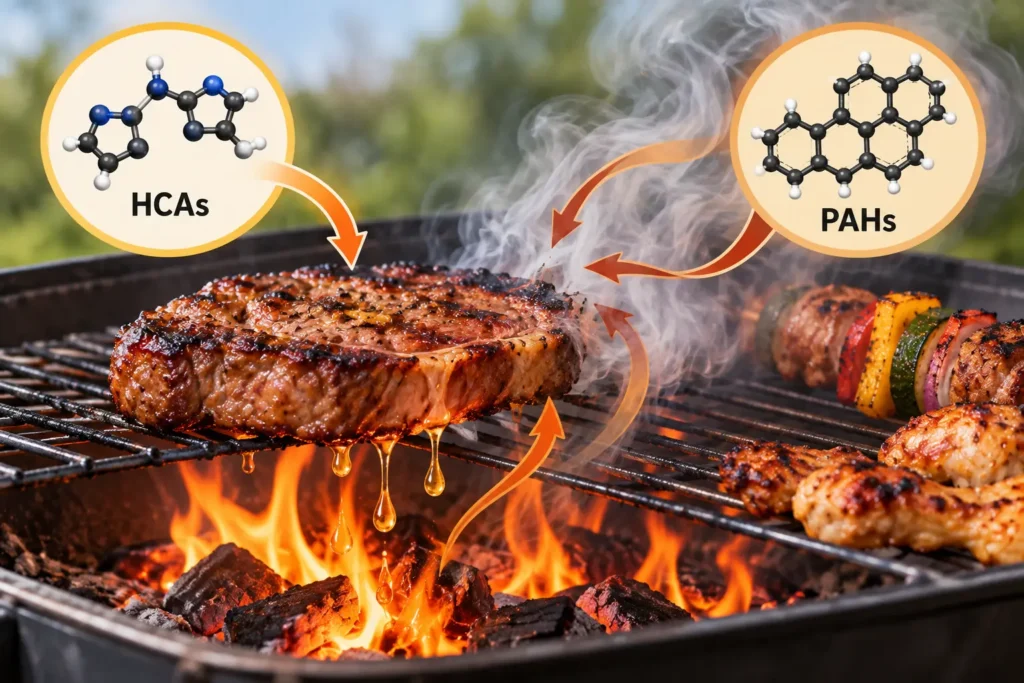
Some HCAs and PAHs have been shown to cause DNA damage in experimental studies. Therefore, regularly eating charred meat or meat cooked at very high temperatures is not an ideal choice for health.
There is more than one mechanism involved
The link between processed meat and cancer cannot be explained by a single substance. Scientists are studying a combination of factors, ranging from heme iron and N-nitroso compounds to substances formed during high-temperature cooking, as well as the effects of diet on inflammation and the gut microbiome.
This also does not mean that eating one sausage or a few slices of cold cuts will cause someone to develop cancer. The risk is related to the amount consumed and long-term eating habits.
In 2015, the International Agency for Research on Cancer (IARC), part of the World Health Organization (WHO), classified processed meat as Group 1 – “carcinogenic to humans,” based on convincing evidence of its link to colorectal cancer.
The term “Group 1” can sometimes be misunderstood. It indicates how certain the evidence is that an agent can cause cancer; it does not mean that processed meat is as dangerous as smoking. The increase in risk depends greatly on the level and duration of exposure.
According to an analysis published by IARC, every 50 g of processed meat consumed daily is associated with an approximately 18% increase in the relative risk of colorectal cancer.
Do we need to stop eating it completely?
There is no need to panic or eliminate all types of meat from the diet. What is more important is to limit processed meat and avoid making sausages, bacon, ham, or Chinese sausages foods that are eaten regularly.
They can partly be replaced with fish, poultry, eggs, beans, and other sources of protein, while increasing the amount of vegetables, fruits, and fiber-rich foods in the diet.
Cancer is the result of many factors acting over a long period of time, including age, genetics, smoking, alcohol consumption, certain infections, and lifestyle. Therefore, no single food determines whether or not a person will develop cancer.
But among the factors we can control, eating less processed meat is a relatively simple change that may help reduce the risk in the long term.
Source: Vnexpress.net
WORD BANK:
sausage /ˈsɑː.sɪdʒ/ (n): xúc xích
cold cut /ˈkoʊld ˌkʌt/ (n): thịt nguội, thịt thái lát ăn lạnh
bacon /ˈbeɪ.kən/ (n): thịt xông khói
ham /hæm/ (n): giăm bông
Chinese sausage /ˌtʃaɪ.niːz ˈsɑː.sɪdʒ/ (n): lạp xưởng
go through sth /ɡoʊ ˈθruː/ [B2] (phr v): trải qua cái gì
salting /ˈsɑːl.tɪŋ/ (n): quá trình ướp muối
smoking /ˈsmoʊ.kɪŋ/ (n): quá trình hun khói
fermentation /ˌfɝː.mənˈteɪ.ʃən/ (n): quá trình lên men
preservative /prɪˈzɝː.və.t̬ɪv/ (n): chất bảo quản
shelf life /ˈʃelf ˌlaɪf/ (n): thời hạn sử dụng, thời gian bảo quản
processed meat /ˈprɑː.sest ˌmiːt/ (n): thịt chế biến sẵn
lie in sth /ˈlaɪ/ (phr v): nằm ở, bắt nguồn từ cái gì
substance /ˈsʌb.stəns/ [B2] (n): chất
nitrate /ˈnaɪ.treɪt/ (n): nitrat
nitrite /ˈnaɪ.traɪt/ (n): nitrit
bacterium (plural: bacteria) /bækˈtɪr.i.əm/ (n): vi khuẩn
characteristic /ˌker.ək.təˈrɪs.tɪk/ [B2] (adj): đặc trưng, đặc điểm
carcinogen /kɑːrˈsɪn.ə.dʒən/ (n): chất gây ung thư
N-nitroso compound /ˌen naɪˈtroʊ.soʊ ˈkɑːm.paʊnd/ (n): hợp chất N-nitroso
carcinogenic property /ˌkɑːr.sən.oʊˈdʒen.ɪk ˈprɑː.pɚ.t̬i/ (n): đặc tính gây ung thư
mechanism /ˈmek.ə.nɪ.zəm/ [B2] (n): cơ chế
colorectal cancer /ˌkoʊ.loʊˈrek.təl ˈkæn.sɚ/ (n): ung thư đại trực tràng
heme iron /ˈhiːm ˌaɪ.ɚn/ (n): sắt heme
lamb /læm/ (n): thịt cừu
digestive tract /daɪˈdʒes.tɪv ˌtrækt/ (n): đường tiêu hóa
oxidative stress /ˈɑːk.sə.deɪ.t̬ɪv ˌstres/ (n): stress oxy hóa
molecule /ˈmɑː.lə.kjuːl/ [B2] (n): phân tử
gut /ɡʌt/ (n): ruột, đường ruột
mutation /mjuːˈteɪ.ʃən/ [C1] (n): đột biến
grill /ɡrɪl/ [B1] (v): nướng
come into direct contact with sth /kʌm ˌɪn.tuː dəˈrekt ˈkɑːn.tækt/ (phr): tiếp xúc trực tiếp với cái gì
heterocyclic amine /ˌhet̬.ɚ.oʊˈsaɪ.klɪk əˈmiːn/ (n): amin dị vòng
polycyclic aromatic hydrocarbon /ˌpɑː.liˈsaɪ.klɪk ˌer.əˈmæt̬.ɪk ˌhaɪ.droʊˈkɑːr.bən/ (n): hydrocarbon thơm đa vòng
drip onto sth /drɪp/ (v): nhỏ, nhỏ giọt xuống cái gì
settle back onto sth /ˈset̬.əl ˈbæk/ (phr v): bám, lắng trở lại trên cái gì
experimental study /ɪkˌsper.əˈmen.t̬əl ˈstʌd.i/ (n): nghiên cứu thực nghiệm
charred /tʃɑːrd/ (adj): cháy xém
combination /ˌkɑːm.bəˈneɪ.ʃən/ [B2] (n): sự kết hợp
inflammation /ˌɪn.fləˈmeɪ.ʃən/ (n): tình trạng viêm, viêm
gut microbiome /ˈɡʌt ˌmaɪ.kroʊˈbaɪ.oʊm/ (n): hệ vi sinh vật đường ruột
convincing evidence /kənˈvɪn.sɪŋ ˈev.ə.dəns/ (n): bằng chứng thuyết phục
agent /ˈeɪ.dʒənt/ [B2] (n): tác nhân
duration /dʊrˈeɪ.ʃən/ [C1] (n): khoảng thời gian, thời gian kéo dài
exposure /ɪkˈspoʊ.ʒɚ/ [C1] (n): sự tiếp xúc, phơi nhiễm
relative /ˈrel.ə.t̬ɪv/ [B2] (adj): tương đối
panic /ˈpæn.ɪk/ [B2] (v): hoảng sợ, hoảng loạn
eliminate /ɪˈlɪm.ə.neɪt/ [C1] (v): loại bỏ
poultry /ˈpoʊl.tri/ (n): thịt gia cầm, gia cầm
fiber-rich /ˈfaɪ.bɚ ˌrɪtʃ/ (adj): giàu chất xơ
genetic /dʒəˈnet̬.ɪk/ [B2] (adj): thuộc di truyền, thuộc gen
determine /dɪˈtɝː.mɪn/ [B2] (v): xác định, quyết định
ỦNG HỘ READ TO LEAD!
Chào bạn! Có thể bạn chưa biết, Read to Lead là một trang giáo dục phi lợi nhuận với mục đích góp phần phát triển cộng đồng người học tiếng Anh tại Việt Nam. Chúng tôi không yêu cầu người đọc phải trả bất kỳ chi phí nào để sử dụng các sản phẩm của mình để mọi người đều có cơ hội học tập tốt hơn. Tuy nhiên, nếu bạn có thể, chúng tôi mong nhận được sự hỗ trợ tài chính từ bạn để duy trì hoạt động của trang và phát triển các sản phẩm mới.
Bạn có thể ủng hộ chúng tôi qua 1 trong 2 cách dưới đây.
– Cách 1: Chuyển tiền qua tài khoản Momo.
Số điện thoại 0947.886.865 (Chủ tài khoản: Nguyễn Tiến Trung)
Nội dung chuyển tiền: Ủng hộ Read to Lead
hoặc
– Cách 2: Chuyển tiền qua tài khoản ngân hàng.
Ngân hàng VIB chi nhánh Hải Phòng
Số tài khoản: 012704060048394 (Chủ tài khoản: Nguyễn Tiến Trung)
Nội dung chuyển tiền: Ủng hộ Read to Lead
Lớp luyện thi IELTS online
Bạn đang có nhu cầu thi chứng chỉ IELTS cho đầu vào đại học, đi du học, xin việc hay xin cư trú và đang phân vân chưa biết học ở đâu?
Nếu bạn đang tìm kiếm dịch vụ luyện thi IELTS online với giáo viên uy tín và chất lượng, cũng như học phí phải chăng, thì lớp học online của thầy Trung (Admin và dịch giả chính của Read to Lead) có thể là một lựa chọn phù hợp dành cho bạn.
Hãy liên hệ (nhắn tin) tới trang Facebook cá nhân của mình (https://www.facebook.com/nguyen.trung.509) để tìm hiểu về lớp học và được tư vấn cũng như được học thử nha!


