


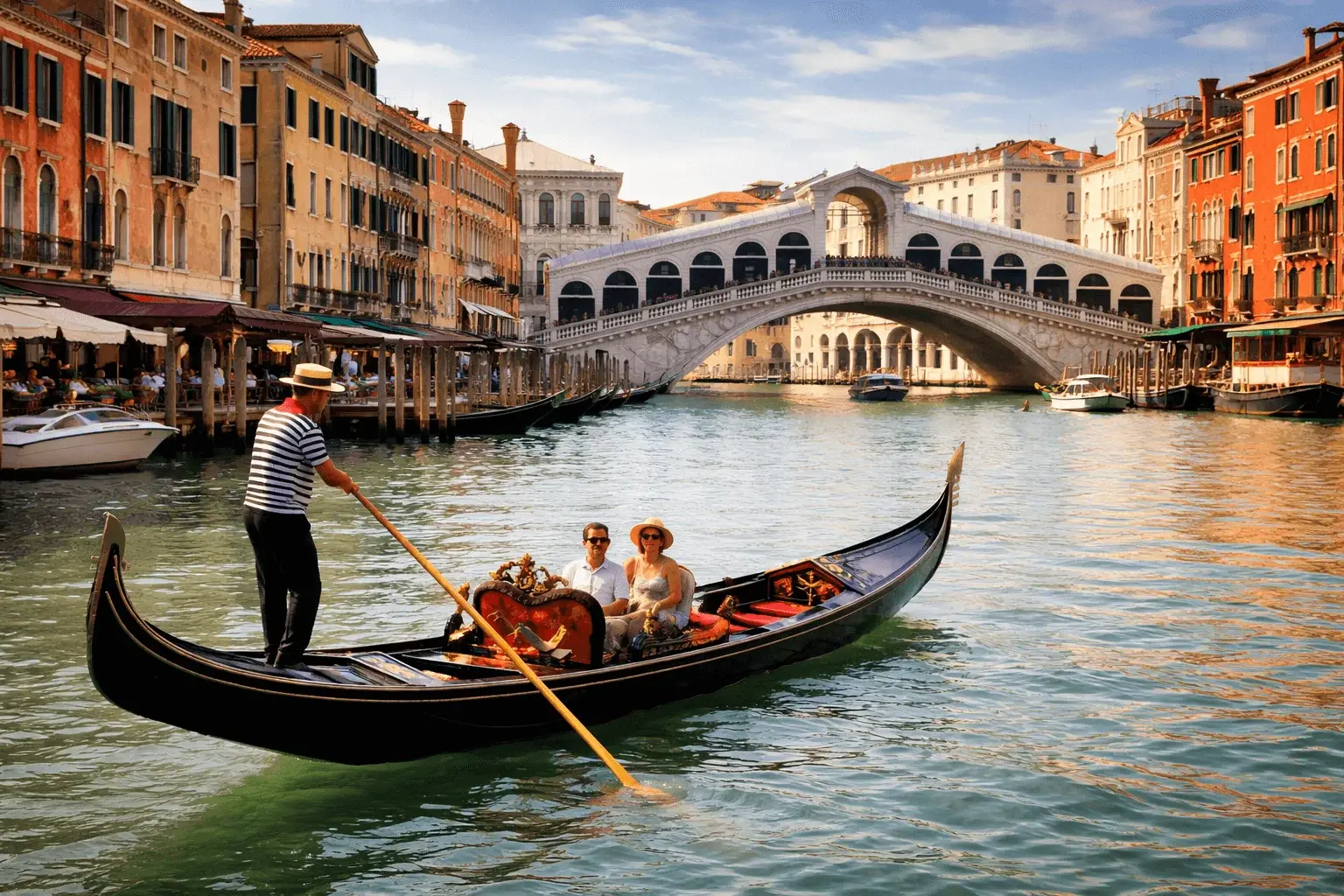
In the late 560s, a Germanic group known as the Lombards was wreaking havoc through northern Italy. To escape the invaders, boatloads of people fled into the Venetian Lagoon, a morass of swampy mudflats and scattered islands. Formed over centuries by the outflow of silt from the Po and Piave Rivers and the counterforce of Adriatic currents, this marshy maze was constantly shifting and disappearing.
These qualities made it both the perfect spot to hide and a very unstable place to live. So the new arrivals set out to tame the lagoon and build the most unlikely of cities from the mud. While some fishermen already inhabited the region in stilted huts, the settlers wanted to build a foundation to support heavier, longer lasting structures.
Little did they know, their work would support Venice to this very day. They drove clusters of 1 to 3-meter-long wooden piles into the ground, in a process that squeezed out groundwater and compacted mud around the piles. This created an oxygen-free environment that protected the wood from insects and fungi. The piles were still vulnerable to minor bacterial damage, but otherwise impervious to rot.
And this sealed system of wood, water, and mud is still supporting Venice 1,500 years later. Wooden beams and stone platforms above the piles provided the bases for buildings. And sometime around 697, the settlers formally declared their new home the Republic of Venice.
Initially, footbridges were built to connect the islands, but these were prone to decay, collapse, and fire. Many, like the famed Rialto Bridge, had to be regularly rebuilt, each time incorporating new materials and techniques to improve their longevity. By the 11th century, the channels between islands had been reinforced into stone-lined canals navigated by slender gondolas.
And unlike the rest of Europe, where nobles typically rode above commoners, the city’s layout necessitated foot travel for all classes. Yet despite this clever engineering, the Republic still had no land for farming, so Venetians were heavily dependent on trade. Fortunately, Venice’s location made it the perfect port city to connect markets from Europe to the Silk Road.
Its canal network allowed boats to dock close to warehouses, and the challenge of navigating its narrow waterways protected the city from outsiders. These advantages helped make Venice a major maritime power, and the 1200s began with their biggest business deal yet.
The Pope brokered an arrangement with Venice’s elected leader, Enrico Dandolo, to produce ships and arms for the Fourth Crusade’s anticipated 33,000 soldiers. Dandolo agreed, investing huge amounts of the republic’s money and resources. But when it was time to set sail, only one-third of the soldiers arrived, with less than half of the promised payment.
Furious, Dandolo redirected the crusading army against Venice’s Christian rivals, including Constantinople. This campaign laid the foundation for Venice’s overseas empire, and over the following centuries, Venetian merchants like Marco Polo ventured as far as China.
During the Renaissance, the republic became a hub of art and intellectual life. Its sail-making looms were repurposed to create vast canvases; its craftsmen pioneered various printing techniques; and the silica-rich sands from the Ticino and Adige rivers fueled extravagant glassworks.
However, in addition to art, silks, and spices, the Venetians also traded enslaved peoples to work in private homes or on ships. Once freed, some stayed in the city, even finding work as gondoliers.
Venice’s dominance over the Mediterranean remained unchallenged until the mid-15th century, when the Ottomans conquered Constantinople. In the following centuries, the Ottomans used their navy to interfere with Venice’s business, all while new transoceanic trade routes excluded Venetians.
The republic soldiered on until French attacks forced it to dissolve in 1797, at which point Venice traded hands between Austria and France several times before finally being ceded to Italy in 1866.
No longer able to compete commercially, Venice was reinvented as a tourist destination. But today, rising sea levels are threatening to sink the so-called “floating city.” In 1900, the then 900-year-old Basilica di San Marco flooded about seven times a year— now it experiences roughly 250 annual floods.
And tourists are perhaps just as dangerous. As millions of annual visitors speed along in motorboats, they erode the muddy barrier protecting Venice’s foundations. Left unaddressed, these modern advances could destroy one of the world’s most remarkable cities.
Source: TED-Ed
WORD BANK:
wreak havoc /riːk ˈhæv.ək/ (v): tàn phá, gây thiệt hại nghiêm trọng
invader /ɪnˈveɪ.dɚ/ [C1] (n): kẻ xâm lược
boatload of sth /ˈboʊt.loʊd/ (n): một lượng lớn cái gì
flee (past: fled) /fliː/ [B2] (v): chạy trốn
lagoon /ləˈɡuːn/ (n): đầm phá
morass /məˈræs/ (n): vùng lầy lội, tình trạng hỗn độn
swampy /ˈswɑːm.pi/ (adj): đầm lầy
mudflat /ˈmʌd.flæt/ (n): bãi bùn
scattered /ˈskæt̬.ɚd/ [B2] (adj): rải rác
the outflow of sth /ˈaʊt.floʊ/ (n): sự chảy ra
silt /sɪlt/ (n): phù sa
counterforce /ˈkaʊn.t̬ɚ.fɔːrs/ (n): lực đối kháng
marshy /ˈmɑːr.ʃi/ (adj): lầy lội, đầm lầy
maze /meɪz/ [B2] (n): mê cung
tame sth /teɪm/ (v): chế ngự, thuần hóa
inhabit /ɪnˈhæb.ɪt/ [C1] (v): cư trú ở
stilted /ˈstɪl.t̬ɪd/ (adj): dựng trên cọc
hut /hʌt/ (n): túp lều
settler /ˈset̬.lɚ/ (n): người định cư
drive sth into the ground /draɪv/ (v): đóng cái gì xuống đất
cluster /ˈklʌs.tɚ/ (n): cụm, nhóm
wooden pile /ˌwʊd.ən ˈpaɪl/ (n): cọc gỗ
squeeze out sth /skwiːz aʊt/ (v): ép ra
compact /kəmˈpækt/ (v): nén chặt
fungi /ˈfʌn.dʒaɪ/ (n): nấm
vulnerable to sth /ˈvʌl.nɚ.ə.bəl/ [B2] (adj): dễ bị ảnh hưởng bởi
impervious to sth /ɪmˈpɝː.vi.əs/ (adj): không bị ảnh hưởng bởi
rot /rɑːt/ (v): mục nát
sealed /siːld/ (adj): được bịt kín
beam /biːm/ (n): xà, dầm
declare sth /dɪˈkler/ [B1] (v): tuyên bố
initially /ɪˈnɪʃ.ə.li/ [B2] (adv): ban đầu
prone to sth /proʊn/ (adj): dễ bị
decay /dɪˈkeɪ/ (v): phân hủy, mục rữa
incorporating /ɪnˈkɔːr.pə.reɪ.t̬ɪŋ/ (v): kết hợp
longevity /lɑːnˈdʒev.ə.t̬i/ (n): tuổi thọ, sự lâu bền
stone-lined /ˌstoʊn ˈlaɪnd/ (adj): được lát đá
canal /kəˈnæl/ (n): kênh đào
slender /ˈslen.dɚ/ (adj): mảnh, thon
noble /ˈnoʊ.bəl/ [B2] (adj): quý tộc
commoner /ˈkɑː.mə.nɚ/ (n): thường dân
layout /ˈleɪ.aʊt/ (n): bố cục
necessitate sth /nəˈses.ə.teɪt/ (v): đòi hỏi, khiến cần thiết
dock /dɑːk/ (v): cập bến
navigate sth /ˈnæv.ə.ɡeɪt/ [B2] (v): điều hướng, đi qua
maritime power /ˈmer.ə.taɪm ˌpaʊ.ɚ/ (n): cường quốc hàng hải
broker /ˈbroʊ.kɚ/ (v): dàn xếp, môi giới
crusade /kruːˈseɪd/ (n): cuộc thập tự chinh
furious /ˈfjʊr.i.əs/ [B2] (adj): dữ dội, cuồng nộ
overseas /ˌoʊ.vɚˈsiːz/ [B1] (adj/adv): ở nước ngoài
empire /ˈem.paɪɚ/ [B2] (n): đế chế
merchant /ˈmɝː.tʃənt/ (n): thương nhân
venture somewhere /ˈven.tʃɚ/ (v): mạo hiểm đi đâu
the Renaissance /ˈren.ə.sɑːns/ (n): thời kỳ Phục Hưng
hub /hʌb/ (n): trung tâm
intellectual life /ˌɪn.t̬əlˈek.tʃu.əl laɪf/ (n): đời sống trí thức
loom /luːm/ (n): khung dệt
canvas /ˈkæn.vəs/ (n): vải canvas
fuel sth /ˈfjuː.əl/ [B2] (v): thúc đẩy
extravagant /ɪkˈstræv.ə.ɡənt/ (adj): xa hoa
glasswork /ˈɡlæs.wɝːk/ (n): đồ thủy tinh
spice /spaɪs/ (n): gia vị
enslave /ɪnˈsleɪv/ (v): biến thành nô lệ
dominance /ˈdɑː.mə.nəns/ (n): sự thống trị
conquer sth /ˈkɑːŋ.kɚ/ [B2] (v): chinh phục
interfere with sth /ˌɪn.t̬ɚˈfɪr wɪð/ [B2] (v): can thiệp vào
transoceanic /ˌtrænzˌoʊ.ʃiˈæn.ɪk/ (adj): xuyên đại dương
soldier on /ˈsoʊl.dʒɚ ɑːn/ (v): tiếp tục kiên trì
dissolve /dɪˈzɑːlv/ [B2] (v): giải thể, tan rã
trade hands /treɪd hændz/ (v): đổi chủ
cede sth to sb /siːd/ (v): nhượng cái gì cho ai
the so-called /ˌsoʊ ˈkɔːld/ (adj): cái gọi là
basilica /bəˈsɪl.ɪ.kə/ (n): thánh đường
roughly /ˈrʌf.li/ [B1] (adv): khoảng, xấp xỉ
erode /ɪˈroʊd/ (v): xói mòn
leave sth unaddressed /ʌn.əˈdrest/ (v): để cái gì không được giải quyết
ỦNG HỘ READ TO LEAD!
Chào bạn! Có thể bạn chưa biết, Read to Lead là một trang giáo dục phi lợi nhuận với mục đích góp phần phát triển cộng đồng người học tiếng Anh tại Việt Nam. Chúng tôi không yêu cầu người đọc phải trả bất kỳ chi phí nào để sử dụng các sản phẩm của mình để mọi người đều có cơ hội học tập tốt hơn. Tuy nhiên, nếu bạn có thể, chúng tôi mong nhận được sự hỗ trợ tài chính từ bạn để duy trì hoạt động của trang và phát triển các sản phẩm mới.
Bạn có thể ủng hộ chúng tôi qua 1 trong 2 cách dưới đây.
– Cách 1: Chuyển tiền qua tài khoản Momo.
Số điện thoại 0947.886.865 (Chủ tài khoản: Nguyễn Tiến Trung)
Nội dung chuyển tiền: Ủng hộ Read to Lead
hoặc
– Cách 2: Chuyển tiền qua tài khoản ngân hàng.
Ngân hàng VIB chi nhánh Hải Phòng
Số tài khoản: 012704060048394 (Chủ tài khoản: Nguyễn Tiến Trung)
Nội dung chuyển tiền: Ủng hộ Read to Lead
Lớp luyện thi IELTS online
Bạn đang có nhu cầu thi chứng chỉ IELTS cho đầu vào đại học, đi du học, xin việc hay xin cư trú và đang phân vân chưa biết học ở đâu?
Nếu bạn đang tìm kiếm dịch vụ luyện thi IELTS online với giáo viên uy tín và chất lượng, cũng như học phí phải chăng, thì thầy Trung và Cô Thủy (Admin và dịch giả chính của Read to Lead) có thể là một lựa chọn phù hợp dành cho bạn.
Hãy liên hệ (nhắn tin) tới trang Facebook cá nhân của mình (https://www.facebook.com/nguyen.trung.509) để tìm hiểu về lớp học và được tư vấn cũng như được học thử nha!


