


[Reading level: B2 – Upper Intermediate]
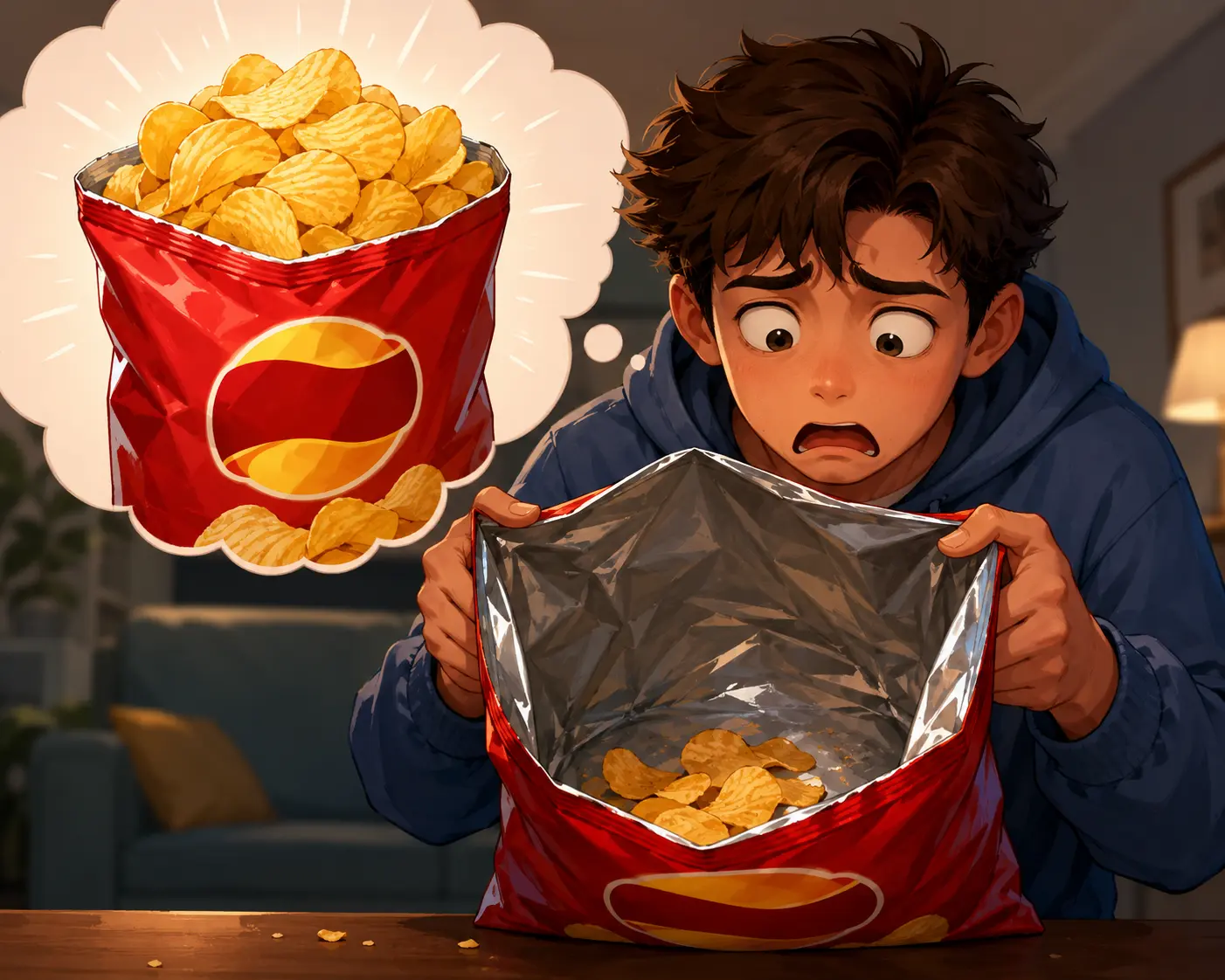
Perhaps all of us have experienced this feeling at least once in our lives: holding a puffed-up bag of chips in our hands, feeling excited to open it, only to tear the package open and immediately feel disappointed because inside there are just a few lonely chips sitting in a huge empty space. Many people even joke that snack companies are “selling air” instead of selling chips.
But in reality, that empty space is far from meaningless. Behind a puffy bag of chips lies an entire story involving food preservation science, transportation engineering and even highly sophisticated psychological marketing strategies.
The first thing we need to understand is that what makes the bag puff up is not ordinary air. If manufacturers simply pumped normal outside air into the bag, the chips would spoil very quickly after a short time.
The reason lies in oxygen. The air we breathe every day contains about 21% oxygen, and oxygen is actually the “enemy” of fried foods. When oxygen comes into contact with the oils and fats in chips, it causes oxidation, making the oil deteriorate, creating an unpleasant rancid smell, and turning the chips soft, stale, and no longer crispy.
That is why manufacturers use nitrogen gas instead of normal air. Nitrogen is an inert gas: colorless, odorless, tasteless, and almost completely nonreactive with food. By pumping nitrogen into the bag, manufacturers remove most of the oxygen and create an almost perfect preservation environment.
As a result, even if a bag of chips sits in a supermarket for months, when opened, consumers can still experience the smell, crispiness, and flavor that are close to freshly produced chips.
Nitrogen can be imagined as an invisible “protective barrier.” It helps prevent bacteria, mold, and chemical reactions from damaging the food. So the next time you open a bag of chips and feel a burst of gas escaping, perhaps we should thank it rather than complain it.
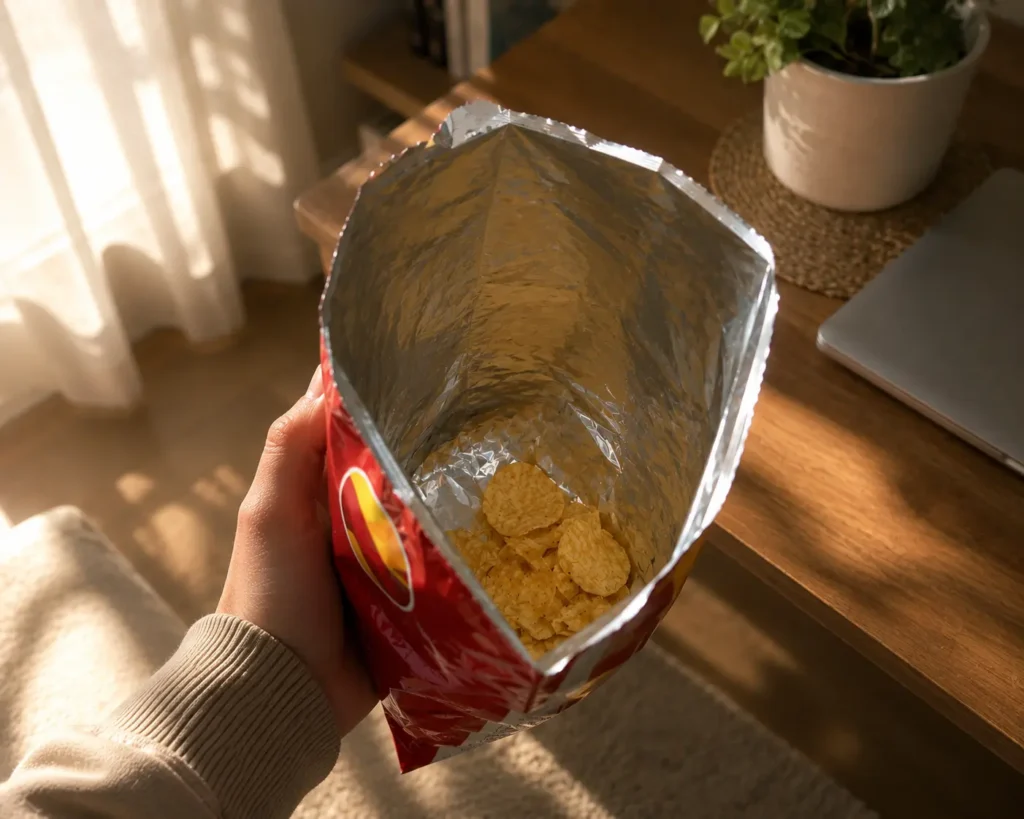
However, pumping nitrogen into the bag is not only for preserving the chips. It also plays an extremely important role in protecting the fragile chips from being crushed.
Just imagine the journey of a bag of snacks: it gets loaded onto trucks, shaken for hundreds of kilometers over potholes and rough roads, stacked under dozens of boxes in warehouses, and then repeatedly picked up and put down on supermarket shelves.
If the bag were tightly pressed against the chips without a layer of gas inside, there is a very high chance that by the time it reached consumers, everything inside would have turned into crumbs.
At this point, the nitrogen gas functions very much like an airbag in a car. It creates a cushioning layer that absorbs impacts and helps protect the delicate chips throughout transportation.
In other words, the empty space that many people think is “wasteful” is actually the very thing allows us to enjoy a bag of chips with the contents still intact.
Of course, food preservation science is not the only reason why bags of chips always appear larger than the amount of chips inside. Marketing also plays an extremely important role.
Humans naturally tend to be attracted to things that are large, full, and visually striking. When standing in front of a shelf filled with dozens of products, our eyes are usually drawn toward snack bags that are bigger, puffier, and more eye-catching.
A larger package gives manufacturers more space to print appealing product images, bold logos, and attractive colors. If the packaging were made too small and fit tightly around the chips inside, the product might look much less impressive when placed next to competitors.
In short, the “puffiness” of chip bags is not a simple trick as many people think. It is a combination of food preservation science, transportation engineering, manufacturing optimization, and the art of marketing.
WORD BANK:
puffed-up /ˌpʌft ˈʌp/ (adj): phồng lên
lonely /ˈloʊn.li/ [A2] (adj): lạc lõng, cô đơn
far from + Adj /fɑːr frəm/ (adj): không hề
puffy /ˈpʌf.i/ (adj): phồng, căng phồng
food preservation /fuːd ˌprez.ɚˈveɪ.ʃən/ (n): sự bảo quản thực phẩm
spoil /spɔɪl/ [B1] (v): làm hỏng; bị hỏng
come into contact with sth /kʌm ˈɪn.tuː ˈkɑːn.tækt wɪð/ (v): tiếp xúc với cái gì
oxidation /ˌɑːk.sɪˈdeɪ.ʃən/ (n): sự oxy hóa
deteriorate /dɪˈtɪr.i.ə.reɪt/ [C1] (v): xuống cấp, suy giảm, hư hỏng
unpleasant /ʌnˈplez.ənt/ [B1] (adj): khó chịu, không dễ chịu
rancid /ˈræn.sɪd/ (adj): bị ôi thiu (dầu mỡ)
stale /steɪl/ (adj): ỉu, không còn tươi mới
crispy /ˈkrɪs.pi/ [B1] (adj): giòn rụm
crispiness /ˈkrɪs.pi.nəs/ (n): độ giòn
inert /ɪˈnɝːt/ (adj): trơ, không phản ứng
odorless /ˈoʊ.dɚ.ləs/ (adj): không mùi
freshly /ˈfreʃ.li/ [B1] (adv): một cách tươi mới, vừa mới
mold /moʊld/ (n): nấm mốc
a burst of gas /ə bɝːst əv ɡæs/ (n): luồng khí phụt ra
fragile /ˈfrædʒ.əl/ [B2] (adj): dễ vỡ, mong manh
crush /krʌʃ/ [B2] (v): nghiền nát, làm bẹp
pothole /ˈpɑːt.hoʊl/ (n): ổ gà
rough /rʌf/ [B1] (adj): gồ ghề, không bằng phẳng
stack /stæk/ [B2] (v): chất đống, xếp chồng
crumb /krʌm/ (n): vụn bánh, mảnh vụn
cushion /ˈkʊʃ.ən/ (v, n): đệm đỡ; làm giảm tác động
absorb sth /əbˈzɔːrb/ [B2] (v): hấp thụ cái gì
delicate /ˈdel.ə.kət/ [B2] (adj): mỏng manh, dễ hư hỏng
the very thing that … /ðə ˈver.i θɪŋ ðæt/ : chính là thứ mà …
content /ˈkɑːn.tent/ [B2] (n): nội dung; phần bên trong
intact /ɪnˈtækt/ [C1] (adj): nguyên vẹn
visually striking /ˈvɪʒ.u.ə.li ˈstraɪ.kɪŋ/ (adj): bắt mắt, nổi bật về mặt thị giác
appealing /əˈpiː.lɪŋ/ [B2] (adj): hấp dẫn
bold /boʊld/ [B2] (adj): nổi bật, ấn tượng
trick /trɪk/ [B1] (n): mánh khóe, trò lừa
ỦNG HỘ READ TO LEAD!
Chào bạn! Có thể bạn chưa biết, Read to Lead là một trang giáo dục phi lợi nhuận với mục đích góp phần phát triển cộng đồng người học tiếng Anh tại Việt Nam. Chúng tôi không yêu cầu người đọc phải trả bất kỳ chi phí nào để sử dụng các sản phẩm của mình để mọi người đều có cơ hội học tập tốt hơn. Tuy nhiên, nếu bạn có thể, chúng tôi mong nhận được sự hỗ trợ tài chính từ bạn để duy trì hoạt động của trang và phát triển các sản phẩm mới.
Bạn có thể ủng hộ chúng tôi qua 1 trong 2 cách dưới đây.
– Cách 1: Chuyển tiền qua tài khoản Momo.
Số điện thoại 0947.886.865 (Chủ tài khoản: Nguyễn Tiến Trung)
Nội dung chuyển tiền: Ủng hộ Read to Lead
hoặc
– Cách 2: Chuyển tiền qua tài khoản ngân hàng.
Ngân hàng VIB chi nhánh Hải Phòng
Số tài khoản: 012704060048394 (Chủ tài khoản: Nguyễn Tiến Trung)
Nội dung chuyển tiền: Ủng hộ Read to Lead
Lớp luyện thi IELTS online
Bạn đang có nhu cầu thi chứng chỉ IELTS cho đầu vào đại học, đi du học, xin việc hay xin cư trú và đang phân vân chưa biết học ở đâu?
Nếu bạn đang tìm kiếm dịch vụ luyện thi IELTS online với giáo viên uy tín và chất lượng, cũng như học phí phải chăng, thì thầy Trung và Cô Thủy (Admin và dịch giả chính của Read to Lead) có thể là một lựa chọn phù hợp dành cho bạn.
Hãy liên hệ (nhắn tin) tới trang Facebook cá nhân của mình (https://www.facebook.com/nguyen.trung.509) để tìm hiểu về lớp học và được tư vấn cũng như được học thử nha!


