



[Reading level: B2 – Upper Intermediate]
Tires are made primarily from natural and synthetic rubber. Interestingly, pure natural rubber is usually off-white or pale yellow, rather than black. In fact, the earliest tires were once white or off-white, quite different from the familiar black tires we see today.
In the late 19th and early 20th centuries, when the automobile industry was still developing, many tires were made from light-colored rubber. However, these tires had one major disadvantage: they wore out quickly, deteriorated easily when exposed to sunlight, and were not durable enough to meet growing demands.

To address this problem, manufacturers began adding a substance called carbon black to rubber compounds. This is a form of carbon made up of extremely small particles, produced mainly through the incomplete combustion or thermal decomposition of carbon-containing materials.
Carbon black makes tires more durable, improves their resistance to wear, and helps prevent cracks from forming and spreading. It also helps protect rubber from the effects of ultraviolet radiation from sunlight.
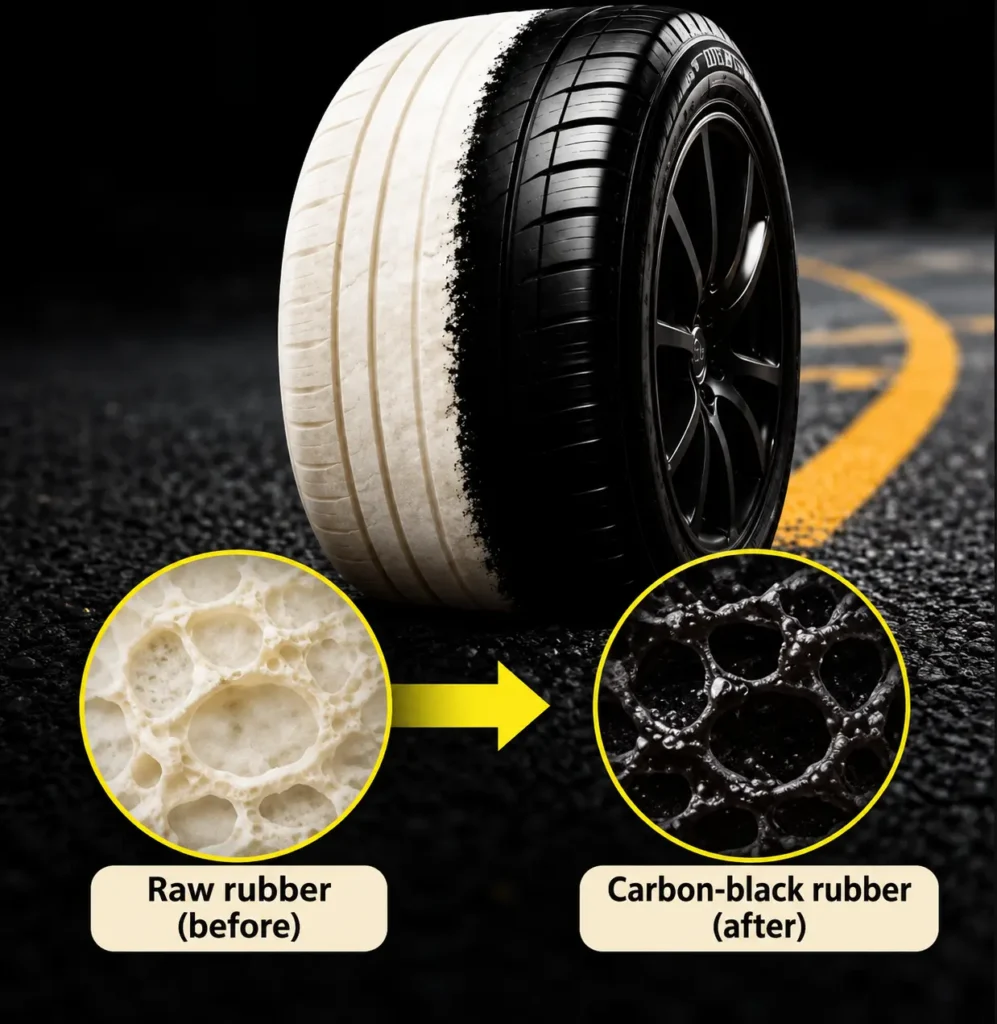
Thanks to these properties, tires can withstand harsh operating conditions, from constant friction with the road surface to repeated deformation as vehicles move. The use of carbon black became an important breakthrough in the history of tire manufacturing.
Today, some types of tires also use silica (silicon dioxide) to improve properties such as road grip and rolling resistance. However, carbon black remains an important ingredient in many tire rubber formulas, allowing black to remain the dominant color.
In fact, tires can be manufactured in other colors, but black remains the most common because of the technical benefits of carbon black, while also helping to hide dirt and signs of wear.
Thus, the black color of tires is not merely an aesthetic choice. It is the result of more than a century of technological improvements aimed at producing durable, safe tires suitable for the operating conditions of modern vehicles.
WORD BANK:
synthetic /sɪnˈθet̬.ɪk/ [C1] (adj): tổng hợp, nhân tạo
rubber /ˈrʌb.ɚ/ (n): cao su
off-white /ˌɑːfˈwaɪt/ (adj): màu trắng ngà
pale yellow /peɪl ˈjel.oʊ/ (adj): màu vàng nhạt
wear sth out /wer/ [B2] (phr v): làm cái gì bị mòn, hao mòn (quá khứ: wore out)
wear /wer/ (n): sự mài mòn, hao mòn
deteriorate /dɪˈtɪr.i.ə.reɪt/ [C1] (v): xuống cấp, hư hỏng dần
be exposed to sth /ɪkˈspoʊzd/ [B2] (v): tiếp xúc với, chịu tác động của cái gì
durable /ˈdʊr.ə.bəl/ [C2] (adj): bền, bền bỉ
growing /ˈɡroʊ.ɪŋ/ (adj): ngày càng tăng, ngày càng lớn
address sth /əˈdres/ [B2] (v): giải quyết, xử lý vấn đề gì
substance /ˈsʌb.stəns/ [B2] (n): chất, vật chất
carbon black /ˈkɑːr.bən blæk/ (n): muội than
compound /ˈkɑːm.paʊnd/ [B2] (n): hợp chất
particle /ˈpɑːr.t̬ɪ.kəl/ [C1] (n): hạt, phần tử nhỏ
incomplete combustion /ˌɪn.kəmˈpliːt kəmˈbʌs.tʃən/ (n): sự đốt cháy không hoàn toàn
thermal decomposition /ˈθɝː.məl ˌdiː.kɑːm.pəˈzɪʃ.ən/ (n): sự phân hủy nhiệt
resistance to sth /rɪˈzɪs.təns/ [B2] (n): khả năng chống chịu, sự kháng lại cái gì
crack /kræk/ [B2] (n): vết nứt
ultraviolet radiation /ˌʌl.trəˈvaɪə.lət ˌreɪ.diˈeɪ.ʃən/ (n): bức xạ tia cực tím
property /ˈprɑː.pɚ.t̬i/ [B2] (n): đặc tính, tính chất
withstand sth /wɪðˈstænd/ [C2] (v): chịu đựng, chống chịu cái gì
harsh /hɑːrʃ/ [C1] (adj): khắc nghiệt, khắc khổ
silica (silicon dioxide) /ˈsɪl.ɪ.kə (ˈsɪl.ɪ.kən daɪˈɑːk.saɪd)/ (n): silica (silic dioxide)
road grip /roʊd ɡrɪp/ (n): độ bám đường
rolling resistance /ˈroʊ.lɪŋ rɪˈzɪs.təns/ (n): lực cản lăn
dominant /ˈdɑː.mə.nənt/ [B2] (adj): chiếm ưu thế, chủ đạo
merely /ˈmɪr.li/ [C1] (adv): chỉ đơn thuần, chỉ là
aesthetic /esˈθet̬.ɪk/ [C1] (adj): thuộc về thẩm mỹ
be aimed at doing sth /eɪmd/ [B2] (v): nhằm mục đích làm gì
ỦNG HỘ READ TO LEAD!
Chào bạn! Có thể bạn chưa biết, Read to Lead là một trang giáo dục phi lợi nhuận với mục đích góp phần phát triển cộng đồng người học tiếng Anh tại Việt Nam. Chúng tôi không yêu cầu người đọc phải trả bất kỳ chi phí nào để sử dụng các sản phẩm của mình để mọi người đều có cơ hội học tập tốt hơn. Tuy nhiên, nếu bạn có thể, chúng tôi mong nhận được sự hỗ trợ tài chính từ bạn để duy trì hoạt động của trang và phát triển các sản phẩm mới.
Bạn có thể ủng hộ chúng tôi qua 1 trong 2 cách dưới đây.
– Cách 1: Chuyển tiền qua tài khoản Momo.
Số điện thoại 0947.886.865 (Chủ tài khoản: Nguyễn Tiến Trung)
Nội dung chuyển tiền: Ủng hộ Read to Lead
hoặc
– Cách 2: Chuyển tiền qua tài khoản ngân hàng.
Ngân hàng VIB chi nhánh Hải Phòng
Số tài khoản: 012704060048394 (Chủ tài khoản: Nguyễn Tiến Trung)
Nội dung chuyển tiền: Ủng hộ Read to Lead
Lớp luyện thi IELTS online
Bạn đang có nhu cầu thi chứng chỉ IELTS cho đầu vào đại học, đi du học, xin việc hay xin cư trú và đang phân vân chưa biết học ở đâu?
Nếu bạn đang tìm kiếm dịch vụ luyện thi IELTS online với giáo viên uy tín và chất lượng, cũng như học phí phải chăng, thì lớp học online của thầy Trung (Admin và dịch giả chính của Read to Lead) có thể là một lựa chọn phù hợp dành cho bạn.
Hãy liên hệ (nhắn tin) tới trang Facebook cá nhân của mình (https://www.facebook.com/nguyen.trung.509) để tìm hiểu về lớp học và được tư vấn cũng như được học thử nha!


