


[Reading level: C1 – Advanced]
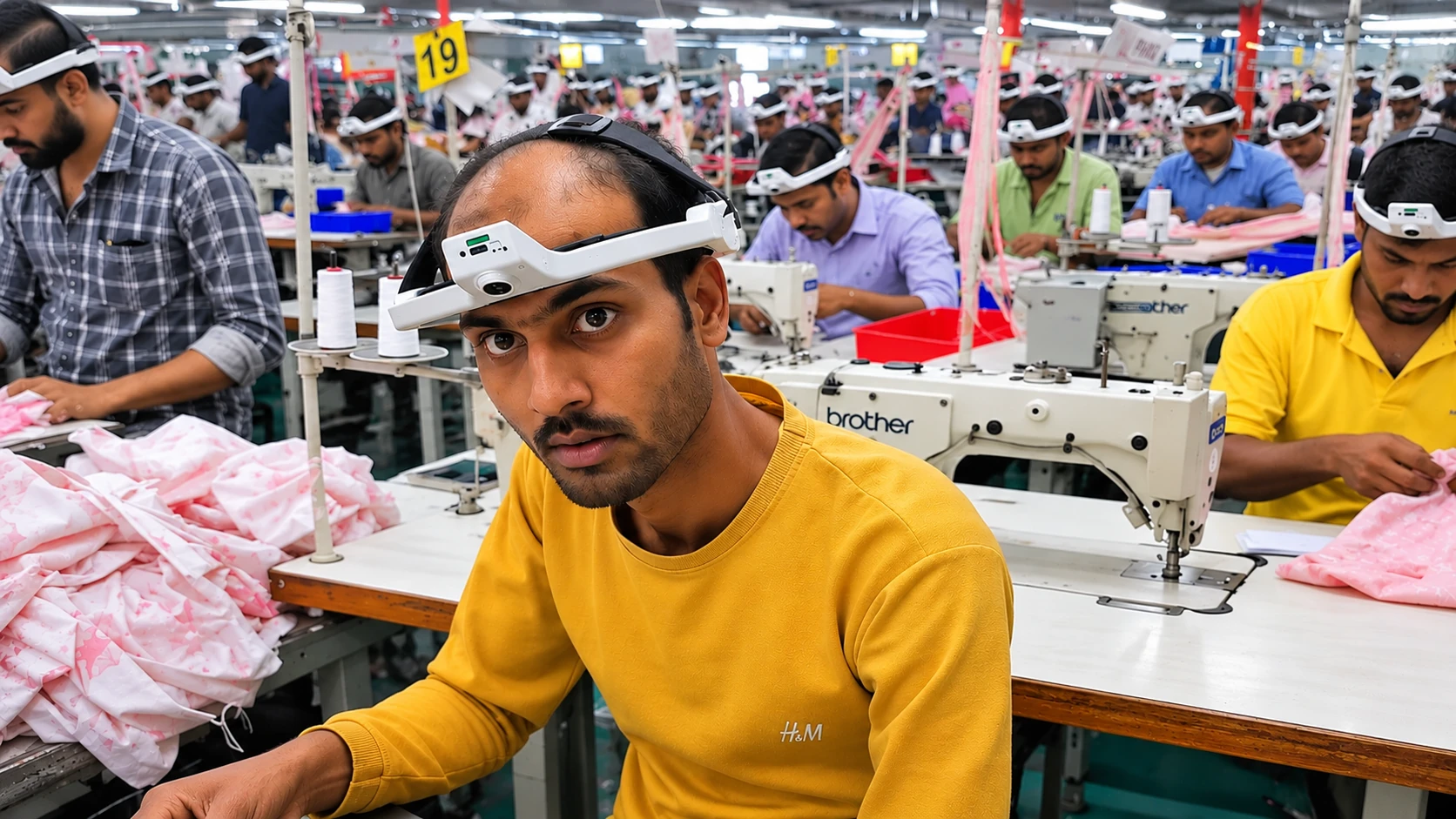
At many factories and small businesses across India, thousands of workers are wearing small cameras mounted on their heads for hours while working. From sewing, folding clothes, and ironing to welding metal, every movement of their hands is recorded. These videos do not simply document their work; they are also used to train artificial intelligence (AI) and robots to perform those very same tasks.
According to a report on this industry, more than 20,000 workers in India are participating in this type of data collection. In return, they are paid an additional 500 to 1,000 rupees per day on top of their regular wages. For low-income workers, this is a significant amount of money and an opportunity to improve their immediate living conditions.
However, behind this additional income lies a troubling paradox: workers are being paid to help develop machines that may eventually replace them.
For robots to perform seemingly simple tasks such as folding clothes, handling tools, or packaging products, developers must help them understand how humans carry out these actions.
For example, when a worker folds a shirt, they must identify its position, move their hands to the right places, adjust their grip, lift the edges of the fabric, and fold it in a particular sequence. Humans perform these movements almost automatically, thanks to experience accumulated over many years. For robots, however, these are skills that must be learned.
The cameras mounted on workers’ heads record the entire process from the worker’s perspective. The videos are then checked, processed, and sold to technology companies or robotics laboratories. Data on arm and wrist movements, gripping techniques, and the sequence of actions is analyzed to support the training of AI systems.
In other words, skills that workers have spent years mastering are being converted into data so that machines can learn to imitate them.
India has become an attractive location for this activity thanks to its large workforce and the vast number of jobs involving manual labor. For AI companies, this is a valuable source of data that helps them develop increasingly flexible robots capable of performing a wider range of tasks.
For workers, however, the immediate benefits may come with long-term risks. Once robots become capable of performing similar tasks at a consistent speed and a reasonable cost, businesses may reduce their demand for human labor in certain jobs.
What is even more worrying is that even if workers are aware of these risks, many may have little choice. For those who must pay for food, housing, and family expenses on meager wages, the additional income they can earn today may matter more than the possibility of losing their jobs at some unknown point in the future.
Refusing to participate means giving up an opportunity to earn extra money, while their refusal is unlikely to prevent technology companies from continuing to collect data from other workers.
Of course, robots cannot immediately replace humans in every job. Observing an action through a video and successfully performing that action in a real-world environment are still two different challenges. However, as technology continues to advance, the risk of automation replacing some manual workers cannot be overlooked.
The situation in India reveals a troubling downside of the AI revolution. While technology companies gain valuable data to develop increasingly intelligent machines, the workers who directly generate that data may receive only a small payment, along with uncertainty about their professional futures.
Ironically, a worker may spend an entire day recording the skills they rely on to make a living, only for those same skills to one day be performed by a machine that needs no wages, no rest, and never asks for a pay raise.
WORD BANK:
mounted /ˈmaʊn.t̬ɪd/ (adj): được gắn, được lắp đặt
sew /soʊ/ (v): may, khâu
fold /foʊld/ (v): gấp, gập
iron /ˈaɪ.ɚn/ (v): là, ủi (quần áo)
weld /weld/ (v): hàn (kim loại)
in return /ɪn rɪˈtɝːn/ (adv): đổi lại
on top of sth /ɑːn ˈtɑːp/ (prep): ngoài cái gì ra, thêm vào cái gì
low-income /ˌloʊ ˈɪn.kʌm/ (adj): có thu nhập thấp
immediate /ɪˈmiː.di.ət/ (adj): trước mắt, tức thời
behind sth lies sth /bɪˈhaɪnd/ (structure): đằng sau cái gì ẩn chứa điều gì
paradox /ˈper.ə.dɑːks/ [C2] (n): nghịch lý
a troubling paradox /ˈtrʌb.lɪŋ ˈper.ə.dɑːks/ (n): một nghịch lý đáng lo ngại
seemingly /ˈsiː.mɪŋ.li/ [C1] (adv): có vẻ như, tưởng chừng như
carry out sth /ˈker.i aʊt/ [B2] (phr v): thực hiện, tiến hành cái gì
adjust sth /əˈdʒʌst/ [B2] (v): điều chỉnh cái gì
grip /ɡrɪp/ (n): lực nắm, cách cầm nắm
edge /edʒ/ (n): mép, cạnh, rìa
sequence /ˈsiː.kwəns/ [B2] (n): trình tự, chuỗi
in a particular sequence /ɪn ə pɚˈtɪk.jə.lɚ ˈsiː.kwəns/ (phr): theo một trình tự nhất định
accumulate /əˈkjuː.mjə.leɪt/ [C1] (v): tích lũy
entire /ɪnˈtaɪr/ [B2] (adj): toàn bộ
perspective /pɚˈspek.tɪv/ [B2] (n): góc nhìn, quan điểm
robotics /roʊˈbɑː.t̬ɪks/ (n): ngành robot học, công nghệ robot
laboratory /ˈlæb.rə.tɔːr.i/ (n): phòng thí nghiệm
wrist /rɪst/ (n): cổ tay
master /ˈmæs.tɚ/ (v): thành thạo, làm chủ (một kỹ năng)
convert sth into sth /kənˈvɝːt/ [B2] (v): chuyển đổi cái gì thành cái gì
imitate /ˈɪm.ə.teɪt/ [C1] (v): bắt chước, mô phỏng
manual labor /ˈmæn.ju.əl ˈleɪ.bɚ/ (n): lao động chân tay
increasingly /ɪnˈkriː.sɪŋ.li/ [B2] (adv): ngày càng
flexible /ˈflek.sə.bəl/ [B2] (adj): linh hoạt
a wider range of sth /ə ˈwaɪ.dɚ reɪndʒ/ (n phr): phạm vi rộng hơn, nhiều loại cái gì hơn
consistent /kənˈsɪs.tənt/ [B2] (adj): ổn định, nhất quán
meager /ˈmiː.ɡɚ/ (adj): ít ỏi, đạm bạc
refusal /rɪˈfjuː.zəl/ [C1] (n): sự từ chối
advance /ədˈvæns/ [B2] (v): tiến bộ, phát triển
overlook /ˌoʊ.vɚˈlʊk/ [C1] (v): bỏ qua, không chú ý đến
a troubling downside /ə ˈtrʌb.lɪŋ ˈdaʊn.saɪd/ (n): một mặt trái đáng lo ngại
revolution /ˌrev.əˈluː.ʃən/ [B2] (n): cuộc cách mạng
uncertainty /ʌnˈsɝː.tən.ti/ [B2] (n): sự không chắc chắn, tình trạng bất định
ironically /aɪˈrɑː.nɪ.kəl.i/ (adv): trớ trêu thay, thật mỉa mai
ask for a pay raise (v phr): yêu cầu tăng lương
ỦNG HỘ READ TO LEAD!
Chào bạn! Có thể bạn chưa biết, Read to Lead là một trang giáo dục phi lợi nhuận với mục đích góp phần phát triển cộng đồng người học tiếng Anh tại Việt Nam. Chúng tôi không yêu cầu người đọc phải trả bất kỳ chi phí nào để sử dụng các sản phẩm của mình để mọi người đều có cơ hội học tập tốt hơn. Tuy nhiên, nếu bạn có thể, chúng tôi mong nhận được sự hỗ trợ tài chính từ bạn để duy trì hoạt động của trang và phát triển các sản phẩm mới.
Bạn có thể ủng hộ chúng tôi qua 1 trong 2 cách dưới đây.
– Cách 1: Chuyển tiền qua tài khoản Momo.
Số điện thoại 0947.886.865 (Chủ tài khoản: Nguyễn Tiến Trung)
Nội dung chuyển tiền: Ủng hộ Read to Lead
hoặc
– Cách 2: Chuyển tiền qua tài khoản ngân hàng.
Ngân hàng VIB chi nhánh Hải Phòng
Số tài khoản: 012704060048394 (Chủ tài khoản: Nguyễn Tiến Trung)
Nội dung chuyển tiền: Ủng hộ Read to Lead
Lớp luyện thi IELTS online
Bạn đang có nhu cầu thi chứng chỉ IELTS cho đầu vào đại học, đi du học, xin việc hay xin cư trú và đang phân vân chưa biết học ở đâu?
Nếu bạn đang tìm kiếm dịch vụ luyện thi IELTS online với giáo viên uy tín và chất lượng, cũng như học phí phải chăng, thì lớp học online của thầy Trung (Admin và dịch giả chính của Read to Lead) có thể là một lựa chọn phù hợp dành cho bạn.
Hãy liên hệ (nhắn tin) tới trang Facebook cá nhân của mình (https://www.facebook.com/nguyen.trung.509) để tìm hiểu về lớp học và được tư vấn cũng như được học thử nha!


