


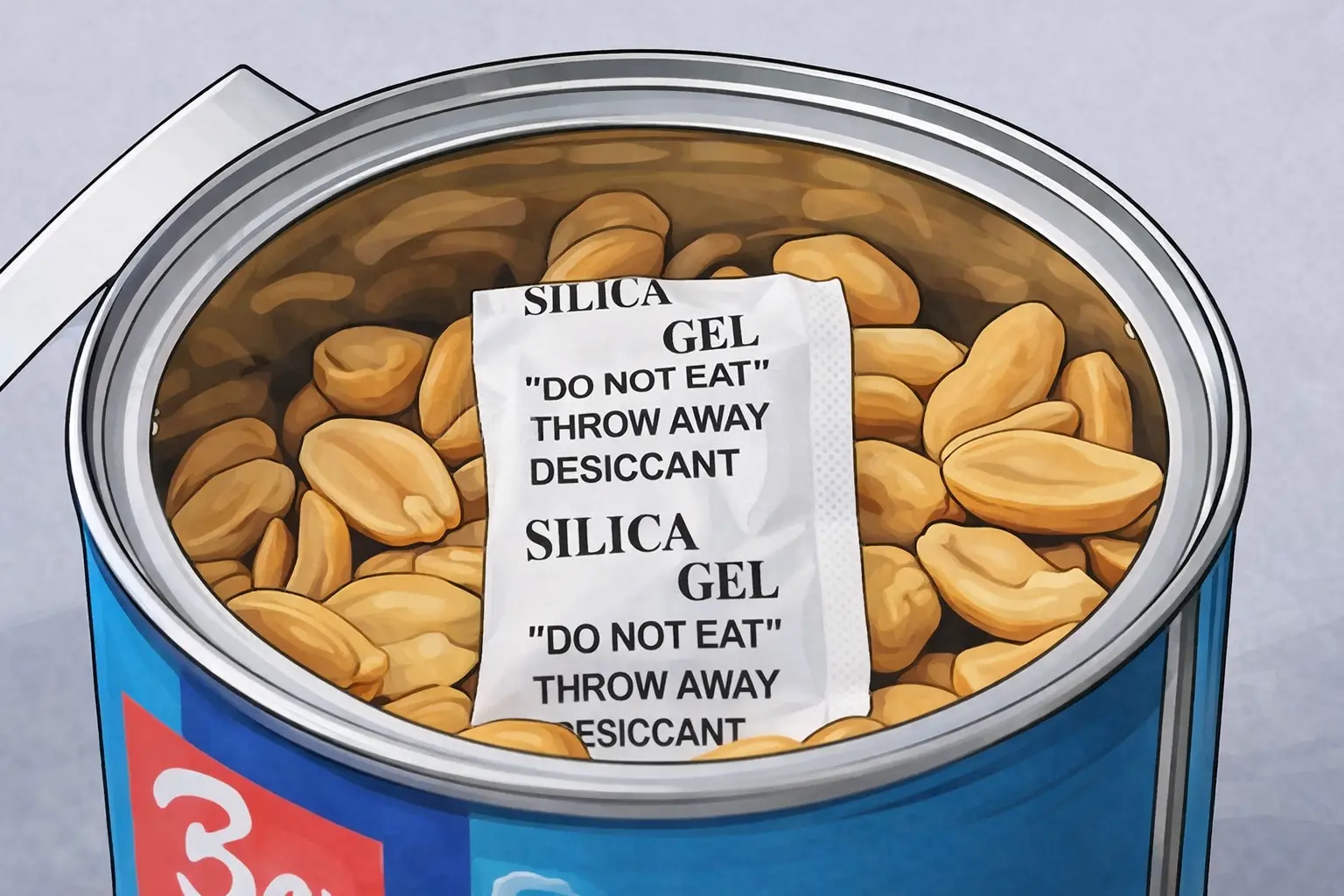
Of the many, many things we’re not supposed to snack on, perhaps the most common forbidden food is silica gel. This tiny packet pops up in packaging for everything—from TVs and guitar cases to sunscreen and snack foods. So why is silica gel everywhere, and what would actually happen if you ate it?
Found in the Earth’s crust, silica, also called silicon dioxide, is typically mined as raw silica sand, which is then washed, dried, sifted, and chemically treated. Once manufacturers ensure each grain is uniform, the processed sand gets mixed with sodium carbonate, then heated and combined with an acid that links the silica particles into a jelly-like matrix. This matrix gives the material its porous structure, which stays stable after being washed and dried into hard, glassy beads. The final product is chemically identical to the sand you might find on a beach—the only difference is that porous structure.
Inside each silica gel bead is a massive microscopic network of tunnels. This dramatically increases the surface area of each bead, with a single gram of silica offering over 700 square meters of surface area. But this space doesn’t stay empty for long. The silicon dioxide molecules that make up the gel are held together by polar covalent bonds, which attract other polar substances, including water.
So when silica gel is placed in a humid environment, the water in the air is drawn to the beads’ surface. From these surface pores, the water vapor is then pulled inside the grain through a process called capillary condensation. Each grain can hold up to 40% of its own weight in water, allowing a standard 5-gram packet to hold roughly 2 grams of liquid. And since this liquid is held inside the bead’s internal network, even fully saturated silica doesn’t feel wet to the touch.
This ability makes silica gel a desiccant, a type of substance used to keep things dry. But these beads can suck up more than just water. Silica attracts ammonia, sulfur dioxide, and a handful of other gases, making it useful in gas masks and other filtration systems.
The pace of this process depends on the environment. In a very humid enclosed space, a packet could reach its saturation point within a day or two, but this could take up to a week in a moderately humid environment. Either way, silica gel beads functionally last forever since you can dry them out in a hot oven.
These abilities and silica’s prevalence in Earth’s crust have made it the planet’s most popular commercial desiccant since we started mass producing it in 1919. At home, it keeps snacks crispy and extends their shelf life, ensures pills and vitamins stay dry, and captures any stinky scents from your cat’s litter box. Museums use silica gel in exhibit cases to prevent metal artifacts from rusting and preserved animals from growing mold. And in outer space, a form of silica gel called aerogel is used to insulate rovers from extreme temperatures and capture high-velocity comet dust for study back home.
But what about what silica gel would do to you if you successfully swallowed a packet? The answer is… not much. Those “Do Not Eat” warnings have more to do with packets being choking hazards than any silica-specific concerns. Besides, your body has so much liquid in it—even if the packet did suck up the standard 2 grams, you could replenish that much and more with a single glass of water. And since silica is chemically inert, your body won’t break the gel down into something toxic.
That said, downing larger quantities of silica gel would be unpleasant. Its moisture-wicking properties could dry and irritate mucous membranes along the digestive tract, resulting in diarrhea and an upset stomach.
Worse still, some silica is coated with cobalt chloride to indicate moisture levels, and that compound actually is toxic. But assuming your silica “snack” is of the standard variety, you should survive the ordeal.
Source: TED-Ed
WORD BANK:
(not) supposed to do sth /səˈpoʊzd tu duː/ (phr): được/không được phép làm gì
snack on sth /snæk ɑːn/ (v): ăn vặt cái gì
silica gel /ˈsɪl.ɪ.kə dʒel/ (n): hạt hút ẩm silica
pop up /pɑːp ʌp/ (v): xuất hiện bất ngờ
crust /krʌst/ (n): lớp vỏ
mine /maɪn/ (v): khai thác
raw /rɔː/ (adj): thô, chưa qua xử lý
sift /sɪft/ (v): sàng lọc
grain /ɡreɪn/ (n): hạt
particle /ˈpɑːr.t̬ɪ.kəl/ (n): hạt nhỏ, phần tử
jelly-like /ˈdʒel.i laɪk/ (adj): giống dạng thạch
matrix /ˈmeɪ.trɪks/ (n): cấu trúc nền
porous /ˈpɔːr.əs/ (adj): xốp, có lỗ nhỏ
glassy /ˈɡlæs.i/ (adj): giống thủy tinh
bead /biːd/ (n): hạt nhỏ
identical to sth /aɪˈden.t̬ɪ.kəl tuː/ (adj): giống hệt cái gì
tunnel /ˈtʌn.əl/ (n): đường hầm
molecule /ˈmɑː.lə.kjuːl/ (n): phân tử
make up sth /meɪk ʌp/ (v): tạo nên
polar covalent bond /ˈpoʊ.lɚ koʊˈveɪ.lənt bɑːnd/ (n): liên kết cộng hóa trị phân cực
polar substance /ˈpoʊ.lɚ ˈsʌb.stəns/ (n): chất phân cực
humid /ˈhjuː.mɪd/ (adj): ẩm
be drawn to sth /bi drɔːn tuː/ (v): bị hút về phía
water vapor /ˈwɔː.t̬ɚ ˈveɪ.pɚ/ (n): hơi nước
capillary condensation /ˌkæp.əˈler.i ˌkɑːn.denˈseɪ.ʃən/ (n): sự ngưng tụ mao dẫn
roughly /ˈrʌf.li/ (adv): xấp xỉ
saturated /ˈsætʃ.ə.reɪ.t̬ɪd/ (adj): bão hòa
desiccant /ˈdes.ɪ.kənt/ (n): chất hút ẩm
suck up sth /sʌk ʌp/ (v): hút cái gì vào
ammonia /əˈmoʊ.ni.ə/ (n): amoniac
a handful of sth /ə ˈhænd.fʊl əv/ (phr): một nắm, một ít
filtration /fɪlˈtreɪ.ʃən/ (n): sự lọc
enclosed /ɪnˈkloʊzd/ (adj): kín, bao kín
reach saturation point /riːtʃ ˌsætʃ.əˈreɪ.ʃən pɔɪnt/ (v): đạt điểm bão hòa
moderately /ˈmɑː.dɚ.ət.li/ (adv): vừa phải
oven /ˈʌv.ən/ (n): lò nướng
prevalence /ˈprev.ə.ləns/ (n): sự phổ biến
mass produce /ˌmæs prəˈduːs/ (v): sản xuất hàng loạt
crispy /ˈkrɪs.pi/ (adj): giòn
shelf life /ˈʃelf laɪf/ (n): hạn sử dụng
pill /pɪl/ (n): viên thuốc
stinky scent /ˈstɪŋ.ki sent/ (n): mùi hôi
cat’s litter box /kæts ˈlɪt̬.ɚ bɑːks/ (n): khay vệ sinh cho mèo
exhibit case /ɪɡˈzɪb.ɪt keɪs/ (n): tủ trưng bày
artifact /ˈɑːr.t̬ə.fækt/ (n): hiện vật
rusting /ˈrʌs.tɪŋ/ (n): sự gỉ sét
grow mold /ɡroʊ moʊld/ (v): bị mốc
insulate /ˈɪn.sə.leɪt/ (v): cách nhiệt
rover /ˈroʊ.vɚ/ (n): xe thám hiểm
high-velocity /ˌhaɪ vəˈlɑː.sə.t̬i/ (adj): tốc độ cao
comet dust /ˈkɑː.mət dʌst/ (n): bụi sao chổi
swallow /ˈswɑː.loʊ/ (v): nuốt
have more to do with /hæv mɔːr tuː duː wɪð/ (phr): liên quan nhiều hơn đến
choking hazard /ˈtʃoʊ.kɪŋ ˈhæz.ɚd/ (n): nguy cơ hóc
sth-specific concern /spəˈsɪf.ɪk kənˈsɝːn/ (n): mối lo ngại về cái gì đó cụ thể
replenish /rɪˈplen.ɪʃ/ (v): bổ sung
chemically inert /ˈkem.ɪ.kli ɪˈnɝːt/ (adj): trơ về mặt hóa học
break down sth /breɪk daʊn/ (v): phân hủy
moisture-wicking /ˈmɔɪs.tʃɚ ˌwɪk.ɪŋ/ (adj): thấm hút ẩm
property /ˈprɑː.pɚ.t̬i/ (n): đặc tính
irritate sth /ˈɪr.ɪ.teɪt/ (v): gây kích ứng
mucous membrane /ˈmjuː.kəs ˈmem.breɪn/ (n): màng nhầy
digestive tract /daɪˈdʒes.tɪv trækt/ (n): đường tiêu hóa
diarrhea /ˌdaɪ.əˈriː.ə/ (n): tiêu chảy
upset sth /ʌpˈset/ (v): làm rối loạn
be coated with sth /bi ˈkoʊ.t̬ɪd wɪð/ (v): được phủ bởi
indicate sth /ˈɪn.dɪ.keɪt/ (v): chỉ ra, chỉ thị cái gì
compound /ˈkɑːm.paʊnd/ (n): hợp chất
assume /əˈsuːm/ (v): cho rằng
ordeal /ɔːrˈdiːl/ (n): thử thách gian khổ
ỦNG HỘ READ TO LEAD!
Chào bạn! Có thể bạn chưa biết, Read to Lead là một trang giáo dục phi lợi nhuận với mục đích góp phần phát triển cộng đồng người học tiếng Anh tại Việt Nam. Chúng tôi không yêu cầu người đọc phải trả bất kỳ chi phí nào để sử dụng các sản phẩm của mình để mọi người đều có cơ hội học tập tốt hơn. Tuy nhiên, nếu bạn có thể, chúng tôi mong nhận được sự hỗ trợ tài chính từ bạn để duy trì hoạt động của trang và phát triển các sản phẩm mới.
Bạn có thể ủng hộ chúng tôi qua 1 trong 2 cách dưới đây.
– Cách 1: Chuyển tiền qua tài khoản Momo.
Số điện thoại 0947.886.865 (Chủ tài khoản: Nguyễn Tiến Trung)
Nội dung chuyển tiền: Ủng hộ Read to Lead
hoặc
– Cách 2: Chuyển tiền qua tài khoản ngân hàng.
Ngân hàng VIB chi nhánh Hải Phòng
Số tài khoản: 012704060048394 (Chủ tài khoản: Nguyễn Tiến Trung)
Nội dung chuyển tiền: Ủng hộ Read to Lead
Lớp luyện thi IELTS online
Bạn đang có nhu cầu thi chứng chỉ IELTS cho đầu vào đại học, đi du học, xin việc hay xin cư trú và đang phân vân chưa biết học ở đâu?
Nếu bạn đang tìm kiếm dịch vụ luyện thi IELTS online với giáo viên uy tín và chất lượng, cũng như học phí phải chăng, thì thầy Trung và Cô Thủy (Admin và dịch giả chính của Read to Lead) có thể là một lựa chọn phù hợp dành cho bạn.
Hãy liên hệ (nhắn tin) tới trang Facebook cá nhân của mình (https://www.facebook.com/nguyen.trung.509) để tìm hiểu về lớp học và được tư vấn cũng như được học thử nha!


