


[Reading level: B2 – Upper Intermediate]
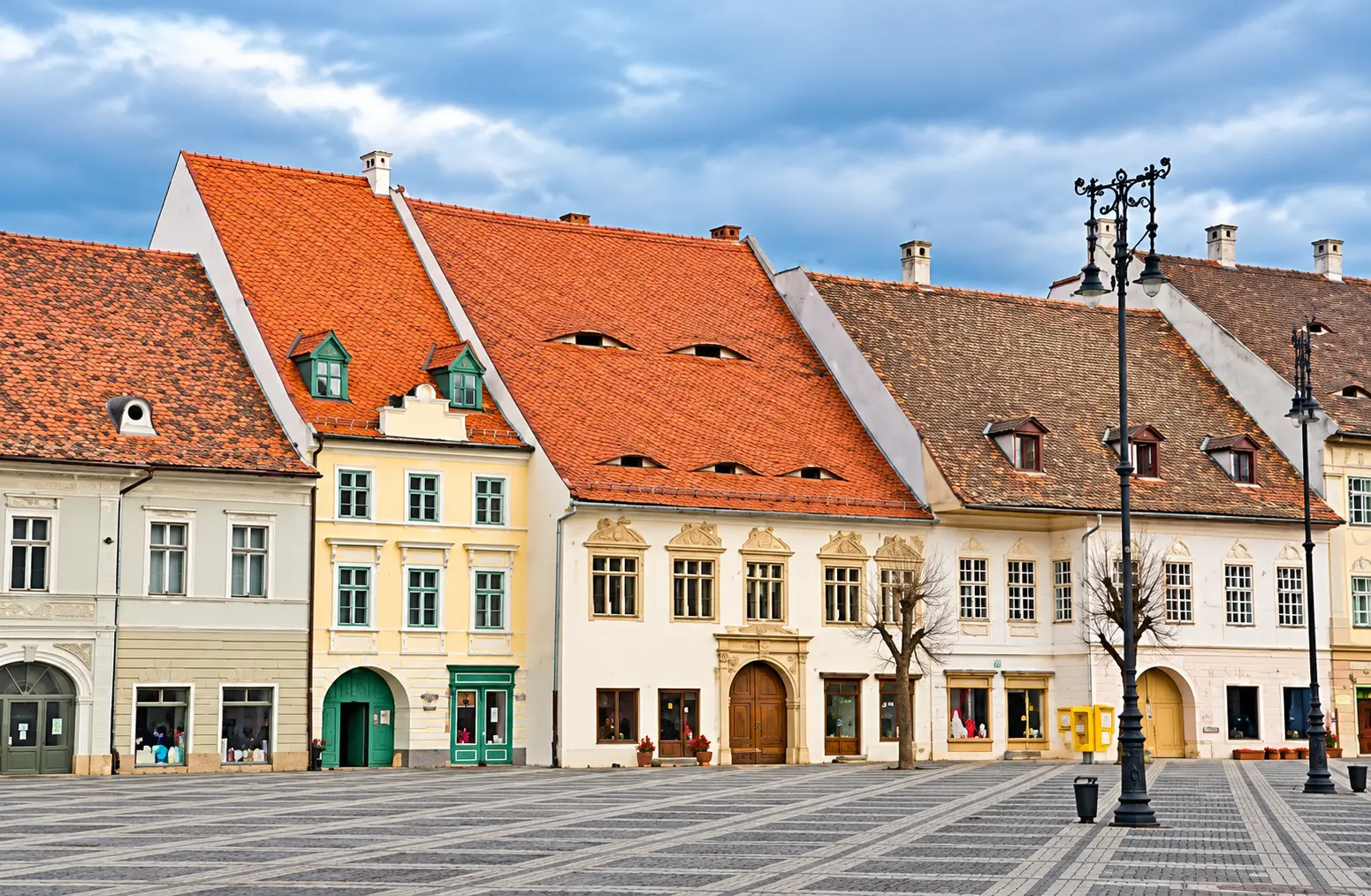
In Romania, there is a remarkable ancient city where visitors feel as though hundreds of eyes are watching them with every step they take through its streets. These eyes do not belong to people but are found on the rooftops of houses that are hundreds of years old. This is Sibiu, a city dubbed “The City of Eyes.”
Located in Transylvania, central Romania, Sibiu is about a five-hour drive from the capital, Bucharest. The city has a population of approximately 134,000 and covers an area of around 121 km². Although it is not a large city, Sibiu attracts visitors with its well-preserved medieval architecture, ancient cobblestone streets, and, most notably, its unusual rooftop windows.
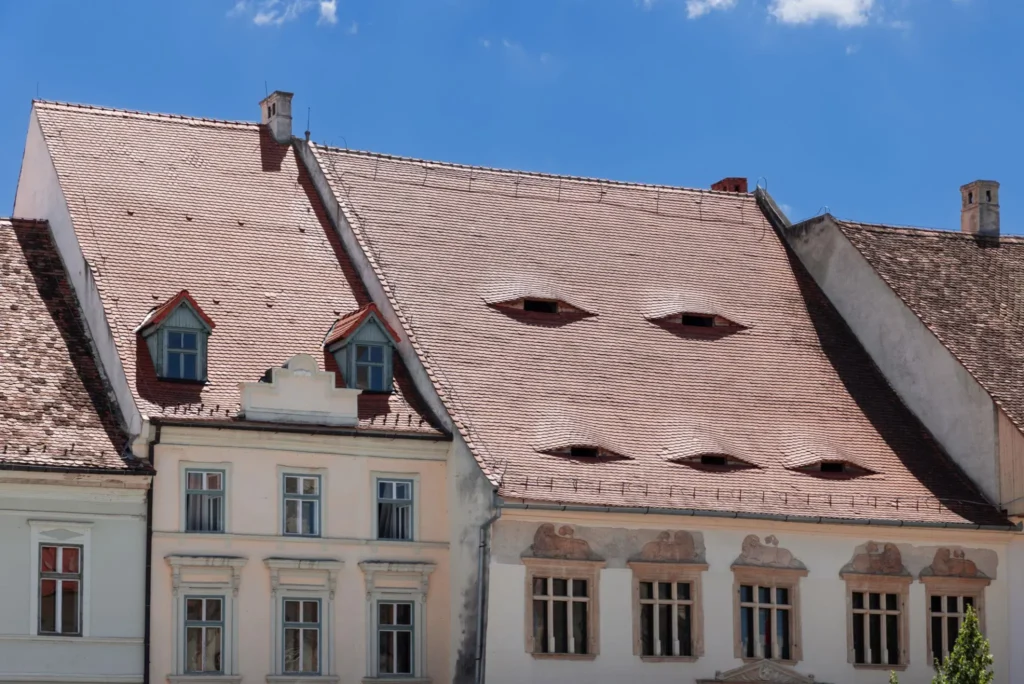
Simply looking up, visitors will notice windows shaped exactly like eyes gazing down at the streets. Some appear wide open, others half-closed as if they are sleepy, while still others seem to be glancing sideways at passersby. Romanians call them “Ochii Sibiului,” meaning “The Eyes of Sibiu.” Their presence gives the city a unique and somewhat mysterious beauty, as though everything happening in the streets is being silently observed.
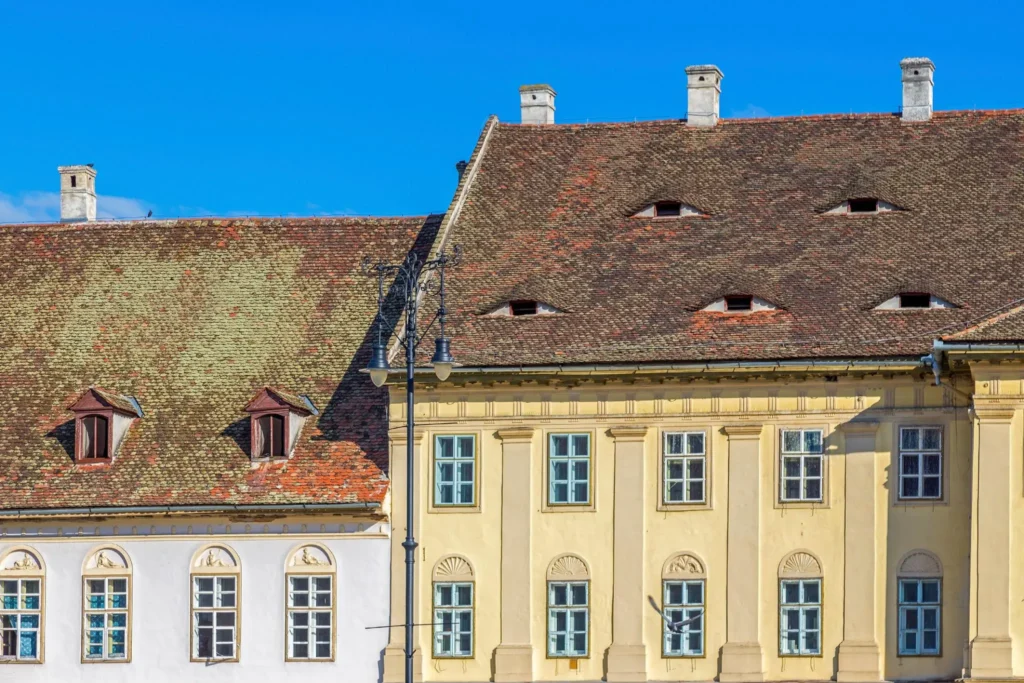
However, these eyes were not created to watch people. They are actually ventilation windows built into rooftops, serving a very practical purpose. Between the 17th and 19th centuries, when Sibiu was an important trading center in Transylvania, residents often used their attics to store grain, food, and various goods. To allow air to circulate, reduce moisture, and prevent food from becoming moldy, they designed ventilation windows with a distinctive elongated shape. Over time, this simple architectural solution became the city’s most famous symbol.
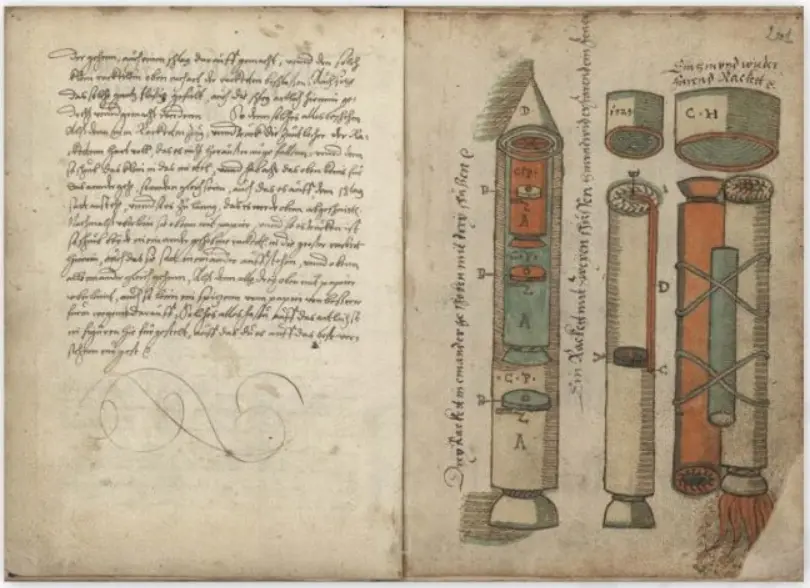
Besides its eye-like rooftops, Sibiu also has an interesting connection to the history of rocket technology. In the 16th century, Conrad Haas, a military engineer working in Sibiu, studied and sketched designs for multistage rockets. In a manuscript compiled between approximately 1529 and 1569, he proposed the idea of using successive rocket stages to maintain thrust. This is considered one of the earliest known descriptions of the principle of multistage rockets, appearing more than 400 years before humans first set foot on the Moon in 1969.
Another famous landmark in Sibiu is the Bridge of Lies, a cast-iron bridge built in 1859 and often described as the first cast-iron bridge in what is now Romania.
The bridge is associated with an intriguing legend. According to one version of the legend, the bridge was once a meeting place for lovers who exchanged promises of eternal faithfulness. People believed that if either of them broke their promise, the bridge would shake as they crossed it. Another version tells of dishonest merchants who often exaggerated the quality of their goods or cheated customers while trading in the area. According to the legend, if these merchants stood on the bridge and told lies, it would tremble or even collapse to punish their dishonesty.
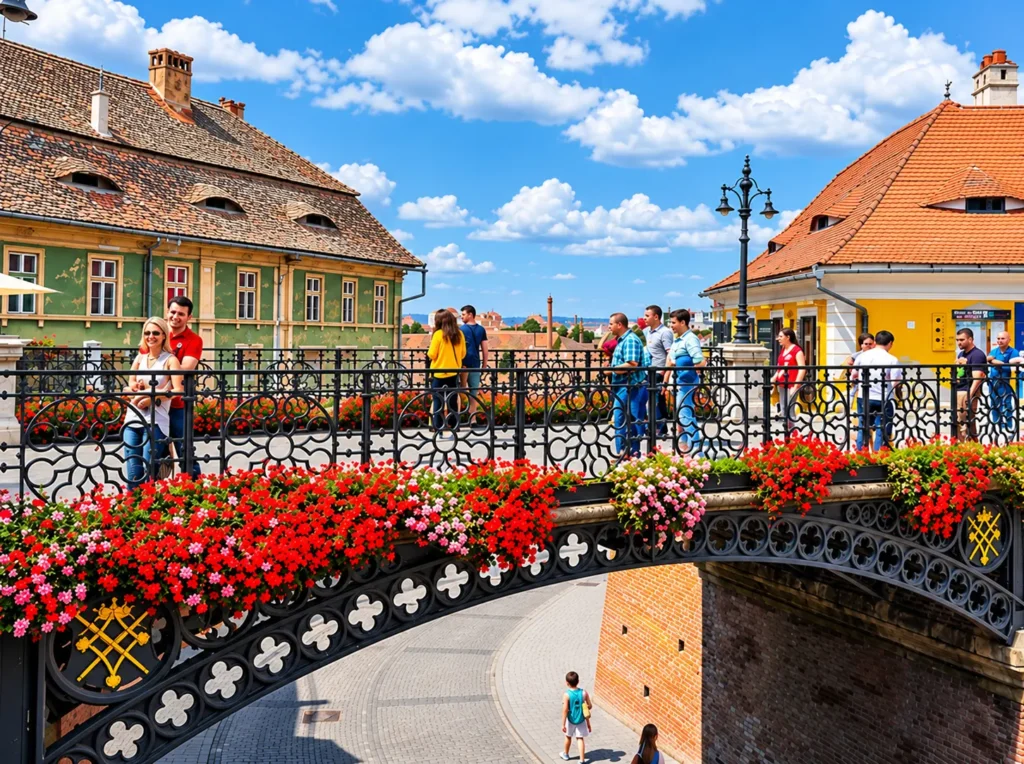
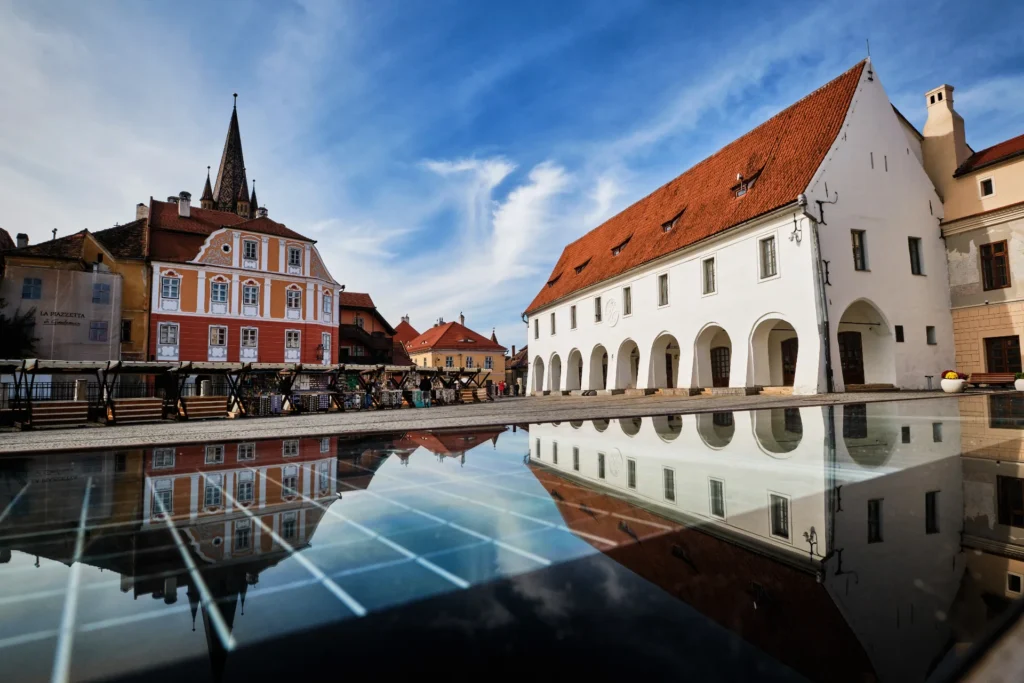
Today, Sibiu still retains its historic atmosphere, with spacious squares, red-tiled roofs, colorful rows of houses, and narrow, winding streets. Amid this scenery, the eye-shaped windows continue to gaze silently down, like witnesses that have observed life in the city for centuries.
WORD BANK:
dub /dʌb/ (v): đặt tên, gọi là, phong danh hiệu
well-preserved /ˌwel.prɪˈzɝːvd/ (adj): được bảo tồn tốt
medieval /ˌmed.iˈiː.vəl/ [B2] (adj): thuộc thời Trung cổ
cobblestone /ˈkɑː.bəl.stoʊn/ (n): đá cuội lát đường
gaze /ɡeɪz/ [B2] (v): nhìn chăm chú, nhìn chằm chằm
half-closed /ˌhæfˈkloʊzd/ (adj): khép hờ, mở hé
glance at sth/sb /ɡlæns/ [B2] (v): liếc nhìn ai/cái gì
passersby /ˌpæs.ɚzˈbaɪ/ (n): những người qua đường
ventilation /ˌven.t̬əlˈeɪ.ʃən/ (n): sự thông gió, hệ thống thông gió
attic /ˈæt̬.ɪk/ (n): tầng áp mái, gác mái
circulate /ˈsɝː.kjə.leɪt/ [C1] (v): lưu thông, tuần hoàn
moisture /ˈmɔɪs.tʃɚ/ (n): độ ẩm, hơi ẩm
moldy /ˈmoʊl.di/ (adj): bị mốc, có nấm mốc
distinctive /dɪˈstɪŋk.tɪv/ [C1] (adj): đặc trưng, khác biệt, dễ nhận biết
elongated /ɪˈlɑːŋ.ɡeɪ.t̬ɪd/ (adj): thuôn dài, kéo dài
sketch sth /sketʃ/ (v): phác thảo cái gì
multistage rocket /ˌmʌl.t̬iˈsteɪdʒ ˈrɑː.kɪt/ (n): tên lửa nhiều tầng
manuscript /ˈmæn.jə.skrɪpt/ (n): bản thảo, bản viết tay
compile sth /kəmˈpaɪl/ [C1] (v): biên soạn, tổng hợp cái gì
propose sth /prəˈpoʊz/ [B2] (v): đề xuất, đưa ra cái gì
successive /səkˈses.ɪv/ (adj): liên tiếp, kế tiếp nhau
thrust /θrʌst/ (n): lực đẩy
set foot on sth /set fʊt/ (v): đặt chân lên nơi nào
cast-iron /ˌkæstˈaɪ.ɚn/ (adj): làm bằng gang
intriguing /ɪnˈtriː.ɡɪŋ/ [C1] (adj): hấp dẫn, gây tò mò
exchange promises /ɪksˈtʃeɪndʒ ˈprɑː.mɪ.sɪz/ (v): trao nhau những lời hứa
eternal /ɪˈtɝː.nəl/ (adj): vĩnh cửu, bất diệt
faithfulness /ˈfeɪθ.fəl.nəs/ (n): sự chung thủy, lòng trung thành
break a promise /breɪk ə ˈprɑː.mɪs/ (v): thất hứa, không giữ lời hứa
dishonest /dɪˈsɑː.nɪst/ (adj): không trung thực, gian dối
merchant /ˈmɝː.tʃənt/ (n): thương nhân, người buôn bán
exaggerate sth /ɪɡˈzædʒ.ə.reɪt/ [B2] (v): phóng đại, cường điệu cái gì
cheat sb /tʃiːt/ [B2] (v): lừa gạt, gian lận với ai
tremble /ˈtrem.bəl/ (v): run rẩy, rung chuyển
collapse /kəˈlæps/ [B2] (v): sụp đổ, đổ sập
dishonesty /dɪˈsɑː.nə.sti/ (n): sự gian dối, tính không trung thực
retain sth /rɪˈteɪn/ [C1] (v): giữ lại, duy trì, bảo tồn cái gì
red-tiled roof /ˌredˈtaɪld ruːf/ (n): mái nhà lợp ngói đỏ
a row of houses /ə roʊ əv ˈhaʊ.zɪz/ (n): một dãy nhà
winding /ˈwaɪn.dɪŋ/ (adj): quanh co, uốn lượn
witness /ˈwɪt.nəs/ [B2] (n): nhân chứng, người chứng kiến
ỦNG HỘ READ TO LEAD!
Chào bạn! Có thể bạn chưa biết, Read to Lead là một trang giáo dục phi lợi nhuận với mục đích góp phần phát triển cộng đồng người học tiếng Anh tại Việt Nam. Chúng tôi không yêu cầu người đọc phải trả bất kỳ chi phí nào để sử dụng các sản phẩm của mình để mọi người đều có cơ hội học tập tốt hơn. Tuy nhiên, nếu bạn có thể, chúng tôi mong nhận được sự hỗ trợ tài chính từ bạn để duy trì hoạt động của trang và phát triển các sản phẩm mới.
Bạn có thể ủng hộ chúng tôi qua 1 trong 2 cách dưới đây.
– Cách 1: Chuyển tiền qua tài khoản Momo.
Số điện thoại 0947.886.865 (Chủ tài khoản: Nguyễn Tiến Trung)
Nội dung chuyển tiền: Ủng hộ Read to Lead
hoặc
– Cách 2: Chuyển tiền qua tài khoản ngân hàng.
Ngân hàng VIB chi nhánh Hải Phòng
Số tài khoản: 012704060048394 (Chủ tài khoản: Nguyễn Tiến Trung)
Nội dung chuyển tiền: Ủng hộ Read to Lead
Lớp luyện thi IELTS online
Bạn đang có nhu cầu thi chứng chỉ IELTS cho đầu vào đại học, đi du học, xin việc hay xin cư trú và đang phân vân chưa biết học ở đâu?
Nếu bạn đang tìm kiếm dịch vụ luyện thi IELTS online với giáo viên uy tín và chất lượng, cũng như học phí phải chăng, thì lớp học online của thầy Trung (Admin và dịch giả chính của Read to Lead) có thể là một lựa chọn phù hợp dành cho bạn.
Hãy liên hệ (nhắn tin) tới trang Facebook cá nhân của mình (https://www.facebook.com/nguyen.trung.509) để tìm hiểu về lớp học và được tư vấn cũng như được học thử nha!


