


[Reading level: C1 – Advanced]
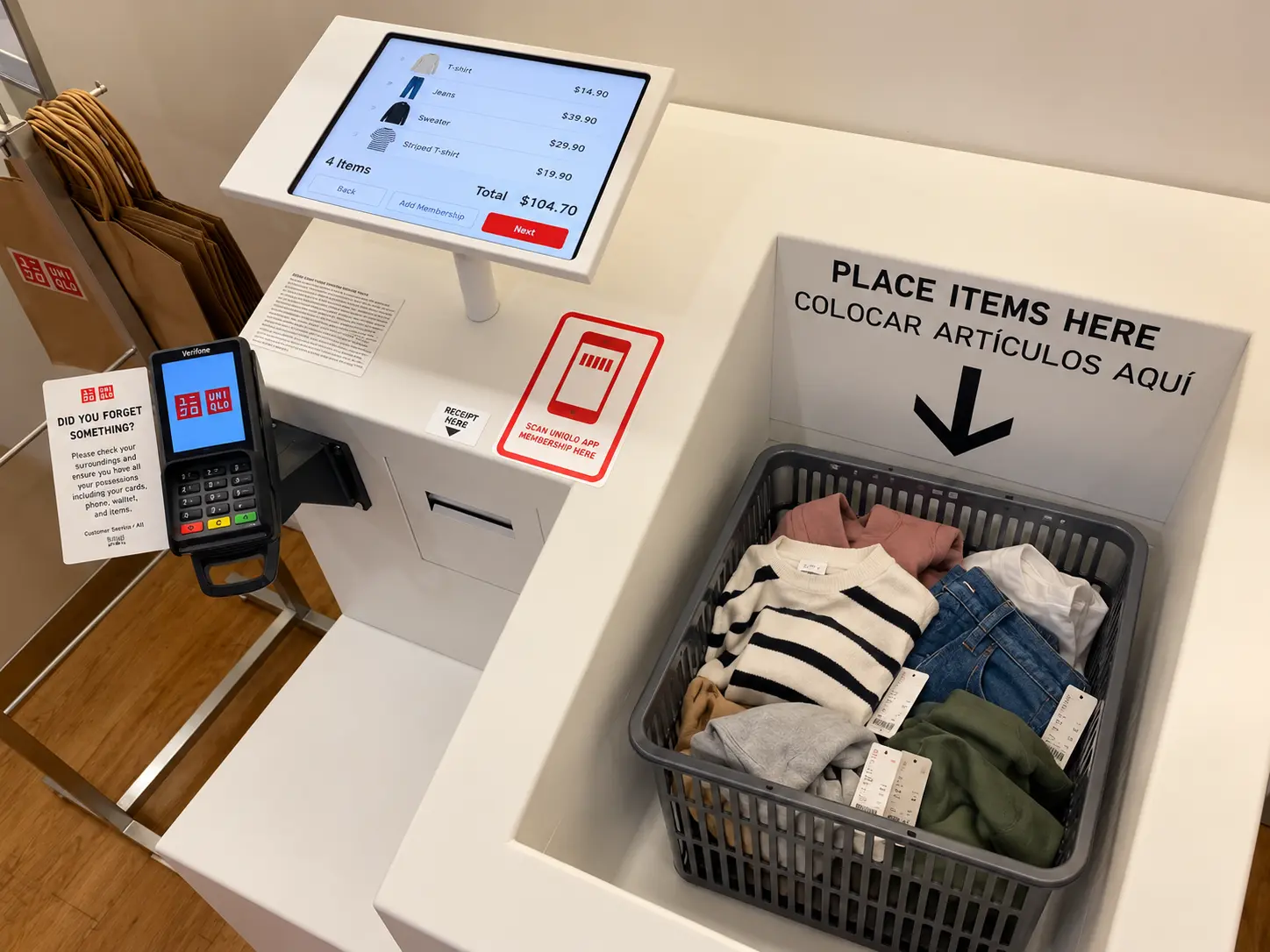
If you have ever shopped at Uniqlo, Zara or Decathlon and wondered how simply placing an entire basket of clothes in a self-checkout machine allows the screen, just a few seconds later, to display exactly how many items you are buying, what those products are, and how much each one costs, the answer lies in a technology called RFID.
RFID stands for Radio Frequency Identification. Unlike traditional barcodes, this technology does not require customers to pick up each product and hold its barcode in front of a scanner.
Fast Retailing, the parent company of Uniqlo, says that it has attached RFID tags to products from Uniqlo, GU, and other brands in the group around the world. This technology not only supports self-checkout machines but also helps the company manage inventory and store operations more efficiently.
What is inside an RFID tag?
An RFID tag used in retail may look no different from an ordinary paper label. But if you peel apart the layers of a typical RFID tag, you will usually find three important components: a tiny chip, a very thin antenna, and a substrate layer.
The RFID chip stores identification data. It does not necessarily contain all the information about a product, such as “white shirt, size M, $20.” Instead, the chip usually stores an identifier, such as an EPC (Electronic Product Code). The retailer’s system uses this code to connect to a database and identify the corresponding product. One common EPC configuration contains only 96 bits of data.
Connected to the chip is an extremely thin antenna, which often has a winding or symmetrical shape when viewed inside the tag. The antenna can be made from aluminium or other conductive materials.
The chip and antenna are attached to a thin substrate to form what is commonly known as an RFID inlay. This inlay can then be incorporated into a paper label, adhesive tag, or other type of product label.
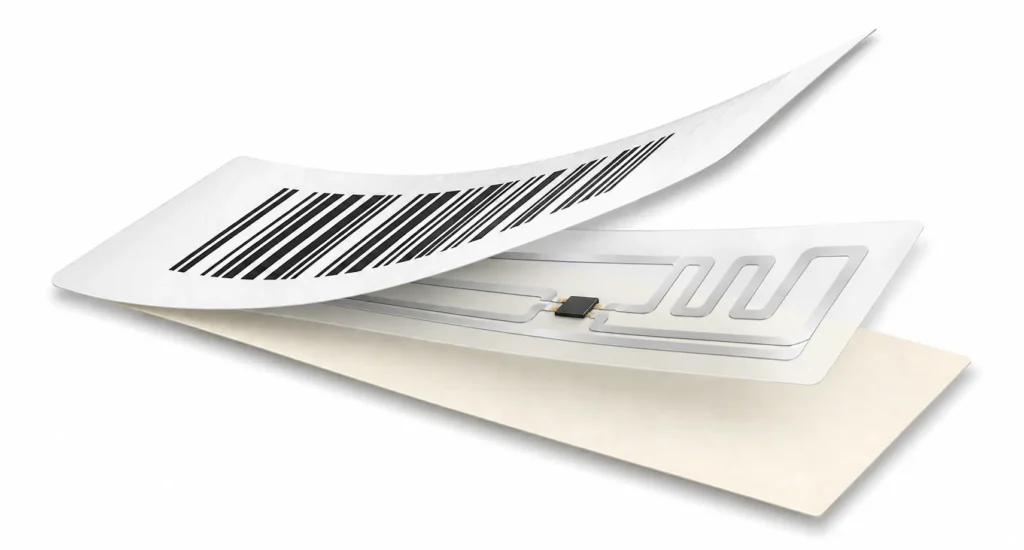
So, the “electronic tag” we might imagine is not actually a complicated device like a bank card or a smartphone. Its electronic components may consist of nothing more than a tiny silicon chip connected to a thin metal antenna.
The most remarkable thing: it does not need a battery. This is one of the main reasons RFID technology used in retail can be so inexpensive.
When an RFID reader emits radio waves, the antenna on the tag captures some of the energy from those waves and transfers it to the chip.
The chip is “woken up,” processes the request, and then sends a signal back to the reader.
The process can be illustrated simply as follows:
RFID reader emits radio waves → tag antenna captures energy → chip is activated → tag sends back its identification code → the system looks up the code in the database → product appears on the screen.
Once the tag leaves the reader’s radio field, it returns to its passive state.
Because it requires no battery, screen, buttons, charger, or independent power source, its construction is much simpler than that of most electronic devices we use every day.
How are RFID tags made, and why are they so cheap?
One reason RFID tags are inexpensive is the way they are designed and manufactured. Rather than being assembled one by one like conventional electronic devices, RFID inlays are mass-produced on long rolls of material using highly automated production lines.

First, a very thin layer of conductive material, often aluminium, is formed into an antenna. A tiny RFID chip is then precisely attached to the antenna. Together with a thin substrate, these components form an RFID inlay, which can then be laminated with paper, adhesive, or other materials to create a finished label. Some newer designs even form the aluminium antenna directly on a paper substrate, reducing the need for plastic.
Despite containing a chip and antenna, an RFID tag can cost very little because its construction is extremely simple. The chip is tiny, performs only limited functions, and stores far less data than chips in smartphones or computers. The antenna is merely a thin layer of conductive material, and most importantly, the tag requires no battery, as it obtains energy from the radio waves emitted by the RFID reader.
RFID tags are also manufactured on an enormous scale. Global retailers may require hundreds of millions of them, allowing automated mass production to drive the unit cost down dramatically. Impinj notes that RFID chips can cost only a few US cents each, although the final price of a complete tag depends on its materials, design, and order volume.
In other words, an RFID tag is an electronic device that has been simplified and mass-produced to the point where it can be cheap enough to become part of a disposable product label.
Why can the machine read an entire basket instead of scanning each item?
This is one of RFID’s biggest advantages over barcodes. Barcodes work optically. The scanner has to “see” the code. If you buy ten shirts, you would normally have to present all ten barcodes to the scanner one by one.
RFID does not work that way. The reader emits radio waves into a particular area. Tags within that area can respond. RFID systems are also designed to deal with multiple tags appearing within the reading area at the same time, allowing the reader to identify many products one after another within a very short period.
That is why you can simply place the entire basket on the machine, check the list and pay.
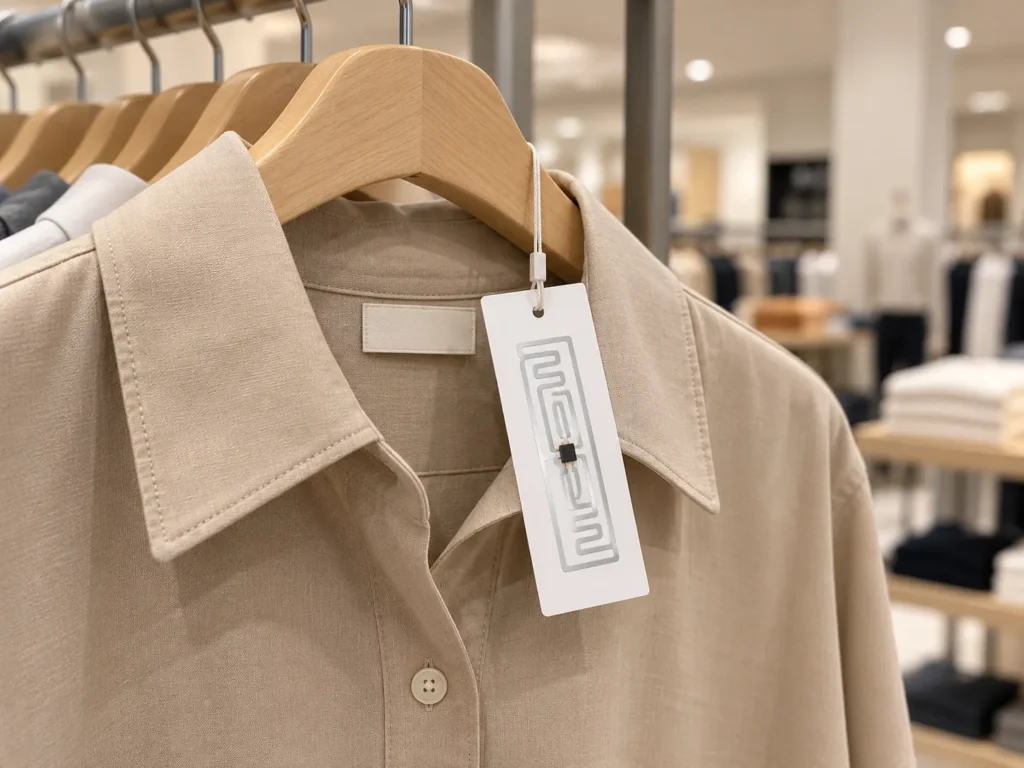
A tag costing only a few cents can save a great deal of money
Viewed individually, adding a chip to every item of clothing may seem like an additional expense. But for a large retailer, the calculation has to be considered across the entire system.
A single RFID tag can support a product through many stages: from the factory to the warehouse, transportation, stocktaking, the store, and finally the checkout counter. Fast Retailing has also said that RFID is used to track production progress and manage merchandise, while the combination of RFID and self-checkout systems helps improve store efficiency.
If the technology allows thousands of stores to reduce the time spent on stocktaking, identify more accurately which products are running low, replenish the right sizes and colours that are selling quickly, and shorten the checkout process at the same time, then the small amount spent on each tag can be offset by improvements in efficiency across the entire system.
WORD BANK:
basket /ˈbæs.kɪt/ (n): giỏ, giỏ hàng
self-checkout machine /ˌself ˈtʃek.aʊt məˌʃiːn/ (n): máy tự thanh toán
display /dɪˈspleɪ/ [B1] (v): hiển thị
stand for sth /stænd/ [B2] (v): là chữ viết tắt của, đại diện cho cái gì
frequency /ˈfriː.kwən.si/ [B2] (n): tần số
barcode /ˈbɑːr.koʊd/ (n): mã vạch
pick up sth /pɪk ʌp/ [B1] (v): nhấc, cầm cái gì lên
parent company /ˈper.ənt ˌkʌm.pə.ni/ (n): công ty mẹ
attach sth to sth /əˈtætʃ/ [B1] (v): gắn cái gì vào cái gì
tag /tæɡ/ (n): thẻ, nhãn
brand /brænd/ [B1] (n): thương hiệu
inventory /ˈɪn.vən.tɔːr.i/ [C1] (n): hàng tồn kho; lượng hàng tồn kho
retail /ˈriː.teɪl/ [B2] (n/adj): hoạt động bán lẻ; thuộc lĩnh vực bán lẻ
ordinary /ˈɔːr.dən.er.i/ [B1] (adj): thông thường, bình thường
label /ˈleɪ.bəl/ [B1] (n): nhãn
peel apart /piːl əˈpɑːrt/ (v): bóc, tách các lớp ra
component /kəmˈpoʊ.nənt/ [B2] (n): thành phần, bộ phận
antenna /ænˈten.ə/ (n): ăng-ten
substrate /ˈsʌb.streɪt/ (n): vật liệu nền, lớp nền
substrate layer /ˈsʌb.streɪt ˌleɪ.ɚ/ (n): lớp vật liệu nền
identification /aɪˌden.t̬ə.fəˈkeɪ.ʃən/ [B2] (n): sự nhận dạng, nhận diện
not necessarily /ˌnes.əˈser.əl.i/ [B2] (adv): không nhất thiết
identifier /aɪˈden.t̬ə.faɪ.ɚ/ (n): mã định danh, yếu tố nhận dạng
identify /aɪˈden.t̬ə.faɪ/ [B1] (v): xác định, nhận diện
corresponding /ˌkɔːr.əˈspɑːn.dɪŋ/ [C1] (adj): tương ứng
configuration /kənˌfɪɡ.jəˈreɪ.ʃən/ [C1] (n): cấu hình
antenna /ænˈten.ə/ (n): ăng-ten
winding /ˈwaɪn.dɪŋ/ (adj): ngoằn ngoèo, uốn lượn
symmetrical /sɪˈmet.rɪ.kəl/ (adj): đối xứng
aluminium /ˌæl.jəˈmɪn.i.əm/ (n): nhôm
conductive /kənˈdʌk.tɪv/ (adj): dẫn điện
incorporate sth into sth /ɪnˈkɔːr.pə.reɪt/ [C1] (v): kết hợp, tích hợp cái gì vào cái gì
adhesive tag /ədˈhiː.sɪv ˌtæɡ/ (n): nhãn dán, thẻ có lớp keo dính
be nothing more than sth /ˈnʌθ.ɪŋ mɔːr ðæn/ (phrase): chẳng qua chỉ là, không gì hơn ngoài
emit sth /iˈmɪt/ [C1] (v): phát ra cái gì
capture (energy) /ˈkæp.tʃɚ/ [B2] (v): thu, hấp thụ (năng lượng)
illustrate /ˈɪl.ə.streɪt/ [B2] (v): minh họa
look up sth /lʊk ʌp/ [B1] (v): tra cứu cái gì
charger /ˈtʃɑːr.dʒɚ/ (n): bộ sạc
assemble sth /əˈsem.bəl/ [C1] (v): lắp ráp cái gì
conventional /kənˈven.ʃən.əl/ [B2] (adj): thông thường, truyền thống
mass-produced /ˌmæs.prəˈduːst/ (adj): được sản xuất hàng loạt
roll /roʊl/ [B1] (n): cuộn
laminate /ˈlæm.ə.neɪt/ (v): cán, ép nhiều lớp
adhesive /ədˈhiː.sɪv/ (n/adj): chất kết dính, keo dán; có tính kết dính
merely /ˈmɪr.li/ [B2] (adv): chỉ, đơn thuần
on an enormous scale /ɪˈnɔːr.məs skeɪl/ (phrase): trên quy mô khổng lồ
drive sth down /draɪv daʊn/ (v): làm giảm cái gì
to the point where … /pɔɪnt/ (phrase): đến mức mà…
disposable /dɪˈspoʊ.zə.bəl/ [C1] (adj): dùng một lần, có thể vứt bỏ sau khi sử dụng
optically /ˈɑːp.tɪ.kəl.i/ (adv): bằng phương thức quang học
one after another /wʌn ˌæf.tɚ əˈnʌð.ɚ/ (phrase): lần lượt, hết cái này đến cái khác
calculation /ˌkæl.kjəˈleɪ.ʃən/ [B2] (n): sự tính toán, phép tính
across /əˈkrɑːs/ [B1] (prep): trên khắp, xuyên suốt
stocktaking /ˈstɑːkˌteɪ.kɪŋ/ (n): việc kiểm kê hàng hóa
checkout counter /ˈtʃek.aʊt ˌkaʊn.t̬ɚ/ (n): quầy thanh toán
track sth /træk/ [B2] (v): theo dõi cái gì
merchandise /ˈmɝː.tʃən.daɪz/ (n): hàng hóa
efficiency /ɪˈfɪʃ.ən.si/ [B2] (n): hiệu quả, hiệu suất
run low /rʌn loʊ/ (v): sắp hết, còn lại ít
replenish sth /rɪˈplen.ɪʃ/ [C1] (v): bổ sung, cung cấp thêm cái gì
be selling quickly /sel ˈkwɪk.li/ (phrase): đang bán chạy
offset /ˌɑːfˈset/ [C1] (v): bù đắp, cân bằng
ỦNG HỘ READ TO LEAD!
Chào bạn! Có thể bạn chưa biết, Read to Lead là một trang giáo dục phi lợi nhuận với mục đích góp phần phát triển cộng đồng người học tiếng Anh tại Việt Nam. Chúng tôi không yêu cầu người đọc phải trả bất kỳ chi phí nào để sử dụng các sản phẩm của mình để mọi người đều có cơ hội học tập tốt hơn. Tuy nhiên, nếu bạn có thể, chúng tôi mong nhận được sự hỗ trợ tài chính từ bạn để duy trì hoạt động của trang và phát triển các sản phẩm mới.
Bạn có thể ủng hộ chúng tôi qua 1 trong 2 cách dưới đây.
– Cách 1: Chuyển tiền qua tài khoản Momo.
Số điện thoại 0947.886.865 (Chủ tài khoản: Nguyễn Tiến Trung)
Nội dung chuyển tiền: Ủng hộ Read to Lead
hoặc
– Cách 2: Chuyển tiền qua tài khoản ngân hàng.
Ngân hàng VIB chi nhánh Hải Phòng
Số tài khoản: 012704060048394 (Chủ tài khoản: Nguyễn Tiến Trung)
Nội dung chuyển tiền: Ủng hộ Read to Lead
Lớp luyện thi IELTS online
Bạn đang có nhu cầu thi chứng chỉ IELTS cho đầu vào đại học, đi du học, xin việc hay xin cư trú và đang phân vân chưa biết học ở đâu?
Nếu bạn đang tìm kiếm dịch vụ luyện thi IELTS online với giáo viên uy tín và chất lượng, cũng như học phí phải chăng, thì lớp học online của thầy Trung (Admin và dịch giả chính của Read to Lead) có thể là một lựa chọn phù hợp dành cho bạn.
Hãy liên hệ (nhắn tin) tới trang Facebook cá nhân của mình (https://www.facebook.com/nguyen.trung.509) để tìm hiểu về lớp học và được tư vấn cũng như được học thử nha!


I love your website. It’s really helpful for English learners who want to improve their English skills.
Thank you. Please share it to your friends ^^