


[Reading level: B2 – Upper Intermediate]
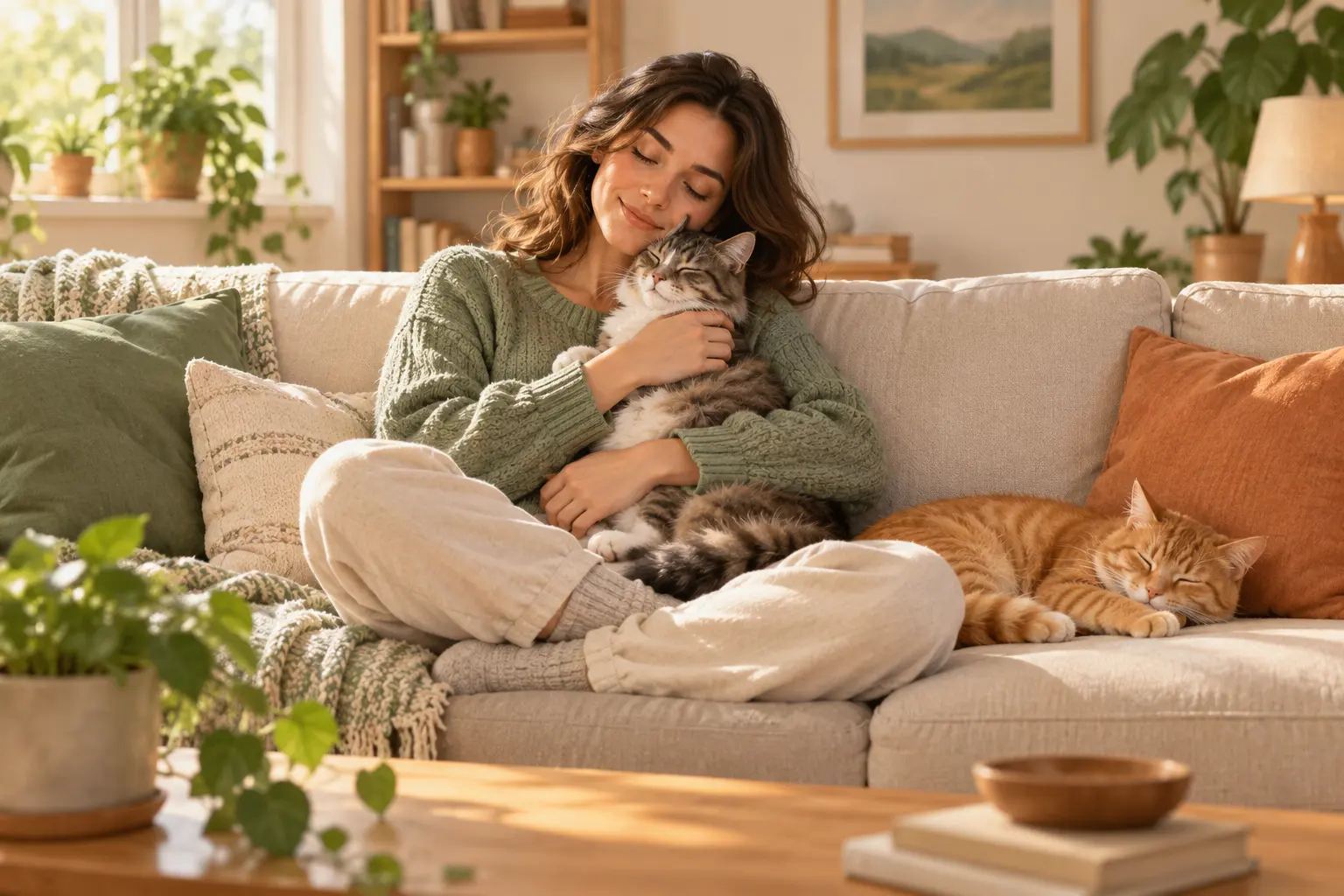
The cat in your home is not merely an adorable “ball of fluff” that spends all day eating, sleeping, and casually taking over your chair. According to several studies, living with a cat may bring significant benefits to human physical and mental health.
Of course, cats cannot replace doctors or medical treatments. However, in a sense, they can still be quiet “therapists” who do not need to wear white coats and never send you a bill.
1. Benefits for cardiovascular health
In 2009, a research team at the University of Minnesota analysed data from more than 4,400 Americans over a period of approximately 20 years. The results showed that people who had owned cats had about a 30% lower risk of dying from myocardial infarction (heart attack) than those who had never owned one. The study was published in the Journal of Vascular and Interventional Neurology.
However, this was an observational study, so it could not prove that cat ownership directly caused this reduction. Other factors, such as the owners’ lifestyles, personalities, and living conditions, may also have influenced the results. Nevertheless, the researchers suggested that cats may help their owners relax and reduce stress, thereby supporting cardiovascular health.
Sometimes, a cat does not need to do anything special. It simply lies there, curled up beside you, yet its peaceful presence can make a stressful day feel a little easier.
2. Soothing purring
A cat’s purr usually vibrates within a low-frequency range, commonly around 25–150 Hz. Some frequencies within this range have also been studied in vibration therapy to support bones and tissues.
This has led to an interesting hypothesis: purring may help cats recover from injuries or relieve pain. However, there is currently insufficient evidence to claim that a cat lying on your lap can directly heal your bones or reduce your pain.

The more noticeable benefit probably lies in the sense of relaxation it brings. The steady sound and gentle vibrations of a cat’s body may make us feel calmer and more comfortable and help us focus less on unpleasant sensations. In other words, purring is not a form of physical therapy, but it can certainly provide wonderful “background music” when you need to rest.
3. Improved immune system
Some studies have found that children who are exposed to dogs or cats from an early age may be less likely to develop certain types of allergies. A Japanese study based on data from more than 66,000 children found that exposure to dogs or cats during pregnancy or the first few months of life was associated with a 13–16% lower risk of food allergies.
Scientists believe that living with pets may alter the microorganisms in the surrounding environment and help children’s immune systems learn to respond more appropriately. However, findings across studies have not been entirely consistent. In some cases, exposure to cats has been associated with a higher risk of sensitivity to allergens, particularly among children who are already prone to allergies. This finding comes from research into food allergies and reviews of early exposure to pets.
Therefore, families should not adopt a cat solely to prevent allergies in their children. If a child has a history of asthma, or allergies to animal fur, parents should consult a doctor.
4. Almost immediate sense of calm
This is probably the benefit that cat owners can feel most easily. When petting a gentle cat, we often focus on its soft fur, the warmth of its body, and its steady purring. These gentle sensations may help the body move from a state of stress into one of relaxation.
Some studies of pets suggest that interacting with them may calm the body’s response to pressure.

So, after a tiring day, having a cat greet you at the door, lie beside you, or quietly rub its head against your leg can offer something genuinely valuable. It provides a form of companionship that we sometimes cannot find in words.
WORD BANK:
merely /ˈmɪr.li/ [C1] (adv): chỉ, đơn thuần
adorable /əˈdɔːr.ə.bəl/ [B2] (adj): đáng yêu
a ball of fluff /ə ˌbɑːl əv ˈflʌf/ (n phr): một cục bông mềm mại
take over sth /teɪk ˈoʊ.vɚ/ [B2] (phr v): chiếm, tiếp quản hoặc kiểm soát cái gì
in a sense /ɪn ə ˈsens/ [C1] (phr): theo một nghĩa nào đó
therapist /ˈθer.ə.pɪst/ [B2] (n): chuyên gia trị liệu
myocardial infarction /ˌmaɪ.oʊˈkɑːr.di.əl ɪnˈfɑːrk.ʃən/ (n): nhồi máu cơ tim
heart attack /ˈhɑːrt əˌtæk/ [B1] (n): cơn đau tim; nhồi máu cơ tim
observational study /ˌɑːb.zɚˈveɪ.ʃən.əl ˈstʌd.i/ (n): nghiên cứu quan sát
nevertheless /ˌnev.ɚ.ðəˈles/ [B2] (adv): tuy nhiên, dẫu vậy
cardiovascular health /ˌkɑːr.di.oʊˈvæs.kjə.lɚ helθ/ (n): sức khỏe tim mạch
curl up /kɝːl ˈʌp/ [B2] (phr v): cuộn tròn người lại
purr /pɝː/ (v): kêu gừ gừ
purring /ˈpɝː.ɪŋ/ (n): tiếng gừ gừ của mèo
vibrate /ˈvaɪ.breɪt/ (v): rung, dao động
vibration /vaɪˈbreɪ.ʃən/ (n): sự rung, sự dao động
a low-frequency range /ə ˌloʊˈfriː.kwən.si reɪndʒ/ (n phr): một dải tần số thấp
frequency /ˈfriː.kwən.si/ [B2] (n): tần số
vibration therapy /vaɪˈbreɪ.ʃən ˌθer.ə.pi/ (n): liệu pháp rung
tissue /ˈtɪʃ.uː/ [B2] (n): mô
hypothesis /haɪˈpɑː.θə.sɪs/ [C1] (n): giả thuyết
relieve pain /rɪˌliːv ˈpeɪn/ [B2] (v phr): làm giảm đau
insufficient /ˌɪn.səˈfɪʃ.ənt/ [C1] (adj): không đủ, thiếu
evidence /ˈev.ə.dəns/ [B2] (n): bằng chứng
lap /læp/ [B2] (n): lòng; phần đùi khi ngồi
steady /ˈsted.i/ [B2] (adj): đều đặn, ổn định
unpleasant sensation /ʌnˌplez.ənt senˈseɪ.ʃən/ (n phr): cảm giác khó chịu
be exposed to sth /ɪkˈspoʊzd/ [B2] (phr): tiếp xúc với cái gì
allergy /ˈæl.ɚ.dʒi/ [B2] (n): bệnh dị ứng, chứng dị ứng
pregnancy /ˈpreɡ.nən.si/ [B2] (n): thời kỳ mang thai, thai kỳ
alter /ˈɑːl.tɚ/ [B2] (v): làm thay đổi
microorganism /ˌmaɪ.kroʊˈɔːr.ɡə.nɪ.zəm/ (n): vi sinh vật
immune system /ɪˈmjuːn ˌsɪs.təm/ [B2] (n): hệ miễn dịch
entirely consistent /ɪnˌtaɪɚ.li kənˈsɪs.tənt/ (adj phr): hoàn toàn nhất quán
allergen /ˈæl.ɚ.dʒən/ (n): chất gây dị ứng, dị nguyên
be prone to sth /bi ˈproʊn tə/ [C2] (phr): dễ mắc hoặc có xu hướng gặp phải cái gì
adopt /əˈdɑːpt/ [B2] (v): nhận nuôi
solely /ˈsoʊl.li/ [C1] (adv): chỉ, duy nhất
asthma /ˈæz.mə/ [B2] (n): bệnh hen suyễn
fur /fɝː/ [B1] (n): lông thú
pet /pet/ [B2] (v): vuốt ve
gentle sensation /ˌdʒen.təl senˈseɪ.ʃən/ (n phr): cảm giác nhẹ nhàng
calm /kɑːm/ [B1] (v): làm dịu, trấn an
rub /rʌb/ [B2] (v): cọ, chà, xoa
genuinely /ˈdʒen.ju.ɪn.li/ [C1] (adv): thực sự, chân thành
companionship /kəmˈpæn.jən.ʃɪp/ [C1] (n): sự đồng hành, tình bạn
ỦNG HỘ READ TO LEAD!
Chào bạn! Có thể bạn chưa biết, Read to Lead là một trang giáo dục phi lợi nhuận với mục đích góp phần phát triển cộng đồng người học tiếng Anh tại Việt Nam. Chúng tôi không yêu cầu người đọc phải trả bất kỳ chi phí nào để sử dụng các sản phẩm của mình để mọi người đều có cơ hội học tập tốt hơn. Tuy nhiên, nếu bạn có thể, chúng tôi mong nhận được sự hỗ trợ tài chính từ bạn để duy trì hoạt động của trang và phát triển các sản phẩm mới.
Bạn có thể ủng hộ chúng tôi qua 1 trong 2 cách dưới đây.
– Cách 1: Chuyển tiền qua tài khoản Momo.
Số điện thoại 0947.886.865 (Chủ tài khoản: Nguyễn Tiến Trung)
Nội dung chuyển tiền: Ủng hộ Read to Lead
hoặc
– Cách 2: Chuyển tiền qua tài khoản ngân hàng.
Ngân hàng VIB chi nhánh Hải Phòng
Số tài khoản: 012704060048394 (Chủ tài khoản: Nguyễn Tiến Trung)
Nội dung chuyển tiền: Ủng hộ Read to Lead
Lớp luyện thi IELTS online
Bạn đang có nhu cầu thi chứng chỉ IELTS cho đầu vào đại học, đi du học, xin việc hay xin cư trú và đang phân vân chưa biết học ở đâu?
Nếu bạn đang tìm kiếm dịch vụ luyện thi IELTS online với giáo viên uy tín và chất lượng, cũng như học phí phải chăng, thì lớp học online của thầy Trung (Admin và dịch giả chính của Read to Lead) có thể là một lựa chọn phù hợp dành cho bạn.
Hãy liên hệ (nhắn tin) tới trang Facebook cá nhân của mình (https://www.facebook.com/nguyen.trung.509) để tìm hiểu về lớp học và được tư vấn cũng như được học thử nha!


thank you