


[Reading level: B2 – Upper Intermediate]
Warren Buffett is one of the most successful and famous investors in history. What makes him remarkable is that he did not build his enormous fortune through a few lucky deals or by chasing “hot” stocks. For more than six decades, Buffett has followed a relatively consistent investment approach: finding good businesses, buying them at reasonable prices, and patiently holding on to them for the long term.
One of his earliest investments that demonstrated this way of thinking was GEICO. In 1951, when Buffett was only 20 years old and still a student, he learned that Benjamin Graham – his teacher, who had a major influence on his investment philosophy – had connections with the insurance company. Buffett took a train to Washington, D.C. to learn more about GEICO and later invested more than $10,000 in its shares. At the time, the investment accounted for a very large proportion of the young man’s wealth.
Buffett quickly made a profit and sold the shares the following year. However, this became a lesson that stayed with him for a long time. The GEICO shares that Buffett sold too early could later have been worth more than one million dollars. Many years later, Berkshire Hathaway returned to invest in GEICO and eventually bought the entire company. GEICO became one of the most important insurance businesses in the Berkshire empire.
If GEICO taught Buffett the price of selling too early, Coca-Cola showed what could happen when he did the opposite.
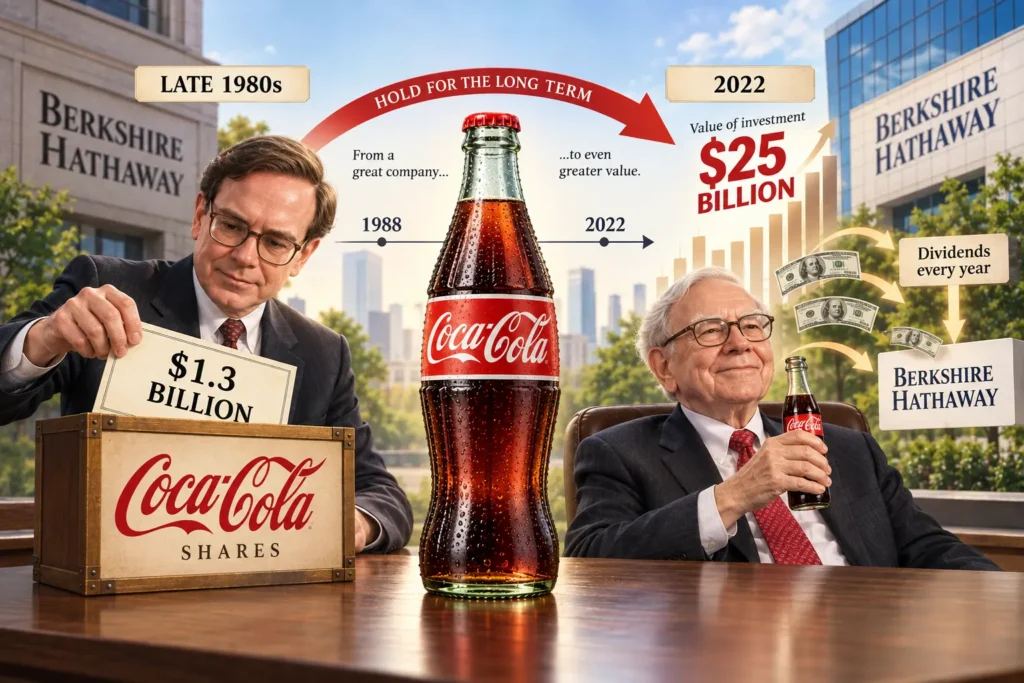
Berkshire began buying Coca-Cola shares heavily in the late 1980s and eventually invested around $1.3 billion in the beverage company. After that, Buffett essentially did just one thing: he held on to the shares.
By the end of 2022, that initial investment was worth around $25 billion. On top of that, Coca-Cola regularly paid Berkshire hundreds of millions of dollars in dividends each year.
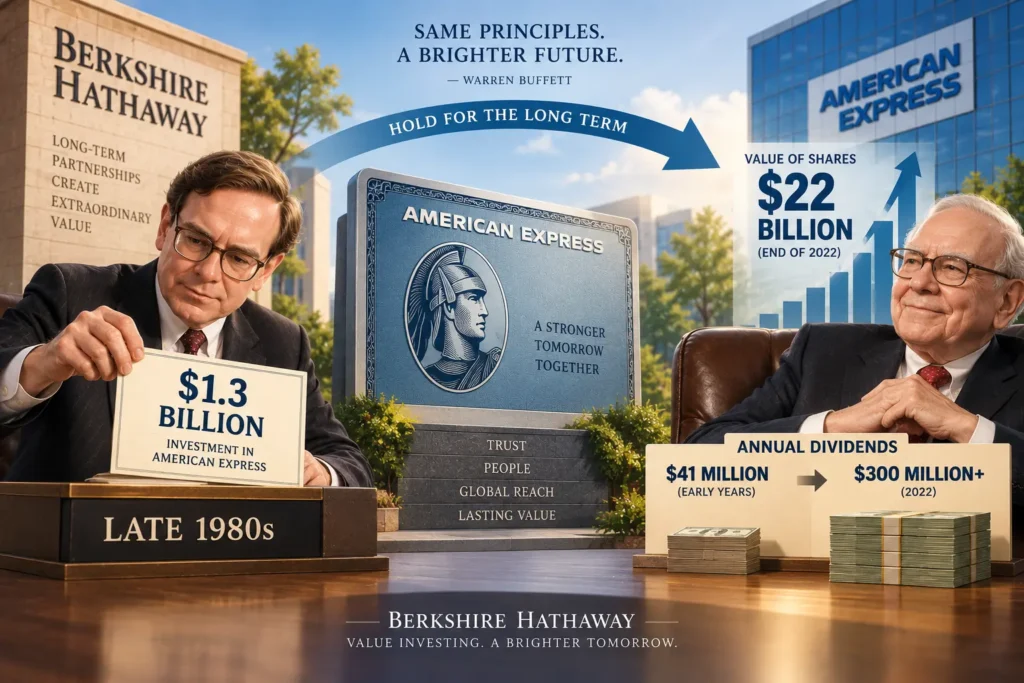
American Express is a similar story. Berkshire also invested around $1.3 billion to build its stake in the company. By the end of 2022, those shares were worth approximately $22 billion, while the annual dividends Berkshire received had risen from around $41 million in the early years to more than $300 million.
These figures clearly illustrate Buffett’s investment philosophy. He does not necessarily look for a stock that can rise rapidly within a few months. What he wants to find is a business capable of continuing to make money for many years, or even many decades. Once he has found such a business, time and compound returns can do the rest.
One of the most notable examples from the later part of his career is Apple.
For many years, Buffett was cautious about technology stocks because he believed that technology was not an area he understood deeply enough. However, he gradually came to see Apple differently. To Buffett, Apple was not simply a company that made phones or computers. It was also a business with an extremely powerful brand and a remarkably loyal customer base.
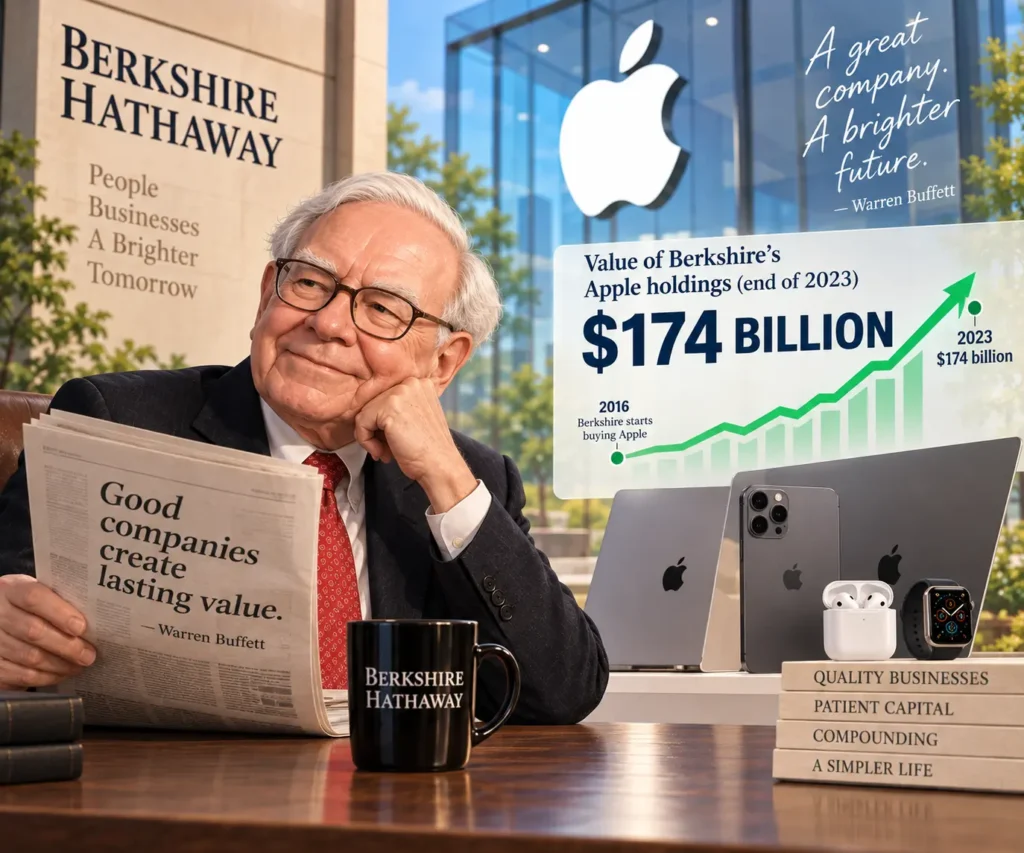
Berkshire began buying Apple shares in 2016. The investment quickly became one of Buffett’s most famous deals. By the end of 2023, Berkshire’s Apple holdings were worth around $174 billion. Berkshire later sold a large portion of its Apple shares, but the investment remains a typical example of Buffett’s style: he can be extremely cautious for a long time, but when he truly sees an opportunity that he understands well, he is willing to make a very large bet.
However, Buffett’s greatest achievement may not lie in any single stock investment. It is perhaps his transformation of Berkshire Hathaway from a struggling textile company into one of the world’s most valuable conglomerates.
Buffett took control of Berkshire in 1965. The company’s textile business had poor prospects at the time, so he gradually redirected its money into insurance and various other businesses. Over time, Berkshire developed into a vast conglomerate, owning numerous businesses while also holding stakes in many major American companies.
The long-term results are extraordinary. From 1965 through the end of 2024, Berkshire’s market value per share increased by an average of around 19.9% per year, compared with an average annual return of approximately 10.4% for the S&P 500, including dividends. Over the entire period from 1964 to 2024, Berkshire shares rose by around 5.5 million percent.
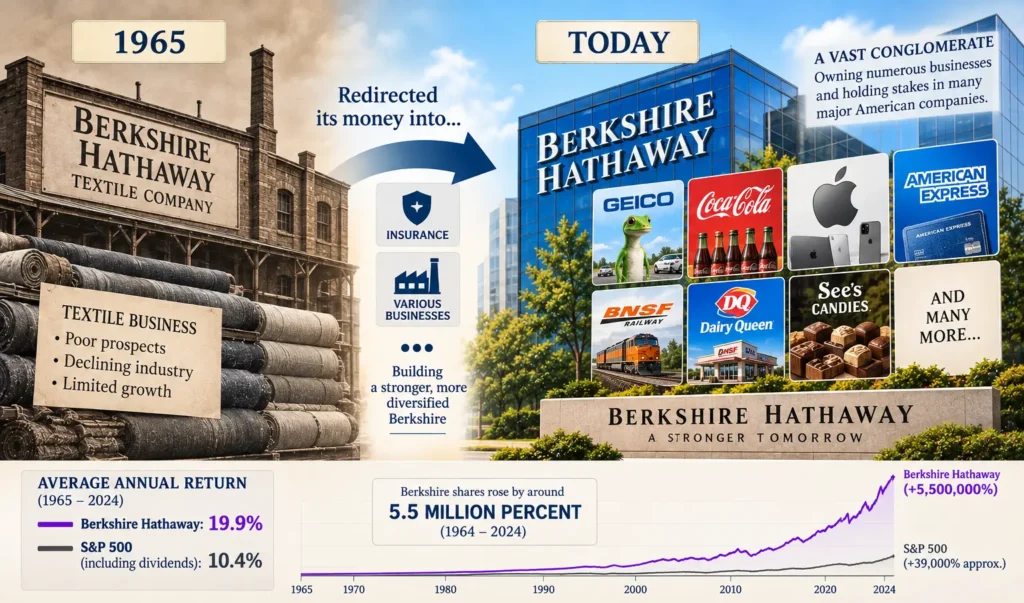
At first glance, the difference between 19.9% and 10.4% a year may not seem enormous. But when those returns accumulate over nearly six decades, the power of compounding creates an enormous gap.
What is interesting, however, is that Buffett’s personal life looks nothing like what people might normally imagine for a billionaire worth well over $100 billion.
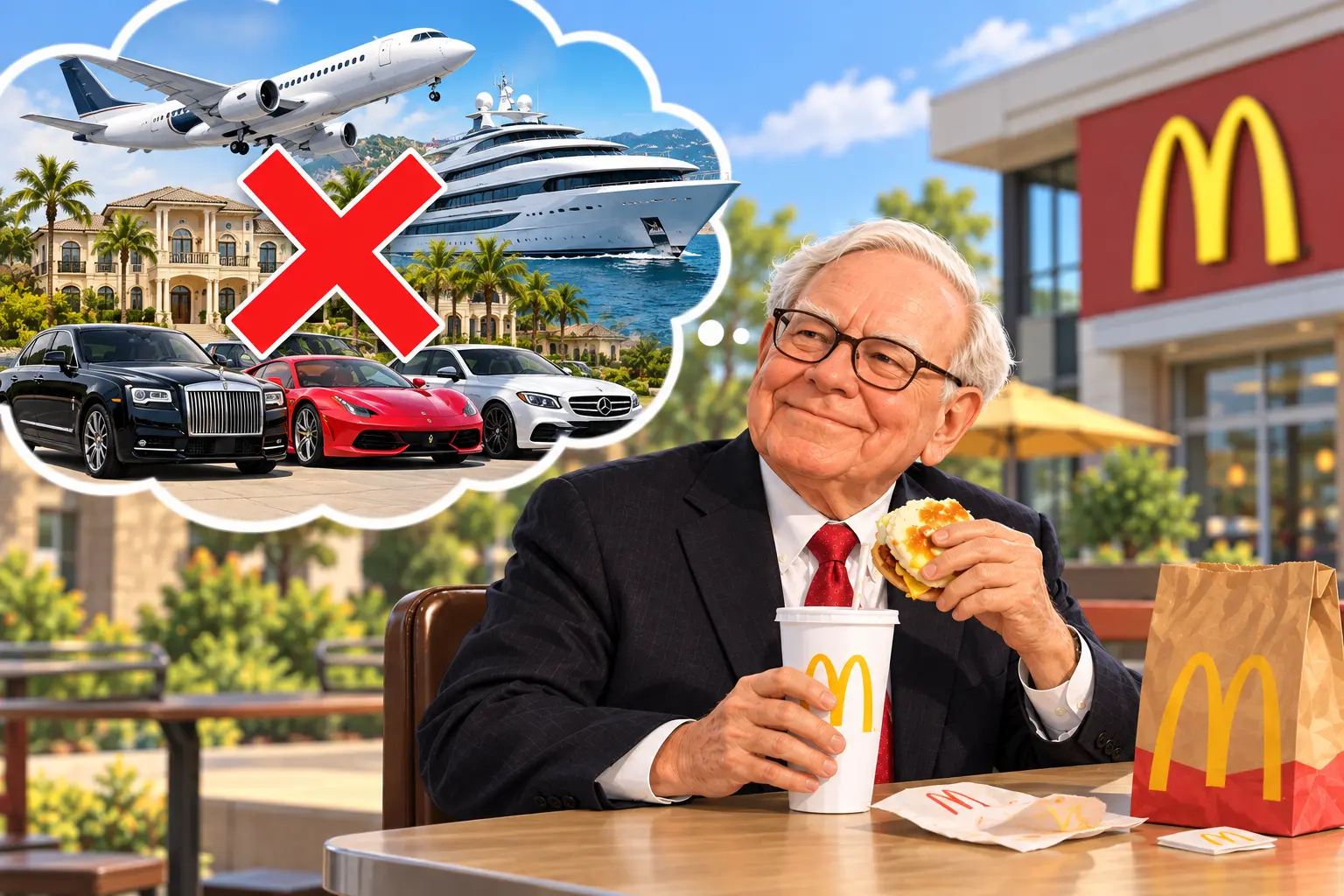
He is famous for being frugal and for having little interest in material possessions. Buffett has remained closely connected to Omaha, Nebraska, and is well known for still living in the house he bought in 1958 for $31,500. While many billionaires are associated with luxurious mansions, superyachts, or collections of supercars, Buffett has long been known for his relatively modest lifestyle.
In the documentary Becoming Warren Buffett, he explains that on his way to the office, he often stops at McDonald’s for breakfast. Every morning, his wife leaves one of three exact amounts of money in the car for him: $2.61, $2.95, or $3.17, corresponding to three different breakfast choices. Buffett even jokes that on days when the stock market is down and he feels that he is “not quite as prosperous,” he skips the $3.17 option—a bacon, egg, and cheese biscuit—and chooses a cheaper breakfast instead.
This can also be seen in his cars. Buffett drove a 2006 Cadillac DTS for about eight years before buying a Cadillac XTS in 2014, which had a starting price of around $44,600. He explained that he drives only about 3,500 miles (5,600 km) a year, so he sees little need to buy a new car frequently. And perhaps he would not have bought a new car if his daughter had not urged him to replace his old one for safety reasons.
His frugality is not simply about trying to spend as little money as possible. Buffett seems to place particular importance on the value he receives compared with the amount of money he pays. This is quite similar to the way he looks at an investment: something expensive is not necessarily valuable, while something valuable does not necessarily have to be extravagant.
Another clear characteristic of Buffett is his patience. He can leave tens of billions of dollars in cash sitting inside Berkshire rather than rush to invest simply because he feels that he needs to do something. On the other hand, once he finds a business that he truly believes in, Buffett can hold on to it for decades.
He also spends a large proportion of his time reading and thinking. Rather than constantly attending meetings or watching every small movement in stock prices, Buffett has long been famous for his habit of reading newspapers, annual reports, and corporate documents. Behind deals worth billions of dollars is usually not an impulsive decision, but a great deal of time spent studying and understanding businesses, followed by the ability to wait until the right opportunity appears.
This is also one of the fascinating paradoxes of Warren Buffett. He has spent most of his life becoming one of the best money-makers in the world, yet he has not spent the rest of it trying to find ways to spend all that money.
From investing more than $10,000 in GEICO as a young student to making investments worth tens of billions of dollars in Coca-Cola, American Express, and Apple, Buffett has demonstrated that extraordinary wealth does not necessarily have to be created through extraordinary decisions every day. Much of his success comes from a few principles that sound relatively simple but are extremely difficult to follow over a long period of time: understand what you are buying, do not pay too much, avoid following the crowd, wait patiently, and give compound returns enough time to work their magic.
WORD BANK:
fortune /ˈfɔːr.tʃən/ [B2] (n): khối tài sản, gia tài
deal /diːl/ [B2] (n): thương vụ, giao dịch
stock /stɑːk/ [B2] (n): cổ phiếu
relatively /ˈrel.ə.t̬ɪv.li/ [B2] (adv): tương đối
consistent /kənˈsɪs.tənt/ [B2] (adj): nhất quán
approach /əˈproʊtʃ/ [B2] (n): cách tiếp cận, phương pháp
hold on to sth /ˌhoʊld ˈɑːn/ [B2] (phr v): tiếp tục giữ, không bán cái gì
investment philosophy /ɪnˈvest.mənt fəˈlɑː.sə.fi/ [C1] (n): triết lý đầu tư
proportion /prəˈpɔːr.ʃən/ [B2] (n): tỷ lệ, phần
empire /ˈem.paɪr/ [B2] (n): đế chế
beverage /ˈbev.ɚ.ɪdʒ/ [C1] (n): đồ uống
dividend /ˈdɪv.ə.dend/ [C1] (n): cổ tức
compound return /ˌkɑːm.paʊnd rɪˈtɝːn/ [C1] (n): lợi nhuận kép
cautious about sth /ˈkɑː.ʃəs/ [B2] (adj): thận trọng về cái gì
loyal customer base /ˈlɔɪ.əl ˈkʌs.tə.mɚ beɪs/ [C1] (n): tệp khách hàng trung thành
make a bet /ˌmeɪk ə ˈbet/ [B2] (v): đặt cược
lie in sth /ˈlaɪ/ [B2] (v): nằm ở, nằm trong cái gì
struggling /ˈstrʌɡ.lɪŋ/ [B2] (adj): đang gặp khó khăn, chật vật
textile /ˈtek.staɪl/ [C1] (n/adj): ngành dệt may; thuộc dệt may
conglomerate /kənˈɡlɑː.mɚ.ət/ [C1] (n): tập đoàn đa ngành
prospect /ˈprɑː.spekt/ [B2] (n): triển vọng
redirect sth into sth /ˌriː.daɪˈrekt/ [C1] (v): chuyển, điều hướng cái gì sang cái gì
average annual return /ˈæv.ɚ.ɪdʒ ˈæn.ju.əl rɪˈtɝːn/ [C1] (n): lợi nhuận trung bình hằng năm
at first glance /ət ˌfɝːst ˈɡlæns/ [C1] (phr): thoạt nhìn
gap /ɡæp/ [B1] (n): khoảng cách, chênh lệch
exceed sth by a wide margin /ɪkˈsiːd/ [C1] (v): vượt xa cái gì
pledge to do sth /pledʒ/ [C1] (v): cam kết làm gì
donate sth to sth /ˈdoʊ.neɪt/ [B2] (v): quyên góp, hiến tặng cái gì cho cái gì
charitable cause /ˈtʃer.ə.t̬ə.bəl kɑːz/ [C1] (n): mục đích, hoạt động từ thiện
frugal /ˈfruː.ɡəl/ [C1] (adj): tằn tiện, tiết kiệm
material possession /məˈtɪr.i.əl pəˈzeʃ.ən/ [C1] (n): của cải, tài sản vật chất
luxurious /lʌɡˈʒʊr.i.əs/ [B2] (adj): xa hoa, sang trọng
mansion /ˈmæn.ʃən/ [B2] (n): dinh thự
superyacht /ˈsuː.pɚ.jɑːt/ [C1] (n): siêu du thuyền
modest /ˈmɑː.dɪst/ [B2] (adj): giản dị, khiêm tốn
corresponding to sth /ˌkɔːr.əˈspɑːn.dɪŋ/ [C1] (adj): tương ứng với cái gì
prosperous /ˈprɑː.spɚ.əs/ [C1] (adj): giàu có, thịnh vượng
bacon /ˈbeɪ.kən/ [B1] (n): thịt xông khói
extravagant /ɪkˈstræv.ə.ɡənt/ [C1] (adj): xa hoa, phung phí
characteristic /ˌker.ək.təˈrɪs.tɪk/ [B2] (n): đặc điểm, đặc tính
rush to do sth /rʌʃ/ [B2] (v): vội vàng làm gì
corporate /ˈkɔːr.pɚ.ət/ [B2] (adj): thuộc công ty, doanh nghiệp
impulsive decision /ɪmˈpʌl.sɪv dɪˈsɪʒ.ən/ [C1] (n): quyết định bốc đồng
paradox /ˈper.ə.dɑːks/ [C1] (n): nghịch lý
ỦNG HỘ READ TO LEAD!
Chào bạn! Có thể bạn chưa biết, Read to Lead là một trang giáo dục phi lợi nhuận với mục đích góp phần phát triển cộng đồng người học tiếng Anh tại Việt Nam. Chúng tôi không yêu cầu người đọc phải trả bất kỳ chi phí nào để sử dụng các sản phẩm của mình để mọi người đều có cơ hội học tập tốt hơn. Tuy nhiên, nếu bạn có thể, chúng tôi mong nhận được sự hỗ trợ tài chính từ bạn để duy trì hoạt động của trang và phát triển các sản phẩm mới.
Bạn có thể ủng hộ chúng tôi qua 1 trong 2 cách dưới đây.
– Cách 1: Chuyển tiền qua tài khoản Momo.
Số điện thoại 0947.886.865 (Chủ tài khoản: Nguyễn Tiến Trung)
Nội dung chuyển tiền: Ủng hộ Read to Lead
hoặc
– Cách 2: Chuyển tiền qua tài khoản ngân hàng.
Ngân hàng VIB chi nhánh Hải Phòng
Số tài khoản: 012704060048394 (Chủ tài khoản: Nguyễn Tiến Trung)
Nội dung chuyển tiền: Ủng hộ Read to Lead
Lớp luyện thi IELTS online
Bạn đang có nhu cầu thi chứng chỉ IELTS cho đầu vào đại học, đi du học, xin việc hay xin cư trú và đang phân vân chưa biết học ở đâu?
Nếu bạn đang tìm kiếm dịch vụ luyện thi IELTS online với giáo viên uy tín và chất lượng, cũng như học phí phải chăng, thì lớp học online của thầy Trung (Admin và dịch giả chính của Read to Lead) có thể là một lựa chọn phù hợp dành cho bạn.
Hãy liên hệ (nhắn tin) tới trang Facebook cá nhân của mình (https://www.facebook.com/nguyen.trung.509) để tìm hiểu về lớp học và được tư vấn cũng như được học thử nha!


