


[Reading level: C1 – Advanced]
Money has not always existed in the form of paper bills or numbers in bank accounts. For most of human history, the exchange of goods took place in a very simple way: barter. A farmer might exchange rice for fish, while a blacksmith might trade tools for food. However, this system quickly revealed many inconveniences. Both parties had to possess something the other needed at the same time, and determining the value of different goods was often difficult. To solve this problem, people gradually turned to a medium of exchange—something that everyone accepted.
In many ancient civilizations, items such as shells, salt, or livestock were used as money. Over time, however, gold and silver became the most common choices. They were rare, durable, easy to divide, and difficult to counterfeit. As a result, money gradually became tied to precious metals. As financial systems developed further, countries began issuing paper money and coins but still guaranteed that they could be exchanged for gold. This system became known as the gold standard.
Under the gold standard, the value of money was not based solely on trust but was directly linked to a specific amount of gold. People could take their paper banknotes and coins to a bank and exchange it for an equivalent amount of gold. In the twentieth century, particularly after World War II, the international monetary system was reorganized through the Bretton Woods Agreement of 1944. Under this arrangement, the U.S. dollar became the center of the global financial system. Other countries pegged their currencies to the U.S. dollar, and the United States promised that 35 U.S. dollars could be exchanged for one ounce of gold. This made the dollar almost like the “gold of the modern world.” Central banks around the world accumulated USD because they believed it could be converted into gold at any time.
However, by the late 1960s, the system began to crack. The United States was spending increasingly large amounts of money on the Vietnam War and on domestic welfare programs. To finance these expenditures, the U.S. had to issue more dollars. The amount of USD circulating globally increased rapidly, while America’s gold reserves did not grow accordingly. Many countries began to worry that the United States no longer had enough gold to guarantee all the dollars in existence. As a result, they began bringing dollars to exchange for gold.
America’s gold reserves, as a result, declined rapidly. Facing the risk of losing its gold holdings, in 1971, President Richard Nixon announced that the United States would end the convertibility of dollars into gold. This decision—often referred to as the “Nixon Shock”—officially marked the end of the gold standard. From that point on, the U.S. dollar became a fiat currency, meaning its value was no longer tied to gold or any physical commodity.
But this raised an important question: if the dollar was no longer backed by gold, why would the world still need and trust it? The United States needed a new mechanism to maintain global demand for its currency.
The answer lay in oil.
In the early 1970s, the United States reached a strategic agreement with Saudi Arabia, the world’s largest oil exporter. Under this arrangement, Saudi Arabia agreed to sell oil exclusively in U.S. dollars. This meant that any country wishing to buy oil from Saudi Arabia had to use USD for payment. In return, the United States provided military protection, weapons, and security support to Saudi Arabia.
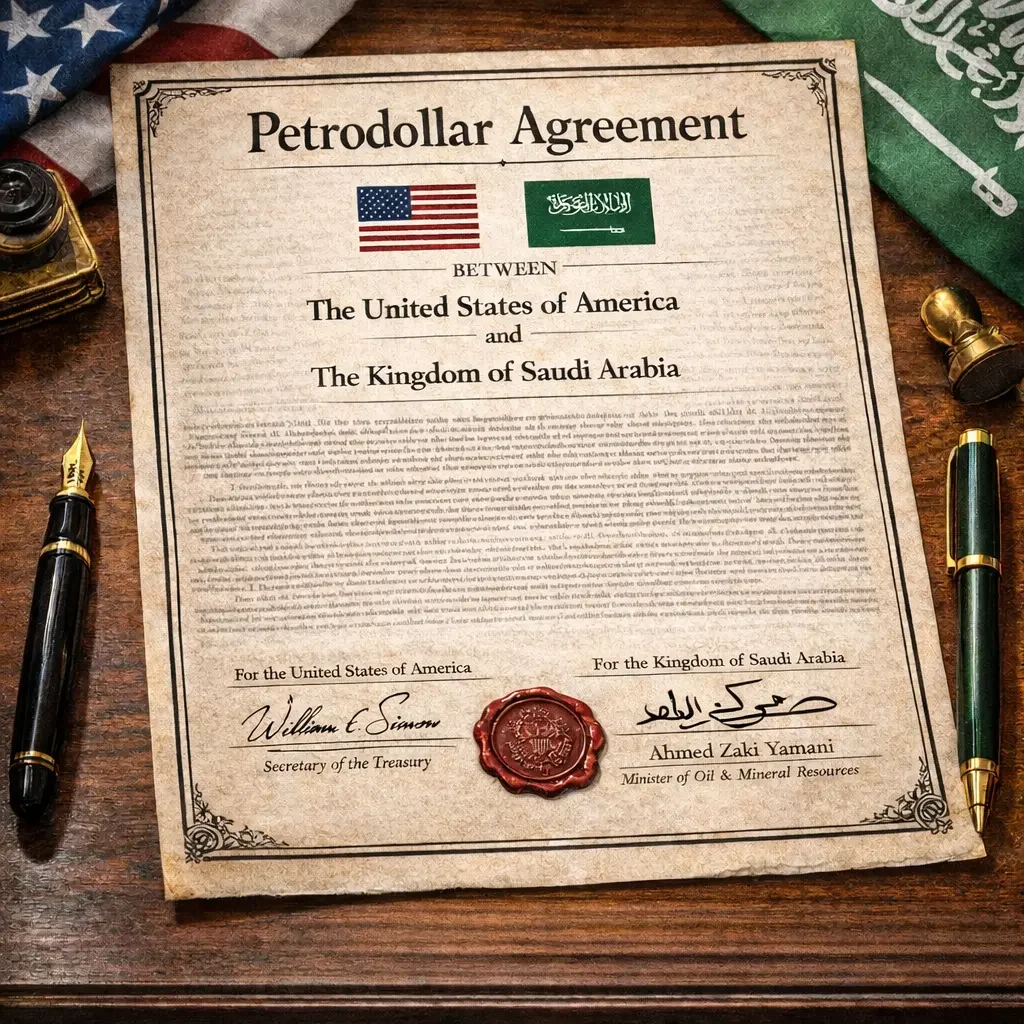
The model was gradually extended to other members of OPEC. As a result, most of the world’s oil—the most important energy resource in the modern economy—came to be priced and traded in U.S. dollars. This arrangement became known as the petrodollar system, meaning a system in which the dollar is tied to oil.
From that point forward, any country wishing to buy oil on the global market had to obtain USD. This created a continuous global demand for the U.S. dollar. Countries needed to hold USD in their foreign exchange reserves to ensure they could import energy.
But the story does not stop with simply holding dollars. When governments and investors around the world accumulate large amounts of USD, a natural question arises: how can that money grow and generate returns? No one wants to keep a huge amount of money simply sitting idle. Therefore, countries and investment funds began searching for places to invest these dollars.
One of the safest and most common choices is U.S. Treasury bonds. These are widely considered among the safest assets in the world. When oil-exporting countries or central banks hold USD, they often use those dollars to purchase U.S. government bonds.
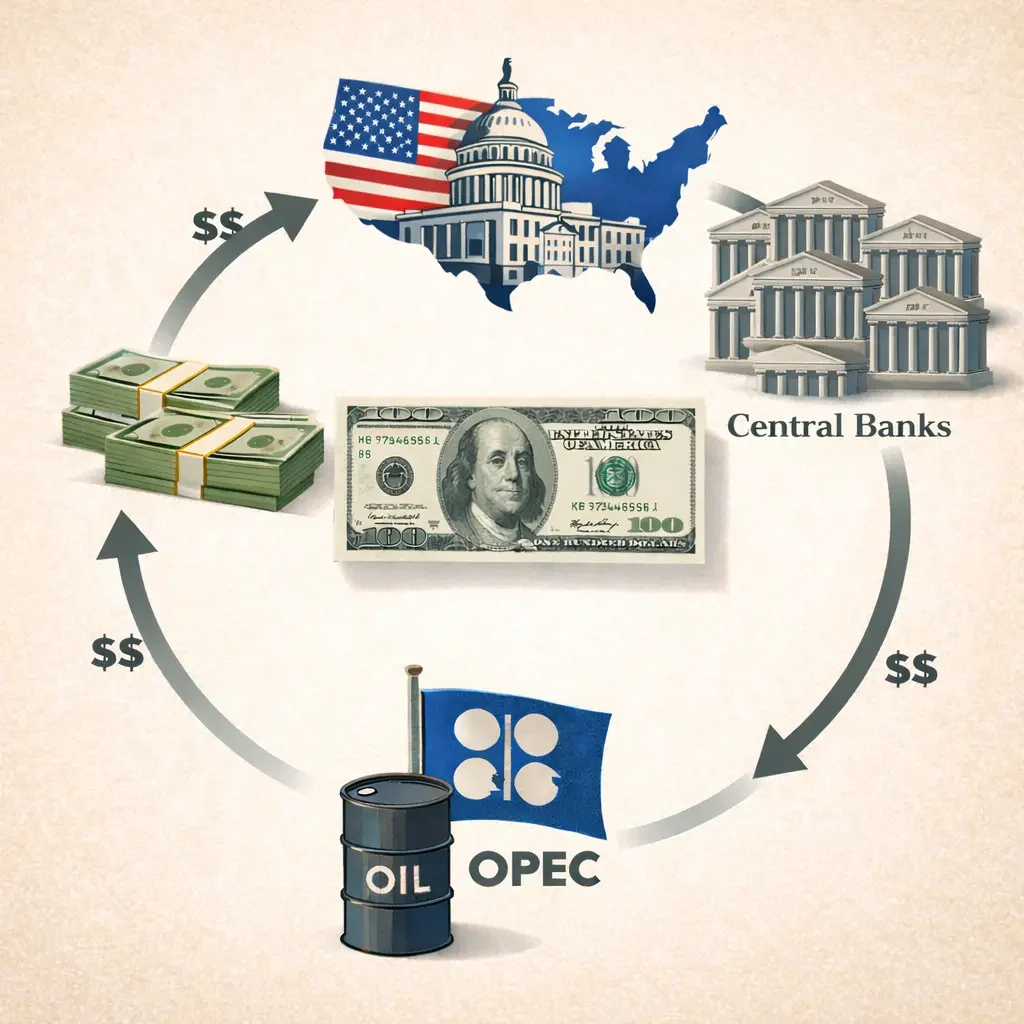
This creates a very special financial cycle. Countries that import oil must buy USD to pay for oil. Oil-exporting countries receive those USD. They then use those dollars to invest back into the U.S. economy, particularly by purchasing U.S. Treasury bonds. In this way, the money flows back to the United States once again, providing the U.S. government with capital to finance spending and budget deficits.
In other words, the petrodollar system not only forces the world to use USD to buy oil, but also causes a large portion of those dollars to flow back into the American financial system.
This mechanism provides the United States with several major advantages. First, it helps the dollar become the primary reserve currency of the world. Since countries need USD to buy oil and conduct international trade, they must hold dollars in their central bank reserves. This creates enormous demand for the U.S. currency.
Second, the petrodollar system helps the United States finance its budget deficits at low cost. Because many countries continuously purchase U.S. Treasury bonds, the United States can borrow money easily at relatively low interest rates.
Third, because global demand for USD remains high, the United States has the ability to issue more currency while maintaining the value of the dollar. While many other countries must worry about currency depreciation when they print more money, the U.S. enjoys a unique advantage due to the dollar’s central role in the global financial system.
Finally, the central role of the dollar also brings significant geopolitical power. Because much of international trade and the global financial system operates through USD, the United States can use financial tools such as sanctions or control over capital flows to influence other countries.
Looking back at the entire story, the world’s monetary system has gone through a long evolution: from barter, to precious metals, to the gold standard, and finally to fiat money supported by economic and geopolitical power. After the collapse of the gold standard in 1971, the United States found a new way to maintain the dominance of its currency: linking it to the most important resource of the global economy—oil.
Thanks to the petrodollar system, the U.S. dollar has continued to hold a central role in international trade and finance for decades, becoming one of the key foundations of the modern global economic order.
WORD BANK:
paper bill /ˈpeɪ.pɚ bɪl/ (n): tiền giấy
barter /ˈbɑːr.t̬ɚ/ [C1] (v): trao đổi hàng hóa
blacksmith /ˈblæk.smɪθ/ (n): thợ rèn
reveal sth /rɪˈviːl/ [B2] (v): tiết lộ cái gì
possess sth /pəˈzes/ [B2] (v): sở hữu cái gì
determine the value of sth /dɪˈtɝː.mɪn/ (v): xác định giá trị của cái gì
medium /ˈmiː.di.əm/ [B2] (n): phương tiện
civilization /ˌsɪv.ə.ləˈzeɪ.ʃən/ [B2] (n): nền văn minh
livestock /ˈlaɪv.stɑːk/ (n): gia súc
durable /ˈdʊr.ə.bəl/ [C1] (adj): bền
counterfeit /ˈkaʊn.t̬ɚ.fɪt/ [C1] (adj): giả mạo
tied to sth /taɪd tuː ˈsʌm.θɪŋ/ (adj): gắn liền với cái gì
precious /ˈpreʃ.əs/ [B2] (adj): quý giá
issue sth /ˈɪʃ.uː/ [B2] (v): phát hành cái gì
guarantee sth /ˌɡer.ənˈtiː/ [B2] (v): đảm bảo cái gì
gold standard /ɡoʊld ˈstæn.dɚd/ (n): chế độ bản vị vàng
solely /ˈsoʊl.li/ [C1] (adv): hoàn toàn, chỉ
equivalent /ɪˈkwɪv.ə.lənt/ [B2] (adj): tương đương
monetary /ˈmɑː.nə.ter.i/ [C1] (adj): thuộc tiền tệ
peg sth to sth /peɡ ˈsʌm.θɪŋ tuː ˈsʌm.θɪŋ/ (v): neo (giá trị) vào cái gì
accumulate /əˈkjuː.mjə.leɪt/ [C1] (v): tích lũy
convert sth into sth /kənˈvɝːt ˈsʌm.θɪŋ ˈɪn.tuː ˈsʌm.θɪŋ/ [B2] (v): chuyển đổi cái gì thành cái gì
crack /kræk/ (n): sự sụp đổ, vết rạn nứt
domestic /dəˈmes.tɪk/ [B2] (adj): trong nước
welfare /ˈwel.fer/ [B2] (n): phúc lợi
finance /ˈfaɪ.næns/ [B2] (n): tài chính
expenditure /ɪkˈspen.dɪ.tʃɚ/ [C1] (n): chi tiêu
circulate /ˈsɝː.kjə.leɪt/ [C1] (v): lưu thông
gold reserves /ɡoʊld rɪˈzɝːvz/ (n): dự trữ vàng
accordingly /əˈkɔːr.dɪŋ.li/ [B2] (adv): theo đó
holdings /ˈhoʊl.dɪŋz/ (n): lượng nắm giữ tài sản
convertibility /kənˌvɝː.t̬əˈbɪl.ə.t̬i/ [C2] (n): khả năng chuyển đổi
fiat currency /ˈfiː.æt ˈkɝː.ən.si/ (n): tiền pháp định
commodity /kəˈmɑː.də.t̬i/ [B2] (n): hàng hóa
mechanism /ˈmek.ə.nɪ.zəm/ [B2] (n): cơ chế
strategic /strəˈtiː.dʒɪk/ [B2] (adj): mang tính chiến lược
exclusively /ɪkˈskluː.sɪv.li/ [C1] (adv): độc quyền, duy nhất
petrodollar /ˈpe.trəˌdɑː.lɚ/ (n): petrodollar (hệ thống đổi dầu mỏ lấy dollar Mỹ)
foreign exchange reserves /ˈfɔːr.ən ɪksˈtʃeɪndʒ rɪˈzɝːvz/ (n): dự trữ ngoại hối
generate returns /ˈdʒen.ə.reɪt rɪˈtɝːnz/ (v): tạo ra lợi nhuận
sit idle /sɪt ˈaɪ.dəl/ (v): nằm yên, không được sử dụng
treasury bonds /ˈtreʒ.ɚ.i bɑːndz/ (n): trái phiếu kho bạc
asset /ˈæs.et/ [B2] (n): tài sản
flow back to somewhere /floʊ/ (v): chảy ngược trở lại đâu đó
budget deficit /ˈbʌdʒ.ɪt ˈdef.ə.sɪt/ (n): thâm hụt ngân sách
enormous /ɪˈnɔːr.məs/ [B2] (adj): khổng lồ
currency depreciation /ˈkɝː.ən.si dɪˌpriː.ʃiˈeɪ.ʃən/ (n): sự mất giá tiền tệ
geopolitical /ˌdʒiː.oʊ.pəˈlɪ.t̬ɪ.kəl/ [C1] (adj): thuộc địa chính trị
sanction /ˈsæŋk.ʃən/ [C1] (n): lệnh trừng phạt
dominance /ˈdɑː.mə.nəns/ [C1] (n): sự thống trị
ỦNG HỘ READ TO LEAD!
Chào bạn! Có thể bạn chưa biết, Read to Lead là một trang giáo dục phi lợi nhuận với mục đích góp phần phát triển cộng đồng người học tiếng Anh tại Việt Nam. Chúng tôi không yêu cầu người đọc phải trả bất kỳ chi phí nào để sử dụng các sản phẩm của mình để mọi người đều có cơ hội học tập tốt hơn. Tuy nhiên, nếu bạn có thể, chúng tôi mong nhận được sự hỗ trợ tài chính từ bạn để duy trì hoạt động của trang và phát triển các sản phẩm mới.
Bạn có thể ủng hộ chúng tôi qua 1 trong 2 cách dưới đây.
– Cách 1: Chuyển tiền qua tài khoản Momo.
Số điện thoại 0947.886.865 (Chủ tài khoản: Nguyễn Tiến Trung)
Nội dung chuyển tiền: Ủng hộ Read to Lead
hoặc
– Cách 2: Chuyển tiền qua tài khoản ngân hàng.
Ngân hàng VIB chi nhánh Hải Phòng
Số tài khoản: 012704060048394 (Chủ tài khoản: Nguyễn Tiến Trung)
Nội dung chuyển tiền: Ủng hộ Read to Lead
Lớp luyện thi IELTS online
Bạn đang có nhu cầu thi chứng chỉ IELTS cho đầu vào đại học, đi du học, xin việc hay xin cư trú và đang phân vân chưa biết học ở đâu?
Nếu bạn đang tìm kiếm dịch vụ luyện thi IELTS online với giáo viên uy tín và chất lượng, cũng như học phí phải chăng, thì thầy Trung và Cô Thủy (Admin và dịch giả chính của Read to Lead) có thể là một lựa chọn phù hợp dành cho bạn.
Hãy liên hệ (nhắn tin) tới trang Facebook cá nhân của mình (https://www.facebook.com/nguyen.trung.509) để tìm hiểu về lớp học và được tư vấn cũng như được học thử nha!


