



[Reading level: B1 – Intermediate]
About 50 kilometers from the center of Hanoi, Doan Nu Hamlet in Hong Son Commune presents the scenery of a Northern Delta countryside, with a row of 20 ancient kapok trees simultaneously bursting into bloom in mid-March. Unlike the commonly seen scattered distribution, the kapok trees here are arranged in a line stretching over 500 meters, forming a corridor of red along the edge of paddy fields.

Mr. Le Hoang Vu, a photographer living in Hanoi, visited the hamlet during peak bloom and captured peaceful moments of the rural area along the Day River. According to Mr. Vu, this location has long been famous for its row of ancient kapok trees.
“Not only does it create a distinctive landscape, but the tree row is also deeply connected to the lives, memories, and culture of the local people,” Mr. Vu said.
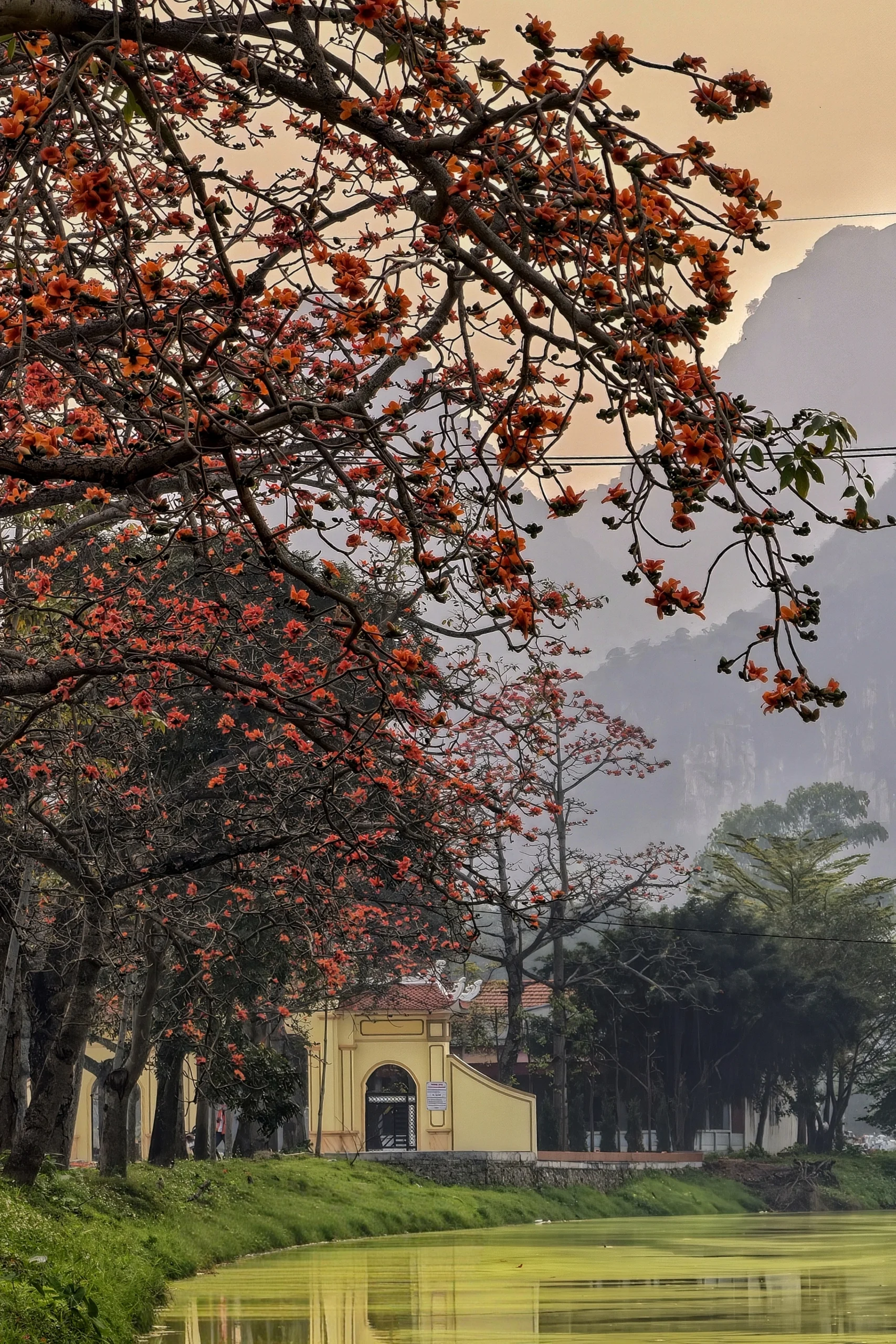
In the local people’s agricultural life, changes in the kapok trees serve as signals of seasonal weather. When the flowers begin to fall, it marks the end of late cold spells (spring chill), and temperatures start to stabilize, entering the period of tending spring–summer rice crops.
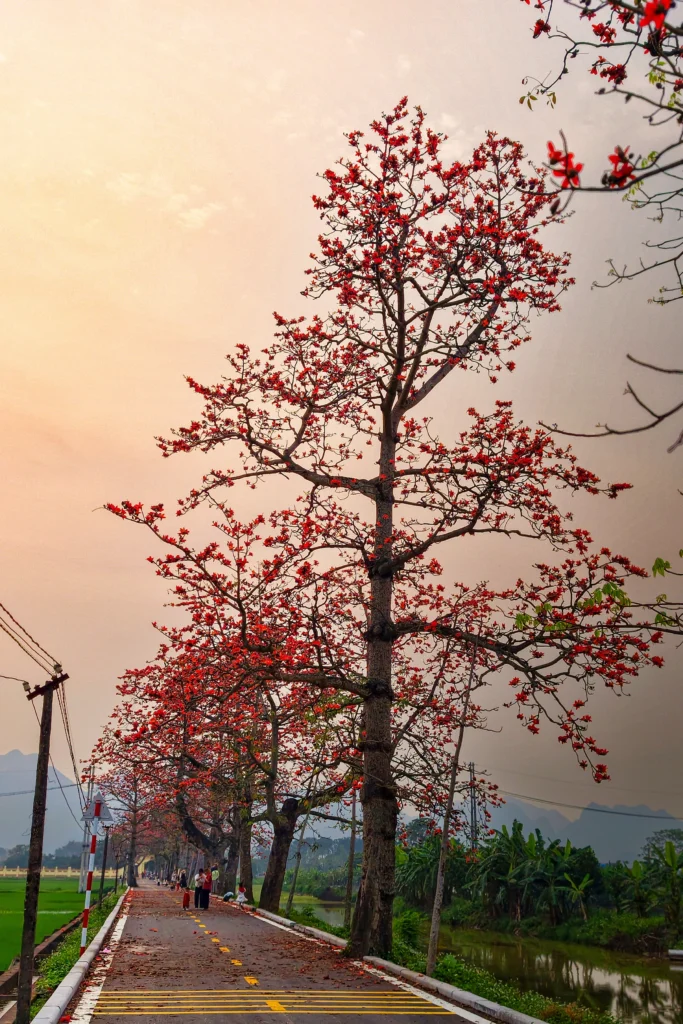
The row of kapok trees in Doan Nu Hamlet lies along the road leading to the cemetery, running parallel to the irrigation system and rice fields. According to folk beliefs, the kapok tree plays a role in “spiritual protection”; such ancient trees are often planted in fields or at village entrances and have been preserved intact by the community for decades.
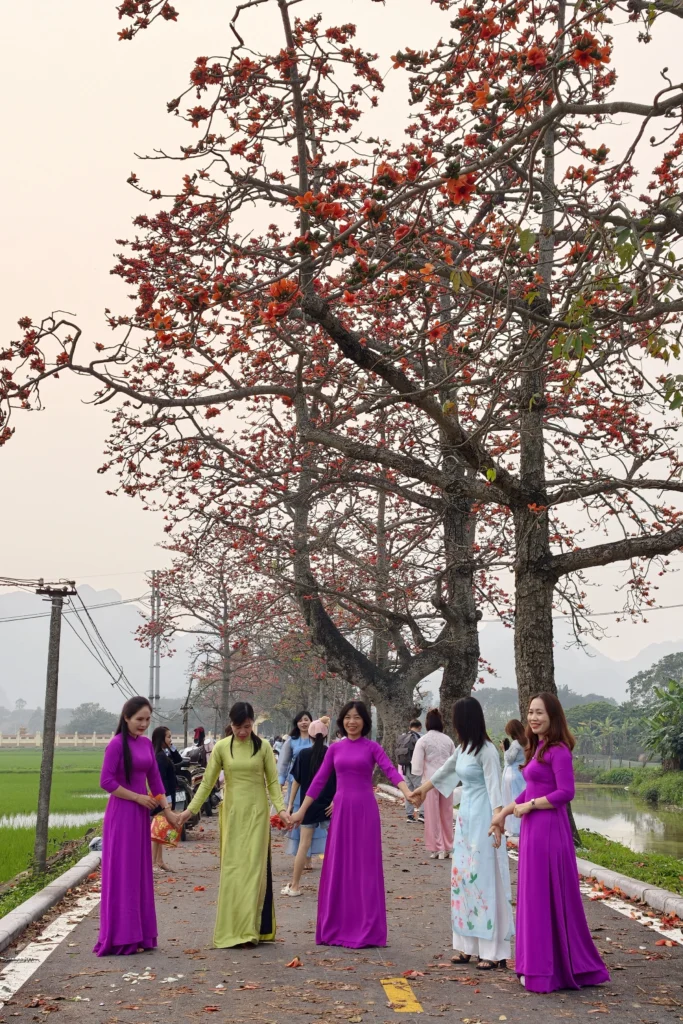
During the blooming season, Doan Nu Hamlet becomes an attractive destination for visitors thanks to its popularity on social media. Tourists often come on weekends to take photos and explore. As tourism activities develop, local residents have actively cooperated with authorities to maintain the landscape. Households along the flower-lined road voluntarily collect household waste and remind visitors not to climb trees or break branches.
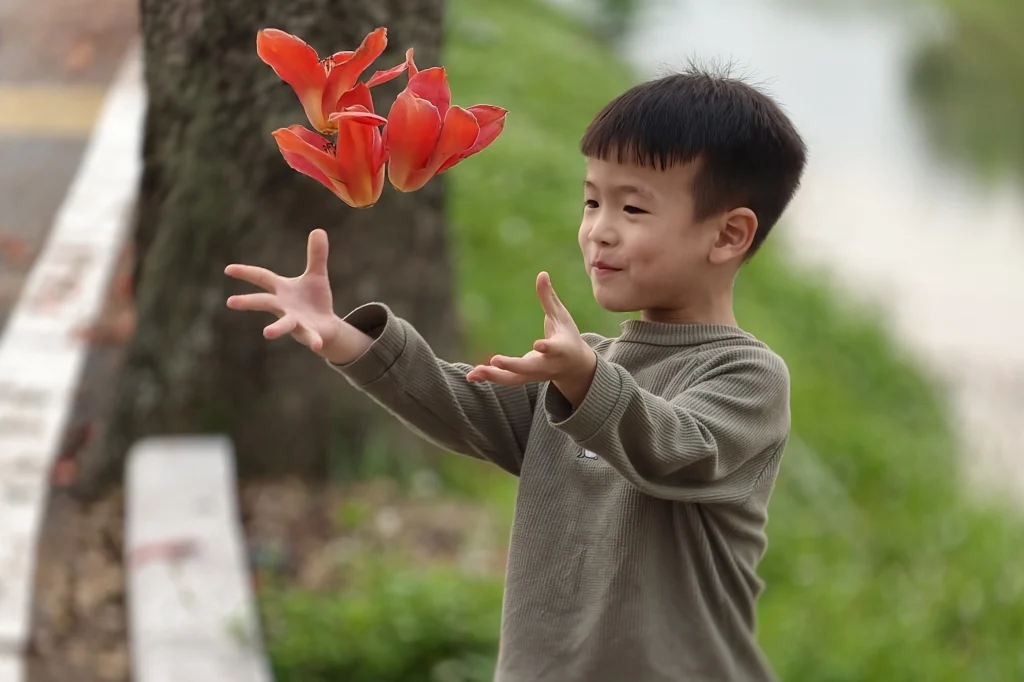
The kapok flower, also known as moc mien or po lang, has five large, thick petals in bright red or deep crimson. Before blooming, the tree usually sheds all its leaves.
The blooming cycle lasts about two to three weeks, typically beginning in early March and ending in mid-April. Due to the short blooming period, the flowers cluster densely on bare branches, creating a uniform red canopy against the sky—a distinctive feature of this tree species during seasonal transitions.
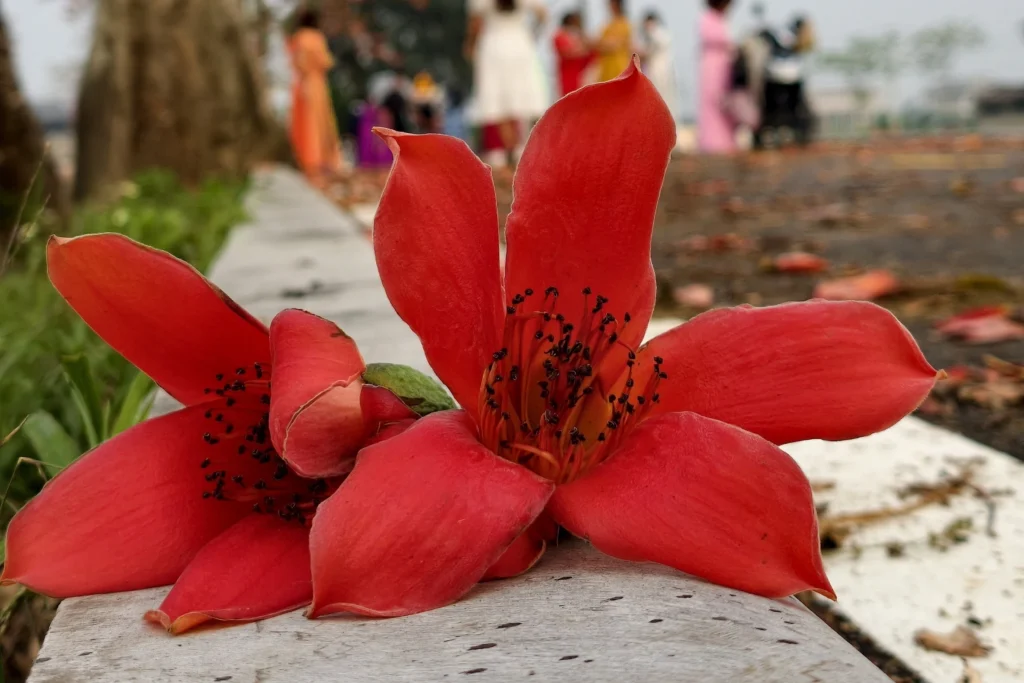
In addition to its symbolic value, the kapok flower is also utilized in daily life. Dried petals are used as a medicinal ingredient in traditional remedies for cooling the body and reducing inflammation.
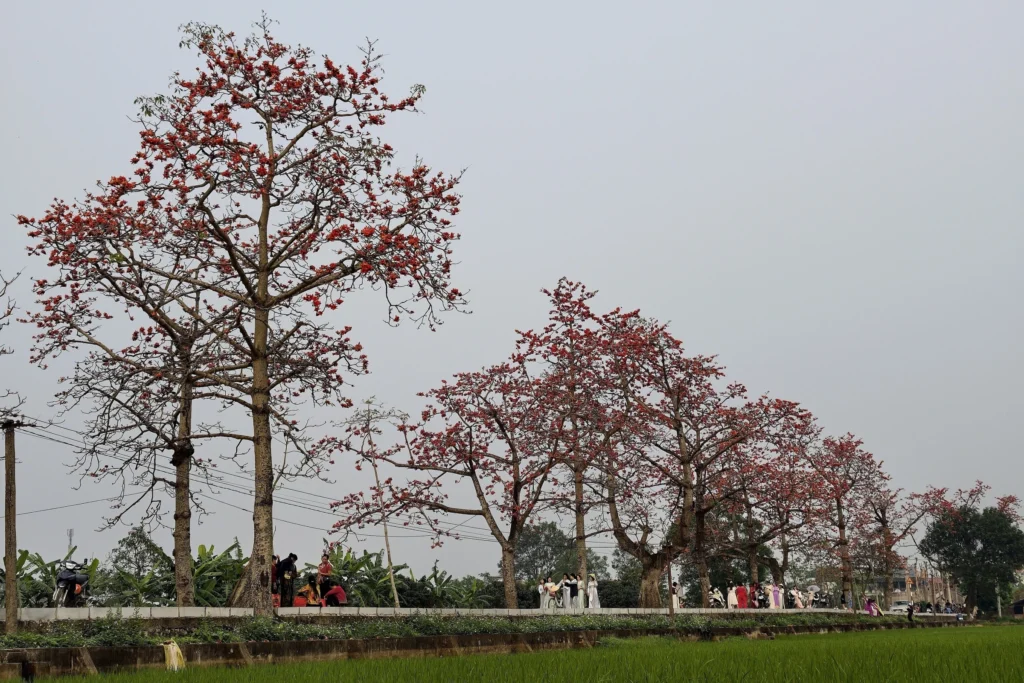
Maintaining the row of trees is not only for preserving the landscape but also for protecting a living heritage closely associated with the historical formation of the hamlet in the outskirts of Hanoi.
Source: https://vnexpress.net/hoa-gao-bung-no-nhuom-do-vung-que-ngoai-thanh-ha-noi-5050108.html
WORD BANK:
hamlet /ˈhæm.lɪt/ (n): thôn
commune /ˈkɑː.mjuːn/ (n): xã
scenery /ˈsiː.nɚ.i/ [B1] (n): phong cảnh
delta /ˈdel.tə/ (n): đồng bằng châu thổ
a row of sth /ə roʊ əv/ (phr): một hàng cái gì
kapok tree /ˈkeɪ.pɑːk triː/ (n): cây gạo
kapok flower /ˈkeɪ.pɑːk ˈflaʊ.ɚ/ (n): hoa gạo
simultaneously /ˌsaɪ.məlˈteɪ.ni.əs.li/ [B2] (adv): đồng thời
burst into bloom /bɝːst ˈɪn.tuː bluːm/ (v): nở rộ
scattered /ˈskæt̬.ɚd/ [B2] (adj): rải rác
stretch /stretʃ/ [B2] (v): kéo dài
corridor /ˈkɔːr.ə.dɔːr/ (n): hành lang
edge /edʒ/ [B1] (n): rìa, mép
paddy field /ˈpæd.i fiːld/ (n): cánh đồng lúa
peak bloom /piːk bluːm/ (n): thời điểm nở rộ nhất
distinctive /dɪˈstɪŋk.tɪv/ [B2] (adj): đặc trưng
cold spell /koʊld spel/ (n): đợt rét
chill /tʃɪl/ (n): cái lạnh
tend /tend/ [B1] (v): chăm sóc
cemetery /ˈsem.ə.ter.i/ (n): nghĩa trang
parallel to sth /ˈper.ə.lel tuː/ (adj): song song với cái gì
irrigation system /ˌɪr.əˈɡeɪ.ʃən ˈsɪs.təm/ (n): hệ thống thủy lợi
folk belief /foʊk bɪˈliːf/ (n): tín ngưỡng dân gian
intact /ɪnˈtækt/ (adj): nguyên vẹn
flower-lined road /ˈflaʊ.ɚ laɪnd roʊd/ (n): con đường rợp hoa
petal /ˈpet̬.əl/ (n): cánh hoa
deep crimson /diːp ˈkrɪm.zən/ (adj): đỏ thẫm
shed sth /ʃed/ (v): rụng, rơi (lá, hoa)
cluster /ˈklʌs.tɚ/ (v): tụ lại, kết thành chùm
densely /ˈdens.li/ (adv): dày đặc
bare branch /ber bræntʃ/ (n): cành trơ trụi
canopy /ˈkæn.ə.pi/ (n): tán cây
symbolic /sɪmˈbɑː.lɪk/ [B2] (adj): mang tính biểu tượng
utilize /ˈjuː.t̬əl.aɪz/ [C1] (v): tận dụng
medicinal ingredient /məˈdɪs.ən.əl ɪnˈɡriː.di.ənt/ (n): thành phần dược liệu
inflammation /ˌɪn.fləˈmeɪ.ʃən/ (n): sự viêm
heritage /ˈher.ɪ.t̬ɪdʒ/ [B2] (n): di sản
ỦNG HỘ READ TO LEAD!
Chào bạn! Có thể bạn chưa biết, Read to Lead là một trang giáo dục phi lợi nhuận với mục đích góp phần phát triển cộng đồng người học tiếng Anh tại Việt Nam. Chúng tôi không yêu cầu người đọc phải trả bất kỳ chi phí nào để sử dụng các sản phẩm của mình để mọi người đều có cơ hội học tập tốt hơn. Tuy nhiên, nếu bạn có thể, chúng tôi mong nhận được sự hỗ trợ tài chính từ bạn để duy trì hoạt động của trang và phát triển các sản phẩm mới.
Bạn có thể ủng hộ chúng tôi qua 1 trong 2 cách dưới đây.
– Cách 1: Chuyển tiền qua tài khoản Momo.
Số điện thoại 0947.886.865 (Chủ tài khoản: Nguyễn Tiến Trung)
Nội dung chuyển tiền: Ủng hộ Read to Lead
hoặc
– Cách 2: Chuyển tiền qua tài khoản ngân hàng.
Ngân hàng VIB chi nhánh Hải Phòng
Số tài khoản: 012704060048394 (Chủ tài khoản: Nguyễn Tiến Trung)
Nội dung chuyển tiền: Ủng hộ Read to Lead
Lớp luyện thi IELTS online
Bạn đang có nhu cầu thi chứng chỉ IELTS cho đầu vào đại học, đi du học, xin việc hay xin cư trú và đang phân vân chưa biết học ở đâu?
Nếu bạn đang tìm kiếm dịch vụ luyện thi IELTS online với giáo viên uy tín và chất lượng, cũng như học phí phải chăng, thì thầy Trung và Cô Thủy (Admin và dịch giả chính của Read to Lead) có thể là một lựa chọn phù hợp dành cho bạn.
Hãy liên hệ (nhắn tin) tới trang Facebook cá nhân của mình (https://www.facebook.com/nguyen.trung.509) để tìm hiểu về lớp học và được tư vấn cũng như được học thử nha!


