


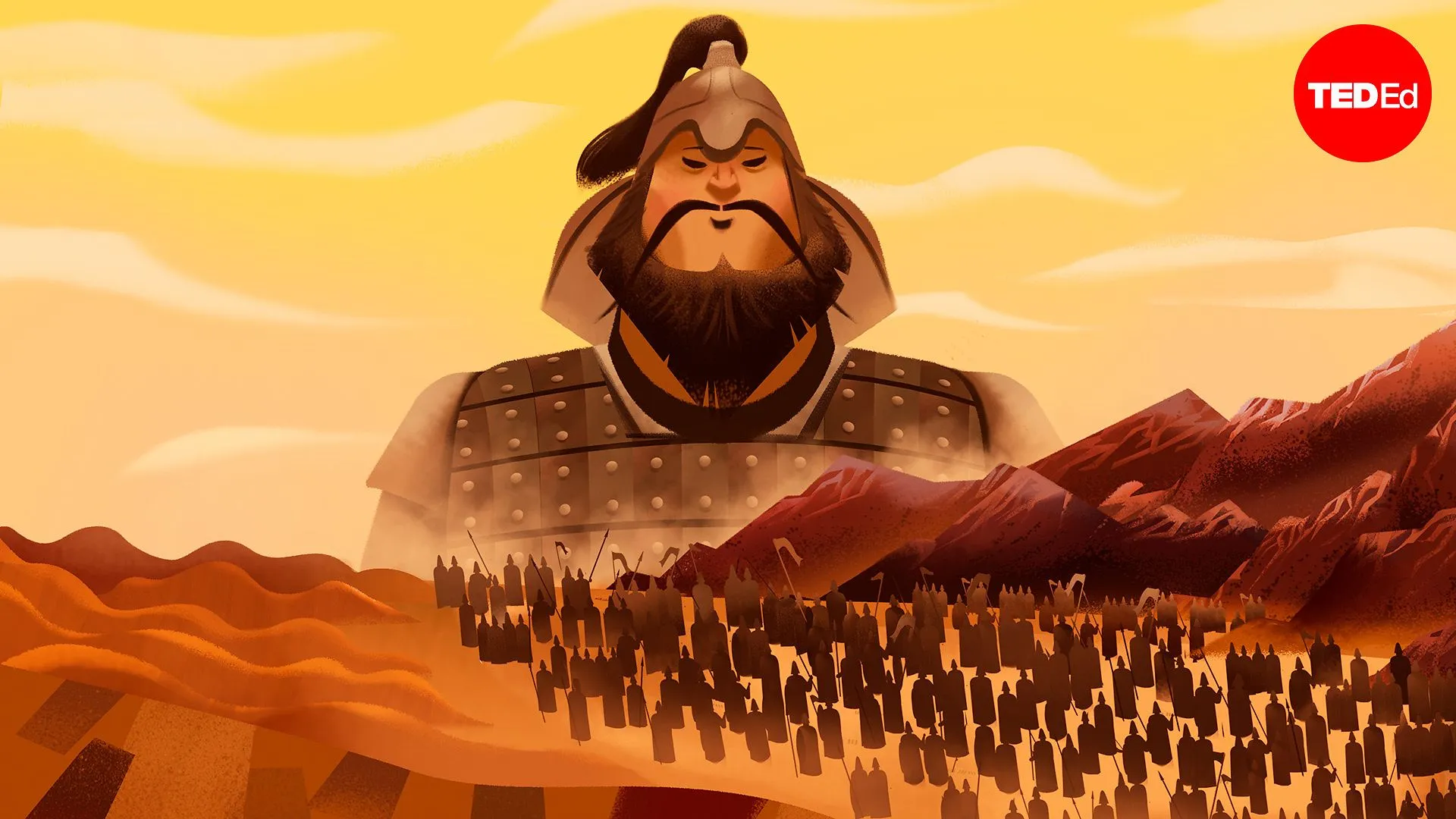
It was the largest contiguous land empire in history—stretching from Korea to Ukraine and from Siberia to southern China, and was forged on the open plains. In the 12th century CE, before the Mongol Empire formed, the East Asian steppe was home to scattered groups of Mongol and Turkic pastoral nomads led by Khans. The people herded sheep, cattle, yaks and camels. They lived in felt tents and moved between summer and winter campsites.
Nomadic women held significant authority, managing these migrations, many of the flocks and trade. Meanwhile, men specialized in mounted warfare. These nomadic groups often fought each other. That was to change under Temujin, who was born into an aristocratic Mongol family. Despite losing his father at an early age and growing up in poverty, he quickly rose to power by forging strategic alliances with other leaders.
Unlike those khans, Temujin promoted soldiers based on merit and distributed spoils evenly among them. His most brilliant move was to scatter the nomads he conquered among his own soldiers so they couldn’t join together against him. These innovations made him unstoppable, and by 1206, he had united the people of the felt-walled tents and become Chinggis Khan.
The Mongols were shamanists, believing that the spirits of nature and their ancestors inhabited the world around them. Over all arched the Sky god Tenggeri. Chinggis Khan believed that Tenggeri wanted him to conquer the entire world in his name. With the nomads of the Mongolian plain united, this seemed within reach. Anyone who resisted the Mongols was resisting Tenggeri’s will, and for this insubordination, had to die.
Under Chinggis Khan, the Mongols first subdued northern China and the eastern Islamic lands. After his death in 1227, the Divine Mandate passed to his family, or the Golden Lineage. In the 1230s, Chinggis Khan’s sons and daughters conquered the Turks of Central Asia and the Russian princes, then destroyed two European armies in 1241.
In the 1250s, the Mongols seized Islamic territory as far as Baghdad, while in the East their grasp reached southern China by 1279. Life within the Mongol Empire wasn’t just war, pillage and destruction. Once the Mongols conquered a territory, they left its internal politics alone and used local administrators to govern for them. The Mongols let all religions flourish, as long as the leaders prayed for them.
Although they routinely captured artisans, scholars and engineers, they appreciated what those specialists could do and forcibly settled them across Asia to continue their work. The most valuable produce in the Empire was gold brocade, which took silk from China, gold from Tibet and weavers from Baghdad. Gold brocade clothed the Mongol rulers, covered their horses and lined their tents.
The Mongols particularly prized gunpowder technicians from China. With much of Eurasia politically unified, trade flourished along the Silk Road, helped by an extensive system of horse messengers and relay posts. Robust trade continued at sea, especially in blue-and-white porcelain, which combined white pottery from Mongol China with blue dye from Mongol Iran.
But this was not to last. Succession to the Great Khan didn’t automatically go to the eldest son, but rather allowed brothers, uncles and cousins to vie for leadership with senior widows acting as regents for their sons. By the 1260s, Chinggis Khan’s grandsons were in a full-blown civil war over inheritance and fragmented the realm into four separate empires.
In China, Kublai Khan’s Yuan Dynasty is remembered as a golden age of science and culture. In Iran, the Ilkhanate inaugurated the development of new monumental architecture and Persian miniature painting. In Central Asia, the Chagatai Khanate brought forth leaders like Timur and his descendant Babur, who founded the Mughal Empire in India.
And in Eastern Europe, the Golden Horde ruled for years until a trading post named Muscovy grew into a major world power. Even though the Empire lasted only a short while, the Mongols left a legacy of world-domination that remains unmatched today.
Source: TED-ed
WORD BANK:
contiguous /kənˈtɪɡ.ju.əs/ [C2] (adj): liền kề
empire /ˈem.paɪɚ/ [B2] (n): đế chế
stretch /stretʃ/ [B2] (v): kéo dài
forge sth /fɔːrdʒ/ [C1] (v): tạo dựng
plain /pleɪn/ [B1] (n): đồng bằng
steppe /step/ [C2] (n): thảo nguyên
scattered /ˈskæt̬.ɚd/ [B2] (adj): rải rác
pastoral /ˈpæs.tɚ.əl/ [C2] (adj): thuộc chăn nuôi
nomad /ˈnoʊ.mæd/ [B2] (n): dân du mục
herd /hɝːd/ [B2] (v): chăn dắt
cattle /ˈkæt̬.əl/ [B1] (n): gia súc
yak /jæk/ (n): bò yak
felt tent /felt tent/ (n): lều nỉ
authority /əˈθɔːr.ə.t̬i/ [B2] (n): quyền lực
migration /maɪˈɡreɪ.ʃən/ [B2] (n): sự di cư
flock /flɑːk/ [B2] (n): đàn (chim/cừu)
mounted /ˈmaʊn.t̬ɪd/ [C1] (adj): cưỡi ngựa
warfare /ˈwɔːr.fer/ [C1] (n): chiến tranh
aristocratic /əˌrɪs.təˈkræt̬.ɪk/ [C2] (adj): quý tộc
alliance /əˈlaɪ.əns/ [B2] (n): liên minh
merit /ˈmer.ɪt/ [B2] (n): năng lực
spoils /spɔɪlz/ [C2] (n): chiến lợi phẩm
evenly /ˈiː.vən.li/ [B2] (adv): một cách đồng đều
move /muːv/ [B1] (n): nước đi
conquered /ˈkɑːŋ.kɚd/ [B2] (adj): bị chinh phục
shamanist /ˈʃɑː.mə.nɪst/ (adj): thuộc đạo Shaman
ancestor /ˈæn.ses.tɚ/ [B2] (n): tổ tiên
inhabit /ɪnˈhæb.ɪt/ [C1] (v): sinh sống
arch sth /ɑːrtʃ/ (v): uốn cong
within reach /wɪˈðɪn riːtʃ/ (phr): trong tầm với
resisted /rɪˈzɪs.tɪd/ [B2] (v): kháng cự
will /wɪl/ [B2] (n): ý chí
insubordination /ˌɪn.səˌbɔːr.dəˈneɪ.ʃən/ [C2] (n): sự chống đối
subdue /səbˈduː/ [C1] (v): khuất phục
Islamic /ɪzˈlæm.ɪk/ [B2] (adj): thuộc Hồi giáo
Divine Mandate /dɪˈvaɪn ˈmæn.deɪt/ (n): Thiên Mệnh
lineage /ˈlɪn.i.ɪdʒ/ [C2] (n): dòng dõi
seize sth /siːz/ [B2] (v): chiếm lấy
territory /ˈter.ə.tɔːr.i/ [B2] (n): lãnh thổ
grasp /ɡræsp/ [C1] (v): nắm lấy
pillage /ˈpɪl.ɪdʒ/ [C2] (v): cướp phá
internal /ɪnˈtɝː.nəl/ [B2] (adj): nội bộ
politics /ˈpɑː.lə.tɪks/ [B1] (n): chính trị
local administrator /ˈloʊ.kəl ədˈmɪn.ə.streɪ.t̬ɚ/ (n): quan địa phương
religion /rɪˈlɪdʒ.ən/ [B1] (n): tôn giáo
flourish /ˈflɝː.ɪʃ/ [C1] (v): phát triển mạnh
pray /preɪ/ [B1] (v): cầu nguyện
routinely /ruːˈtiːn.li/ [B2] (adv): thường xuyên
artisan /ˈɑːr.t̬ə.zən/ [C2] (n): thợ thủ công
forcibly /ˈfɔːr.sə.bli/ [C2] (adv): bằng vũ lực
settle /ˈset̬.əl/ [B1] (v): định cư
produce /ˈproʊ.duːs/ [B2] (n): sản phẩm
gold brocade /ɡoʊld broʊˈkeɪd/ (n): gấm vàng
weaver /ˈwiː.vɚ/ [B2] (n): thợ dệt
line /laɪn/ [B2] (v): lót
prize sb /praɪz/ [C1] (v): coi trọng ai đó
gunpowder /ˈɡʌnˌpaʊ.dɚ/ [C1] (n): thuốc súng
Eurasia /jʊˈreɪ.ʒə/ (n): Á-Âu
horse messenger /hɔːrs ˈmes.ɪn.dʒɚ/ (n): sứ giả cưỡi ngựa
relay post /ˈriː.leɪ poʊst/ (n): trạm chuyển tin
robust /roʊˈbʌst/ [C1] (adj): mạnh mẽ
porcelain /ˈpɔːr.səl.ɪn/ [C1] (n): đồ sứ
succession to sb /səkˈseʃ.ən tuː/ (n): sự kế vị
vie for sth /vaɪ fɔːr/ [C2] (v): tranh giành
senior /ˈsiː.njɚ/ [B1] (adj): cấp cao
widow /ˈwɪd.oʊ/ [B2] (n): góa phụ
regent /ˈriː.dʒənt/ [C2] (n): nhiếp chính
full-blown /ˌfʊlˈbloʊn/ [C2] (adj): toàn diện
civil war /ˌsɪv.əl ˈwɔːr/ [B2] (n): nội chiến
inheritance /ɪnˈher.ɪ.təns/ [B2] (n): tài sản thừa kế
fragment sth /ˈfræɡ.mənt/ [C1] (v): chia cắt
dynasty /ˈdaɪ.nə.sti/ [B2] (n): triều đại
inaugurate sth /ɪˈnɑː.ɡjə.reɪt/ [C2] (v): khởi xướng
monumental architecture /ˌmɑː.njəˈmen.t̬əl ˈɑːr.kə.tek.tʃɚ/ (n): kiến trúc đồ sộ
miniature painting /ˈmɪn.i.ə.tʃɚ ˈpeɪn.t̬ɪŋ/ (n): tranh thu nhỏ
descendant /dɪˈsen.dənt/ [B2] (n): hậu duệ
a short while /ə ʃɔːrt waɪl/ (phr): một thời gian ngắn
legacy /ˈleɡ.ə.si/ [B2] (n): di sản
world-domination /ˈwɝːld ˌdɑː.məˈneɪ.ʃən/ (n): sự thống trị thế giới
unmatched /ʌnˈmætʃt/ [C1] (adj): vô song
ỦNG HỘ READ TO LEAD!
Chào bạn! Có thể bạn chưa biết, Read to Lead là một trang giáo dục phi lợi nhuận với mục đích góp phần phát triển cộng đồng người học tiếng Anh tại Việt Nam. Chúng tôi không yêu cầu người đọc phải trả bất kỳ chi phí nào để sử dụng các sản phẩm của mình để mọi người đều có cơ hội học tập tốt hơn. Tuy nhiên, nếu bạn có thể, chúng tôi mong nhận được sự hỗ trợ tài chính từ bạn để duy trì hoạt động của trang và phát triển các sản phẩm mới.
Bạn có thể ủng hộ chúng tôi qua 1 trong 2 cách dưới đây.
– Cách 1: Chuyển tiền qua tài khoản Momo.
Số điện thoại 0947.886.865 (Chủ tài khoản: Nguyễn Tiến Trung)
Nội dung chuyển tiền: Ủng hộ Read to Lead
hoặc
– Cách 2: Chuyển tiền qua tài khoản ngân hàng.
Ngân hàng VIB chi nhánh Hải Phòng
Số tài khoản: 012704060048394 (Chủ tài khoản: Nguyễn Tiến Trung)
Nội dung chuyển tiền: Ủng hộ Read to Lead
Lớp luyện thi IELTS online
Bạn đang có nhu cầu thi chứng chỉ IELTS cho đầu vào đại học, đi du học, xin việc hay xin cư trú và đang phân vân chưa biết học ở đâu?
Nếu bạn đang tìm kiếm dịch vụ luyện thi IELTS online với giáo viên uy tín và chất lượng, cũng như học phí phải chăng, thì thầy Trung và Cô Thủy (Admin và dịch giả chính của Read to Lead) có thể là một lựa chọn phù hợp dành cho bạn.
Hãy liên hệ (nhắn tin) tới trang Facebook cá nhân của mình (https://www.facebook.com/nguyen.trung.509) để tìm hiểu về lớp học và được tư vấn cũng như được học thử nha!


