


[Reading level: B2 – Upper Interemdiate]
Passengers are not prohibited from bringing power banks, but capacity limits and in-flight usage are now more strictly regulated than before.
If you travel by air frequently, especially on international flights, regulations regarding power banks are something you must be aware of. As of late January 2026, many major airlines around the world have tightened rules on power banks to minimize the risk of fire or explosion.
This does not mean that power banks are banned on airplanes, but the way they are carried, their capacity, and their usage are now subject to stricter regulations than before. If you are preparing for a flight in 2026, you should take note of the following guidelines from Mr. Huỳnh Mạnh of Bucketravel Travel Company (Ho Chi Minh City) to avoid having your luggage held, being denied transport, or encountering issues at the airport.
Why power banks are controlled
Most power banks today use lithium-ion or lithium-polymer batteries, which are high-energy types. This allows devices to be compact but also poses a risk of fire or explosion if damaged or overheated. According to aviation safety reports by the International Civil Aviation Organization (ICAO), lithium batteries are classified as items with a high risk of fire in aircraft cabins.
In recent years, there have been numerous incidents involving power banks, such as smoking in the cabin or overheating in luggage, causing some flights to make emergency landings.
Regulations on power bank capacity
Battery capacity is a key factor when bringing power banks on board. Airlines worldwide currently apply regulations based on safety standards from the International Air Transport Association (IATA) and ICAO. Typically, battery capacity is labeled in mAh (milliampere-hour). In aviation, limits are calculated in Wh (watt-hour).
When checking a power bank, passengers should convert the units to determine whether the device is allowed on board. Formula: Wh = (mAh ÷ 1000) × V. For example: 10,000 mAh × 3.7V = 37Wh. Most power banks on the market fall within 30–80 Wh, so they are generally allowed on airplanes.
Power banks are divided into three main categories, each with different regulations:
Power banks under 100 Wh (≈ under 20,000 mAh)
This is the most common category carried by passengers. These typically include 10,000 mAh, 15,000 mAh, and 20,000 mAh devices, used for charging phones, tablets, wireless earphones, and other personal electronic devices.
According to current aviation safety regulations, power banks under 100 Wh are considered safe. Specific rules:
- Allowed in carry-on luggage only, strictly not in checked baggage
- No prior airline approval required
- Each passenger may carry up to 10 units
Power banks of 10,000 mAh or 20,000 mAh usually do not cause issues at security checkpoints, provided they have clear capacity labels and are properly stored. It is recommended to place them where they are easily visible for inspection if needed.
Power banks between 100 Wh and 160 Wh (about 20,000–32,000 mAh)
These are higher-capacity batteries, often used for professional equipment such as cameras, high-performance laptops, video production devices, or certain personal medical equipment. Due to their larger capacity, they pose a higher risk of overheating in case of malfunction. Therefore, airlines require strict control.
Regulations:
- Must obtain prior approval from the airline
- Maximum of 2 units per passenger
- Must be carried in hand luggage, not checked
In many cases, check-in staff may require passengers to declare battery capacity or verify the information printed on the device before allowing it on board.
Power banks over 160 Wh (over 32,000 mAh)
These are not allowed on airplanes under any circumstances. Batteries exceeding 160 Wh are classified as dangerous goods in air transport. This rule applies to standalone batteries, ultra-high-capacity power banks, or devices containing lithium batteries above the permitted level.
If such batteries need to be transported, they must be shipped via specialized cargo services under strict packaging and safety procedures.
Notes when carrying power banks
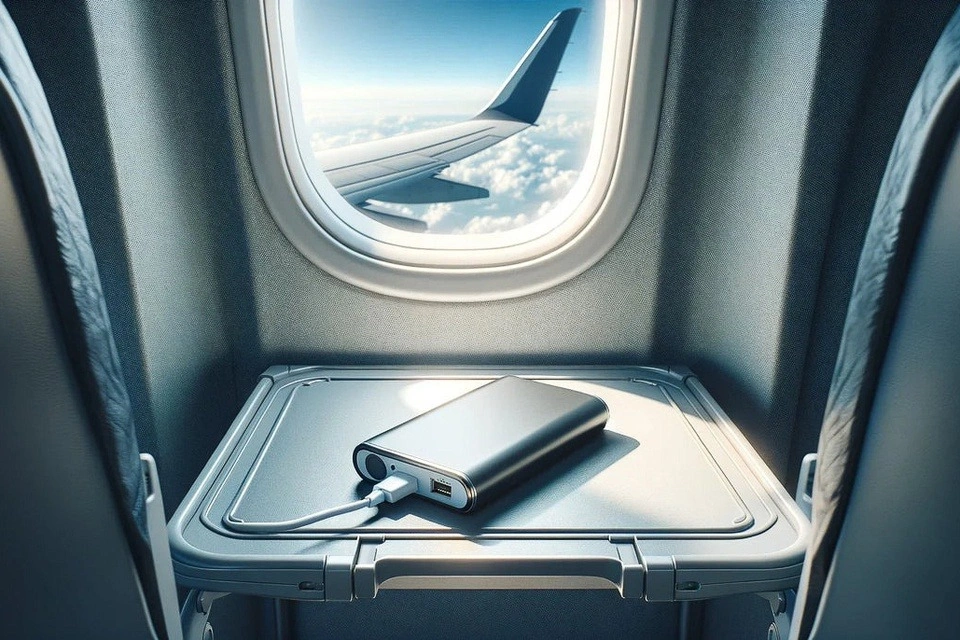
Power banks must be carried in hand luggage only and must never be placed in checked baggage, even if turned off. The reason is that checked baggage compartments are difficult to monitor; if a battery catches fire or emits smoke, the crew may not detect it in time. In the cabin, incidents can be handled immediately.
Regardless of capacity category, passengers must follow some general rules:
- The battery must clearly display its capacity
- Do not carry batteries without clear origin or labeling
- Cover the terminals or store in a case to prevent short circuits
- Always keep the battery in a visible location, not in overhead compartments
- Report any abnormalities. If the battery becomes hot, swollen, or emits smoke, inform the cabin crew immediately. Flight crews are trained to handle such situations
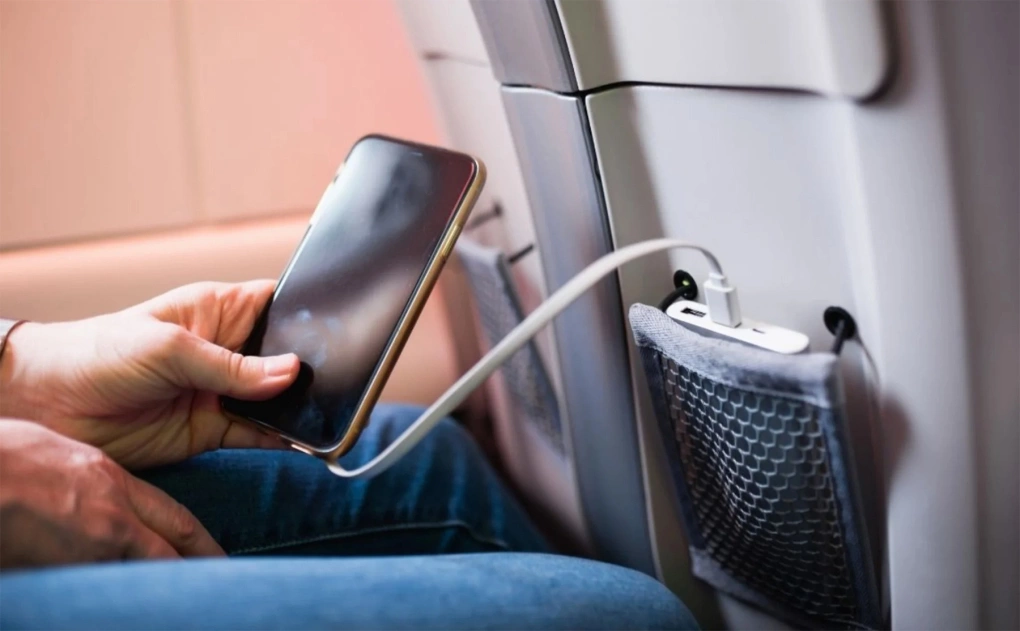
Many airlines have banned the use of power banks throughout the flight. This means:
- Do not charge your phone using a power bank
- Do not recharge the power bank on board
- Do not plug it into seat USB ports
- USB ports on airplanes should only be used for devices like phones and tablets, not for charging power banks
At least 13 major airlines worldwide have implemented new lithium battery regulations, including Singapore Airlines, EVA Air, Thai Airways, Emirates, AirAsia, Air Busan, China Airlines, Korean Air, Hong Kong Airlines, Cathay Pacific, Tigerair, Starlux Airlines, and Asiana Airlines. Many of these operate routes to Vietnam, so Vietnamese passengers on international or transit flights will be directly affected.
In Vietnam, airlines such as Vietnam Airlines, Pacific Airlines, Vasco, and VietJet Air allow passengers to carry compliant power banks, but they must follow these rules:
- Not in checked baggage, must be in carry-on luggage
- Placed in an easily visible position
- Not allowed to be used during the flight
In some cases, ground staff may provide special battery storage bags to prevent short circuits.
Source: https://vnexpress.net/duoc-mang-sac-du-phong-nhu-the-nao-len-may-bay-5051557.html
WORD BANK:
prohibit /prəˈhɪbɪt/ [B2] (v): cấm
capacity /kəˈpæsəti/ [B2] (n): dung lượng
in-flight /ˈɪn flaɪt/ (adj): trên chuyến bay
as of /æz əv/ (pre): tính đến
tighten /ˈtaɪtən/ [B2] (v): siết chặt
subject to sth /ˈsʌbdʒɪkt tuː/ [B2] (adj): chịu sự, phụ thuộc vào
luggage /ˈlʌɡɪdʒ/ (n): hành lý
hold /hoʊld/ (v): giữ lại, thu giữ
encounter sth /ɪnˈkaʊntər/ [B2] (v): gặp phải
pose a risk of sth /poʊz ə rɪsk əv/ (v): gây ra nguy cơ
aviation /ˌeɪviˈeɪʃn/ (n): hàng không
cabin /ˈkæbɪn/ (n): khoang (máy bay)
make an emergency landing /meɪk ən ɪˈmɜːrdʒənsi ˈlændɪŋ/ (v): hạ cánh khẩn cấp
label /ˈleɪbl/ (n): nhãn
milliampere-hour /ˌmɪliˈæmpɪr aʊər/ (n): miliampe-giờ
watt-hour /ˈwɑːt aʊər/ (n): oát-giờ
convert /kənˈvɜːrt/ [B2] (v): chuyển đổi
determine /dɪˈtɜːrmɪn/ [B2] (v): xác định
on board /ɑːn bɔːrd/ (adv): trên tàu/máy bay
wireless /ˈwaɪərləs/ (adj): không dây
carry-on luggage /ˈkæri ɑːn ˈlʌɡɪdʒ/ (n): hành lý xách tay
strictly not /ˈstrɪktli nɑːt/ (adv): tuyệt đối không
prior /ˈpraɪər/ [B2] (adj): trước
approval /əˈpruːvl/ [B2] (n): sự chấp thuận
provided (that) /prəˈvaɪdɪd ðæt/ (conj): với điều kiện là
easily visible /ˈiːzəli ˈvɪzəbl/ (adj): dễ nhìn thấy
inspection /ɪnˈspekʃn/ (n): sự kiểm tra
malfunction /ˌmælˈfʌŋkʃn/ (n): sự trục trặc
obtain sth /əbˈteɪn/ [B2] (v): đạt được, xin được
declare /dɪˈkler/ [B2] (v): khai báo
verify /ˈverɪfaɪ/ [B2] (v): xác minh
under any circumstances /ˈʌndər ˈeni ˈsɜːrkəmstænsɪz/ (adv): trong bất kỳ hoàn cảnh nào
standalone /ˈstændəloʊn/ (adj): độc lập
ultra-high-capacity /ˈʌltrə haɪ kəˈpæsəti/ (adj): dung lượng siêu cao
specialized /ˈspeʃəlaɪzd/ (adj): chuyên dụng
cargo /ˈkɑːrɡoʊ/ (n): hàng hóa
procedure /prəˈsiːdʒər/ (n): quy trình
compartment /kəmˈpɑːrtmənt/ (n): ngăn
emit sth /ɪˈmɪt/ (v): phát ra
detect sth /dɪˈtekt/ (v): phát hiện
regardless of sth /rɪˈɡɑːrdləs əv/ (pre): bất kể
terminal /ˈtɜːrmɪnl/ (n): đầu cắm
short circuit /ˈʃɔːrt ˈsɜːrkɪt/ (n): đoản mạch
overhead compartment /ˌoʊvərˈhed kəmˈpɑːrtmənt/ (n): ngăn hành lý phía trên
abnormality /ˌæbnɔːrˈmælɪti/ (n): sự bất thường
swollen /ˈswoʊlən/ (adj): bị phồng
implement /ˈɪmplɪment/ [B2] (v): thực hiện
transit /ˈtrænzɪt/ (n): quá cảnh
compliant /kəmˈplaɪənt/ (adj): tuân thủ
ỦNG HỘ READ TO LEAD!
Chào bạn! Có thể bạn chưa biết, Read to Lead là một trang giáo dục phi lợi nhuận với mục đích góp phần phát triển cộng đồng người học tiếng Anh tại Việt Nam. Chúng tôi không yêu cầu người đọc phải trả bất kỳ chi phí nào để sử dụng các sản phẩm của mình để mọi người đều có cơ hội học tập tốt hơn. Tuy nhiên, nếu bạn có thể, chúng tôi mong nhận được sự hỗ trợ tài chính từ bạn để duy trì hoạt động của trang và phát triển các sản phẩm mới.
Bạn có thể ủng hộ chúng tôi qua 1 trong 2 cách dưới đây.
– Cách 1: Chuyển tiền qua tài khoản Momo.
Số điện thoại 0947.886.865 (Chủ tài khoản: Nguyễn Tiến Trung)
Nội dung chuyển tiền: Ủng hộ Read to Lead
hoặc
– Cách 2: Chuyển tiền qua tài khoản ngân hàng.
Ngân hàng VIB chi nhánh Hải Phòng
Số tài khoản: 012704060048394 (Chủ tài khoản: Nguyễn Tiến Trung)
Nội dung chuyển tiền: Ủng hộ Read to Lead
Lớp luyện thi IELTS online
Bạn đang có nhu cầu thi chứng chỉ IELTS cho đầu vào đại học, đi du học, xin việc hay xin cư trú và đang phân vân chưa biết học ở đâu?
Nếu bạn đang tìm kiếm dịch vụ luyện thi IELTS online với giáo viên uy tín và chất lượng, cũng như học phí phải chăng, thì thầy Trung và Cô Thủy (Admin và dịch giả chính của Read to Lead) có thể là một lựa chọn phù hợp dành cho bạn.
Hãy liên hệ (nhắn tin) tới trang Facebook cá nhân của mình (https://www.facebook.com/nguyen.trung.509) để tìm hiểu về lớp học và được tư vấn cũng như được học thử nha!


