


[Reading level: B1 – Intermediate]
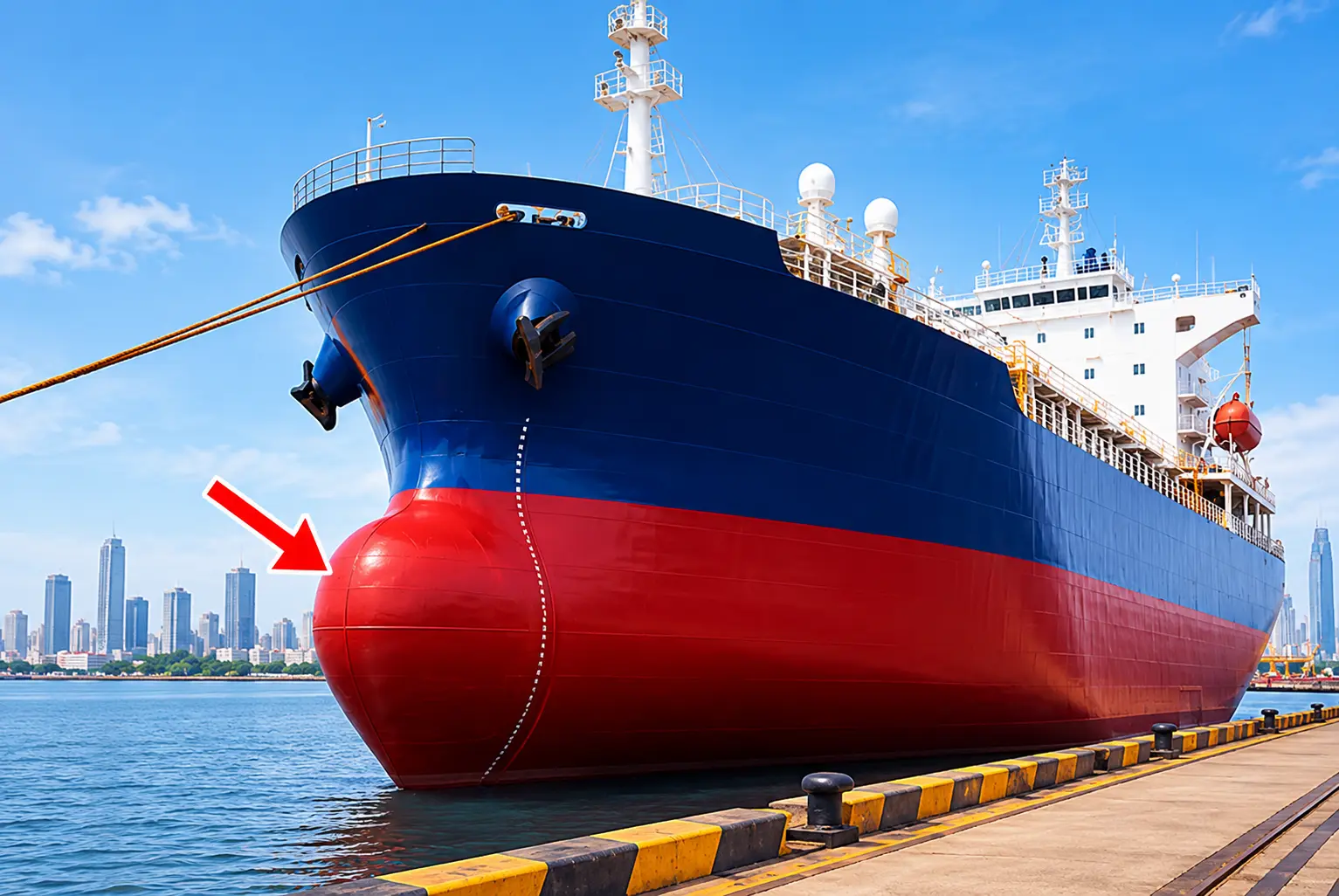
If you have ever seen a large ship taken into a dry dock for repairs, you may have noticed an interesting detail: the upper part of the ship’s hull can be painted in various colors, but the bottom is mostly painted dark red, with almost no exceptions.
The main reason is that when ships operate at sea for long periods, the submerged parts of their hulls often become covered with marine organisms such as barnacles, mussels, seaweed, and algae. These organisms make the hull’s surface rougher, increasing water resistance, slowing the ship down, and causing it to consume more fuel. This phenomenon is known as biofouling.
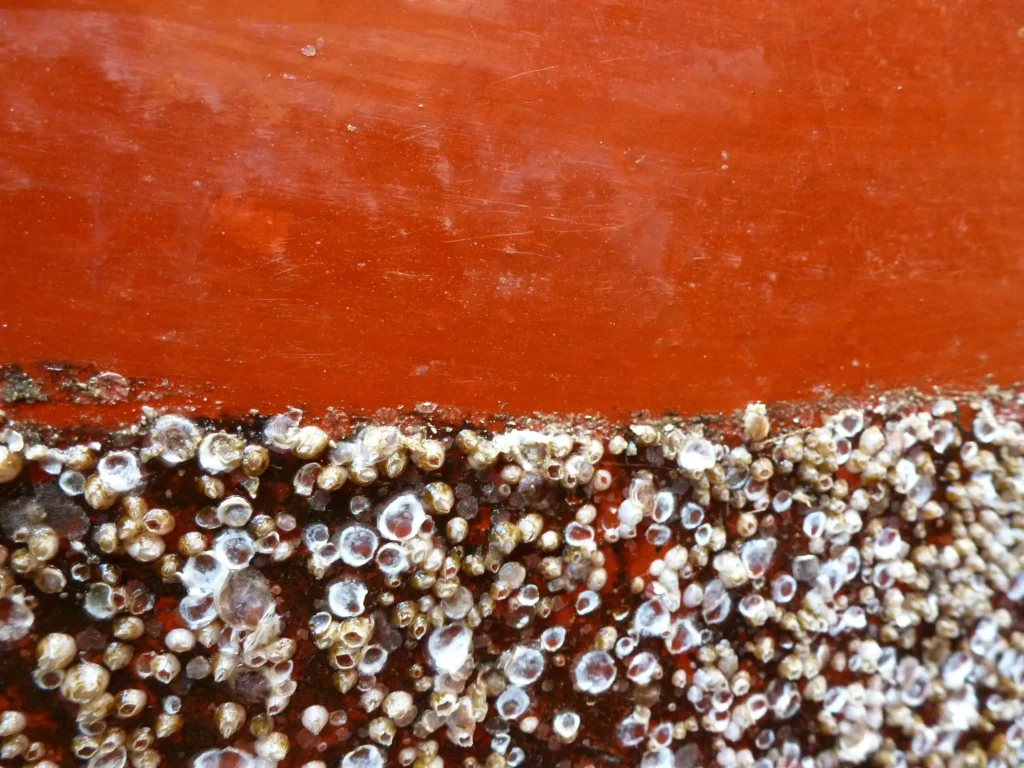
To address this problem, special paints called antifouling paints are used to prevent marine organisms from attaching themselves to ships’ hulls. In many traditional paint formulas, an important ingredient is copper oxide (Cu₂O), a compound with a distinctive reddish-brown color that can inhibit the attachment of many marine organisms.
It is the natural color of this compound that has helped make dark red the familiar color of ships’ bottoms.
Today, antifouling paint technology has advanced, with various ingredients and protective mechanisms. Some types of paint do not even require chemicals that kill organisms. Instead, they create surfaces that make it difficult for marine organisms to attach. As a result, the bottoms of modern ships do not necessarily have to be red; they can also be black, blue, or other colors.
However, after hundreds of years of development in the maritime industry, the dark red color of ships’ bottoms has become a familiar and distinctive feature. When people think of the submerged parts of ships’ hulls, dark red almost automatically comes to mind. Therefore, although antifouling paint technology continues to advance and offers a wider range of colors, dark red remains widely used to this day.
Thus, the red color on the bottoms of ships is not merely a familiar visual feature. It is also closely connected to the history of protecting ships from tiny marine organisms that can cause enormous economic losses.
WORD BANK:
dry dock /ˈdraɪ ˌdɑːk/ (n): ụ tàu khô, nơi đưa tàu lên để sửa chữa
hull /hʌl/ (n): thân tàu
exception /ɪkˈsep.ʃən/ [B2] (n): ngoại lệ
submerged /səbˈmɝːdʒd/ (adj): chìm dưới nước
marine /məˈriːn/ [C1] (adj): thuộc về biển
organism /ˈɔːr.ɡə.nɪ.zəm/ [B2] (n): sinh vật
barnacle /ˈbɑːr.nə.kəl/ (n): con hà biển
mussel /ˈmʌs.əl/ (n): con vẹm, con trai biển
seaweed /ˈsiː.wiːd/ (n): rong biển
algae /ˈæl.dʒiː/ (n): tảo
rough /rʌf/ [B1] (adj): gồ ghề, thô ráp
water resistance /ˈwɑː.t̬ɚ rɪˈzɪs.təns/ (n): lực cản của nước
phenomenon /fəˈnɑː.mə.nɑːn/ [C1] (n): hiện tượng
biofouling /ˌbaɪ.oʊˈfaʊ.lɪŋ/ (n): hiện tượng bám bẩn sinh học
address sth /əˈdres/ [B2] (v): giải quyết, xử lý vấn đề gì
antifouling paint /ˌæn.tiˈfaʊ.lɪŋ peɪnt/ (n): sơn chống hà, sơn chống sinh vật biển bám vào
formula /ˈfɔːr.mjə.lə/ [B2] (n): công thức
ingredient /ɪnˈɡriː.di.ənt/ [B1] (n): thành phần
copper oxide /ˈkɑː.pɚ ˈɑːk.saɪd/ (n): oxit đồng
compound /ˈkɑːm.paʊnd/ [B2] (n): hợp chất
distinctive /dɪˈstɪŋk.tɪv/ [C1] (adj): đặc trưng, dễ nhận biết
reddish-brown /ˌred.ɪʃˈbraʊn/ (adj): có màu nâu đỏ
inhibit sth /ɪnˈhɪb.ɪt/ [C2] (v): ức chế, ngăn cản cái gì
advance /ədˈvæns/ [B2] (v): tiến bộ, phát triển
protective mechanism /prəˈtek.tɪv ˈmek.ə.nɪ.zəm/ (n): cơ chế bảo vệ
not necessarily /nɑːt ˌnes.əˈser.əl.i/ (adv): không nhất thiết
long-standing /ˌlɑːŋˈstæn.dɪŋ/ [C2] (adj): lâu đời, tồn tại từ lâu
merely /ˈmɪr.li/ [C1] (adv): chỉ đơn thuần, chỉ là
enormous /ɪˈnɔːr.məs/ [B2] (adj): khổng lồ, vô cùng lớn
ỦNG HỘ READ TO LEAD!
Chào bạn! Có thể bạn chưa biết, Read to Lead là một trang giáo dục phi lợi nhuận với mục đích góp phần phát triển cộng đồng người học tiếng Anh tại Việt Nam. Chúng tôi không yêu cầu người đọc phải trả bất kỳ chi phí nào để sử dụng các sản phẩm của mình để mọi người đều có cơ hội học tập tốt hơn. Tuy nhiên, nếu bạn có thể, chúng tôi mong nhận được sự hỗ trợ tài chính từ bạn để duy trì hoạt động của trang và phát triển các sản phẩm mới.
Bạn có thể ủng hộ chúng tôi qua 1 trong 2 cách dưới đây.
– Cách 1: Chuyển tiền qua tài khoản Momo.
Số điện thoại 0947.886.865 (Chủ tài khoản: Nguyễn Tiến Trung)
Nội dung chuyển tiền: Ủng hộ Read to Lead
hoặc
– Cách 2: Chuyển tiền qua tài khoản ngân hàng.
Ngân hàng VIB chi nhánh Hải Phòng
Số tài khoản: 012704060048394 (Chủ tài khoản: Nguyễn Tiến Trung)
Nội dung chuyển tiền: Ủng hộ Read to Lead
Lớp luyện thi IELTS online
Bạn đang có nhu cầu thi chứng chỉ IELTS cho đầu vào đại học, đi du học, xin việc hay xin cư trú và đang phân vân chưa biết học ở đâu?
Nếu bạn đang tìm kiếm dịch vụ luyện thi IELTS online với giáo viên uy tín và chất lượng, cũng như học phí phải chăng, thì lớp học online của thầy Trung (Admin và dịch giả chính của Read to Lead) có thể là một lựa chọn phù hợp dành cho bạn.
Hãy liên hệ (nhắn tin) tới trang Facebook cá nhân của mình (https://www.facebook.com/nguyen.trung.509) để tìm hiểu về lớp học và được tư vấn cũng như được học thử nha!


