


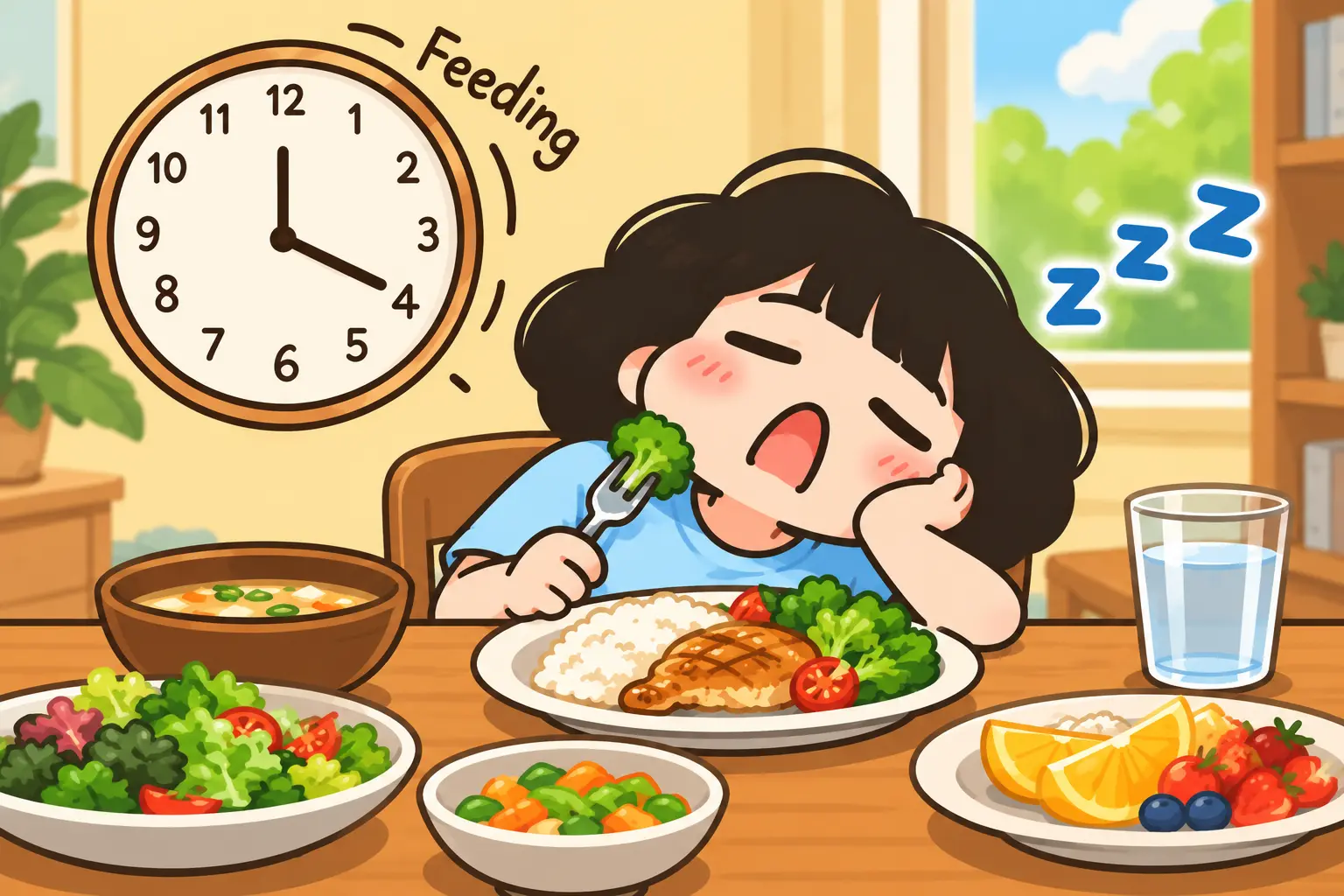
You finish lunch feeling completely normal, having just consumed 3,000 kJ of food, more than enough to keep you going until dinner. But before long, your eyelids begin to grow heavy and your concentration starts to slip. It seems strange when you think about it. Food is supposed to give you energy. Yet, one of the most predictable things that can happen after eating is your brain starting to ask for sleep.
Most people blame digestion, blood moving away from the brain, or something they ate. But the real explanation is more complicated. Scientists call this feeling postprandial somnolence or sleepiness after a meal.
One common explanation is also a misconception. Digestion does not steal so much blood from your brain that it becomes oxygen starved. Your body can maintain blood flow to the brain while increasing circulation elsewhere, just as it does during exercise. So the food coma has to come from something else.
Part of the answer has surprisingly little to do with food. Human alertness naturally dips in the early afternoon because of our circadian rhythm. Researchers have observed this decline even when people skip lunch and lack normal cues about the time of day. In other words, lunch often gets blamed for a slump your biological clock was already preparing to create.
Food can then amplify that dip. As nutrients enter your digestive system, your stomach stretches, blood glucose and insulin change, and the gut releases hormones involved in digestion and satiety. These signals interact with brain regions that regulate both feeding and wakefulness, including the hypothalamus.
One important player is orexin, a chemical that helps maintain alertness and motivated behavior. Orexin activity is closely tied to hunger and food seeking. When an animal needs calories, staying awake and active is useful. Once food has been found, signals associated with satiety can reduce that drive.
This connection between hunger and sleep is seen across many species. Animals often sleep less when food is scarce, giving them more time to search for it, while increased sleep after feeding has been observed in animals. Scientists still do not know exactly why this pattern evolved, but the logic is straightforward. Hunger favors activity, while feeding removes some of the need to remain active.
What you eat can also affect how sleepy you feel. Large meals, especially those rich in rapidly digested carbohydrates, can produce substantial changes in blood glucose, insulin, and circulating nutrients. Carbohydrates may also influence how easily tryptophan enters the brain, where it can eventually contribute to serotonin production. After a normal mixed meal, carbs have only a modest effect on serotonin and sleepiness. Research suggests meal size may matter as much as nutrient composition.
The same is true of the famous Thanksgiving turkey myth. Turkey contains tryptophan, but not in some extraordinary concentration that makes it a natural sleeping pill. Other meats contain similar amounts, and tryptophan from a protein-rich meal must compete with other amino acids to enter the brain.
The more convincing explanation is the whole meal. Large portions of meat, potatoes, bread, desserts, fats, carbohydrates, and sometimes alcohol, often followed by sitting comfortably after a long day.
Timing matters, too. Dinner may be larger than lunch without making you equally sleepy because your circadian system produces a strong alerting signal in the early evening, sometimes called the wake maintenance zone. This can temporarily oppose the sleep pressure that has been building throughout the day.
That is why the same meal can affect two people very differently. Someone who slept well, ate moderately, and stayed active may barely notice an afternoon slump. Someone who slept 5 hours, ate a huge lunch, and then sat in a warm conference room may struggle to keep their eyes open. The meal is often the final push, not the entire cause.
If you want to reduce the afternoon crash, enormous meals are more likely to work against you than moderate ones. Meals with fiber, protein, and slower digesting carbohydrates may produce steadier metabolic responses, while a short walk afterward adds movement and stimulation. Most importantly, getting enough sleep at night gives the afternoon circadian dip less accumulated sleep pressure to amplify.
So when you feel sleepy after lunch, your stomach has not stolen blood from your brain. Your circadian clock is naturally lowering alertness. Your gut is signaling that food has arrived. Your metabolism is processing the meal. And the brain systems that helped motivate food seeking no longer need to work as hard.
The modern lunch break may be new, but the biology connecting hunger, feeding, and alertness is ancient.
Source: Past Tense
WORD BANK:
before long (adv): chẳng bao lâu sau
eyelid /ˈaɪ.lɪd/ (n): mí mắt
grow heavy /ɡroʊ ˈhev.i/ (v): trở nên nặng trĩu, trĩu xuống
slip /slɪp/ [B2] (v/n): suy giảm, sa sút; sự trượt, sự suy giảm
afternoon slip /ˌæf.tɚˈnuːn slɪp/ (n): sự suy giảm vào buổi chiều
be supposed to do sth /səˈpoʊzd/ [B1] (v): được cho là phải làm gì, được kỳ vọng sẽ làm gì
blame sb/sth for sth /bleɪm/ [B2] (v): đổ lỗi cho ai/cái gì về điều gì
get blamed for sth /ɡet bleɪmd/ (v): bị đổ lỗi vì điều gì
digestion /daɪˈdʒes.tʃən/ (n): quá trình tiêu hóa
complicated /ˈkɑːm.plə.keɪ.t̬ɪd/ [B2] (adj): phức tạp
misconception /ˌmɪs.kənˈsep.ʃən/ (n): quan niệm sai lầm, sự hiểu lầm
oxygen-starved /ˈɑːk.sɪ.dʒən stɑːrvd/ (adj): thiếu oxy
circulation /ˌsɝː.kjəˈleɪ.ʃən/ [C1] (n): sự tuần hoàn, sự lưu thông máu
food coma /ˈfuːd ˌkoʊ.mə/ (n): trạng thái buồn ngủ, uể oải sau khi ăn no
have little to do with sth (v): hầu như không liên quan đến điều gì
circadian rhythm /sɝːˈkeɪ.di.ən ˈrɪð.əm/ (n): nhịp sinh học 24 giờ
cue /kjuː/ [C1] (n): tín hiệu, dấu hiệu gợi nhắc
slump /slʌmp/ [C1] (n/v): sự suy giảm, tình trạng sa sút; suy giảm
afternoon slump /ˌæf.tɚˈnuːn slʌmp/ (n): tình trạng uể oải vào buổi chiều
amplify sth /ˈæm.plə.faɪ/ (v): khuếch đại, làm tăng thêm
stretch /stretʃ/ [B2] (v): kéo giãn, giãn ra
blood glucose /blʌd ˈɡluː.koʊs/ (n): đường huyết, lượng glucose trong máu
gut /ɡʌt/ [C1] (n): đường ruột, hệ tiêu hóa
satiety /səˈtaɪ.ə.t̬i/ (n): cảm giác no
regulate sth /ˈreɡ.jə.leɪt/ [C1] (v): điều chỉnh, điều hòa
hypothalamus /ˌhaɪ.poʊˈθæl.ə.məs/ (n): vùng dưới đồi (trong não)
be closely tied to sth /ˈkloʊs.li taɪd/ (adj): có mối liên hệ chặt chẽ với điều gì
drive /draɪv/ [C1] (n): động lực, sự thôi thúc
scarce /skers/ [C1] (adj): khan hiếm
evolve /ɪˈvɑːlv/ [C1] (v): tiến hóa, phát triển dần
straightforward /ˌstreɪtˈfɔːr.wɚd/ [C1] (adj): đơn giản, dễ hiểu, rõ ràng
carbohydrate /ˌkɑːr.boʊˈhaɪ.dreɪt/ (n): carbohydrate, chất bột đường
carb /kɑːrb/ (n): carbohydrate, chất bột đường
substantial /səbˈstæn.ʃəl/ [B2] (adj): đáng kể, lớn
composition /ˌkɑːm.pəˈzɪʃ.ən/ [B2] (n): thành phần, cấu tạo
myth /mɪθ/ [B2] (n): quan niệm sai lầm, chuyện hoang đường
sleeping pill /ˈsliː.pɪŋ pɪl/ (n): thuốc ngủ
amino acid /əˈmiː.noʊ ˈæs.ɪd/ (n): axit amin
dessert /dɪˈzɝːt/ [A2] (n): món tráng miệng
timing /ˈtaɪ.mɪŋ/ [B2] (n): thời điểm, sự lựa chọn thời điểm
wake maintenance zone /weɪk ˈmeɪn.tən.əns zoʊn/ (n): khoảng thời gian cơ thể duy trì sự tỉnh táo
temporarily /ˌtem.pəˈrer.ə.li/ [B2] (adv): tạm thời
oppose sth /əˈpoʊz/ [B2] (v): chống lại, phản đối
building /ˈbɪl.dɪŋ/ (n): sự tích tụ, sự gia tăng dần
moderately /ˈmɑː.dɚ.ət.li/ (adv): ở mức độ vừa phải, điều độ
barely /ˈber.li/ [C1] (adv): hầu như không, chỉ vừa đủ
the final push /ðə ˈfaɪ.nəl pʊʃ/ (n): tác nhân cuối cùng, cú hích cuối cùng
afternoon crash /ˌæf.tɚˈnuːn kræʃ/ (n): tình trạng sụt giảm năng lượng đột ngột vào buổi chiều
work against sth /wɝːk əˈɡenst/ (v): gây bất lợi cho, cản trở điều gì
steady /ˈsted.i/ [B2] (adj): ổn định, đều đặn
metabolic response /ˌmet̬.əˈbɑː.lɪk rɪˈspɑːns/ (n): phản ứng chuyển hóa của cơ thể
stimulation /ˌstɪm.jəˈleɪ.ʃən/ (n): sự kích thích
accumulate /əˈkjuː.mjə.leɪt/ [C1] (v): tích tụ, tích lũy
ancient /ˈeɪn.ʃənt/ [B1] (adj): cổ xưa, có từ thời xa xưa
ỦNG HỘ READ TO LEAD!
Chào bạn! Có thể bạn chưa biết, Read to Lead là một trang giáo dục phi lợi nhuận với mục đích góp phần phát triển cộng đồng người học tiếng Anh tại Việt Nam. Chúng tôi không yêu cầu người đọc phải trả bất kỳ chi phí nào để sử dụng các sản phẩm của mình để mọi người đều có cơ hội học tập tốt hơn. Tuy nhiên, nếu bạn có thể, chúng tôi mong nhận được sự hỗ trợ tài chính từ bạn để duy trì hoạt động của trang và phát triển các sản phẩm mới.
Bạn có thể ủng hộ chúng tôi qua 1 trong 2 cách dưới đây.
– Cách 1: Chuyển tiền qua tài khoản Momo.
Số điện thoại 0947.886.865 (Chủ tài khoản: Nguyễn Tiến Trung)
Nội dung chuyển tiền: Ủng hộ Read to Lead
hoặc
– Cách 2: Chuyển tiền qua tài khoản ngân hàng.
Ngân hàng VIB chi nhánh Hải Phòng
Số tài khoản: 012704060048394 (Chủ tài khoản: Nguyễn Tiến Trung)
Nội dung chuyển tiền: Ủng hộ Read to Lead
Lớp luyện thi IELTS online
Bạn đang có nhu cầu thi chứng chỉ IELTS cho đầu vào đại học, đi du học, xin việc hay xin cư trú và đang phân vân chưa biết học ở đâu?
Nếu bạn đang tìm kiếm dịch vụ luyện thi IELTS online với giáo viên uy tín và chất lượng, cũng như học phí phải chăng, thì lớp học online của thầy Trung (Admin và dịch giả chính của Read to Lead) có thể là một lựa chọn phù hợp dành cho bạn.
Hãy liên hệ (nhắn tin) tới trang Facebook cá nhân của mình (https://www.facebook.com/nguyen.trung.509) để tìm hiểu về lớp học và được tư vấn cũng như được học thử nha!


