


Victorian Britain – Part 1: An age of extraordinary achievements
[Reading level: C1 – Advanced]
Railways, steam engines, enormous factories, the Crystal Palace, and an empire stretching across several continents – these are the images most often associated with Victorian Britain.
But if we leave the wealthy avenues of London, enter working-class neighborhoods, descend into a coal mine, or step through the doors of a factory in the mid-19th century, we will see a completely different Victorian era.
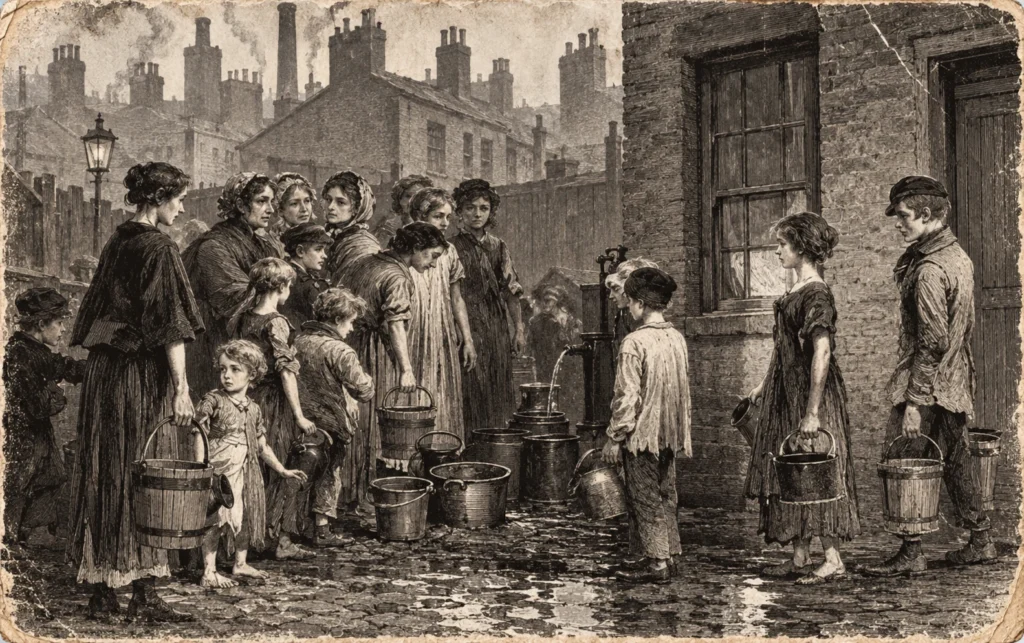
Industrialization drove millions of people to leave the countryside in search of work in cities. Manchester, Liverpool, Birmingham, Leeds, and London grew so rapidly that housing, clean water supplies, and sewage systems could not keep pace.
Many poor families had to live crowded together in tiny rooms. A single house might accommodate several families. Narrow streets were filled with rubbish, dirty water, and human waste. In many areas, drinking water could be contaminated by the city’s own waste.
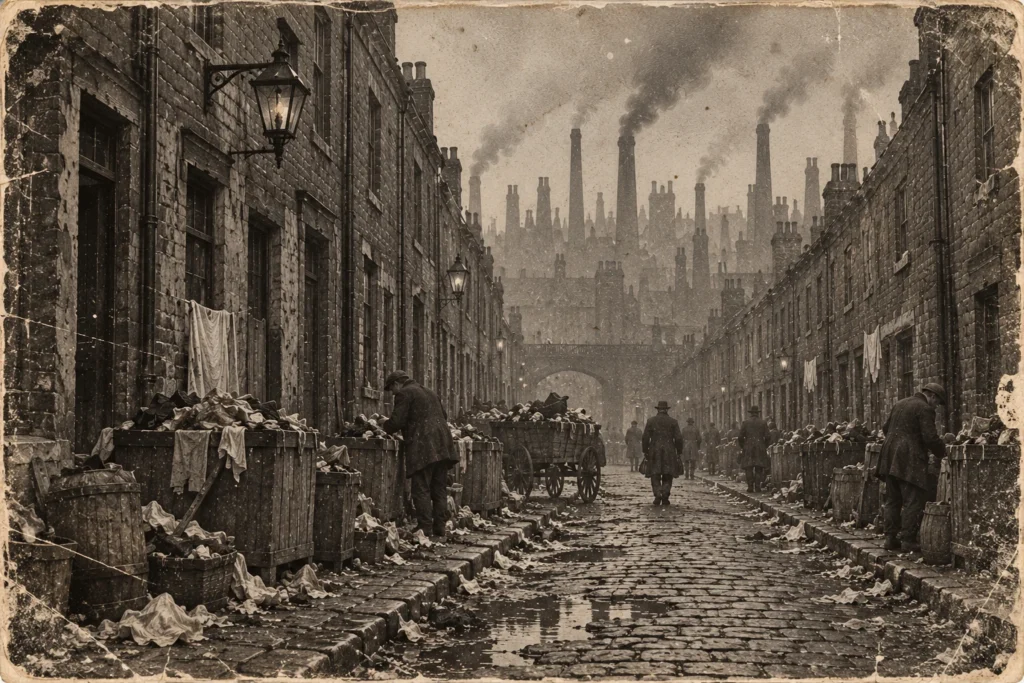
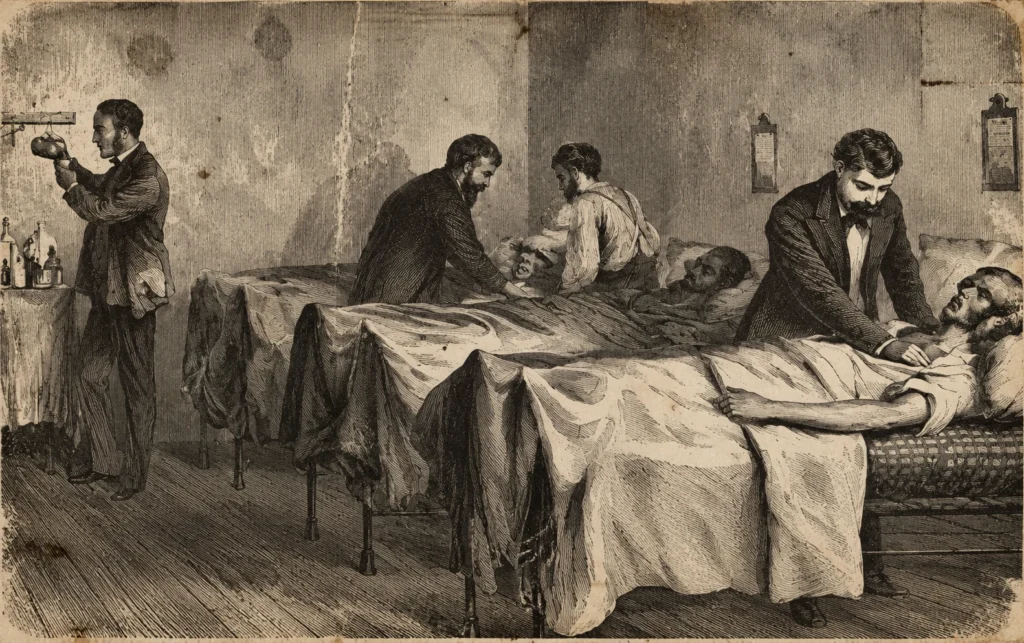
The result was disease.
Cholera repeatedly struck Britain during the 19th century, killing tens of thousands of people. During the 1854 outbreak in London’s Soho district, physician John Snow mapped the deaths and noticed that they were concentrated around a water pump on Broad Street. His work became an important milestone in the history of epidemiology and revealed a horrifying problem in Victorian cities: the very water people used could be what was killing them.
If life above ground was harsh, life underground was even worse. Children were also employed as laborers in coal mines.
A parliamentary investigation in 1842 recorded the testimonies of children who had to work underground for many hours each day. Some were only about seven or eight years old. Some had to sit in darkness opening and closing ventilation doors, while others pulled or pushed coal carts through low, narrow tunnels.
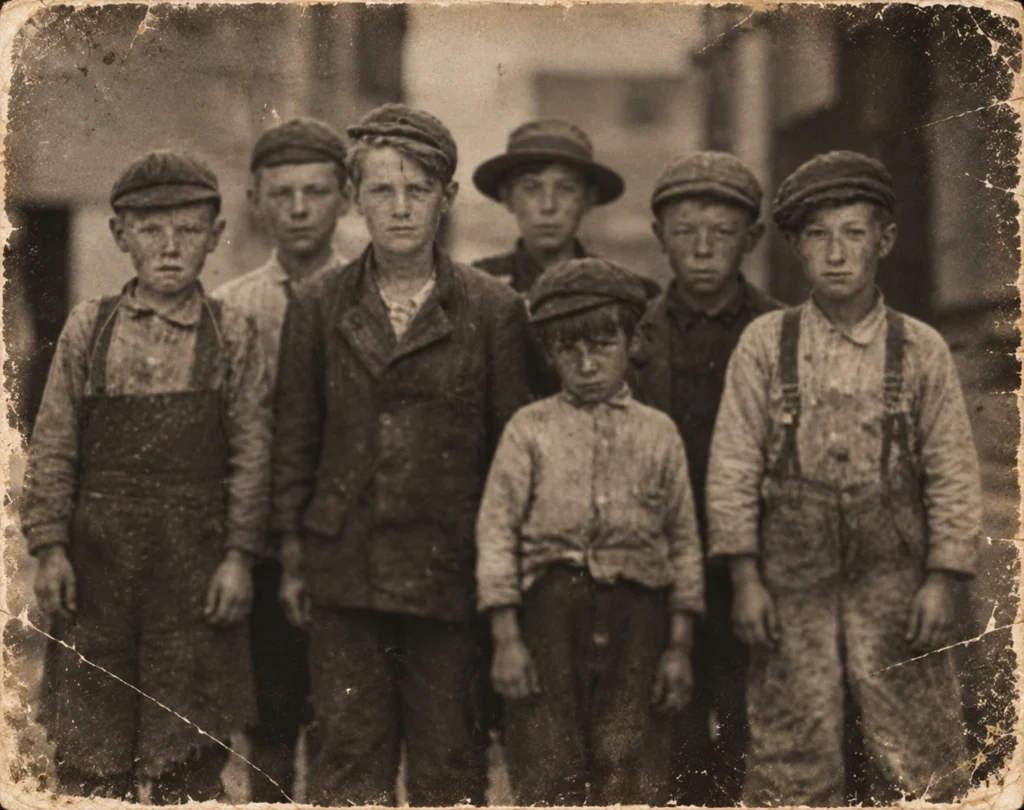
Factories also employed large numbers of child laborers.
For factory owners, young children offered a very practical advantage: they could be paid low wages, and their small bodies allowed them to crawl into narrow spaces around machinery. But for these children, work meant long shifts, dust, noise, and the risk of accidents.
These conditions eventually forced the British Parliament to intervene gradually. The Factory Act of 1833 restricted the employment of children in certain textile factories, prohibited children under nine from working there, and established limits on working hours for older children. The Mines and Collieries Act of 1842 went further, banning women and girls from working underground and prohibiting boys under ten from working in mines.
But legislation could not immediately eliminate poverty.
For many working-class families, children’s wages were sometimes an essential part of the family’s income, helping them afford food and pay the rent.
The gap between rich and poor was therefore strikingly visible.
In the same London, an increasingly wealthy middle and upper class could live in spacious houses, employ servants, travel by train for holidays, and purchase goods from across the empire. Just a few streets away, poor families might live crowded together in miserable housing and have to count every penny to buy food.
Even the greatest symbol of the Victorian era – the British Empire – had another side.
For British people at the time, the empire could symbolize national power, trade, and the ability to bring British goods to markets around the world. But for many peoples living under British rule, that same system meant colonial domination, exploitation of resources, inequality of power, and sometimes violent repression.
India was a prominent example. Following the uprising of 1857, the British government ended the rule of the East India Company and placed India directly under the British Crown. Victoria later took the title Empress of India. While India became a central part of the British imperial system, Indians still did not possess political power equal to that of those who ruled them.
This was the greatest paradox of the Victorian era.
A country could build railways while still allowing children to work in coal mines. A city could become the financial center of the world while still having neighborhoods without clean water. A society could produce great scientists, engineers, and reformers while crippling poverty existed right alongside wealth.
And an empire could take pride in bringing trade, railways, and technology to many parts of the world, while its very expansion depended on placing other peoples under its rule.
Therefore, when looking back at Victorian Britain, perhaps we must look at both sides of Britain. One Britain of the Crystal Palace, steam locomotives, Darwin, the telegraph, and ships sailing across the world. And another Britain of coal smoke, slums, epidemics, coal mines, and children forced to grow up far too soon. Both existed at the same time.
And it is precisely this contrast that creates a complete picture of one of the most remarkable eras in British history.
WORD BANK:
avenue /ˈæv.ə.nuː/ [B2] (n): đại lộ
descend into sth /dɪˈsend/ (v): đi xuống đâu đó
drive sb to do sth /draɪv/ (v): thúc đẩy, buộc ai phải làm gì
in search of sth /ɪn ˈsɝːtʃ əv/ (phr): để tìm kiếm cái gì đó
keep pace /kiːp peɪs/ (v): theo kịp tốc độ
accommodate /əˈkɑː.mə.deɪt/ [B2] (v): cung cấp chỗ ở, chứa được
contaminated /kənˈtæm.ə.neɪ.t̬ɪd/ (adj): bị ô nhiễm, nhiễm bẩn
cholera /ˈkɑː.lɚ.ə/ (n): bệnh tả
strike /straɪk/ [B2] (v): tấn công, ập đến (dịch bệnh, thiên tai)
physician /fɪˈzɪʃ.ən/ (n): bác sĩ
map sth /mæp/ (v): lập bản đồ, xác định vị trí của cái gì trên bản đồ
milestone /ˈmaɪl.stoʊn/ (n): cột mốc quan trọng
epidemiology /ˌep.əˌdiː.miˈɑː.lə.dʒi/ (n): dịch tễ học
reveal sth /rɪˈviːl/ [B2] (v): tiết lộ, cho thấy điều gì
horrifying /ˈhɔːr.ə.faɪ.ɪŋ/ (adj): kinh hoàng, đáng sợ
the very + N /ˈver.i/ (det): chính cái…, ngay chính…
harsh /hɑːrʃ/ [B2] (adj): khắc nghiệt, hà khắc
parliamentary /ˌpɑːr.ləˈmen.t̬ɚ.i/ (adj): thuộc nghị viện, quốc hội
testimony /ˈtes.tə.moʊ.ni/ (n): lời khai, lời chứng
ventilation /ˌven.t̬əlˈeɪ.ʃən/ (n): sự thông gió
coal cart /koʊl kɑːrt/ (n): xe chở than
crawl /krɑːl/ [B2] (v): bò, trườn
intervene /ˌɪn.t̬ɚˈviːn/ [C1] (v): can thiệp
restrict /rɪˈstrɪkt/ [B2] (v): hạn chế, giới hạn
establish a limit /ɪˈstæb.lɪʃ ə ˈlɪm.ɪt/ (v): thiết lập một giới hạn
legislation /ˌledʒ.əˈsleɪ.ʃən/ [C1] (n): pháp luật, các đạo luật
eliminate sth /ɪˈlɪm.ə.neɪt/ [C1] (v): loại bỏ, xóa bỏ cái gì
rent /rent/ [B1] (n): tiền thuê nhà
strikingly visible /ˈstraɪ.kɪŋ.li ˈvɪz.ə.bəl/ (adj phr): hiện rõ một cách nổi bật, dễ nhận thấy
middle class /ˌmɪd.əl ˈklæs/ (n): tầng lớp trung lưu
upper class /ˌʌp.ɚ ˈklæs/ (n): tầng lớp thượng lưu
servant /ˈsɝː.vənt/ [B2] (n): người hầu, người giúp việc
miserable /ˈmɪz.ɚ.ə.bəl/ [B2] (adj): khốn khổ, cực khổ
count every penny /kaʊnt ˈev.ri ˈpen.i/ (v): tính toán chi li từng đồng
symbolize /ˈsɪm.bə.laɪz/ (v): tượng trưng cho, biểu trưng cho
colonial domination /kəˈloʊ.ni.əl ˌdɑː.məˈneɪ.ʃən/ (n): sự thống trị thuộc địa
exploitation /ˌek.splɔɪˈteɪ.ʃən/ (n): sự bóc lột, khai thác
inequality /ˌɪn.ɪˈkwɑː.lə.t̬i/ [C2] (n): sự bất bình đẳng
violent repression /ˈvaɪ.ə.lənt rɪˈpreʃ.ən/ (n): sự đàn áp bằng bạo lực
prominent /ˈprɑː.mə.nənt/ [C1] (adj): nổi bật, có ảnh hưởng lớn
uprising /ˈʌpˌraɪ.zɪŋ/ (n): cuộc nổi dậy, cuộc khởi nghĩa
the British Crown /ˈbrɪt̬.ɪʃ kraʊn/ (n): Hoàng gia Anh, Vương quyền Anh
imperial system /ɪmˈpɪr.i.əl ˈsɪs.təm/ (n): hệ thống đế quốc
possess sth /pəˈzes/ [C1] (v): sở hữu, có cái gì
equal to /ˈiː.kwəl/ [B1] (adj): bằng, tương đương với
paradox /ˈper.ə.dɑːks/ (n): nghịch lý
reformer /rɪˈfɔːr.mɚ/ (n): nhà cải cách
crippling poverty /ˈkrɪp.lɪŋ ˈpɑː.vɚ.t̬i/ (n): tình trạng nghèo đói cùng cực
take pride in sth /teɪk praɪd/ (v): tự hào về điều gì
slum /slʌm/ (n): khu ổ chuột
epidemic /ˌep.əˈdem.ɪk/ (n): dịch bệnh, đợt bùng phát dịch bệnh
ỦNG HỘ READ TO LEAD!
Chào bạn! Có thể bạn chưa biết, Read to Lead là một trang giáo dục phi lợi nhuận với mục đích góp phần phát triển cộng đồng người học tiếng Anh tại Việt Nam. Chúng tôi không yêu cầu người đọc phải trả bất kỳ chi phí nào để sử dụng các sản phẩm của mình để mọi người đều có cơ hội học tập tốt hơn. Tuy nhiên, nếu bạn có thể, chúng tôi mong nhận được sự hỗ trợ tài chính từ bạn để duy trì hoạt động của trang và phát triển các sản phẩm mới.
Bạn có thể ủng hộ chúng tôi qua 1 trong 2 cách dưới đây.
– Cách 1: Chuyển tiền qua tài khoản Momo.
Số điện thoại 0947.886.865 (Chủ tài khoản: Nguyễn Tiến Trung)
Nội dung chuyển tiền: Ủng hộ Read to Lead
hoặc
– Cách 2: Chuyển tiền qua tài khoản ngân hàng.
Ngân hàng VIB chi nhánh Hải Phòng
Số tài khoản: 012704060048394 (Chủ tài khoản: Nguyễn Tiến Trung)
Nội dung chuyển tiền: Ủng hộ Read to Lead
Lớp luyện thi IELTS online
Bạn đang có nhu cầu thi chứng chỉ IELTS cho đầu vào đại học, đi du học, xin việc hay xin cư trú và đang phân vân chưa biết học ở đâu?
Nếu bạn đang tìm kiếm dịch vụ luyện thi IELTS online với giáo viên uy tín và chất lượng, cũng như học phí phải chăng, thì lớp học online của thầy Trung (Admin và dịch giả chính của Read to Lead) có thể là một lựa chọn phù hợp dành cho bạn.
Hãy liên hệ (nhắn tin) tới trang Facebook cá nhân của mình (https://www.facebook.com/nguyen.trung.509) để tìm hiểu về lớp học và được tư vấn cũng như được học thử nha!


