


[Reading level: B2 – Upper Intermediate]
Jellied eels are a famous traditional dish from London, known for their rather unusual appearance: pieces of eel with their skin still on are encased in a clear, soft, and slightly wobbly jelly. For many people seeing this dish for the first time, it can look rather unappetizing. However, behind its unusual appearance lies a story about the lives of London’s poor working-class hundreds of years ago.
During the 18th and 19th centuries, when Britain was undergoing rapid industrialization, London attracted large numbers of people from rural areas who came to the city in search of work. Poor working-class neighborhoods, particularly in the eastern part of the city (the East End), became increasingly crowded. Factory workers, craftsmen, and dockworkers had to work long hours for low wages. Expensive types of meat were not always within their financial reach.
Meanwhile, the River Thames, which flows through London, once had a plentiful supply of eels. Eels were relatively easy to catch, cheap, and nutritious, making them a common source of food for the poor. Using this ingredient, local people created jellied eels, a simple and economical dish that still provided enough energy for long days of hard work.
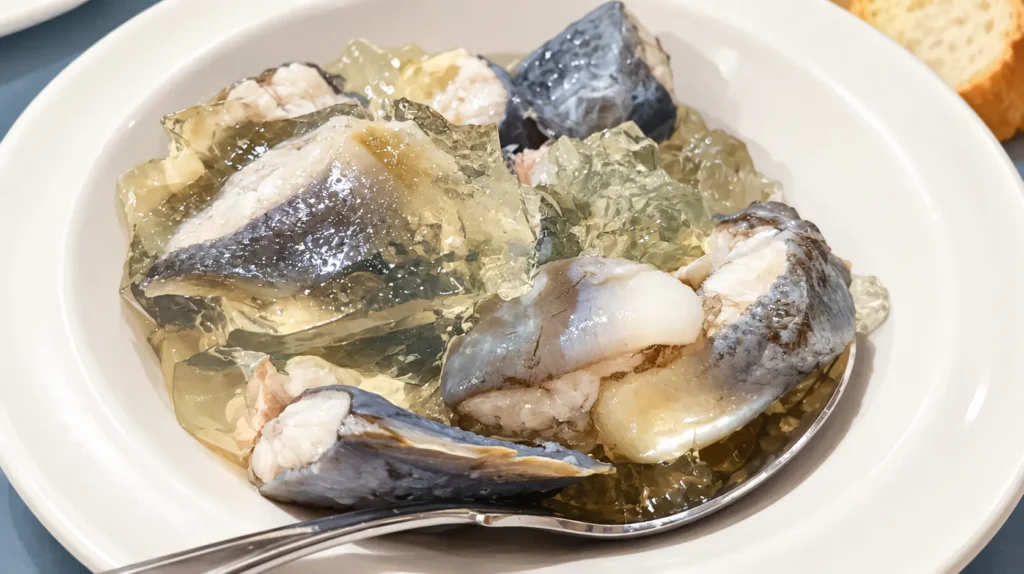
Preparing jellied eels is not particularly complicated. The eels are cleaned, cut into pieces, and then cooked in water with a little vinegar and seasonings, such as salt, pepper, bay leaves, and parsley. Once cooked, both the eels and the broth are left to cool. During cooking, some of the collagen from the eels’ skin and connective tissues is converted into gelatin, which dissolves into the broth. Thanks to Britain’s typically cold weather, especially in winter, the broth can easily cool down and set into a soft layer of jelly surrounding the pieces of eel, without the need for any additional gelling agents.
In principle, this dish is quite similar to Vietnamese jellied pork, which is made by simmering pork, pork skin, or pork trotters and then allowing the broth to cool and solidify. The main difference is that the British use eels instead of pork, giving the dish a rather unusual appearance.
By the 19th century, jellied eels had become a familiar, inexpensive dish in the East End. They were often sold in shops serving meat pies and mashed potatoes, commonly known as pie and mash shops. These were all simple, affordable foods that suited the needs of workers looking for a quick, filling meal before returning to work.
Over time, living standards in London improved, food became more varied, and eating habits changed. Jellied eels gradually lost their place in everyday meals. Even today, not all British people have tried this dish. Nevertheless, some traditional shops in London continue to serve jellied eels as a way of preserving the city’s culinary heritage.
In fact, eels are not only popular in Asian cuisine but also appear in many European culinary traditions. The Dutch and Germans have smoked eel dishes, while Italians prepare eels by grilling or frying them. Spain, meanwhile, is famous for angulas, a dish made from baby eels. In Japan, grilled eel, known as unagi, is a popular dish often served with rice and a sweet and savory sauce.
Although the same ingredient is used, each country has its own way of preparing it, reflecting local natural conditions, history, and culinary preferences. To many people today, jellied eels may look rather strange, but to generations of poor workers in London, they were once a perfectly ordinary meal.
WORD BANK:
eel /iːl/ [C1] (n): con lươn
jelly /ˈdʒel.i/ [B2] (n): thạch
jellied eel /ˌdʒel.id ˈiːl/ (n): thạch lươn, lươn nấu đông
encased in sth /ɪnˈkeɪst/ (adj): được bao bọc, bọc kín trong cái gì
wobbly /ˈwɑː.bli/ (adj): rung rinh, lắc lư, không vững
unappetizing /ʌnˈæp.əˌtaɪ.zɪŋ/ (adj): trông không ngon miệng, không hấp dẫn
behind sth lies sth (structure): đằng sau cái gì ẩn chứa điều gì
in search of /ɪn ˈsɝːtʃ əv/ [B2] (phrase): để tìm kiếm
craftsman /ˈkræfts.mæn/ [C1] (n): thợ thủ công
dockworker /ˈdɑːkˌwɝː.kɚ/ (n): công nhân bến cảng
within one’s financial reach /wɪˈðɪn/ /faɪˈnæn.ʃəl/ /riːtʃ/ (phrase): nằm trong khả năng tài chính của ai
plentiful /ˈplen.tɪ.fəl/ [C1] (adj): dồi dào, phong phú
ingredient /ɪnˈɡriː.di.ənt/ [B1] (n): nguyên liệu, thành phần
particularly /pɚˈtɪk.jə.lɚ.li/ [B1] (adv): đặc biệt, nhất là (dùng để nhấn mạnh tính từ)
complicated /ˈkɑːm.plə.keɪ.t̬ɪd/ [B2] (adj): phức tạp, cầu kỳ
vinegar /ˈvɪn.ə.ɡɚ/ [B2] (n): giấm
seasoning /ˈsiː.zən.ɪŋ/ (n): gia vị, sự nêm nếm
bay leaf (plural: bay leaves) /ˈbeɪ ˌliːf/ (n): lá nguyệt quế
parsley /ˈpɑːr.sli/ (n): rau mùi tây
broth /brɑːθ/ (n): nước dùng, nước hầm
connective tissue /kəˈnek.tɪv ˈtɪʃ.uː/ (n): mô liên kết
convert into sth /kənˈvɝːt/ [B2] (v): chuyển hóa thành cái gì
dissolve /dɪˈzɑːlv/ [B2] (v): hòa tan, tan ra
set /set/ [C1] (v): đông lại, đặc lại (chất lỏng, thạch)
gelling agent /ˈdʒel.ɪŋ ˌeɪ.dʒənt/ (n): chất tạo đông
in principle /ɪn ˈprɪn.sə.pəl/ [B2] (phrase): về nguyên tắc, về cơ bản
jellied pork /ˌdʒel.id ˈpɔːrk/ (n): thịt lợn nấu đông, thịt đông
simmer /ˈsɪm.ɚ/ (v): ninh, đun liu riu
trotter /ˈtrɑː.t̬ɚ/ (n): chân giò, móng giò (động vật)
pork trotter /ˈpɔːrk ˌtrɑː.t̬ɚ/ (n): chân giò lợn
solidify /səˈlɪd.ə.faɪ/ (v): đông đặc, làm đông đặc
meat pie /ˈmiːt ˌpaɪ/ (n): bánh nướng nhân thịt
mashed potatoes /ˌmæʃt pəˈteɪ.t̬oʊz/ (n): khoai tây nghiền
filling /ˈfɪl.ɪŋ/ (adj): no bụng, chắc bụng (bữa ăn)
culinary /ˈkʌl.ə.ner.i/ (adj): thuộc về ẩm thực, nấu nướng
heritage /ˈher.ɪ.t̬ɪdʒ/ [C2] (n): di sản
smoked /smoʊkt/ (adj): hun khói
grill /ɡrɪl/ [B1] (v): nướng (trên vỉ hoặc bằng nhiệt trực tiếp)
fry /fraɪ/ [A2] (v): chiên, rán
savory /ˈseɪ.vɚ.i/ (adj): có vị mặn hoặc đậm đà, không ngọt
ordinary /ˈɔːr.dən.er.i/ [B1] (adj): bình thường, thông thường
ỦNG HỘ READ TO LEAD!
Chào bạn! Có thể bạn chưa biết, Read to Lead là một trang giáo dục phi lợi nhuận với mục đích góp phần phát triển cộng đồng người học tiếng Anh tại Việt Nam. Chúng tôi không yêu cầu người đọc phải trả bất kỳ chi phí nào để sử dụng các sản phẩm của mình để mọi người đều có cơ hội học tập tốt hơn. Tuy nhiên, nếu bạn có thể, chúng tôi mong nhận được sự hỗ trợ tài chính từ bạn để duy trì hoạt động của trang và phát triển các sản phẩm mới.
Bạn có thể ủng hộ chúng tôi qua 1 trong 2 cách dưới đây.
– Cách 1: Chuyển tiền qua tài khoản Momo.
Số điện thoại 0947.886.865 (Chủ tài khoản: Nguyễn Tiến Trung)
Nội dung chuyển tiền: Ủng hộ Read to Lead
hoặc
– Cách 2: Chuyển tiền qua tài khoản ngân hàng.
Ngân hàng VIB chi nhánh Hải Phòng
Số tài khoản: 012704060048394 (Chủ tài khoản: Nguyễn Tiến Trung)
Nội dung chuyển tiền: Ủng hộ Read to Lead
Lớp luyện thi IELTS online
Bạn đang có nhu cầu thi chứng chỉ IELTS cho đầu vào đại học, đi du học, xin việc hay xin cư trú và đang phân vân chưa biết học ở đâu?
Nếu bạn đang tìm kiếm dịch vụ luyện thi IELTS online với giáo viên uy tín và chất lượng, cũng như học phí phải chăng, thì lớp học online của thầy Trung (Admin và dịch giả chính của Read to Lead) có thể là một lựa chọn phù hợp dành cho bạn.
Hãy liên hệ (nhắn tin) tới trang Facebook cá nhân của mình (https://www.facebook.com/nguyen.trung.509) để tìm hiểu về lớp học và được tư vấn cũng như được học thử nha!


