


[Reading level: C1 – Advanced]
What if a tiny rock in the middle of the ocean were worth more than your entire national economy? It sounds absurd, but that is exactly the situation in Japan. In the vast expanse of the Pacific Ocean, thousands of kilometers from the mainland, lies a coral outcrop called Okinotorishima. The portion that rises above the water measures only about 16 square meters—so small that you could walk across it in a few seconds, even smaller than many people’s bedrooms. Yet Japan has invested more than 487 million US dollars—and according to many estimates, the total cost of maintaining and protecting it could reach over 12 billion dollars—just to keep it from sinking.
The reason behind this apparent “madness” is, in fact, perfectly rational. Under the United Nations Convention on the Law of the Sea (UNCLOS), any naturally formed land that remains above water at high tide is recognized as an island and is entitled to establish an exclusive economic zone (EEZ) extending 370 kilometers in all directions. In the case of Okinotorishima, a land area no bigger than a fist could allow Japan to claim control over roughly 432,000 square kilometers of ocean—larger than the area of Vietnam and Laos combined. Within this vast maritime zone may lie enormous oil and gas reserves, rare earth elements, seabed minerals, rich fishing ecosystems, and, above all, an extremely important geostrategic position between Japan, China, and Taiwan. It could represent resources worth trillions of dollars and serve as a lever to strengthen Tokyo’s energy security, economic power, and influence across the Pacific.
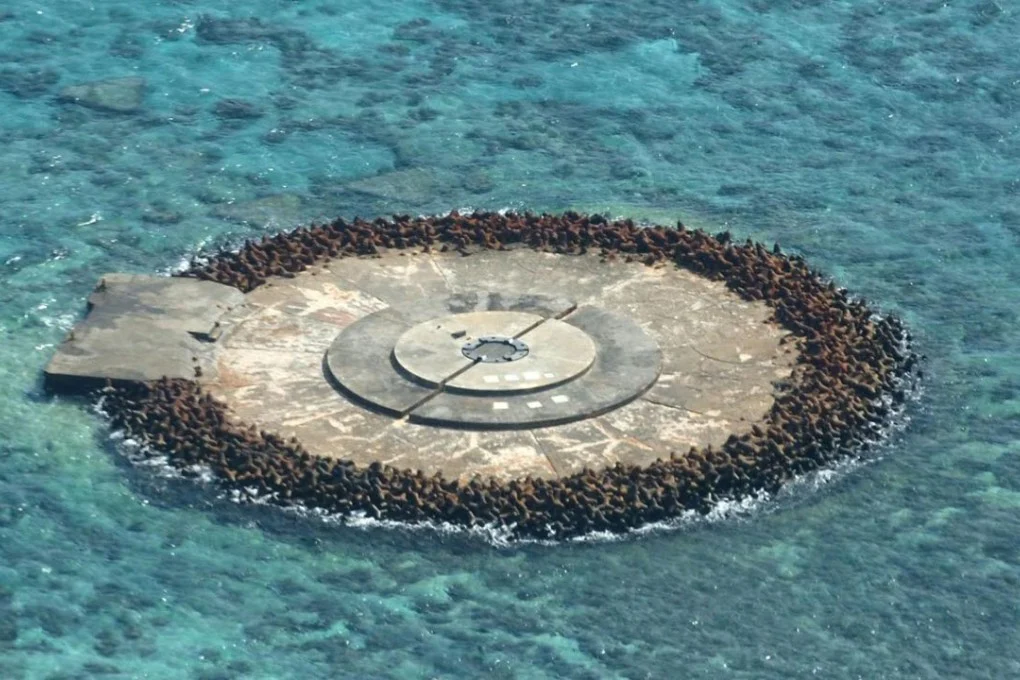
But there is a life-or-death problem: Okinotorishima is merely a low-lying coral reef, barely above sea level. If one day—even for an instant—the entire exposed portion is submerged by waves at high tide, it would no longer be considered an island. Under maritime law, Japan would then lose the entire exclusive economic zone it is trying so hard to protect. This risk is growing as global sea levels rise, storms become more intense, and erosion continues unabated.
To fight against nature, Japan has waged a “war without gunfire” for decades. Tokyo has built massive concrete walls around the reef to prevent seawater from eroding it. Radar systems, water-level sensors, and observation stations operate 24/7 to monitor the rock’s condition.

Every year, research vessels, engineers, divers, and maintenance crews are dispatched to the area—nearly 1,700 kilometers from Tokyo—to reinforce, repair, and ensure that Okinotorishima remains above water, even if only by a few dozen centimeters. Japan has also proposed building a small helipad and research station to strengthen human presence, though it must be extremely cautious not to turn the exposed area into an artificial structure—something that could lead the international community to deny the “island’s” legal status.
Many countries, especially China and South Korea, strongly oppose Japan’s position, arguing that Okinotorishima does not meet the natural criteria to be considered an island. In their view, Japan is attempting to “legalize” a tiny coral outcrop in order to unjustly expand its maritime claims. Nevertheless, Japan remains steadfast, viewing Okinotorishima as a crucial economic and strategic defensive line in the Pacific.
Today, Okinotorishima has become one of the world’s most unusual geopolitical flashpoints: not a populated island, not a military base, but a minuscule coral reef protected by billions of dollars and the will of a nation that depends on the sea. All of this is done to safeguard hundreds of thousands of square kilometers of ocean and the enormous economic interests hidden beneath it.
Okinotorishima is so small that you could walk across it in ten seconds, yet it carries the burden of a multimillion-dollar “maritime empire.” And Japan knows this all too well: the moment that rock sinks beneath the waves, everything will be lost.
WORD BANK:
worth /wɝːθ/ (adj): đáng giá
absurd /əbˈsɝːd/ [C1] (adj): phi lý, vô lý
the vast expanse of (phr): vùng rộng lớn gì đó
coral /ˈkɔːr.əl/ (n): san hô
coral reef /ˈkɔːr.əl riːf/ (n): rạn san hô
outcrop /ˈaʊt.krɑːp/ (n): mỏm đá lộ thiên
apparent /əˈpær.ənt/ [B2] (adj): rõ ràng, hiển nhiên
madness /ˈmæd.nəs/ (n): sự điên rồ
rational /ˈræʃ.ən.əl/ [B2] (adj): hợp lý
convention /kənˈven.ʃən/ [B2] (n): công ước; quy ước
entitled to do sth /ɪnˈtaɪ.t̬əld tuː duː ˈsʌm.θɪŋ/ (adj phr): có quyền làm gì
exclusive economic zone (EEZ) /ɪkˈskluː.sɪv ˌiː.kəˈnɑː.mɪk zoʊn/ (n): vùng đặc quyền kinh tế
fist /fɪst/ (n): nắm đấm
sth and sth combined (phr): cái gì và cái gì cộng lại
reserves /rɪˈzɝːvz/ (n): trữ lượng; nguồn dự trữ
rare earth element /ˌrer ɝːθ ˈel.ə.mənt/ (n): nguyên tố đất hiếm
geostrategic /ˌdʒiː.oʊ.strəˈtiː.dʒɪk/ (adj): thuộc địa chiến lược
lever sth /ˈliː.vɚ/ (v): tận dụng; dùng làm đòn bẩy
life-or-death problem /ˌlaɪf ɔːr ˈdeθ ˈprɑː.bləm/ (n phr): vấn đề sống còn
exposed portion /ɪkˈspoʊzd ˈpɔːr.ʃən/ (n): phần nổi
submerge /səbˈmɝːdʒ/ (v): nhấn chìm; chìm xuống
intense /ɪnˈtens/ [B2] (adj): dữ dội; mãnh liệt
erode /ɪˈroʊd/ (v): bào mòn; xói mòn
erosion /ɪˈroʊ.ʒən/ (n): sự xói mòn
unabated /ˌʌn.əˈbeɪ.t̬ɪd/ (adj): không suy giảm
wage (a war) /weɪdʒ/ (v): tiến hành (chiến tranh)
vessel /ˈves.əl/ (n): tàu thuyền
diver /ˈdaɪ.vɚ/ (n): thợ lặn
dispatch /dɪˈspætʃ/ (v): điều động; cử đi
helipad /ˈhel.i.pæd/ (n): bãi đáp trực thăng
cautious /ˈkɔː.ʃəs/ [B2] (adj): thận trọng
legal status /ˈliː.ɡəl ˈsteɪ.t̬əs/ (n): tình trạng pháp lý
oppose /əˈpoʊz/ [B2] (v): phản đối
legalize /ˈliː.ɡə.laɪz/ (v): hợp pháp hóa
unjustly /ʌnˈdʒʌst.li/ (adv): một cách bất công
maritime claims /ˈmær.ə.taɪm kleɪmz/ (n): yêu sách hàng hải
steadfast /ˈsted.fæst/ (adj): kiên định
geopolitical /ˌdʒiː.oʊ.pəˈlɪ.t̬ɪ.kəl/ (adj): thuộc địa chính trị
flashpoint /ˈflæʃ.pɔɪnt/ (n): điểm bùng phát xung đột
minuscule /ˈmɪn.ə.skuːl/ (adj): cực nhỏ
will /wɪl/ (n): ý chí
ỦNG HỘ READ TO LEAD!
Chào bạn! Có thể bạn chưa biết, Read to Lead là một trang giáo dục phi lợi nhuận với mục đích góp phần phát triển cộng đồng người học tiếng Anh tại Việt Nam. Chúng tôi không yêu cầu người đọc phải trả bất kỳ chi phí nào để sử dụng các sản phẩm của mình để mọi người đều có cơ hội học tập tốt hơn. Tuy nhiên, nếu bạn có thể, chúng tôi mong nhận được sự hỗ trợ tài chính từ bạn để duy trì hoạt động của trang và phát triển các sản phẩm mới.
Bạn có thể ủng hộ chúng tôi qua 1 trong 2 cách dưới đây.
– Cách 1: Chuyển tiền qua tài khoản Momo.
Số điện thoại 0947.886.865 (Chủ tài khoản: Nguyễn Tiến Trung)
Nội dung chuyển tiền: Ủng hộ Read to Lead
hoặc
– Cách 2: Chuyển tiền qua tài khoản ngân hàng.
Ngân hàng VIB chi nhánh Hải Phòng
Số tài khoản: 012704060048394 (Chủ tài khoản: Nguyễn Tiến Trung)
Nội dung chuyển tiền: Ủng hộ Read to Lead
Lớp luyện thi IELTS online
Bạn đang có nhu cầu thi chứng chỉ IELTS cho đầu vào đại học, đi du học, xin việc hay xin cư trú và đang phân vân chưa biết học ở đâu?
Nếu bạn đang tìm kiếm dịch vụ luyện thi IELTS online với giáo viên uy tín và chất lượng, cũng như học phí phải chăng, thì thầy Trung và Cô Thủy (Admin và dịch giả chính của Read to Lead) có thể là một lựa chọn phù hợp dành cho bạn.
Hãy liên hệ (nhắn tin) tới trang Facebook cá nhân của mình (https://www.facebook.com/nguyen.trung.509) để tìm hiểu về lớp học và được tư vấn cũng như được học thử nha!


Ad có thể cho thêm nghĩa tiếng Anh của từ vựng được không ạ