


[Reading level: B2 – Upper Intermediate]
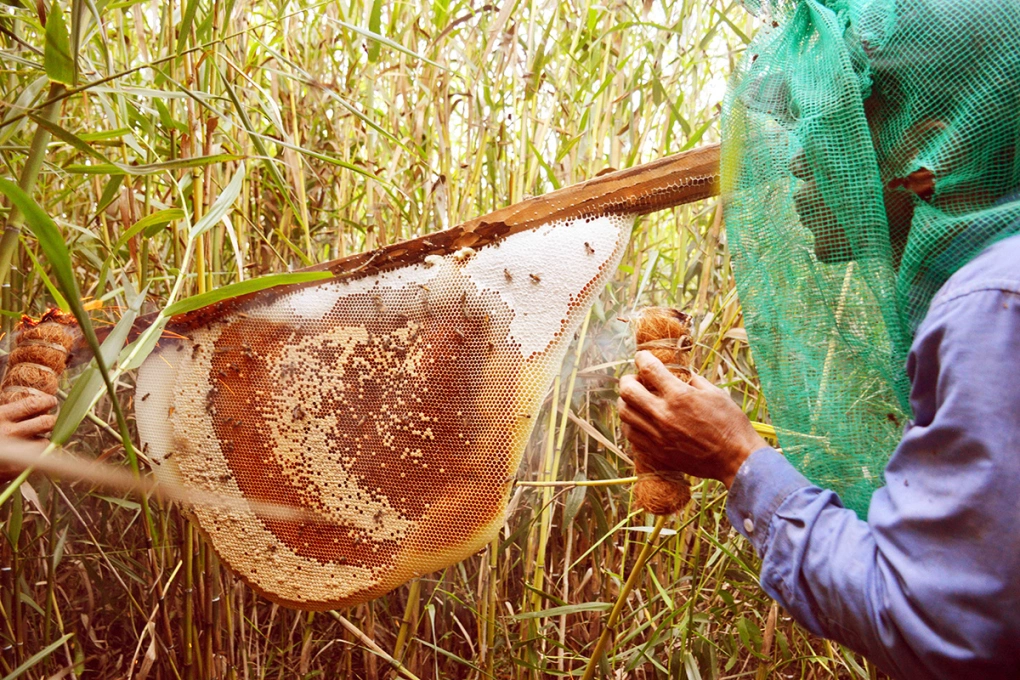
Having existed for hundreds of years, the profession of setting up “kèo” for bees (a slanted wooden beam used to attract bees)– a national intangible cultural heritage – is closely tied to the lives of many residents living under the canopy of the U Minh Hạ forest.
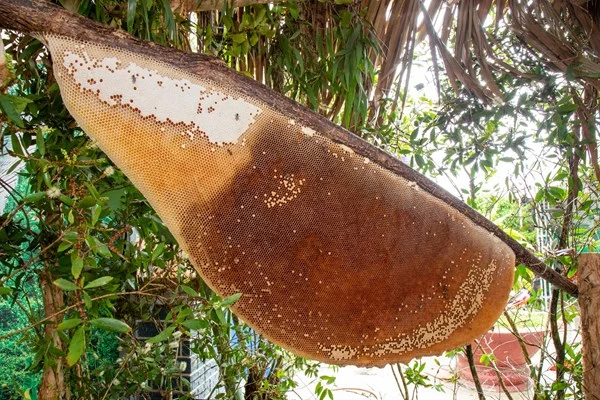
At the age of 63, with nearly 50 years in the beekeeping trade (harvesting wild honey), artisan Trần Văn Nhì, from Nguyễn Phích commune, U Minh district, said that this profession appeared around the second half of the 19th century, when people first came to this land to reclaim and settle it. When the melaleuca flowers in the U Minh Hạ forest bloom, honeybees come to build their nests. Early settlers discovered that bees tend to build nests on slanted tree trunks, similar to roof beams. From that, they created structures to attract bees.
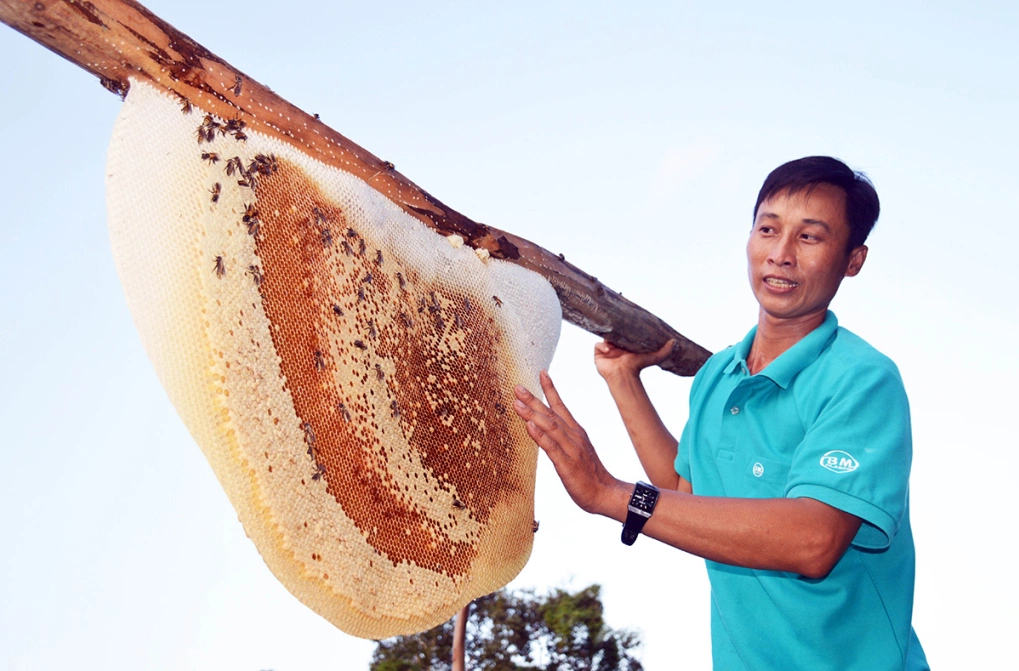
The kèo system consists of two poles driven into the ground and one beam placed on top. The taller pole is called the “nống,” the shorter one the “nạng,” and the beam on top is the “kèo.” “At 15, I followed my father into the forest to learn this trade. It looks simple but is not easy because it requires high technique in setting up the kèo. Not every kèo attracts bees,” Mr. Nhì said, adding that kèo can be made from melaleuca, areca, or apple mangrove trees, but melaleuca is preferred because it decays slowly.
The chosen melaleuca tree must be straight, 10–15 cm in diameter, stripped of bark, dried, and smoothed. The kèo is where bees build their nests and must bear the entire weight of the hive, which can weigh 10–20 kg. According to Mr. Nhì, besides knowing how to make a kèo, choosing the right location is equally important. The best place is where melaleuca trees are low with many flowers and where sunlight shines onto the kèo.
“The person setting the kèo must know how to determine the direction of the sun and wind to ensure bees come to build nests. After 15–20 days from when bees start building, they will produce the first batch of honey. After that, every 10–15 days, another batch can be harvested,” he said, adding that U Minh Hạ forest honey has two seasons: the flooding season (rainy season) from late May to August, and the dry season from October to March (lunar calendar).
While preparing tools such as coconut-fiber torches, head nets, gloves, honey-cutting knives, aluminum basins, and honey containers, Trần Văn Chơn, 40 (Mr. Nhì’s son), said that the amount of honey harvested depends largely on experience. Therefore, this profession is passed down from father to son.
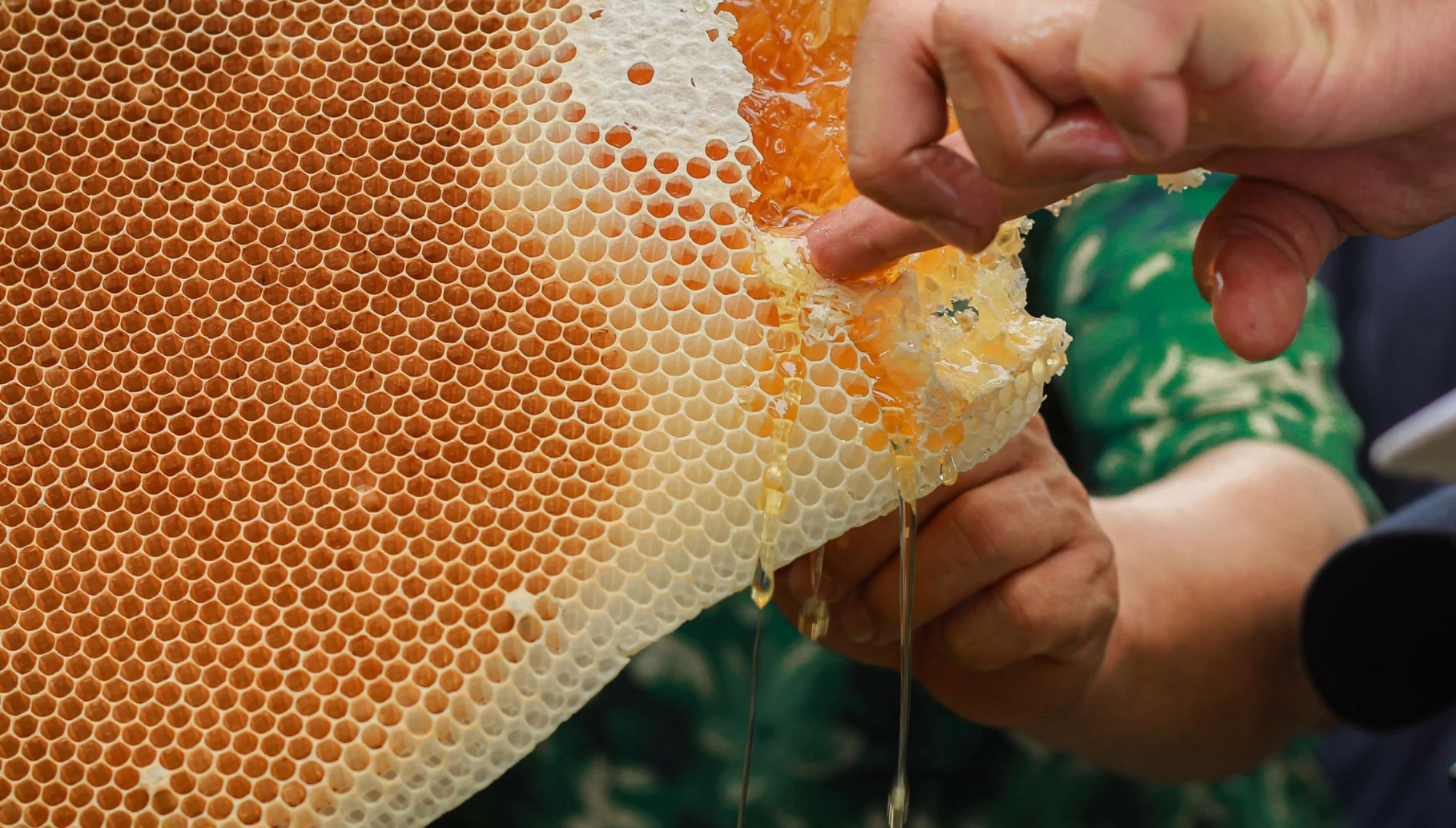
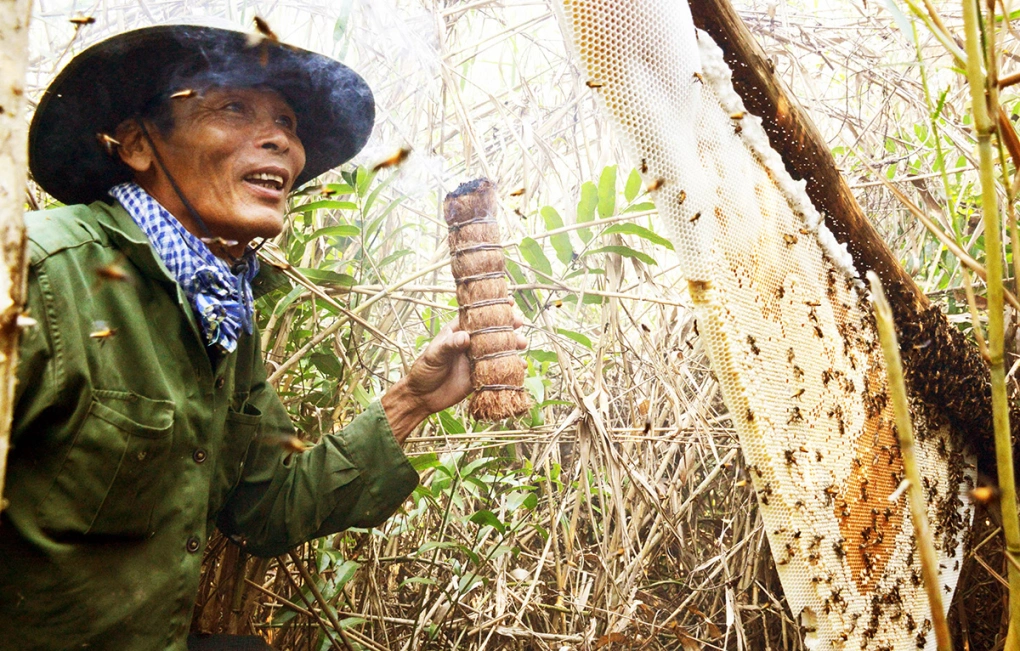
The best time to harvest honey is in the morning (6–8 a.m.) to avoid bee stings and reduce the risk of forest fires. The worker approaches the hive, lights a torch, and blows smoke to drive the bees away. Then, using a knife, he separates the honey section from the brood (where bees live) and cuts off the honey-filled part. After harvesting, the worker trims away the dark brood section.
“Depending on whether the hive is round or long, the cutting differs, but a portion of the brood must always be left so the bees can continue living, not split the colony, and reproduce new honey,” Mr. Chơn said, adding that all these steps are done quickly within 2–3 minutes.
According to him, during the job, bee stings are common, and sometimes workers encounter venomous snakes; each situation requires a different response. Usually, each beekeeping group has 2–3 people to support one another.
Experienced beekeepers in U Minh Hạ say that a hive can be harvested 3–4 times if done properly; each time yields 3–5 liters of honey, sometimes up to 10 liters. With its unique flavor that few places can match, U Minh Hạ honey is sold at around 500,000 VND per liter.
Nguyễn Văn Vững, Director of the 19/5 Cooperative, said that beekeeping groups are well organized with strict rules such as mutual support, honesty, not stealing others’ hives, not setting kèo on others’ land, and not diluting honey. Anyone joining must take an oath to follow these unwritten rules, and all members strictly comply.
He also noted that in 1984, the 19/5 forestry production group was established. In 2012, it was converted into a cooperative with 39 members, responsible for forest exploitation, protection, and beekeeping.
“At the time of its establishment, thanks to old melaleuca forests with abundant flowers, many bees came to build nests, and members harvested a very large amount of honey. One person could collect over 800 liters,” he said. In recent years, although the yield has decreased, members can still earn about 100 million VND per year from this profession.
In 2020, the Ministry of Culture, Sports and Tourism recognized the beekeeping “kèo” profession in U Minh and Trần Văn Thời districts, Cà Mau province, as a national intangible cultural heritage.
Trần Hiếu Hùng, Director of the Department of Culture, Sports and Tourism of Cà Mau province, said that this profession carries strong local cultural identity and is closely linked to the melaleuca forest. Beekeepers also act as frontline forest fire prevention and firefighting forces.
The U Minh Hạ melaleuca forest covers about 35,000 hectares, located in several communes of U Minh and Trần Văn Thời districts, bordering U Minh Thượng forest in Kiên Giang province. Currently, about 150 people still follow the beekeeping “kèo” profession under the melaleuca forest canopy.
Source: https://vnexpress.net/nghe-gac-keo-ong-o-rung-u-minh-ha-4561438.html
WORD BANK:
slanted /ˈslæn.tɪd/ (adj): nghiêng
beam /biːm/ (n): thanh gỗ, xà
intangible cultural heritage /ɪnˈtæn.dʒə.bəl ˈkʌl.tʃɚ.əl ˈher.ɪ.tɪdʒ/ (n): di sản văn hóa phi vật thể
canopy /ˈkæn.ə.pi/ (n): tán (rừng)
harvest /ˈhɑːr.vɪst/ (v): thu hoạch
harvest wild honey /ˈhɑːr.vɪst waɪld ˈhʌn.i/ (v): khai thác mật ong rừng, ăn ong
artisan /ˈɑːr.t̬ə.zən/ (n): thợ thủ công
commune /ˈkɑː.mjuːn/ (n): xã
district /ˈdɪs.trɪkt/ (n): huyện
reclaim /rɪˈkleɪm/ (v): khai hoang, cải tạo
settle /ˈset.əl/ (v): định cư
melaleuca /ˌmel.əˈluː.kə/ (n): cây tràm
bloom /bluːm/ (v): nở hoa
settler /ˈset.lɚ/ (n): người định cư
pole /poʊl/ (n): cột
drive sth into the ground /draɪv ˌɪn.tuː ðə ɡraʊnd/ (v): đóng cái gì xuống đất
trade /treɪd/ (n): nghề
areca /əˈriː.kə/ (n): cây cau
apple mangrove /ˈæp.əl ˈmæn.ɡroʊv/ (n): cây mắm
decay /dɪˈkeɪ/ (v): mục rữa
diameter /daɪˈæm.ə.t̬ɚ/ (n): đường kính
strip /strɪp/ (v): lột, tước
bark /bɑːrk/ (n): vỏ cây
smooth /smuːð/ (v): làm nhẵn
(bee) hive /haɪv/ (n): tổ ong
determine /dɪˈtɝː.mɪn/ (v): xác định
batch /bætʃ/ (n): mẻ
coconut-fiber /ˈkoʊ.kə.nʌt ˈfaɪ.bɚ/ (n): xơ dừa
torch /tɔːrtʃ/ (n): đuốc
head net /ˈhed net/ (n): lưới trùm đầu
glove /ɡlʌv/ (n): găng tay
aluminum basin /əˈluː.mə.nəm ˈbeɪ.sən/ (n): chậu nhôm
pass down sth /pæs daʊn/ (v): truyền lại
bee sting /biː stɪŋ/ (n): vết ong đốt
brood /bruːd/ (n): ấu trùng (ong)
cut off sth /kʌt ɔːf/ (v): cắt bỏ
trim /trɪm/ (v): tỉa, cắt gọn
portion /ˈpɔːr.ʃən/ (n): phần
split sth /splɪt/ (v): tách, chẻ
colony /ˈkɑː.lə.ni/ (n): đàn
reproduce /ˌriː.prəˈduːs/ (v): sinh sản
hands-on experience /ˌhændz ˈɑːn ɪkˈspɪr.i.əns/ (n): trải nghiệm thực tế
venomous snake /ˈven.ə.məs sneɪk/ (n): rắn độc
one another /wʌn əˈnʌð.ɚ/ (pron): lẫn nhau
properly /ˈprɑː.pɚ.li/ (adv): đúng cách
match /mætʃ/ (v): sánh bằng
mutual /ˈmjuː.tʃu.əl/ (adj): lẫn nhau
dilute /daɪˈluːt/ (v): pha loãng
take an oath /teɪk ən oʊθ/ (v): tuyên thệ
unwritten rule /ʌnˈrɪt.ən ruːl/ (n): luật bất thành văn
strictly comply with sth /ˈstrɪkt.li kəmˈplaɪ wɪð/ (v): tuân thủ nghiêm ngặt
forestry /ˈfɔːr.ɪ.stri/ (n): lâm nghiệp
establish /ɪˈstæb.lɪʃ/ (v): thành lập
convert into sth /kənˈvɝːt ˈɪn.tuː/ (v): chuyển đổi thành
cooperative /koʊˈɑː.pɚ.ə.t̬ɪv/ (n): hợp tác xã
abundant /əˈbʌn.dənt/ (adj): dồi dào
yield /jiːld/ (n): sản lượng
cultural identity /ˈkʌl.tʃɚ.əl aɪˈden.t̬ə.t̬i/ (n): bản sắc văn hóa
frontline /ˈfrʌnt.laɪn/ (n): tuyến đầu
border sth /ˈbɔːr.dɚ/ (v): giáp với
ỦNG HỘ READ TO LEAD!
Chào bạn! Có thể bạn chưa biết, Read to Lead là một trang giáo dục phi lợi nhuận với mục đích góp phần phát triển cộng đồng người học tiếng Anh tại Việt Nam. Chúng tôi không yêu cầu người đọc phải trả bất kỳ chi phí nào để sử dụng các sản phẩm của mình để mọi người đều có cơ hội học tập tốt hơn. Tuy nhiên, nếu bạn có thể, chúng tôi mong nhận được sự hỗ trợ tài chính từ bạn để duy trì hoạt động của trang và phát triển các sản phẩm mới.
Bạn có thể ủng hộ chúng tôi qua 1 trong 2 cách dưới đây.
– Cách 1: Chuyển tiền qua tài khoản Momo.
Số điện thoại 0947.886.865 (Chủ tài khoản: Nguyễn Tiến Trung)
Nội dung chuyển tiền: Ủng hộ Read to Lead
hoặc
– Cách 2: Chuyển tiền qua tài khoản ngân hàng.
Ngân hàng VIB chi nhánh Hải Phòng
Số tài khoản: 012704060048394 (Chủ tài khoản: Nguyễn Tiến Trung)
Nội dung chuyển tiền: Ủng hộ Read to Lead
Lớp luyện thi IELTS online
Bạn đang có nhu cầu thi chứng chỉ IELTS cho đầu vào đại học, đi du học, xin việc hay xin cư trú và đang phân vân chưa biết học ở đâu?
Nếu bạn đang tìm kiếm dịch vụ luyện thi IELTS online với giáo viên uy tín và chất lượng, cũng như học phí phải chăng, thì thầy Trung và Cô Thủy (Admin và dịch giả chính của Read to Lead) có thể là một lựa chọn phù hợp dành cho bạn.
Hãy liên hệ (nhắn tin) tới trang Facebook cá nhân của mình (https://www.facebook.com/nguyen.trung.509) để tìm hiểu về lớp học và được tư vấn cũng như được học thử nha!


