


[Reading level: B2 – Upper Intermediate]
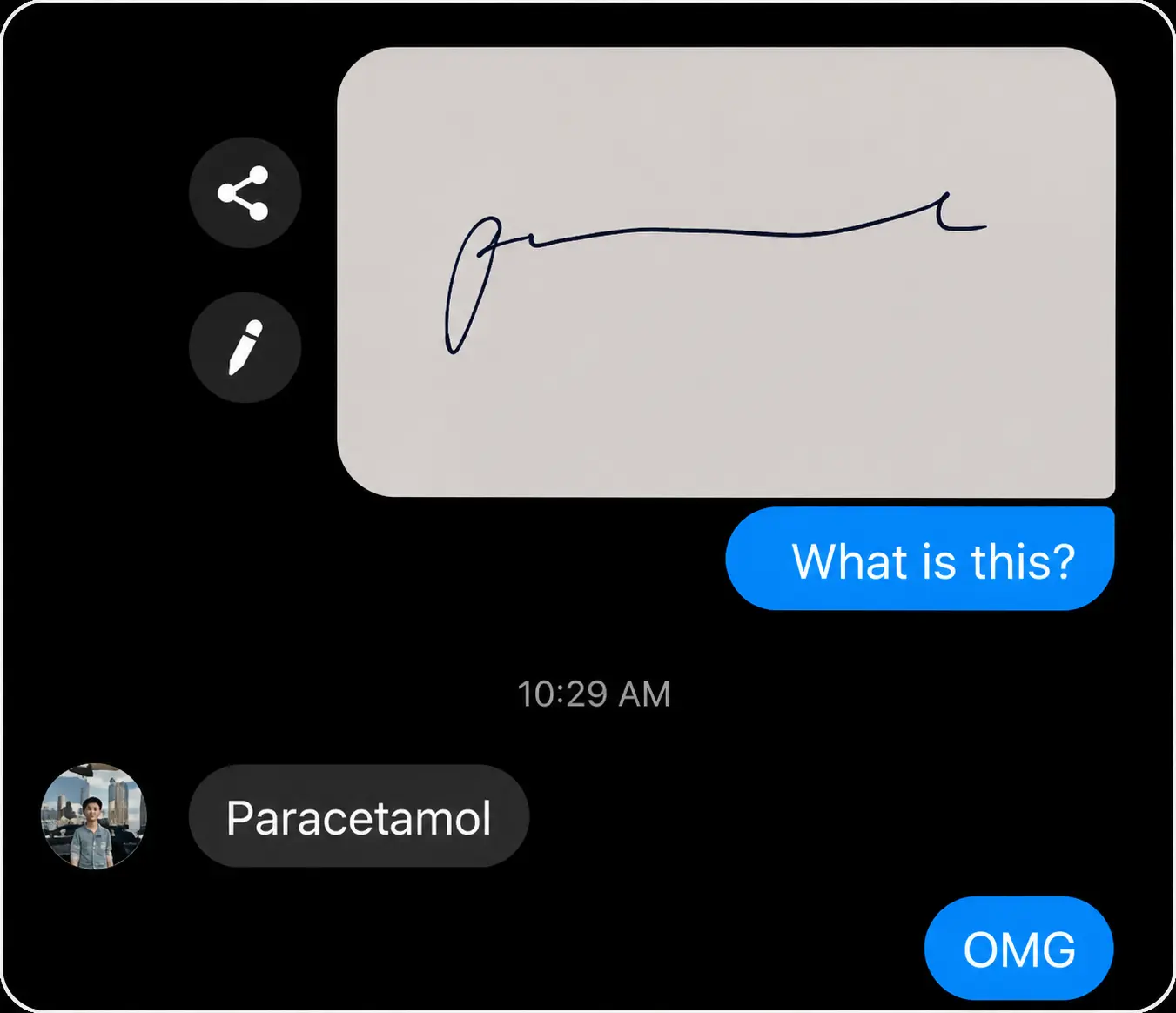
If you have ever read a handwritten note or prescription written by a doctor, you have probably felt confused because you could not understand the content. The messy strokes, abbreviations, and even symbol-like writing make many people feel that “decoding” doctors’ handwriting is almost a challenge. In fact, this phenomenon does not only occur in one single country but is also common around the world. Why is that?
First of all, a major reason comes from doctors’ training and working process. During their years in medical school, students have to take notes very quickly to keep up with lectures and clinical practice. Over time, writing fast, using abbreviations, and employing symbols become habits. When they enter the workplace, these habits not only remain but may even become more pronounced due to time pressure.
In addition, doctors often have a very heavy workload. In a single session, they may have to see dozens of patients. This forces them to write quickly to save time, and as a result, clear handwriting is sometimes no longer a top priority.
Another reason lies in the nature of the profession. Prescriptions often contain many medical terms, as well as drug names in Latin or other foreign languages. These words are already long and difficult to remember, and when written quickly, they become even harder to read for those without professional knowledge.
Moreover, professional habits also contribute to making the handwriting difficult to understand. When doctors frequently prescribe familiar medications, they tend to write in shorthand or out of habit. Over time, the handwriting becomes distorted and increasingly difficult to recognize.
However, it cannot be denied that in some cases, careless writing may result from a lack of attentiveness. This can pose serious risks, such as misreading medications or using incorrect dosages. Not only patients but also pharmacists or other doctors may misunderstand the information.
Fortunately, other medical staff and pharmacists are often accustomed to this kind of handwriting. Thanks to their experience and professional knowledge, they can read and understand what doctors have written. This helps reduce, to some extent, the errors that may occur during the dispensing and use of medication. Therefore, in most situations, you only need to follow the pharmacist’s instructions when receiving your medicine and do not need to worry too much about not being able to read the prescription.
In addition, with the development of technology, many countries have started to switch to electronic prescriptions. This not only makes the information clearer and easier to read but also reduces the risk of errors in prescribing and treatment.
In conclusion, doctors’ illegible handwriting is not a random phenomenon but the result of many factors such as training habits, work pressure, and professional characteristics. However, with the support of people and modern technology, this issue is gradually being improved, helping to ensure the safety and rights of patients.
WORD BANK:
prescription /prɪˈskrɪp.ʃən/ (n): đơn thuốc
stroke /stroʊk/ (n): nét chữ
messy strokes /ˈmes.i stroʊks/ (n): những nét chữ nguệch ngoạc
abbreviation /əˌbriː.viˈeɪ.ʃən/ (n): từ viết tắt
symbol-like /ˈsɪm.bəl laɪk/ (adj): giống ký hiệu
decoding /diːˈkoʊ.dɪŋ/ (n): việc giải mã
phenomenon /fəˈnɑː.mə.nɑːn/ (n): hiện tượng
keep up with sth /kiːp ʌp wɪð/ (v): theo kịp cái gì
lecture /ˈlek.tʃɚ/ (n): bài giảng
clinical practice /ˈklɪn.ɪ.kəl ˈpræk.tɪs/ (n): thực hành lâm sàng
pronounced /prəˈnaʊnst/ (adj): rõ rệt
session /ˈseʃ.ən/ (n): buổi (làm việc/khám bệnh)
nature /ˈneɪ.tʃɚ/ (n): bản chất
prescribe /prɪˈskraɪb/ (v): kê đơn
write in shorthand (v): viết tắt
out of habit /aʊt əv ˈhæb.ɪt/ (adv): theo thói quen
distorted /dɪˈstɔːr.t̬ɪd/ (adj): bị biến dạng
attentiveness /əˈten.tɪv.nəs/ (n): sự cẩn trọng
dosage /ˈdoʊ.sɪdʒ/ (n): liều lượng
pharmacist /ˈfɑːr.mə.sɪst/ (n): dược sĩ
accustomed to /əˈkʌs.təmd tuː/ (adj): quen với
error /ˈer.ɚ/ (n): lỗi sai
dispense /dɪˈspens/ (v): cấp phát (thuốc)
illegible /ɪˈledʒ.ə.bəl/ (adj): khó đọc
ỦNG HỘ READ TO LEAD!
Chào bạn! Có thể bạn chưa biết, Read to Lead là một trang giáo dục phi lợi nhuận với mục đích góp phần phát triển cộng đồng người học tiếng Anh tại Việt Nam. Chúng tôi không yêu cầu người đọc phải trả bất kỳ chi phí nào để sử dụng các sản phẩm của mình để mọi người đều có cơ hội học tập tốt hơn. Tuy nhiên, nếu bạn có thể, chúng tôi mong nhận được sự hỗ trợ tài chính từ bạn để duy trì hoạt động của trang và phát triển các sản phẩm mới.
Bạn có thể ủng hộ chúng tôi qua 1 trong 2 cách dưới đây.
– Cách 1: Chuyển tiền qua tài khoản Momo.
Số điện thoại 0947.886.865 (Chủ tài khoản: Nguyễn Tiến Trung)
Nội dung chuyển tiền: Ủng hộ Read to Lead
hoặc
– Cách 2: Chuyển tiền qua tài khoản ngân hàng.
Ngân hàng VIB chi nhánh Hải Phòng
Số tài khoản: 012704060048394 (Chủ tài khoản: Nguyễn Tiến Trung)
Nội dung chuyển tiền: Ủng hộ Read to Lead
Lớp luyện thi IELTS online
Bạn đang có nhu cầu thi chứng chỉ IELTS cho đầu vào đại học, đi du học, xin việc hay xin cư trú và đang phân vân chưa biết học ở đâu?
Nếu bạn đang tìm kiếm dịch vụ luyện thi IELTS online với giáo viên uy tín và chất lượng, cũng như học phí phải chăng, thì thầy Trung và Cô Thủy (Admin và dịch giả chính của Read to Lead) có thể là một lựa chọn phù hợp dành cho bạn.
Hãy liên hệ (nhắn tin) tới trang Facebook cá nhân của mình (https://www.facebook.com/nguyen.trung.509) để tìm hiểu về lớp học và được tư vấn cũng như được học thử nha!


