



[Reading level: B1 – Intermediate]
Applying the “double-frying” technique combined with a cooling step helps alter the starch structure, turning homemade fries crispy, golden, and long-lasting, just like those sold in restaurants.
Many people wonder why homemade fries often become soft and soggy after just a few minutes, while restaurant fries stay crispy for much longer.
The reason is that fresh potatoes contain a large amount of water (about 80%), along with a network of starch and pectin (a natural binding agent that holds cell walls together). If you cut the potatoes and fry them immediately at high heat, the outer layer will quickly brown or burn, while the moisture inside has not yet escaped. After removing them from the pan, steam from the core rises and seeps back into the crust, breaking the newly formed outer layer and making the fries soggy.
To overcome this, many chefs apply the “double-frying” technique combined with an intermediate cooling step, based on the principle of changing the starch structure.
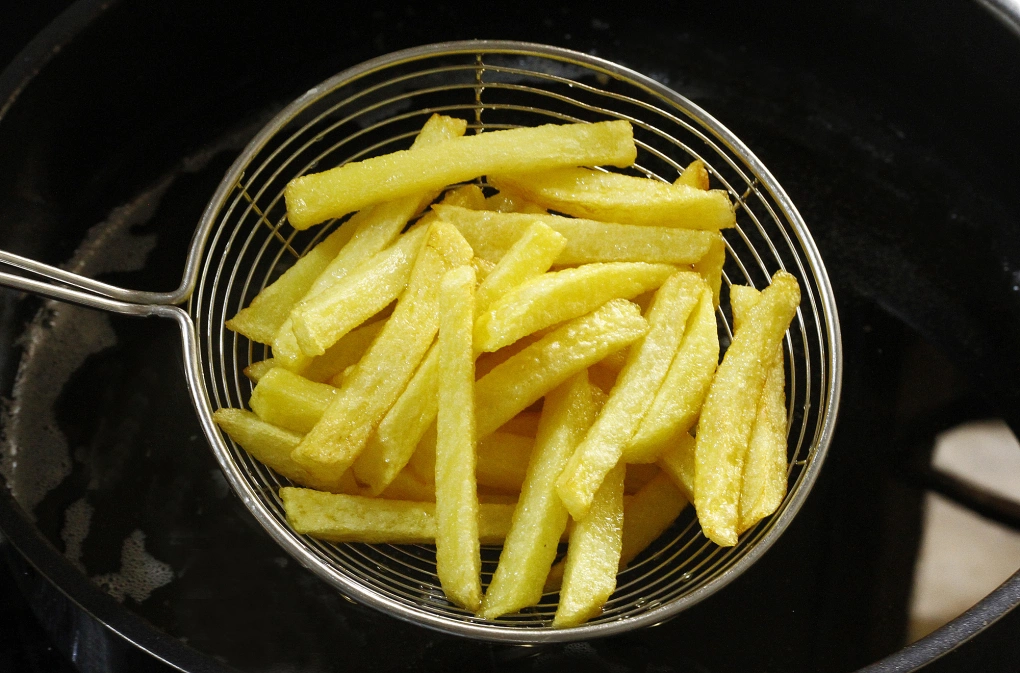
First fry: Low heat
The first frying stage is essentially the process of cooking the inner part, allowing the starch to absorb water and begin gelatinization. A moderate temperature breaks down the pectin structure, softening the potato from the inside without burning the outer layer. After this stage, the fries are cooked but still have a loose structure and a pale color.
Intermediate step: Cooling and moisture reduction
After removing the fries from the first fry, restaurants often let them cool completely or even freeze them. This is the crucial step for achieving crispiness that home kitchens often skip. Under low temperatures, the amylose gel layer contracts and restructures into a more stable network. At the same time, the cold and dry environment helps remove excess surface moisture, creating a dry outer layer.
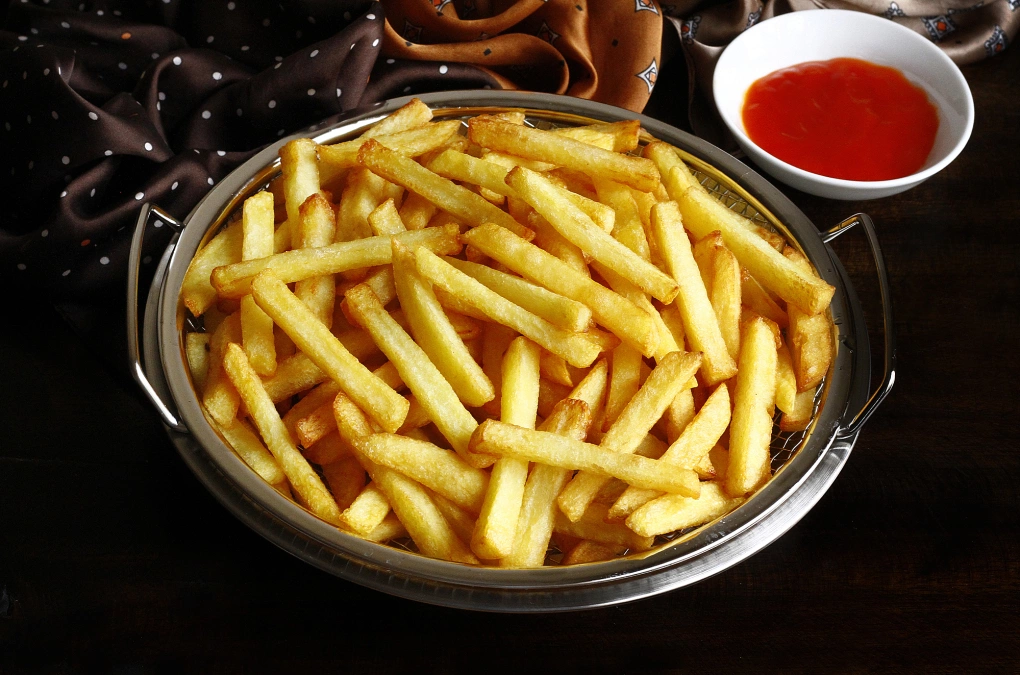
Second fry: High heat
When the cooled fries are dropped into hot oil, the large temperature difference causes the surface moisture to evaporate rapidly, puncturing the outer layer and forming tiny pores. The hot oil immediately fills these spaces, drawing out moisture from the starch network.
With sudden dehydration at high temperatures, the starch transitions into a “glassy” crispy state. At the same time, the Maillard reaction occurs, giving the outer layer its golden color. This crust becomes firm enough to act as a perfect barrier, locking moisture inside and preventing it from seeping back out, allowing the fries to stay crispy for longer.
Source: https://vnexpress.net/bi-quyet-chien-khoai-tay-gion-rum-5055201.html
WORD BANK:
starch /stɑːrtʃ/ [B2] (n): tinh bột
crispy /ˈkrɪs.pi/ [B2] (adj): giòn rụm
long-lasting /ˌlɔːŋ ˈlæs.tɪŋ/ (adj): lâu bền, kéo dài
soggy /ˈsɑː.ɡi/ [C1] (adj): ỉu, nhão
binding agent /ˈbaɪn.dɪŋ ˌeɪ.dʒənt/ (n): chất kết dính
moisture /ˈmɔɪs.tʃɚ/ [B2] (n): độ ẩm
steam /stiːm/ [B1] (n): hơi nước
core /kɔːr/ [B2] (n): lõi, phần trung tâm
seep into sth /siːp ˈɪn.tuː/ (v): thấm vào cái gì
crust /krʌst/ [C1] (n): lớp vỏ (cứng bên ngoài)
intermediate /ˌɪn.tɚˈmiː.di.ət/ [B2] (adj): trung gian
principle /ˈprɪn.sə.pəl/ [B2] (n): nguyên lý
essentially /ɪˈsen.ʃəl.i/ [B2] (adv): về cơ bản
the inner part /ði ˈɪn.ɚ pɑːrt/ (n): phần bên trong
absorb sth /əbˈzɔːrb/ [B1] (v): hấp thụ
gelatinization /dʒəˌlæt̬.ən.əˈzeɪ.ʃən/ (n): sự hồ hóa (tinh bột)
pale /peɪl/ [B2] (adj): nhạt màu
freeze /friːz/ [B1] (v): đông lại
amylose gel /ˈæm.ɪ.loʊs dʒel/ (n): gel amylose
contract /kənˈtrækt/ [B2] (v): co lại
excess /ɪkˈses/ [B2] (n): sự dư thừa
evaporate /ɪˈvæp.ə.reɪt/ [B2] (v): bay hơi
puncture /ˈpʌŋk.tʃɚ/ [C1] (v): đâm thủng
tiny pore /ˈtaɪ.ni pɔːr/ (n): lỗ nhỏ li ti
draw out sth /drɔː aʊt/ (v): rút ra, kéo ra
dehydration /ˌdiː.haɪˈdreɪ.ʃən/ (n): sự mất nước
glassy /ˈɡlæs.i/ (adj): có dạng như thủy tinh
ỦNG HỘ READ TO LEAD!
Chào bạn! Có thể bạn chưa biết, Read to Lead là một trang giáo dục phi lợi nhuận với mục đích góp phần phát triển cộng đồng người học tiếng Anh tại Việt Nam. Chúng tôi không yêu cầu người đọc phải trả bất kỳ chi phí nào để sử dụng các sản phẩm của mình để mọi người đều có cơ hội học tập tốt hơn. Tuy nhiên, nếu bạn có thể, chúng tôi mong nhận được sự hỗ trợ tài chính từ bạn để duy trì hoạt động của trang và phát triển các sản phẩm mới.
Bạn có thể ủng hộ chúng tôi qua 1 trong 2 cách dưới đây.
– Cách 1: Chuyển tiền qua tài khoản Momo.
Số điện thoại 0947.886.865 (Chủ tài khoản: Nguyễn Tiến Trung)
Nội dung chuyển tiền: Ủng hộ Read to Lead
hoặc
– Cách 2: Chuyển tiền qua tài khoản ngân hàng.
Ngân hàng VIB chi nhánh Hải Phòng
Số tài khoản: 012704060048394 (Chủ tài khoản: Nguyễn Tiến Trung)
Nội dung chuyển tiền: Ủng hộ Read to Lead
Lớp luyện thi IELTS online
Bạn đang có nhu cầu thi chứng chỉ IELTS cho đầu vào đại học, đi du học, xin việc hay xin cư trú và đang phân vân chưa biết học ở đâu?
Nếu bạn đang tìm kiếm dịch vụ luyện thi IELTS online với giáo viên uy tín và chất lượng, cũng như học phí phải chăng, thì thầy Trung và Cô Thủy (Admin và dịch giả chính của Read to Lead) có thể là một lựa chọn phù hợp dành cho bạn.
Hãy liên hệ (nhắn tin) tới trang Facebook cá nhân của mình (https://www.facebook.com/nguyen.trung.509) để tìm hiểu về lớp học và được tư vấn cũng như được học thử nha!


