


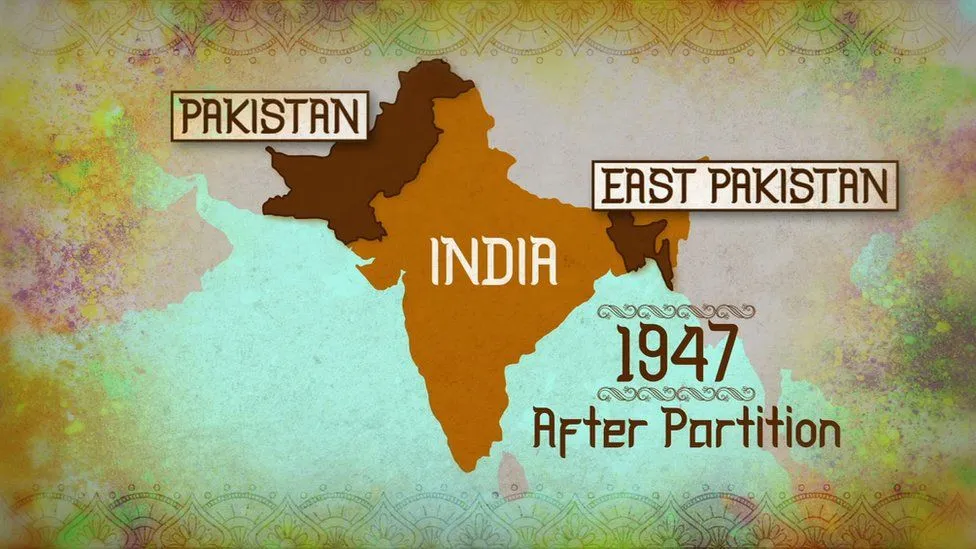
In August 1947, India gained independence after 200 years of British rule. What followed was one of the largest and bloodiest forced migrations in history. An estimated one million people lost their lives.
Before British colonization, the Indian subcontinent was a patchwork of regional kingdoms known as princely states populated by Hindus, Muslims, Sikhs, Jains, Buddhists, Christians, Parsis, and Jews. Each princely state had its own traditions, caste backgrounds, and leadership.
Starting in the 1500s, a series of European powers colonized India with coastal trading settlements. By the mid-18th century, the English East India Company emerged as the primary colonial power in India. The British ruled some provinces directly, and ruled the princely states indirectly. Under indirect rule, the princely states remained sovereign but made political and financial concessions to the British.
In the 19th century, the British began to categorize Indians by religious identity—a gross simplification of the communities in India. They counted Hindus as “majorities” and all other religious communities as distinct “minorities,” with Muslims being the largest minority. Sikhs were considered part of the Hindu community by everyone but themselves.
In elections, people could only vote for candidates of their own religious identification. These practices exaggerated differences, sowing distrust between communities that had previously co-existed.
The 20th century began with decades of anti-colonial movements, where Indians fought for independence from Britain. In the aftermath of World War II, under enormous financial strain from the war, Britain finally caved.
Indian political leaders had differing views on what an independent India should look like. Mohandas Gandhi and Jawaharlal Nehru represented the Hindu majority and wanted one united India. Muhammad Ali Jinnah, who led the Muslim minority, thought the rifts created by colonization were too deep to repair. Jinnah argued for a two-nation division where Muslims would have a homeland called Pakistan.
Following riots in 1946 and 1947, the British expedited their retreat, planning Indian independence behind closed doors. In June 1947, the British viceroy announced that India would gain independence by August, and be partitioned into Hindu India and Muslim Pakistan—but gave little explanation of how exactly this would happen.
Using outdated maps, inaccurate census numbers and minimal knowledge of the land, in a mere five weeks, the Boundary Committee drew a border dividing three provinces under direct British rule: Bengal, Punjab, and Assam. The border took into account where Hindus and Muslims were majorities, but also factors like location and population percentages.
So if a Hindu majority area bordered another Hindu majority area, it would be included in India—but if a Hindu majority area bordered Muslim majority areas, it might become part of Pakistan. Princely states on the border had to choose which of the new nations to join, losing their sovereignty in the process.
While the Boundary Committee worked on the new map, Hindus and Muslims began moving to areas where they thought they’d be a part of the religious majority—but they couldn’t be sure. Families divided themselves. Fearing sexual violence, parents sent young daughters and wives to regions they perceived to be safe.
The new map wasn’t revealed until August 17th, 1947—two days after independence. The provinces of Punjab and Bengal became the geographically separated East and West Pakistan. The rest became Hindu-majority India.
In a period of two years, millions of Hindus and Sikhs living in Pakistan left for India, while Muslims living in India fled villages where their families had lived for centuries. The cities of Lahore, Delhi, Calcutta, Dhaka, and Karachi emptied of old residents and filled with refugees.
In the power vacuum British forces left behind, radicalized militias and local groups massacred migrants. Much of the violence occurred in Punjab, and women bore the brunt of it, suffering rape and mutilation. Around 100,000 women were kidnapped and forced to marry their captors.
The problems created by Partition went far beyond this immediate deadly aftermath. Many families who made temporary moves became permanently displaced, and borders continue to be disputed.
In 1971, East Pakistan seceded and became the new country of Bangladesh. Meanwhile, the Hindu ruler of Kashmir decided to join India—a decision that was to be finalized by a public referendum of the majority Muslim population. That referendum still hasn’t happened as of 2020, and India and Pakistan have been warring over Kashmir since 1947.
More than 70 years later, the legacies of the Partition remain clear in the subcontinent: in its new political formations and in the memories of divided families.
WORD BANK:
rule /ruːl/ [B2] (v, n): cai trị, sự cai trị
bloody /ˈblʌd.i/ (adj): đẫm máu
forced migration /fɔːrst maɪˈɡreɪ.ʃən/ (n): di cư cưỡng bức
colonization /ˌkɑː.lə.nəˈzeɪ.ʃən/ [C1] (n): sự thực dân hóa
subcontinent /ˌsʌbˈkɑːn.tɪ.nənt/ (n): tiểu lục địa
patchwork /ˈpætʃ.wɝːk/ (n): sự chắp vá
Muslim /ˈmʊz.lɪm/ (n): người Hồi giáo
Jain /dʒeɪn/ (n): người theo đạo Jain
Buddhist /ˈbʊd.ɪst/ (n): người theo đạo Phật
Christian /ˈkrɪs.tʃən/ (n): người theo đạo Cơ đốc
Jew /dʒuː/ (n): người Do Thái
princely /ˈprɪns.li/ (adj): thuộc về vương công; quý tộc
princely state /ˈprɪns.li steɪt/ (n): bang phong kiến (ở Ấn Độ thời Anh)
caste /kæst/ (n): đẳng cấp
coastal /ˈkoʊ.stəl/ (adj): thuộc ven biển
trading settlement /ˈtreɪ.dɪŋ ˈset.əl.mənt/ (n): khu định cư buôn bán
emerge as sth /ɪˈmɝːdʒ æz/ (v): nổi lên như là
sovereign /ˈsɑː.vrɪn/ (adj): có chủ quyền
make concessions to sb /meɪk kənˈseʃ.ənz tuː/ (v): nhượng bộ ai
categorize /ˈkæt̬.ə.ɡɔː.raɪz/ (v): phân loại
a gross simplification /ə ɡroʊs ˌsɪm.plə.fəˈkeɪ.ʃən/ (n): sự đơn giản hóa quá mức
count sth as sth /kaʊnt æz/ (v): coi cái gì là
majority /məˈdʒɔːr.ə.t̬i/ (n): đa số
minority /maɪˈnɔːr.ə.t̬i/ (n): thiểu số
election /ɪˈlek.ʃən/ (n): cuộc bầu cử
exaggerate sth /ɪɡˈzædʒ.ə.reɪt/ (v): phóng đại
sow sth /soʊ/ (v): gieo (rắc) cái gì đó
distrust /dɪsˈtrʌst/ (n): sự nghi ngờ
anti-colonial /ˌæn.ti kəˈloʊ.ni.əl/ (adj): chống thực dân
movement /ˈmuːv.mənt/ (n): phong trào
in the aftermath of sth /ɪn ði ˈæf.tɚ.mæθ əv/ (phr): trong hậu quả của
enormous /ɪˈnɔːr.məs/ (adj): to lớn
strain /streɪn/ (n): áp lực
cave /keɪv/ (v): nhượng bộ
rift /rɪft/ (n): sự rạn nứt
riot /ˈraɪ.ət/ (n): bạo loạn
expedite sth /ˈek.spə.daɪt/ (v): xúc tiến
retreat /rɪˈtriːt/ (v): rút lui
plan sth behind closed doors /plæn bɪˈhaɪnd kloʊzd dɔːrz/ (phr): lên kế hoạch bí mật
viceroy /ˈvaɪs.rɔɪ/ (n): phó vương
partition /pɑːrˈtɪʃ.ən/ (n): sự phân chia
census /ˈsen.səs/ (n): điều tra dân số
boundary /ˈbaʊn.dɚ.i/ (n): ranh giới
committee /kəˈmɪt̬.i/ (n): ủy ban
take into account sth /teɪk ˈɪn.tuː əˈkaʊnt/ (v): tính đến
but also sth /bʌt ˈɔːl.soʊ/ (phr): mà còn
perceive /pɚˈsiːv/ (v): cho là; nhận thức
leave for somewhere /liːv fɔːr/ (v): rời đi đến đâu
flee (past tense: fled) /fliː/ (v): chạy trốn
power vacuum /ˈpaʊ.ɚ ˈvæk.juːm/ (n): khoảng trống quyền lực
radicalized /ˈræd.ɪ.kə.laɪzd/ (adj): bị cực đoan hóa
militia /məˈlɪʃ.ə/ (n): dân quân
massacre /ˈmæs.ə.kɚ/ (n): cuộc thảm sát
migrant /ˈmaɪ.ɡrənt/ (n): người di cư
the brunt of sth /ðə brʌnt əv/ (n): đối tượng chịu phần lớn thiệt hại của cái gì
rape /reɪp/ (n): sự cưỡng hiếp
mutilation /ˌmjuː.t̬əˈleɪ.ʃən/ (n): sự làm biến dạng
kidnap /ˈkɪd.næp/ (v): bắt cóc
captor /ˈkæp.tɚ/ (n): kẻ bắt giữ
partition /pɑːrˈtɪʃ.ən/ (v): chia cắt
go far beyond /ɡoʊ fɑːr bɪˈjɑːnd/ (v): vượt xa
temporary /ˈtem.pə.rer.i/ (adj): tạm thời
permanently /ˈpɝː.mə.nənt.li/ (adv): vĩnh viễn
displaced /dɪsˈpleɪst/ (adj): bị di dời
disputed /dɪˈspjuː.t̬ɪd/ (adj): bị tranh chấp
secede /sɪˈsiːd/ (v): ly khai
public referendum /ˈpʌb.lɪk ˌref.əˈren.dəm/ (n): trưng cầu dân ý
war over sth /wɔːr ˈoʊ.vɚ/ (n): chiến tranh về cái gì
legacy /ˈleɡ.ə.si/ (n): di sản
ỦNG HỘ READ TO LEAD!
Chào bạn! Có thể bạn chưa biết, Read to Lead là một trang giáo dục phi lợi nhuận với mục đích góp phần phát triển cộng đồng người học tiếng Anh tại Việt Nam. Chúng tôi không yêu cầu người đọc phải trả bất kỳ chi phí nào để sử dụng các sản phẩm của mình để mọi người đều có cơ hội học tập tốt hơn. Tuy nhiên, nếu bạn có thể, chúng tôi mong nhận được sự hỗ trợ tài chính từ bạn để duy trì hoạt động của trang và phát triển các sản phẩm mới.
Bạn có thể ủng hộ chúng tôi qua 1 trong 2 cách dưới đây.
– Cách 1: Chuyển tiền qua tài khoản Momo.
Số điện thoại 0947.886.865 (Chủ tài khoản: Nguyễn Tiến Trung)
Nội dung chuyển tiền: Ủng hộ Read to Lead
hoặc
– Cách 2: Chuyển tiền qua tài khoản ngân hàng.
Ngân hàng VIB chi nhánh Hải Phòng
Số tài khoản: 012704060048394 (Chủ tài khoản: Nguyễn Tiến Trung)
Nội dung chuyển tiền: Ủng hộ Read to Lead
Lớp luyện thi IELTS online
Bạn đang có nhu cầu thi chứng chỉ IELTS cho đầu vào đại học, đi du học, xin việc hay xin cư trú và đang phân vân chưa biết học ở đâu?
Nếu bạn đang tìm kiếm dịch vụ luyện thi IELTS online với giáo viên uy tín và chất lượng, cũng như học phí phải chăng, thì thầy Trung và Cô Thủy (Admin và dịch giả chính của Read to Lead) có thể là một lựa chọn phù hợp dành cho bạn.
Hãy liên hệ (nhắn tin) tới trang Facebook cá nhân của mình (https://www.facebook.com/nguyen.trung.509) để tìm hiểu về lớp học và được tư vấn cũng như được học thử nha!


