


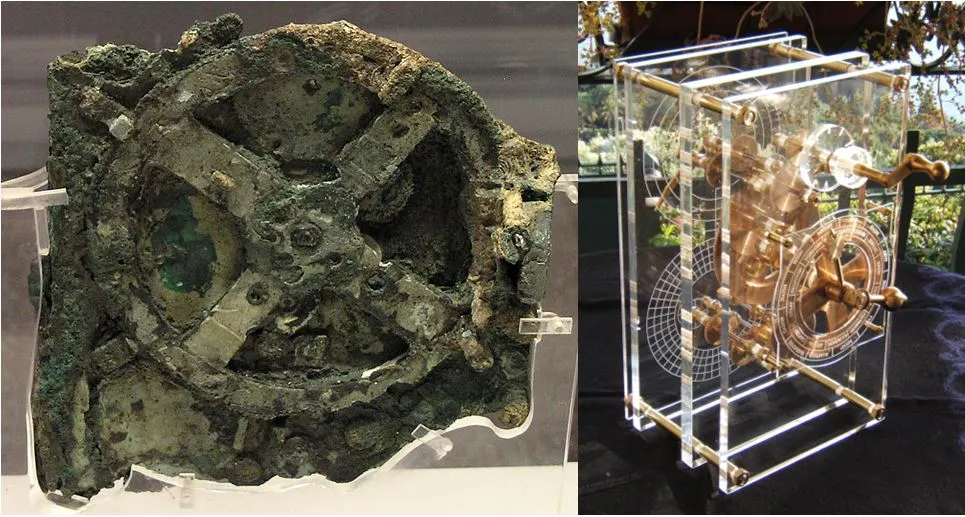
In 1900, Greek divers stumbled upon a 2,000-year-old shipwreck whose contents would shake our understanding of the ancient world. Among the remains were fragments of mangled wood and corroded metal, which archaeologists soon realized contained an intricate series of gears, resembling technology not believed to exist until centuries later.
By the 1950s, scientists began to understand what they’d found. These fragments were part of a device that could calculate the movements of the Sun, Moon, and planets. Now known as the Antikythera mechanism, this instrument appears to be the oldest geared device ever discovered and humankind’s first computer.
Most modern devices, like your phone or laptop, are examples of digital computers. These systems store information in strings of zeros and ones that they can then convert into images on a screen or sounds in a speaker.
But more generally, a computer refers to any device that stores information and can convert it from one format into another. And long before the rise of digital computing, human technology was dominated by analog (*) computers.
Rather than using binary bits, analog computers receive and store signals from the real world, such as light or mechanical motion, and convert that information into something “readable.” Think of how a vinyl record stores impressions of sound.
The recording device— a vinyl cutting system— writes mechanical analogs of the world: the physical force of sound waves carves grooves into a disc, which a record player then reads back into sound. The Antikythera is the first known example of analog computing.
So how did it work? Ancient Greek astronomers knew that celestial bodies zoom predictably around the solar system. But to forecast events like solar eclipses, they’d need to perform calculations by hand.
This device likely made that process much easier. Setting the dial to a specific day drove a series of gears to calculate that day’s astronomical personality. Metallic hands pointed to the positions of the Sun, Moon, and what seemed to be the five then-known planets relative to the 12 constellations of the zodiac.
And the Antikythera’s features didn’t end there: another gear system likely spun a colored sphere representing the lunar phase. On another face, one of the five dials revolved according to the Saros cycle— the approximately 6,585.3 days it takes for the Sun, Moon, and Earth to return to their exact relative positions.
There was even a dial that indicated the timing of Ancient Greek festivals. For the Antikythera, computation lived in the connections between gears. Each celestial body follows specific rules that govern its motion, positions, and quirks— like changing speeds and the Moon’s wobbly orbit.
The fact that these ancient gears were precisely designed to compute not just one, but many, of these rules simultaneously has astounded researchers. For example, the handshake between 13 gears automatically that recreated our Moon’s orbit was only seconds off from reality.
Analog computers, like the Antikythera, are, in fact, more efficient than digital computers. For example, take a digital 4K movie, represented by 100 billion binary digits. These bits are fundamentally devoid of an identity.
They must be assembled by software on your TV or laptop, and converted into the colors, motion, and sound that simulate the real world. While the exactness of binary code makes it reliable, digital logic requires abundance at the expense of efficiency.
And the output is always just an approximation of reality. In contrast, consider an analog scale— when you step on this device, the force of your body weight presses down on a spring which rotates a dial to reveal a number.
This “computer” converts mechanical force directly into numbers we can read. It’s a continuous input: weighing 150 pounds moves the spring more than weighing 149 pounds does.
And by acting continuously rather than discretely, many experts argue that analog computers are more real than digital ones. This elegance of faithfully representing real information has renewed interest in analog tech, and is even inspiring new technologies.
In the future, analog computing may improve the efficiency of digital systems, proving what’s old can be new again.
Source: TED-Ed
WORD BANK:
stumble upon sth /ˈstʌm.bəl əˌpɑːn/ [B2] (v): tình cờ phát hiện ra
shipwreck /ˈʃɪp.rek/ (n): xác tàu đắm
content /ˈkɑːn.tent/ (n): nội dung
fragment /ˈfræɡ.mənt/ (n): mảnh vỡ
mangle /ˈmæŋ.ɡəl/ (v): làm hỏng, làm biến dạng
corrode /kəˈroʊd/ (v): ăn mòn
archaeologist /ˌɑːr.kiˈɑː.lə.dʒɪst/ (n): nhà khảo cổ học
intricate /ˈɪn.trɪ.kət/ (adj): phức tạp, tinh vi
gear /ɡɪr/ (n): bánh răng
resemble sth /rɪˈzem.bəl/ (v): giống với
mechanism /ˈmek.ə.nɪ.zəm/ (n): cơ chế, bộ máy
instrument /ˈɪn.strə.mənt/ (n): thiết bị
string /strɪŋ/ (n): dây
dominate /ˈdɑː.mə.neɪt/ [B2] (v): chi phối, thống trị
analog computer /ˈæn.ə.lɔːɡ kəmˈpjuː.t̬ɚ/ (n): máy tính tương tự
analog computing /ˈæn.ə.lɔːɡ kəmˈpjuː.t̬ɪŋ/ (n): điện toán tương tự
binary /ˈbaɪ.nə.ri/ (adj): nhị phân
mechanical motion /məˈkæn.ɪ.kəl ˈmoʊ.ʃən/ (n): chuyển động cơ học
vinyl /ˈvaɪ.nəl/ (n): nhựa vinyl
vinyl record/disk /ˈvaɪ.nəl ˈrek.ɚd/ (n): đĩa than
carve /kɑːrv/ (v): khắc, chạm
groove /ɡruːv/ (n): rãnh
celestial body /səˈles.tʃəl ˈbɑː.di/ (n): thiên thể
zoom /zuːm/ (v): di chuyển nhanh
eclipse /ɪˈklɪps/ (n): nhật thực/nguyệt thực
dial /ˈdaɪ.əl/ (n): mặt số
drove sth /droʊv/ (v): điều khiển, thúc đẩy cái gì đó, khiến nó hoạt động
astronomical /ˌæs.trəˈnɑː.mɪ.kəl/ (adj): thuộc thiên văn học
metallic /məˈtæl.ɪk/ (adj): thuộc kim loại
hand /hænd/ (n): kim (đồng hồ)
then-known /ˌðenˈnoʊn/ (adj): được biết đến vào thời điểm đó
relative to sth /ˈrel.ə.t̬ɪv tuː/ (prep): liên quan đến
constellation /ˌkɑːn.stəˈleɪ.ʃən/ (n): chòm sao
the zodiac /ˈzoʊ.di.æk/ (n): hoàng đạo
spun sth /spʌn/ (v): quay
sphere /sfɪr/ (n): hình cầu
lunar phase /ˈluː.nɚ feɪz/ (n): pha Mặt Trăng
revolve /rɪˈvɑːlv/ (v): quay quanh
govern sth /ˈɡʌv.ɚn/ (v): chi phối, điều khiển
quirk /kwɝːk/ (n): đặc điểm kỳ lạ
wobbly /ˈwɑː.bli/ (adj): không vững, lung lay
orbit /ˈɔːr.bɪt/ (n): quỹ đạo
precisely /prɪˈsaɪs.li/ (adv): một cách chính xác
simultaneously /ˌsaɪ.məlˈteɪ.ni.əs.li/ (adv): đồng thời
astound sb /əˈstaʊnd/ (v): làm kinh ngạc
handshake /ˈhænd.ʃeɪk/ (n): cái bắt tay
off from reality /ɔːf frəm riˈæl.ə.t̬i/ (adj): xa rời thực tế
fundamentally /ˌfʌn.dəˈmen.t̬əl.i/ (adv): về cơ bản
devoid of sth /dɪˈvɔɪd əv/ (adj): không có, thiếu
assemble sth /əˈsem.bəl/ (v): lắp ráp
reliable /rɪˈlaɪ.ə.bəl/ (adj): đáng tin cậy
abundance /əˈbʌn.dəns/ (n): sự phong phú
at the expense of sth /æt ði ɪkˈspens əv/ (prep): đánh đổi bằng
approximation /əˌprɑːk.səˈmeɪ.ʃən/ (n): sự xấp xỉ
spring /sprɪŋ/ (n): lò xo
mechanical /məˈkæn.ɪ.kəl/ (adj): thuộc cơ khí
discrete /dɪˈskriːt/ (adj): rời rạc
elegance /ˈel.ə.ɡəns/ (n): sự thanh lịch, tinh tế
faithfully /ˈfeɪθ.fəl.i/ (adv): một cách trung thực, chính xác
inspire sb/sth /ɪnˈspaɪr/ [B2] (v): truyền cảm hứng
ỦNG HỘ READ TO LEAD!
Chào bạn! Có thể bạn chưa biết, Read to Lead là một trang giáo dục phi lợi nhuận với mục đích góp phần phát triển cộng đồng người học tiếng Anh tại Việt Nam. Chúng tôi không yêu cầu người đọc phải trả bất kỳ chi phí nào để sử dụng các sản phẩm của mình để mọi người đều có cơ hội học tập tốt hơn. Tuy nhiên, nếu bạn có thể, chúng tôi mong nhận được sự hỗ trợ tài chính từ bạn để duy trì hoạt động của trang và phát triển các sản phẩm mới.
Bạn có thể ủng hộ chúng tôi qua 1 trong 2 cách dưới đây.
– Cách 1: Chuyển tiền qua tài khoản Momo.
Số điện thoại 0947.886.865 (Chủ tài khoản: Nguyễn Tiến Trung)
Nội dung chuyển tiền: Ủng hộ Read to Lead
hoặc
– Cách 2: Chuyển tiền qua tài khoản ngân hàng.
Ngân hàng VIB chi nhánh Hải Phòng
Số tài khoản: 012704060048394 (Chủ tài khoản: Nguyễn Tiến Trung)
Nội dung chuyển tiền: Ủng hộ Read to Lead
Lớp luyện thi IELTS online
Bạn đang có nhu cầu thi chứng chỉ IELTS cho đầu vào đại học, đi du học, xin việc hay xin cư trú và đang phân vân chưa biết học ở đâu?
Nếu bạn đang tìm kiếm dịch vụ luyện thi IELTS online với giáo viên uy tín và chất lượng, cũng như học phí phải chăng, thì thầy Trung và Cô Thủy (Admin và dịch giả chính của Read to Lead) có thể là một lựa chọn phù hợp dành cho bạn.
Hãy liên hệ (nhắn tin) tới trang Facebook cá nhân của mình (https://www.facebook.com/nguyen.trung.509) để tìm hiểu về lớp học và được tư vấn cũng như được học thử nha!


