


[Reading level: B2 – Upper Intermediate]
Floating markets are a famous destination for tourists visiting Thailand, but there are still many aspects of their history and culture that are not widely known to visitors.
A long history
Floating markets date back to the Ayutthaya period (1350–1767), when people traveled and traded mainly via canals and rivers, and riverbanks became important gathering places for farmers and merchants. These markets reflected Thailand’s agricultural wealth and the riverside lifestyle of local communities. People came together to exchange fruits, vegetables, and handicrafts, creating bustling trading hubs.
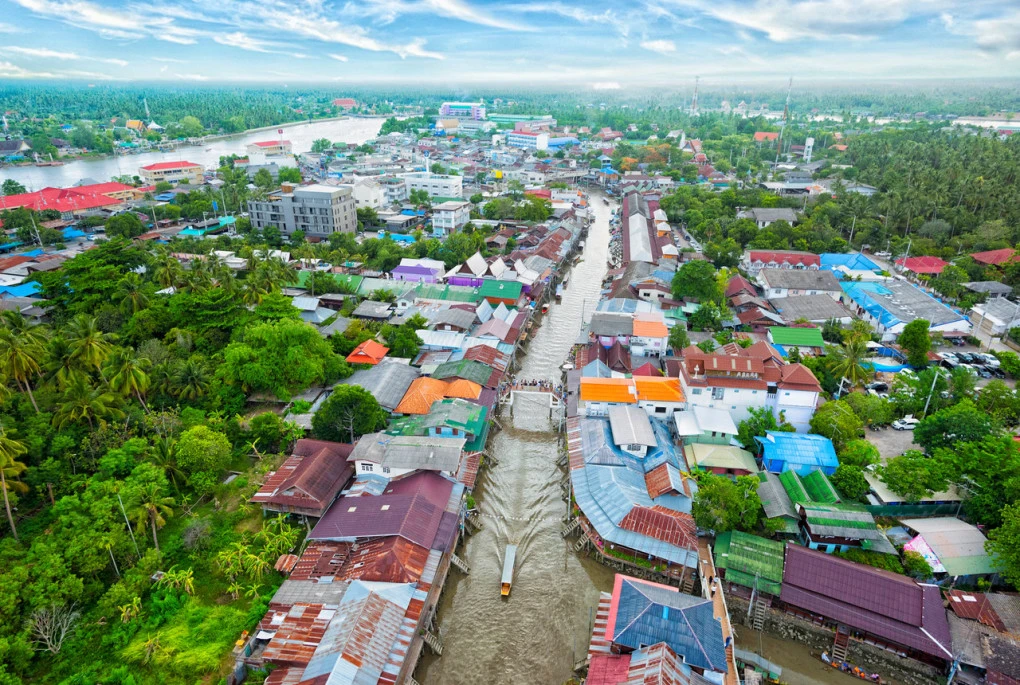
During the Rattanakosin period (1782–1868), floating markets continued to thrive, especially in the Chao Phraya River basin. The markets played an important role in the economy and in social interaction. By the mid-20th century, as roads and railways were built, floating-market culture began to change. Many people shifted to land transport, leading to the decline of traditional floating markets, with many closing down or moving onto land.
By the 1960s, some floating markets were restored as tourist attractions. A notable example is Damnoen Saduak, which was redesigned to attract visitors with the support of the Tourism Authority of Thailand (TAT). This shift changed the role of floating markets from primarily commercial centers to tourist destinations. Today, these markets still showcase elements of traditional Thai life while adapting to tourists’ preferences.
Closely linked to canals
Floating markets in Bangkok exist thanks to an extensive canal network, which played a vital role in the city’s early development. These canals were dug more than 600 years ago to aid drainage, prevent flooding, and serve as routes for transportation and trade.
Canals at Thailand’s floating markets are typically one to three meters deep—just enough for boats to move safely. However, water levels vary depending on the season and location. During the rainy season, from May to October, water levels rise, making the canals deeper. Depth also differs from market to market. Larger markets such as Damnoen Saduak tend to have deeper canals than smaller ones.
To keep these floating markets functioning well for both commerce and tourism, authorities must regularly dredge the canals to maintain sufficient depth and ensure year-round access.
The oldest floating market
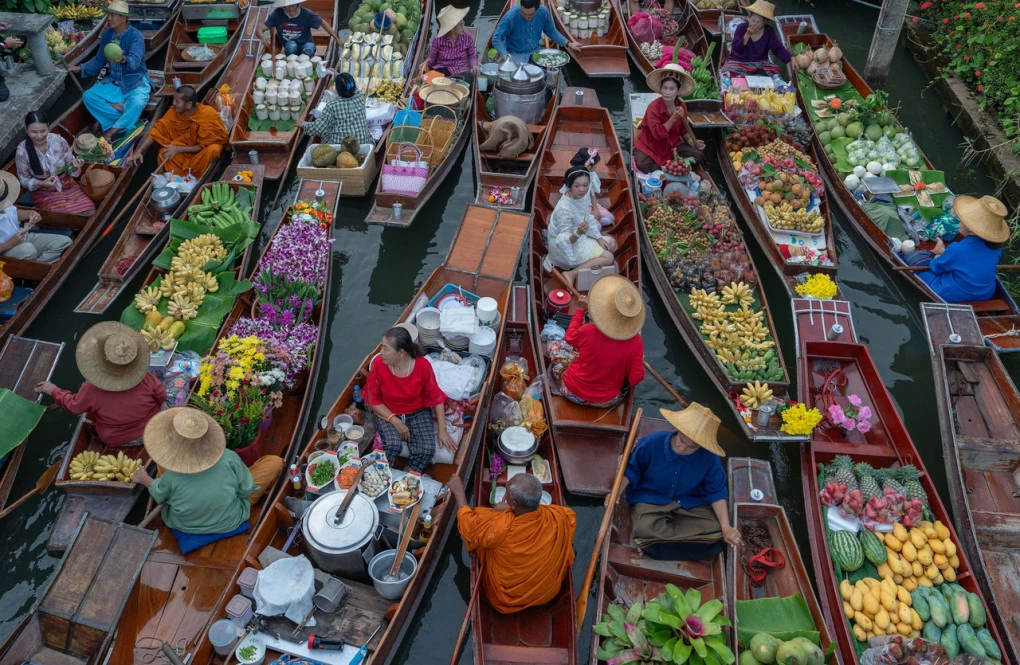
One of the most well-known old floating markets is Damnoen Saduak, located in the district of the same name in Ratchaburi Province, about 105 km from Bangkok. Damnoen Saduak has been operating since 1967. Rather than being held directly on the river, the market takes place along a network of canals that were dug in 1866. The market is famously crowded and offers a wide variety of goods. The best time to visit is from November to March, starting around 6 a.m. At that time, the market is not yet too crowded, allowing visitors to enjoy the early morning sunlight on the canals before immersing themselves in the lively atmosphere.
Boat rental at Sukhaphiban Pier costs around 150–200 baht (112,000–150,000 VND) per hour.
Boat noodles
Boat noodles, or Kuay Tiew Rua, originated from Thailand’s floating markets during the Ayutthaya period. At that time, the dish was served directly from boats, becoming a quick and convenient meal for merchants and travelers passing through busy canals. The small bowls were cleverly designed to prevent spilling.
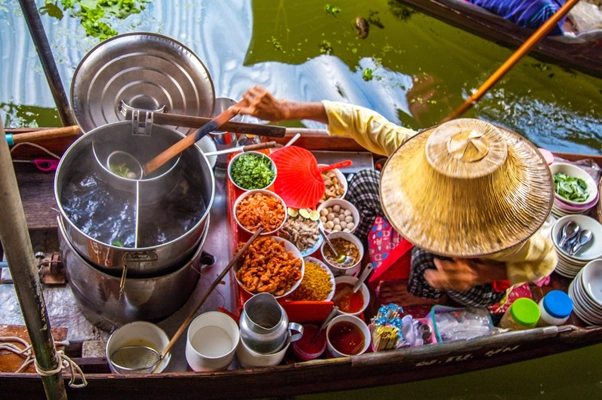
Boat noodles are made with rice-noodle-like strands and served with pork, beef balls, shrimp, or fish, in a distinctive dark reddish-brown broth made with pork blood. Today, many restaurants serve boat noodles, but the dish remains especially popular at floating markets. More than just a noodle dish steeped in Thai culture, it is described by many travelers as “delicious” and not to be missed when visiting a floating market.
Monks collecting alms by boat
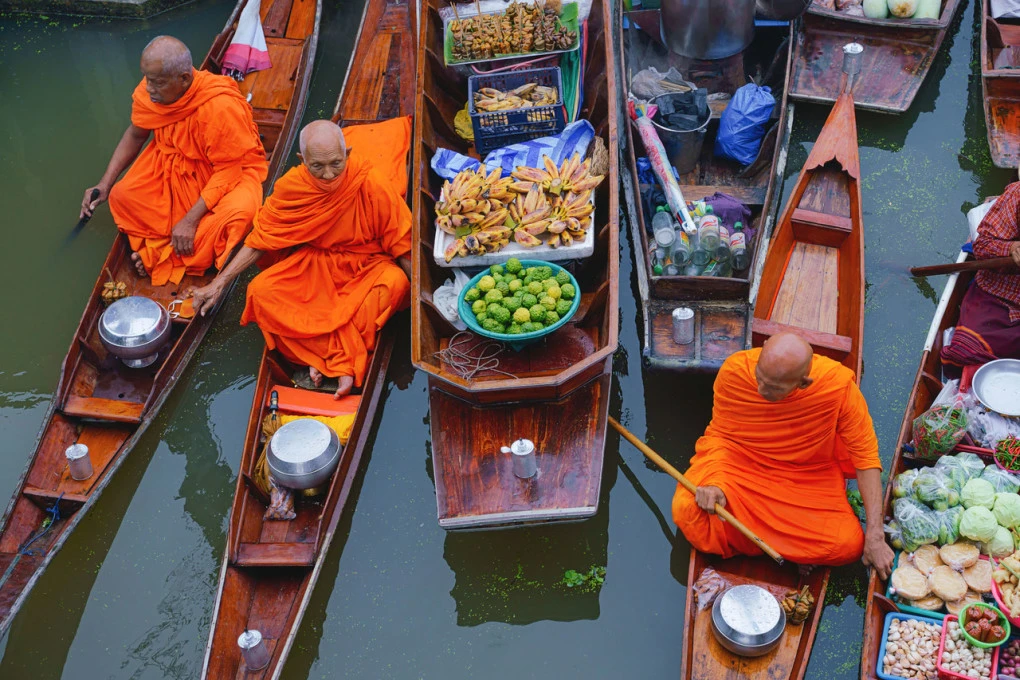
In the early morning at Thailand’s floating markets, visitors often see monks traveling along the canals, receiving alms from vendors and local residents. This practice reflects the deep integration of Buddhist culture into Thai daily life and is commonly seen at Amphawa Floating Market.
After receiving offerings, monks in their bright yellow robes chant blessings for the donors. Visiting a floating market early in the morning to witness alms-giving on the water is an experience many travelers look forward to.
A family-friendly destination
Families visiting Thailand will find floating markets to be an ideal outing. Taling Chan Floating Market is lively and offers plenty of shaded seating, where visitors can enjoy fresh seafood or light snacks. Parents can also take their children on short boat rides along the canals. Traditional Thai music played at the market creates a relaxing atmosphere.
Markets such as Damnoen Saduak, Amphawa, and Khlong Hae are vibrant places selling fresh produce, local dishes, and handicrafts from boats, allowing visitors to experience Thai culture up close.
Source: https://vnexpress.net/6-dieu-it-nguoi-biet-ve-cho-noi-thai-lan-vnepre-4827925.html
WORD BANK:
floating market /ˈfloʊ.t̬ɪŋ ˌmɑːr.kɪt/ (n): chợ nổi
via sth /ˈvaɪə/ [B2] (pre): thông qua cái gì
canal /kəˈnæl/ (n): kênh đào
gathering place /ˈɡæð.ɚ.ɪŋ pleɪs/ (n): nơi tụ họp
merchant /ˈmɝː.tʃənt/ [B2] (n): thương nhân
handicraft /ˈhæn.di.kræft/ (n): đồ thủ công
bustling /ˈbʌs.lɪŋ/ [B2] (adj): nhộn nhịp
trading hub /ˈtreɪ.dɪŋ hʌb/ (n): trung tâm giao thương
thrive /θraɪv/ [C1] (v): phát triển thịnh vượng
primarily /praɪˈmer.ə.li/ [B2] (adv): chủ yếu
adapt to sth /əˈdæpt/ [B2] (v): thích nghi với cái gì
drainage /ˈdreɪ.nɪdʒ/ (n): hệ thống thoát nước
dredge /dredʒ/ (v): nạo vét
immerse oneself in sth /ɪˈmɝːs/ [C1] (v): đắm mình vào cái gì
spill /spɪl/ (v): tràn ra
strand /strændz/ (n): sợi
distinctive /dɪˈstɪŋk.tɪv/ [B2] (adj): đặc trưng
reddish-brown /ˌred.ɪʃ ˈbraʊn/ (adj): màu nâu đỏ
broth /brɑːθ/ (n): nước dùng
steeped in sth /stiːpt/ (adj): thấm đẫm cái gì
monk /mʌŋk/ (n): nhà sư
alms /ɑːmz/ (n): đồ bố thí, đồ cúng dường
vendor /ˈven.dɚ/ (n): người bán hàng
robe /roʊb/ (n): áo choàng
chant sth /tʃænt/ (v): tụng, niệm
blessing /ˈbles.ɪŋ/ (n): lời ban phước
donor /ˈdoʊ.nɚ/ (n): người hiến tặng
look forward to doing sth /lʊk ˈfɔːr.wɚd/ [B1] (v): mong chờ làm gì
outing /ˈaʊ.t̬ɪŋ/ (n): chuyến đi chơi
shaded /ˈʃeɪ.dɪd/ (adj): có bóng râm
vibrant /ˈvaɪ.brənt/ [B2] (adj): sôi động
produce /ˈprɑː.duːs/ (n): nông sản
(do sth) up close /ʌp kloʊs/ (adv): ở khoảng cách gần
ỦNG HỘ READ TO LEAD!
Chào bạn! Có thể bạn chưa biết, Read to Lead là một trang giáo dục phi lợi nhuận với mục đích góp phần phát triển cộng đồng người học tiếng Anh tại Việt Nam. Chúng tôi không yêu cầu người đọc phải trả bất kỳ chi phí nào để sử dụng các sản phẩm của mình để mọi người đều có cơ hội học tập tốt hơn. Tuy nhiên, nếu bạn có thể, chúng tôi mong nhận được sự hỗ trợ tài chính từ bạn để duy trì hoạt động của trang và phát triển các sản phẩm mới.
Bạn có thể ủng hộ chúng tôi qua 1 trong 2 cách dưới đây.
– Cách 1: Chuyển tiền qua tài khoản Momo.
Số điện thoại 0947.886.865 (Chủ tài khoản: Nguyễn Tiến Trung)
Nội dung chuyển tiền: Ủng hộ Read to Lead
hoặc
– Cách 2: Chuyển tiền qua tài khoản ngân hàng.
Ngân hàng VIB chi nhánh Hải Phòng
Số tài khoản: 012704060048394 (Chủ tài khoản: Nguyễn Tiến Trung)
Nội dung chuyển tiền: Ủng hộ Read to Lead
Lớp luyện thi IELTS online
Bạn đang có nhu cầu thi chứng chỉ IELTS cho đầu vào đại học, đi du học, xin việc hay xin cư trú và đang phân vân chưa biết học ở đâu?
Nếu bạn đang tìm kiếm dịch vụ luyện thi IELTS online với giáo viên uy tín và chất lượng, cũng như học phí phải chăng, thì thầy Trung và Cô Thủy (Admin và dịch giả chính của Read to Lead) có thể là một lựa chọn phù hợp dành cho bạn.
Hãy liên hệ (nhắn tin) tới trang Facebook cá nhân của mình (https://www.facebook.com/nguyen.trung.509) để tìm hiểu về lớp học và được tư vấn cũng như được học thử nha!


