


[Reading level: B2 – Upper Intermediate]
With the continuous development of science and technology, humans have discovered and put to use many different sources of energy in various forms, from traditional coal to gasoline, clean energy, and nuclear power. Yet the global economy still depends heavily on a type of fuel associated with the engine developed by Rudolf Diesel in the late 19th century: diesel fuel.
While gasoline is often talked about more because it is associated with the cars we see every day, diesel quietly powers much of the world of goods behind them.
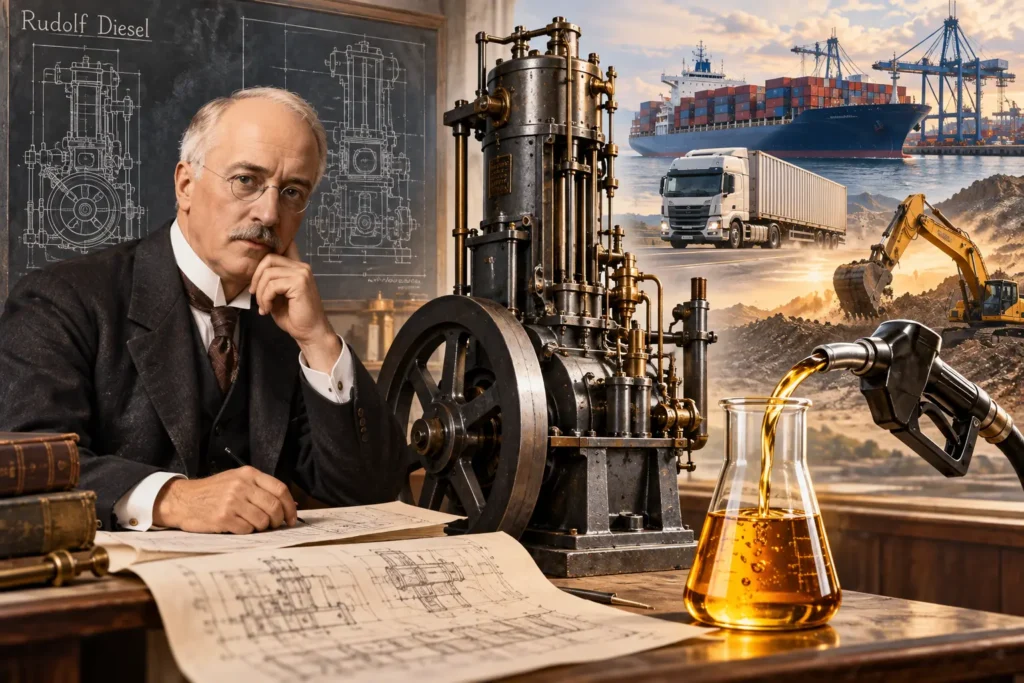
Take a look at any item in your home. Before it reached you, its raw materials may have been extracted using excavators and heavy-duty trucks running on diesel. After being manufactured, the product is transported by truck to a port, loaded onto a cargo ship, and then carried by truck again from the port to a distribution center and finally to a store. Freight railways in many parts of the world also use diesel or diesel-electric locomotives.
In other words, a very large part of the physical flow of goods through the global economy still relies on diesel.
And it is not just transportation. Much of the equipment that helps keep the modern economy running is also designed around diesel engines: excavators, bulldozers, dump trucks, cranes, tractors, harvesters, generators, mining equipment, and many types of heavy industrial machinery. On construction sites, on farms, and at mines, the sound of diesel engines remains a familiar one.
Why diesel?
An important part of the answer lies in one word: torque.
If we had to imagine a diesel engine as an athlete, it probably would not be a sprinter with a light body and the ability to accelerate extremely quickly. It would be more like a sumo wrestler: it does not necessarily move fast, but it can generate enormous force even at low speeds.
That is exactly what a truck carrying tens of tons needs.
A truck does not need its engine to spin extremely fast when it starts moving. It needs enough force to pull an enormous load from a standstill, climb hills, and carry heavy loads for thousands of kilometers. An excavator does not need to “accelerate” like a sports car either; it needs force to push its bucket into the ground and lift tons of material.
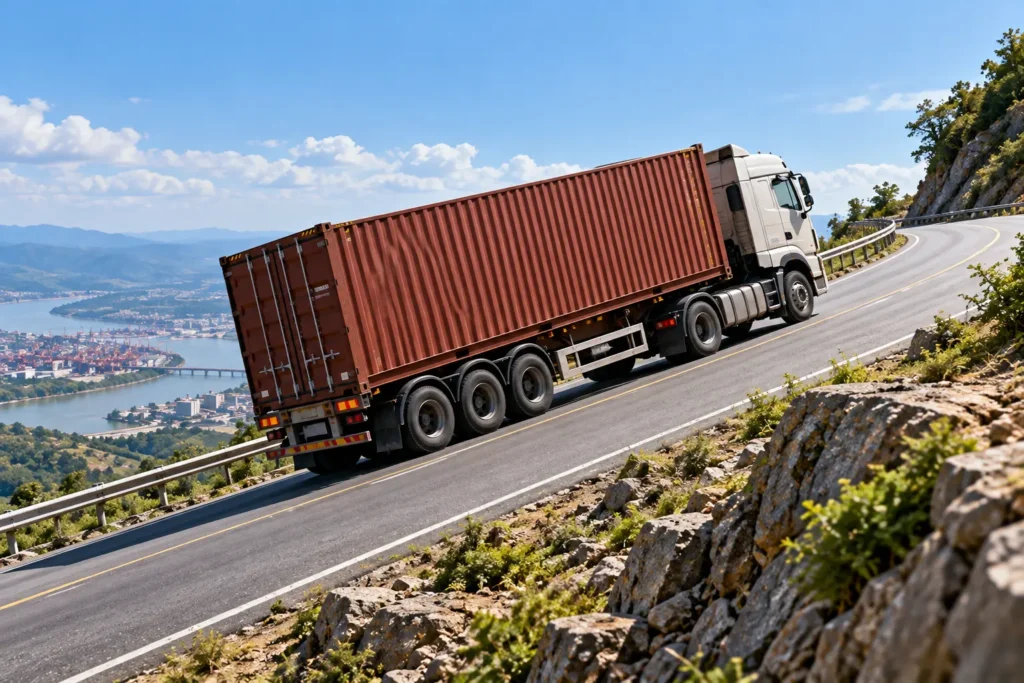
Diesel engines are particularly well suited to such tasks thanks to their high compression ratios, good thermal efficiency, and ability to produce strong torque at low engine speeds.
So why not use gasoline?
Gasoline is very well suited to passenger cars and many light vehicles. Gasoline engines are generally quieter and lighter and can perform well at high engine speeds. But when the task shifts to pulling heavy loads continuously over long periods of time, diesel usually has advantages in fuel efficiency and torque characteristics.
This explains why you may see millions of gasoline-powered cars on the road, but when you look at semi-trucks, excavators, or agricultural tractors, diesel appears far more frequently.
What about electricity?
Electric motors actually have one major advantage: they can produce maximum torque almost immediately from the moment they begin to turn. So in terms of driving force, electric trucks can certainly be extremely powerful.
The problem lies in carrying the energy on board. Lithium-ion batteries are much heavier than an equivalent amount of energy stored in liquid fuel. For passenger cars that travel a few hundred kilometers and then return to a charging station, this problem is becoming increasingly manageable. But for long-haul trucks, mining machinery operating continuously, or equipment that has to work for hours in remote areas, battery weight, charging time, and electrical infrastructure remain significant challenges.
Hydrogen is also often mentioned as an option for heavy-duty transportation. It contains a large amount of energy by weight, but its energy density by volume is low, making compression, storage, transportation, and the construction of refueling networks complicated and expensive.
Meanwhile, diesel has one advantage that its newer competitors may take many years to build: the world already has an enormous infrastructure in place to support it.
From oil refineries, fuel tankers, storage facilities, and tanker trucks to fueling stations; from truck engines to tractors and generators – a vast ecosystem has been built up over more than a century.
Diesel, of course, is not a perfect fuel. Burning it produces CO₂, NOₓ, and other pollutants. Many countries are therefore promoting electric vehicles, hydrogen, biofuels, and synthetic fuels in an effort to reduce their dependence on fossil fuels.
And perhaps one day, the global economy will no longer need diesel.
But that day is not today.
Behind modern cities, supermarkets filled with goods, vast fields, enormous construction sites, and intercontinental trade networks are millions of engines working day and night to pull, lift, dig, transport, and generate electricity.
They are not as glamorous as electric vehicles, they do not carry the futuristic image of hydrogen, and they are not as impressive as a nuclear power plant.
But they are doing an extremely important job: keeping the physical economy of the world moving.
That is why, at least for now, calling diesel the “blood of the modern economy” may not be much of an exaggeration.
WORD BANK:
put to use /ˌpʊt tə ˈjuːs/ (v): đưa vào sử dụng
gasoline /ˈɡæs.ə.liːn/ (n): xăng
associated with sth /əˈsoʊ.si.eɪ.t̬ɪd/ [B2] (adj): gắn liền với, có liên quan đến cái gì
extract /ɪkˈstrækt/ [B2] (v): khai thác, chiết xuất
excavator /ˈek.skə.veɪ.t̬ɚ/ (n): máy xúc
heavy-duty truck /ˌhev.iˈduː.t̬i ˈtrʌk/ (n): xe tải hạng nặng
freight railway /ˈfreɪt ˌreɪl.weɪ/ (n): đường sắt vận chuyển hàng hóa
locomotive /ˌloʊ.kəˈmoʊ.t̬ɪv/ (n): đầu máy xe lửa
the flow of sth /ðə ˈfloʊ/ [B2] (n): dòng chảy, sự lưu chuyển của cái gì
bulldozer /ˈbʊlˌdoʊ.zɚ/ (n): xe ủi đất
dump truck /ˈdʌmp ˌtrʌk/ (n): xe ben, xe tải tự đổ
crane /kreɪn/ (n): cần cẩu
tractor /ˈtræk.tɚ/ (n): máy kéo
harvester /ˈhɑːr.və.stɚ/ (n): máy thu hoạch
generator /ˈdʒen.ə.reɪ.t̬ɚ/ [B2] (n): máy phát điện
machinery /məˈʃiː.nɚ.i/ [B2] (n): máy móc, thiết bị máy móc
lie in sth /ˈlaɪ/ (v): nằm ở cái gì
torque /tɔːrk/ (n): mô-men xoắn
sprinter /ˈsprɪn.t̬ɚ/ (n): vận động viên chạy nước rút
accelerate /əkˈsel.ə.reɪt/ [C1] (v): tăng tốc
wrestler /ˈres.lɚ/ (n): đô vật
spin /spɪn/ [B2] (v): quay, xoay
pull /pʊl/ [B1] (v): kéo
from a standstill /ˈstænd.stɪl/ (adv): từ trạng thái đứng yên
bucket /ˈbʌk.ɪt/ (n): gầu xúc
well suited to sth /ˌwel ˈsuː.t̬ɪd/ (adj): rất phù hợp với cái gì
compression ratio /kəmˈpreʃ.ən ˌreɪ.ʃi.oʊ/ (n): tỷ số nén
thermal efficiency /ˈθɝː.məl ɪˈfɪʃ.ən.si/ (n): hiệu suất nhiệt
fuel efficiency /ˈfjuː.əl ɪˌfɪʃ.ən.si/ (n): hiệu suất nhiên liệu, khả năng tiết kiệm nhiên liệu
driving force /ˈdraɪ.vɪŋ ˌfɔːrs/ (n): động lực thúc đẩy
carry sth on board /ˈker.i/ (v): mang, chở cái gì trên phương tiện
lithium-ion battery /ˌlɪθ.i.əm ˈaɪ.ɑːn ˌbæt̬.ɚ.i/ (n): pin lithium-ion
equivalent /ɪˈkwɪv.əl.ənt/ [B2] (adj/n): tương đương; vật, lượng tương đương
manageable /ˈmæn.ɪ.dʒə.bəl/ (adj): có thể kiểm soát, xử lý được
long-haul /ˈlɑːŋ.hɑːl/ (adj): đường dài, cự ly dài
refueling network /ˌriːˈfjuː.əl.ɪŋ ˈnet.wɝːk/ (n): mạng lưới tiếp nhiên liệu
have sth in place (v): có sẵn cái gì
oil refinery /ˈɔɪl rɪˌfaɪ.nɚ.i/ (n): nhà máy lọc dầu
fuel tanker /ˈfjuː.əl ˌtæŋ.kɚ/ (n): tàu/bồn chở nhiên liệu
tanker truck /ˈtæŋ.kɚ ˌtrʌk/ (n): xe bồn
biofuel /ˈbaɪ.oʊˌfjuː.əl/ (n): nhiên liệu sinh học
synthetic fuel /sɪnˈθet̬.ɪk ˈfjuː.əl/ (n): nhiên liệu tổng hợp
in an effort to do sth [B2] (phrase): nhằm cố gắng làm gì, trong nỗ lực làm gì
glamorous /ˈɡlæm.ɚ.əs/ (adj): hào nhoáng, hấp dẫn
futuristic /ˌfjuː.tʃəˈrɪs.tɪk/ (adj): mang tính tương lai, hiện đại như trong tương lai
not be much of an exaggeration /ɪɡˌzædʒ.əˈreɪ.ʃən/ (phrase): không phải là một sự phóng đại quá mức, không quá lời khi nói rằng
ỦNG HỘ READ TO LEAD!
Chào bạn! Có thể bạn chưa biết, Read to Lead là một trang giáo dục phi lợi nhuận với mục đích góp phần phát triển cộng đồng người học tiếng Anh tại Việt Nam. Chúng tôi không yêu cầu người đọc phải trả bất kỳ chi phí nào để sử dụng các sản phẩm của mình để mọi người đều có cơ hội học tập tốt hơn. Tuy nhiên, nếu bạn có thể, chúng tôi mong nhận được sự hỗ trợ tài chính từ bạn để duy trì hoạt động của trang và phát triển các sản phẩm mới.
Bạn có thể ủng hộ chúng tôi qua 1 trong 2 cách dưới đây.
– Cách 1: Chuyển tiền qua tài khoản Momo.
Số điện thoại 0947.886.865 (Chủ tài khoản: Nguyễn Tiến Trung)
Nội dung chuyển tiền: Ủng hộ Read to Lead
hoặc
– Cách 2: Chuyển tiền qua tài khoản ngân hàng.
Ngân hàng VIB chi nhánh Hải Phòng
Số tài khoản: 012704060048394 (Chủ tài khoản: Nguyễn Tiến Trung)
Nội dung chuyển tiền: Ủng hộ Read to Lead
Lớp luyện thi IELTS online
Bạn đang có nhu cầu thi chứng chỉ IELTS cho đầu vào đại học, đi du học, xin việc hay xin cư trú và đang phân vân chưa biết học ở đâu?
Nếu bạn đang tìm kiếm dịch vụ luyện thi IELTS online với giáo viên uy tín và chất lượng, cũng như học phí phải chăng, thì lớp học online của thầy Trung (Admin và dịch giả chính của Read to Lead) có thể là một lựa chọn phù hợp dành cho bạn.
Hãy liên hệ (nhắn tin) tới trang Facebook cá nhân của mình (https://www.facebook.com/nguyen.trung.509) để tìm hiểu về lớp học và được tư vấn cũng như được học thử nha!


