


[Reading level: B2 – Upper Intermediate]
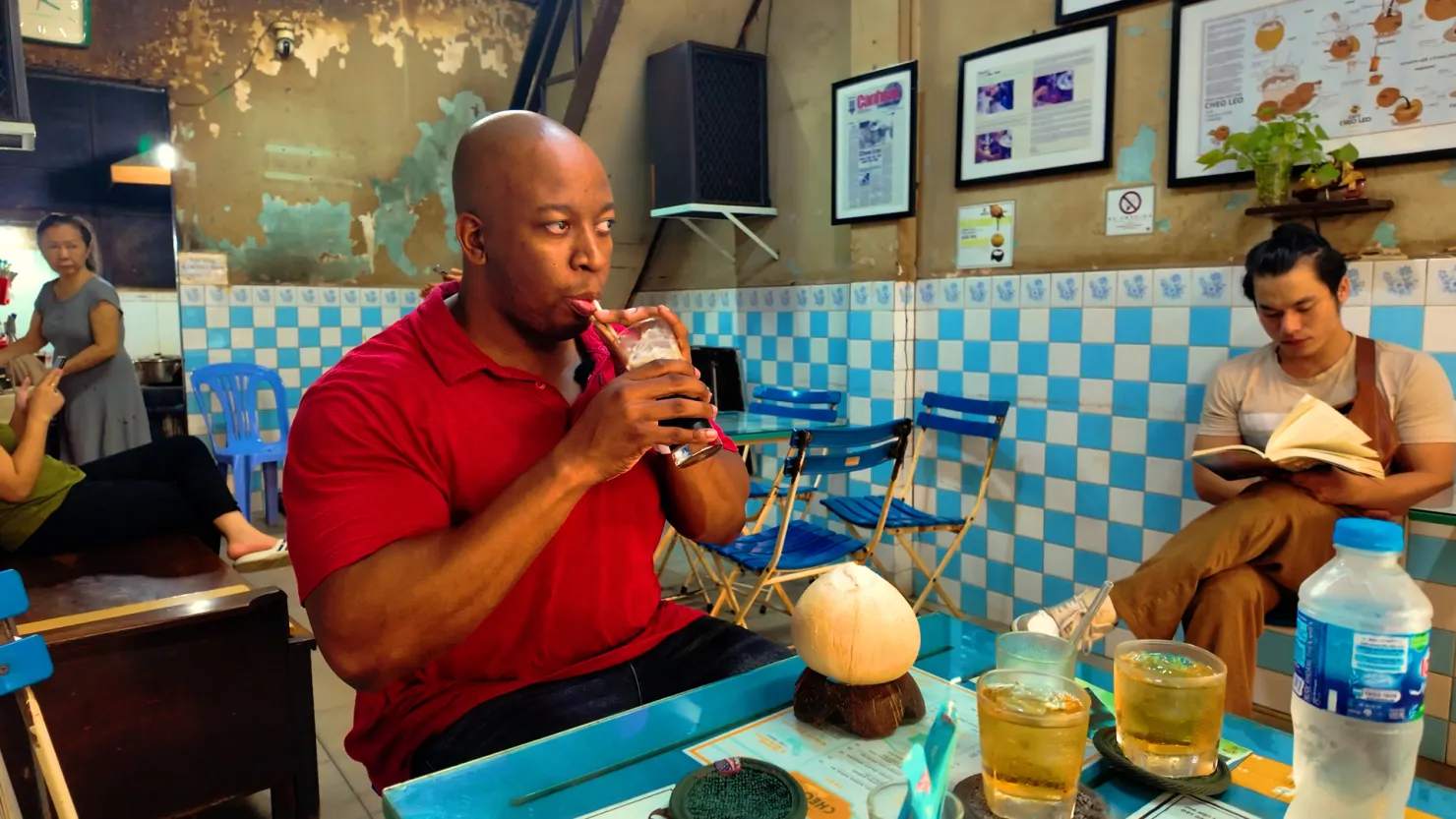
Markeiz Ryan, 36, had a pretty good childhood growing up in Maryland, but the 2008 financial crisis changed things.
“It wiped my mother’s job away and it really made things tough for us around the time I graduated high school,” Ryan tells CNBC Make It. “I didn’t have much of a financial security blanket to fall under. The best thing for me was to join the military so I wouldn’t have to put my family into any more debt and I think that was the right decision.”
Ryan joined the U.S. Air Force in 2010 and was stationed in various countries around the world, including Korea, Germany, and throughout Africa. In 2016, while living in Korea, Ryan got in trouble for breaking his curfew. He lost out on several months of pay, was restricted to his military base and demoted from staff sergeant to senior airman.
“After this, I was very depressed and very sad,” Ryan said. “But that depression and sadness make you think about where your life is going and it makes you redirect your life into the right direction.”
Soon after, Ryan relocated to Vietnam, where he lives off roughly $4,000 a month.
Ryan suffers from spine arthritis, respiratory issues, auditory pain, and mental health challenges from his time in the military. He receives disability from Veterans Affairs (VA).
His monthly income stems from several sources, including approximately $1,500 from VA disability, $1,000 from the GI Bill while he’s pursuing a master’s degree, and $900 to $1,300 from teaching English. Ryan also does occasional odd jobs like voiceover work, where his pay can range from $200 to $600 a month, and is an avid fan of day trading, where he averages about $300 a month.
“This might not sound like a lot in America but trust me, this is more than enough to be middle or even above middle class in Vietnam,” he says.
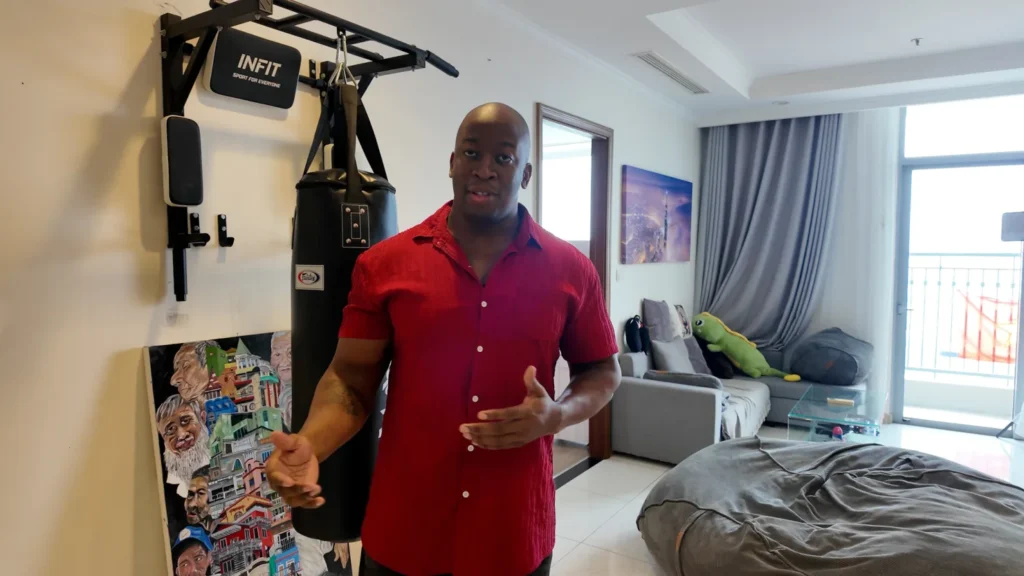
Ryan lives in Ho Chi Minh City and has a two-bedroom, one-bathroom apartment in one of the country’s tallest residential towers. He pays $850 a month in rent and his utilities round up to about $130, which includes electricity, water and housekeeping.
In addition to those expenses, Ryan also pays $1,000 a year for health insurance and $3 a week on gas for his motorcycle. What he spends on groceries varies from $100 to $400 a month, as he often alternates between cooking his own food or dining out frequently.

“Vietnam is the number one safest place I’ve ever lived. I never have to look over my shoulder here. I noticed that there’s this great level of calm,” Ryan says. “People are more focused on their day-to-day life and they’re less focused on what’s going on politically. It’s a much more calm feeling.”
Although Ryan loves living in Vietnam, one thing that irks him is the noise pollution.
“There’s a lot of honking, street sellers and sometimes karaoke really loudly, so if you are very intolerant of noise, this might not be the place for you,” he says.
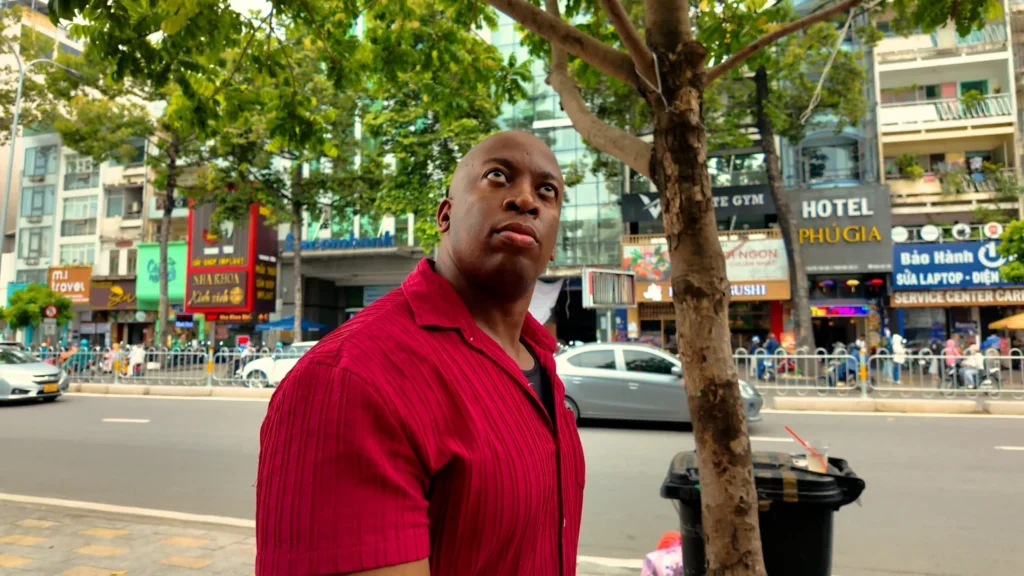
Since moving to Vietnam, Ryan has made an effort to learn the language, but he admits he’s still not the best at it.
“I can never claim that I’m fluent in Vietnamese, but I do a lot better than most of my peers here,” he says.
Ryan has been living in Vietnam for six years now, and says he has no plans of leaving.
“If I leave, it’s because Vietnam told me to leave. In America, I felt very unmotivated. I felt like no matter how hard you work, you’re still in poverty. You’re constantly chasing a standard that you can’t really achieve,” he says. “Here in Vietnam, it takes a lot of the monetary pressure out of your day-to-day. You focus on what makes you happy, who you want to become and how you’re going to get there.”
This experience, he says, is the complete opposite of what his life was like back in the U.S.
“Every day I wake up with a long to-do list of things I want to do, not the things that I need to do, and it’s a completely different way of living. Even if you need to work 40 hours a week here, you’re doing it as an investment in your future. Getting out of survival mode makes things infinitely more human.”
Source: CNBC
WORD BANK:
financial crisis /faɪˈnæn.ʃəl ˈkraɪ.sɪs/ [B2] (n): khủng hoảng tài chính
wipe sth /waɪp/ (v): xóa sạch, quét sạch
tough /tʌf/ [B1] (adj): khó khăn, khắc nghiệt
financial security blanket /faɪˈnæn.ʃəl sɪˈkjʊr.ə.t̬i ˈblæŋ.kɪt/ (n): sự đảm bảo an toàn tài chính
fall under sth /fɔːl ˈʌn.dɚ/ (v): thuộc về, nằm trong phạm vi
station (v) /ˈsteɪ.ʃən/ (v): đóng quân, đồn trú
curfew /ˈkɝː.fjuː/ (n): lệnh giới nghiêm
lose out on sth /luːz aʊt ɑːn/ (v): bỏ lỡ, mất cơ hội
restrict /rɪˈstrɪkt/ [B2] (v): hạn chế
military base /ˈmɪl.ə.ter.i beɪs/ (n): căn cứ quân sự
demote /dɪˈmoʊt/ (v): giáng chức
staff sergeant /stæf ˈsɑːr.dʒənt/ (n): trung sĩ
senior airman /ˈsiː.njɚ ˈer.mən/ (n): binh nhất
depressed /dɪˈprest/ [B2] (adj): trầm cảm, buồn chán
lives off sth /lɪvz ɔːf/ (v): sống nhờ vào
roughly /ˈrʌf.li/ [B1] (adv): khoảng, xấp xỉ
spine arthritis /spaɪn ɑːrˈθraɪ.t̬ɪs/ (n): viêm khớp cột sống
respiratory /rɪˈspɪr.ə.tɔːr.i/ (adj): thuộc hô hấp
auditory pain /ˈɔː.də.tɔːr.i peɪn/ (n): đau tai, đau thính giác
disability /ˌdɪs.əˈbɪl.ə.t̬i/ [B2] (n): trợ cấp thương tật
veteran /ˈvet̬.ɚ.ən/ (n): cựu chiến binh
affairs /əˈferz/ (n): công việc, vấn đề (thường dùng số nhiều)
stem from sth /stem frəm/ (v): bắt nguồn từ
odd jobs /ɑːd dʒɑːbz/ (n): việc vặt
voiceover /ˈvɔɪsˌoʊ.vɚ/ (n): lời thuyết minh (trong phim)
an avid fan of sb/sth /ˈæv.ɪd fæn/ (n): người hâm mộ cuồng nhiệt
day trading /ˈdeɪ ˌtreɪ.dɪŋ/ (n): giao dịch trong ngày (chứng khoán)
middle class /ˈmɪd.əl klæs/ (n): tầng lớp trung lưu
residential tower /ˌrez.ɪˈden.ʃəl ˈtaʊ.ɚ/ (n): tòa nhà chung cư cao tầng
utility /juːˈtɪl.ə.t̬i/ (n): tiện ích; dịch vụ công
round up to /raʊnd ʌp/ (v): làm tròn lên
housekeeping /ˈhaʊsˌkiː.pɪŋ/ (n): việc nhà
groceries /ˈɡroʊ.sɚ.iz/ (n): thực phẩm, đồ tạp hóa
alternate between sth and sth /ˈɔːl.tɚ.neɪt/ (v): luân phiên giữa
dining out /ˈdaɪ.nɪŋ aʊt/ (n): ăn ngoài
intolerant of sth /ɪnˈtɑː.lɚ.ənt əv/ (adj): không chịu được, không dung thứ
fluent in sth /ˈfluː.ənt ɪn/ (adj): thông thạo
in poverty /ɪn ˈpɑː.vɚ.t̬i/ (adv): trong cảnh nghèo đói
take sth out of sth (v): lấy cái gì ra khỏi cái gì, gỡ bỏ cái gì khỏi cái gì
monetary /ˈmɑː.nə.ter.i/ (adj): thuộc tiền tệ
survival mode /sɚˈvaɪ.vəl moʊd/ (n): chế độ sinh tồn
infinitely /ˈɪn.fə.nət.li/ (adv): vô hạn, vô cùng
ỦNG HỘ READ TO LEAD!
Chào bạn! Có thể bạn chưa biết, Read to Lead là một trang giáo dục phi lợi nhuận với mục đích góp phần phát triển cộng đồng người học tiếng Anh tại Việt Nam. Chúng tôi không yêu cầu người đọc phải trả bất kỳ chi phí nào để sử dụng các sản phẩm của mình để mọi người đều có cơ hội học tập tốt hơn. Tuy nhiên, nếu bạn có thể, chúng tôi mong nhận được sự hỗ trợ tài chính từ bạn để duy trì hoạt động của trang và phát triển các sản phẩm mới.
Bạn có thể ủng hộ chúng tôi qua 1 trong 2 cách dưới đây.
– Cách 1: Chuyển tiền qua tài khoản Momo.
Số điện thoại 0947.886.865 (Chủ tài khoản: Nguyễn Tiến Trung)
Nội dung chuyển tiền: Ủng hộ Read to Lead
hoặc
– Cách 2: Chuyển tiền qua tài khoản ngân hàng.
Ngân hàng VIB chi nhánh Hải Phòng
Số tài khoản: 012704060048394 (Chủ tài khoản: Nguyễn Tiến Trung)
Nội dung chuyển tiền: Ủng hộ Read to Lead
Lớp luyện thi IELTS online
Bạn đang có nhu cầu thi chứng chỉ IELTS cho đầu vào đại học, đi du học, xin việc hay xin cư trú và đang phân vân chưa biết học ở đâu?
Nếu bạn đang tìm kiếm dịch vụ luyện thi IELTS online với giáo viên uy tín và chất lượng, cũng như học phí phải chăng, thì thầy Trung và Cô Thủy (Admin và dịch giả chính của Read to Lead) có thể là một lựa chọn phù hợp dành cho bạn.
Hãy liên hệ (nhắn tin) tới trang Facebook cá nhân của mình (https://www.facebook.com/nguyen.trung.509) để tìm hiểu về lớp học và được tư vấn cũng như được học thử nha!


