


[Reading level: B1 – Intermediate]
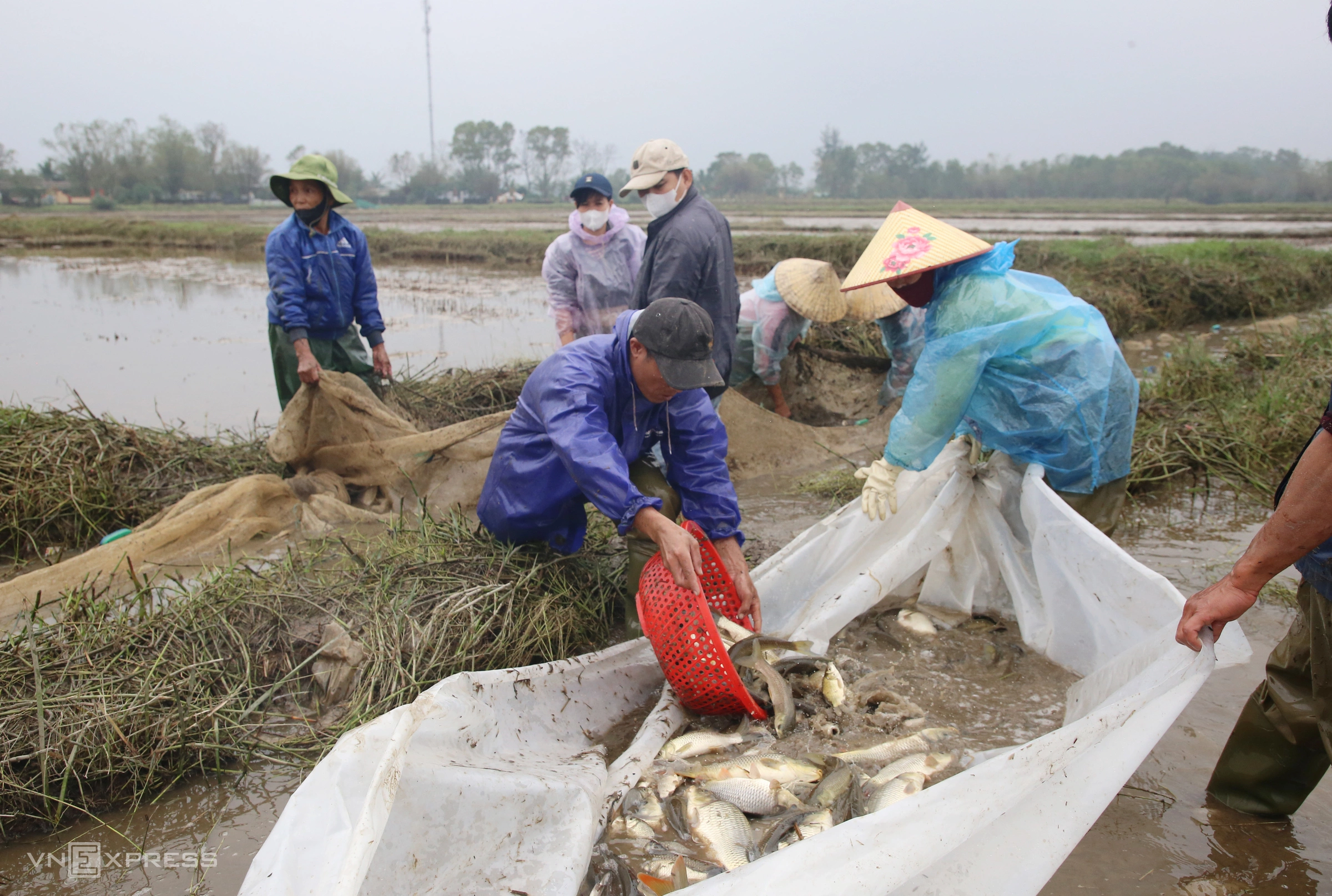
Quang Tri – After the summer-autumn rice crop, abandoned rice fields are utilized by farmers for short-term fish farming, generating revenue of nearly 50 million VND per hectare, three times higher than the initial investment.
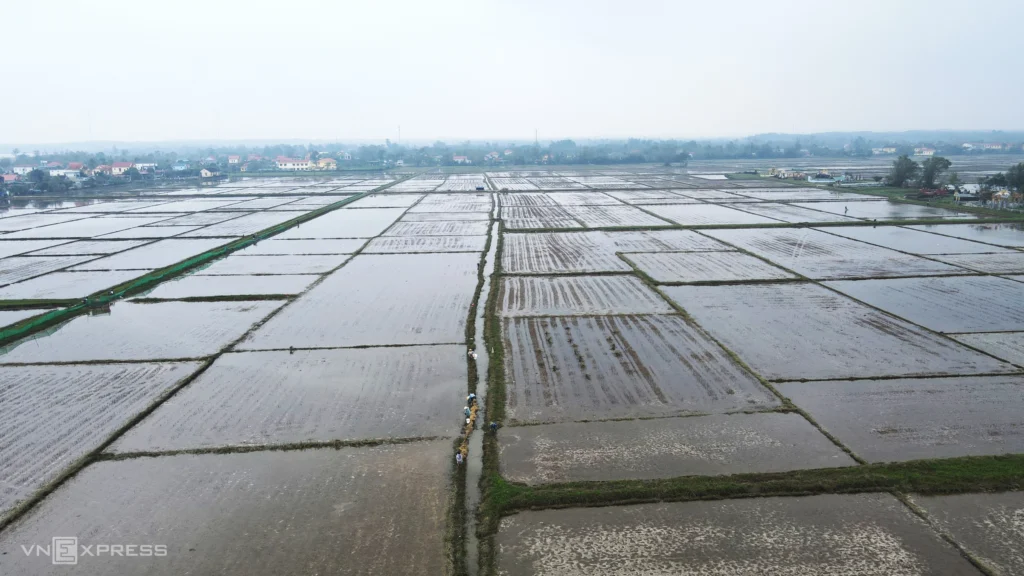
The rice fields in Tan Hoa hamlet, Tan Ha, Tan Ninh, Tan My Commune, covering more than 100 hectares of rice cultivation land, have been rented by 40 households for fish farming. These days, the water is being drained from the fields to harvest fish before returning the land to local residents for the winter-spring rice crop.
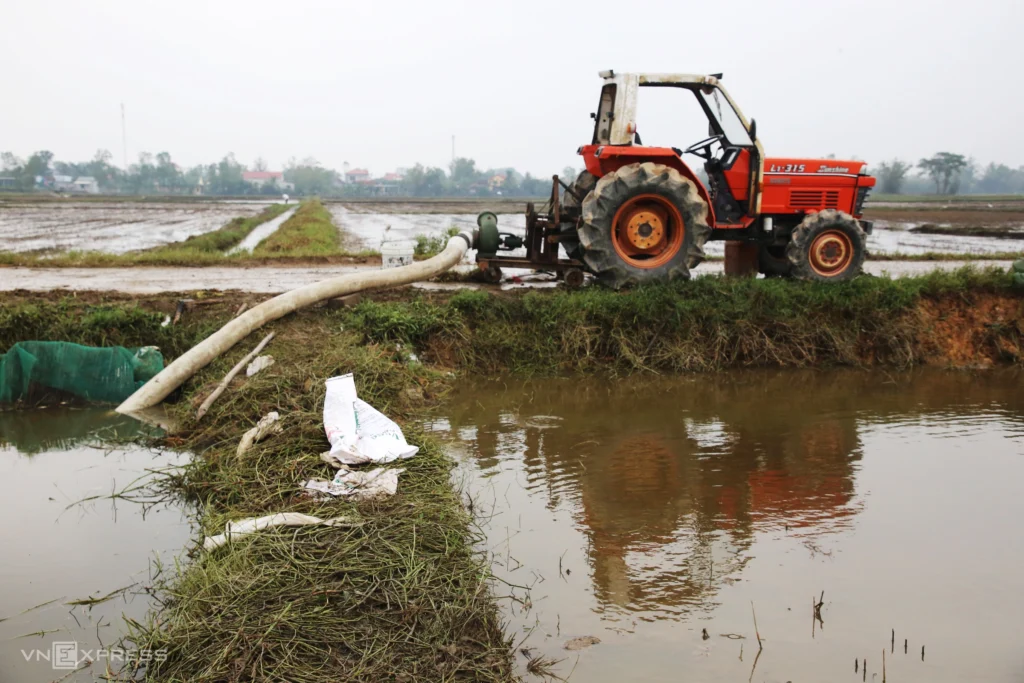
People use tractors modified into water-pumping machines to gather fish along the banks. Each household in Tan My farms fish on at least a few “sào” (*), while some farm more than 10 hectares. This is considered a “one investment, triple profit” model.
(*) sào: a traditional Vietnamese unit of land area (≈ 360 m² in Northern Vietnam and ≈ 500 m² in Central Vietnam).
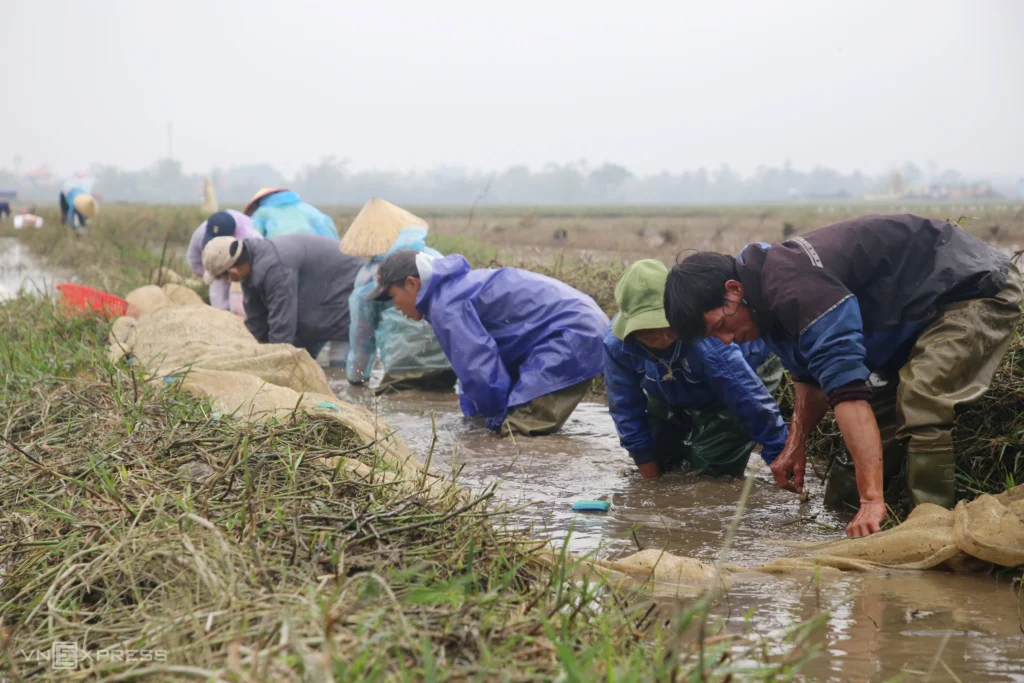
As the water level drops, the fish gather in the canals. People use nets to drag along the canals to catch the fish.
Fish farming has been developed by residents of Tan My Commune for more than 10 years. After the summer-autumn crop ends in early September and the fields are left unused, people rent land from cooperatives, build embankments to retain water, set up nets, and buy fingerlings to release into the fields. The fish take advantage of natural food sources in the rice fields, so no additional feed is required.
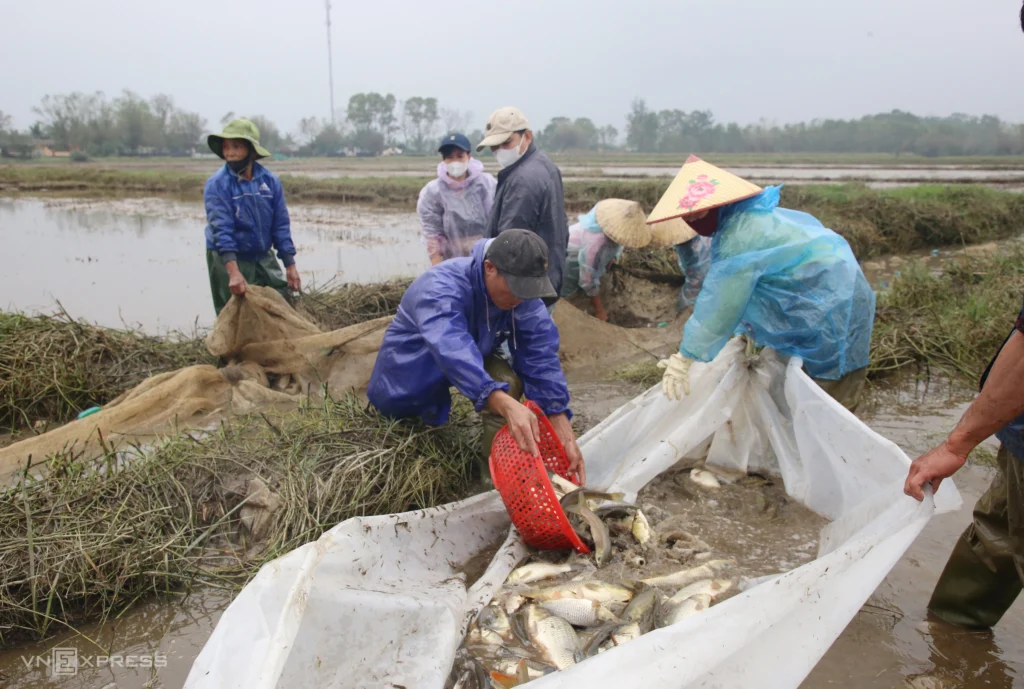
To keep the fish alive, the farmers place them in tarpaulins filled with water. Most harvested fish are sold as fingerlings because after the flood season ends, the demand for fingerlings in Quảng Trị is high.
The selling price depends on the size and species. Grass carp are sold for 80,000 VND per kilogram, common carp for 50,000, silver carp for 35,000, and crucian carp for 100,000 VND. Snakehead fish that grow naturally are the most expensive, ranging from 80,000 to 120,000 VND per kilogram.
“Land rental costs 30 million VND and fingerlings cost 120 million VND. After three months of farming, the harvest brings in 300 million VND in sales. After expenses, the profit is 150 million VND,” farmer Le Xuan Son said.
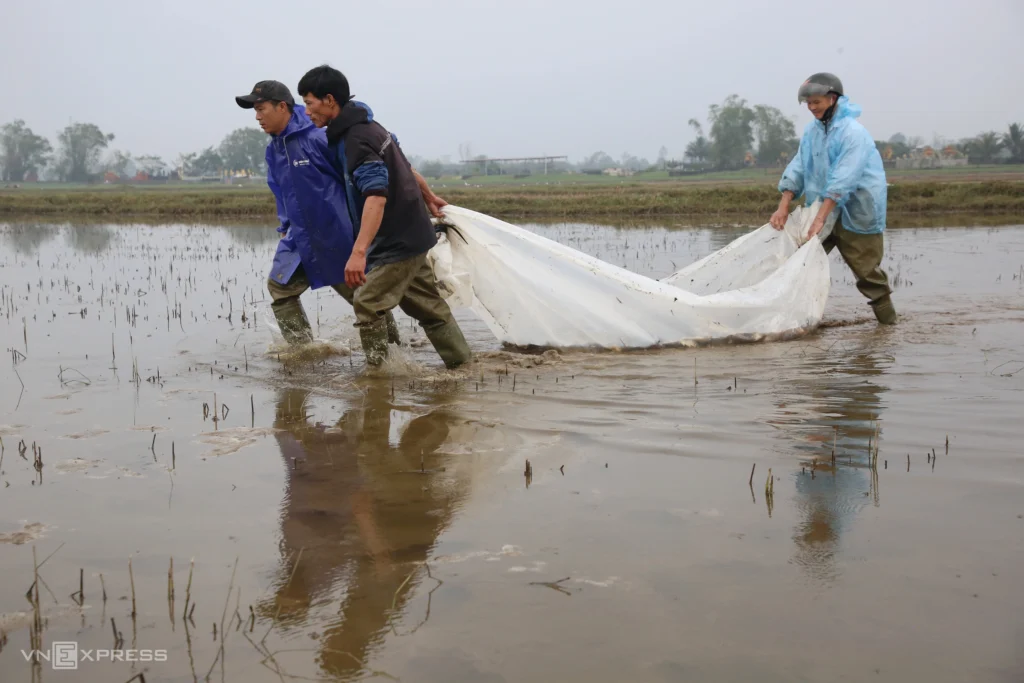
Many people work together to pull the fish toward the banks. Fish raised in rice fields grow quickly thanks to abundant food sources such as grass, rice stubble, regenerated rice plants, fallen grains, plankton, and insects.
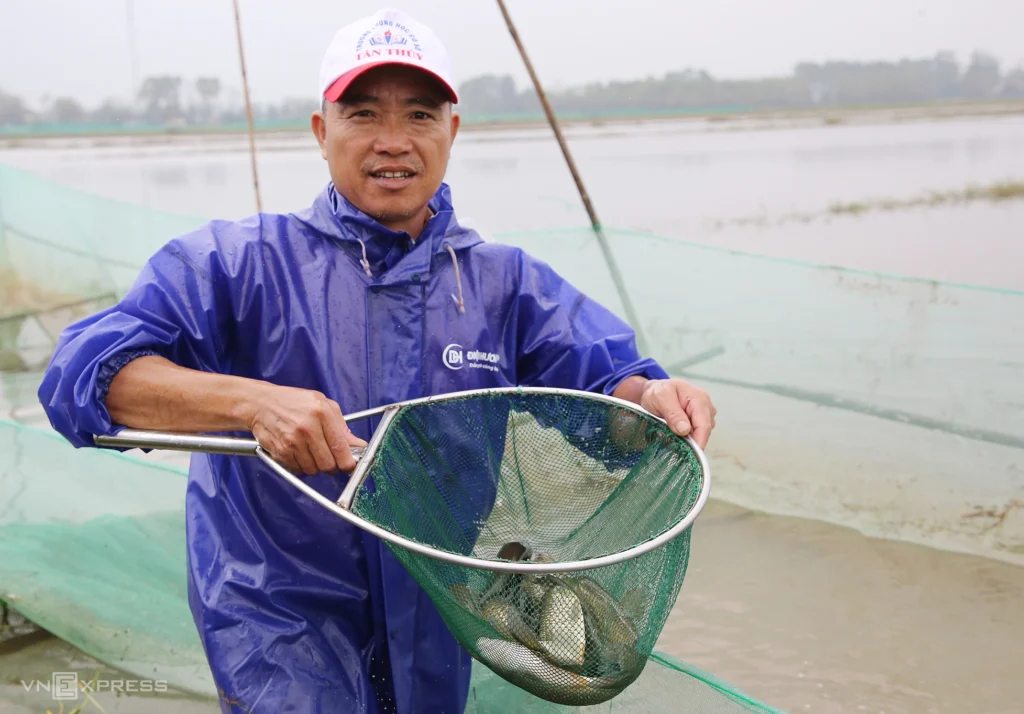
Mr. Son said he and his four brothers jointly bid to farm fish on 10 hectares. At the beginning of the season, they released grass carp, common carp, silver carp, and crucian carp fingerlings at a size of 10 fish per kilogram. After three months, each fish weighed an average of 0.3 kg, with some reaching nearly 1 kg. For fish raised for meat, they were initially stocked at 3 fish per kilogram, and by harvest time they had grown rapidly, increasing three to five times in size.
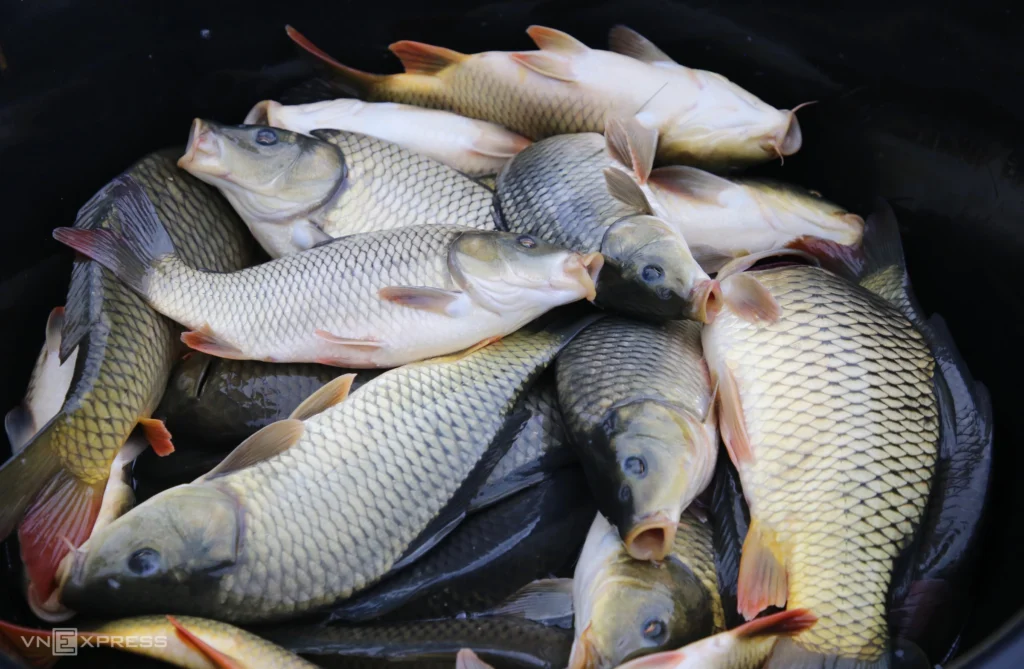
After three months of farming, the larger fish are selected and sold for meat. Besides being sold directly on-site, the fish are also wholesaled to traders.
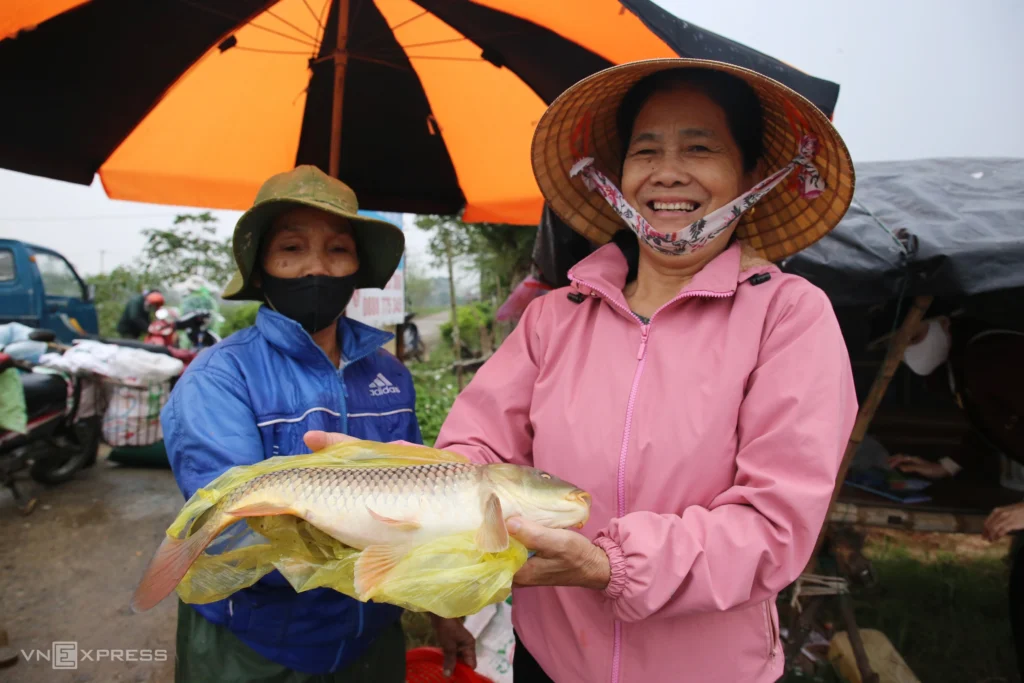
Ms. Le Thi Ly (right) bought a carp weighing 1.4 kg for more than 80,000 VND. “The fish live in a natural environment and are not fed industrial feed, so the meat tastes better,” she said.
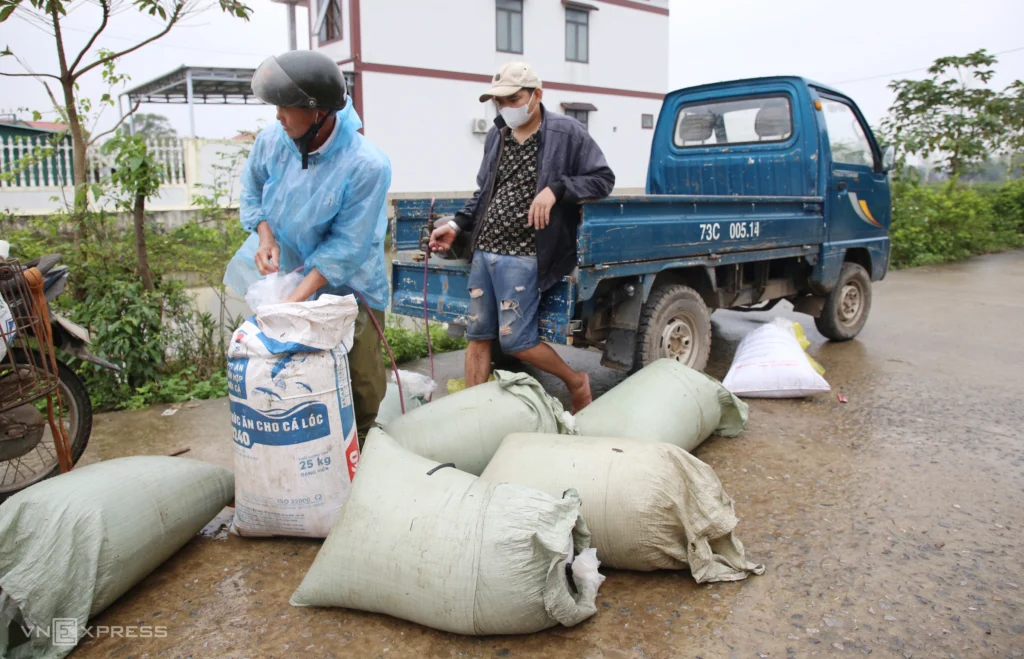
Traders purchase the fish, place them into plastic bags filled with oxygen, and transport them for sale. Fish raised in rice fields grow quickly and continue to develop well when released into ponds or lakes, making them popular among buyers. “Whenever it is harvest season, I go to the fields to buy fish and transport them for resale,” Mr. Bac (left) said.
Mr. Tran Duy Hung, Head of the Economic–Infrastructure Department of Tan My Commune, said that the model of fish farming on rice fields is expanding in the locality, bringing high profits while also creating jobs for farmers during the period when the fields are left unused.
According to Mr. Hung, each hectare of fish farming generates revenue of about 42 million VND after three months. After deducting costs for land rental and fingerlings, estimated at around 15 million VND, farmers earn a net profit of 27 million VND.
“Not only does it bring economic benefits, but fish farming on rice fields also helps process residues left after the harvest season. Fish eat insects, pests, and weeds harmful to rice, while fish waste helps improve soil fertility, benefiting the next rice crop,” Mr. Hung said.
Source: https://vnexpress.net/nuoi-ca-tren-ruong-lua-bo-hoang-mot-von-may-loi-4996903.html
WORD BANK:
crop /krɑːp/ [B1] (n): cây trồng
abandoned /əˈbæn.dənd/ [B2] (adj): bị bỏ hoang
utilize sth /ˈjuː.t̬əl.aɪz/ [C1] (v): tận dụng
revenue /ˈrev.ə.nuː/ [B2] (n): doanh thu
initial /ɪˈnɪʃ.əl/ [B2] (adj): ban đầu
hamlet /ˈhæm.lət/ (n): thôn nhỏ
commune /ˈkɑː.mjuːn/ (n): xã
cultivation land /ˌkʌl.təˈveɪ.ʃən lænd/ (n): đất canh tác
drain /dreɪn/ (v): tháo nước
tractor /ˈtræk.tɚ/ [B1] (n): máy cày
modify sth into sth /ˈmɑː.də.faɪ/ [B2] (v): cải tiến cái gì thành cái gì
bank /bæŋk/ [B1] (n): bờ
gather /ˈɡæð.ɚ/ [B1] (v): dồn lại
canal /kəˈnæl/ [B2] (n): mương, kênh
left unused /left ʌnˈjuːzd/ (adj): bị bỏ không
build embankments /bɪld ɪmˈbæŋk.mənts/ (v): đắp bờ
set up nets /set ʌp nets/ (v): giăng lưới
fingerling /ˈfɪŋ.ɡɚ.lɪŋ/ (n): cá giống
take advantage of sth /teɪk ədˈvæn.t̬ɪdʒ əv/ [B2] (v): tận dụng cái gì
feed /fiːd/ (n): thức ăn chăn nuôi
tarpaulin /tɑːrˈpɑː.lɪn/ (n): bạt
carp /kɑːrp/ (n): cá chép
crucian carp /ˈkruː.ʃən kɑːrp/ (n): cá diếc
silver carp /ˈsɪl.vɚ kɑːrp/ (n): cá mè
snakehead fish /ˈsneɪk.hed fɪʃ/ (n): cá lóc
rental cost /ˈren.t̬əl kɑːst/ (n): chi phí thuê
abundant /əˈbʌn.dənt/ [C1] (adj): dồi dào
rice stubble /raɪs ˈstʌb.əl/ (n): gốc rạ
grain /ɡreɪn/ [B1] (n): hạt ngũ cốc
plankton /ˈplæŋktən/ (n): sinh vật phù du
bid /bɪd/ [B2] (v): đấu giá
initially /ɪˈnɪʃ.ə.li/ [B2] (adv): ban đầu
harvest /ˈhɑːr.vɪst/ [B1] (v, n): thu hoạch
on-site /ˌɑːnˈsaɪt/ (adj): tại chỗ
wholesale /ˈhoʊl.seɪl/ (v): bán sỉ
pond /pɑːnd/ [B1] (n): ao
estimate /ˈes.tə.meɪt/ [B2] (v): ước tính
net profit /ˌnet ˈprɑː.fɪt/ (n): lợi nhuận ròng
residue /ˈrez.ə.duː/ [C1] (n): phần dư, tàn dư
fertility /fɚˈtɪl.ə.t̬i/ [C1] (n): độ màu mỡ
ỦNG HỘ READ TO LEAD!
Chào bạn! Có thể bạn chưa biết, Read to Lead là một trang giáo dục phi lợi nhuận với mục đích góp phần phát triển cộng đồng người học tiếng Anh tại Việt Nam. Chúng tôi không yêu cầu người đọc phải trả bất kỳ chi phí nào để sử dụng các sản phẩm của mình để mọi người đều có cơ hội học tập tốt hơn. Tuy nhiên, nếu bạn có thể, chúng tôi mong nhận được sự hỗ trợ tài chính từ bạn để duy trì hoạt động của trang và phát triển các sản phẩm mới.
Bạn có thể ủng hộ chúng tôi qua 1 trong 2 cách dưới đây.
– Cách 1: Chuyển tiền qua tài khoản Momo.
Số điện thoại 0947.886.865 (Chủ tài khoản: Nguyễn Tiến Trung)
Nội dung chuyển tiền: Ủng hộ Read to Lead
hoặc
– Cách 2: Chuyển tiền qua tài khoản ngân hàng.
Ngân hàng VIB chi nhánh Hải Phòng
Số tài khoản: 012704060048394 (Chủ tài khoản: Nguyễn Tiến Trung)
Nội dung chuyển tiền: Ủng hộ Read to Lead
Lớp luyện thi IELTS online
Bạn đang có nhu cầu thi chứng chỉ IELTS cho đầu vào đại học, đi du học, xin việc hay xin cư trú và đang phân vân chưa biết học ở đâu?
Nếu bạn đang tìm kiếm dịch vụ luyện thi IELTS online với giáo viên uy tín và chất lượng, cũng như học phí phải chăng, thì thầy Trung và Cô Thủy (Admin và dịch giả chính của Read to Lead) có thể là một lựa chọn phù hợp dành cho bạn.
Hãy liên hệ (nhắn tin) tới trang Facebook cá nhân của mình (https://www.facebook.com/nguyen.trung.509) để tìm hiểu về lớp học và được tư vấn cũng như được học thử nha!


