


[Reading level: B1 – Intermediate]
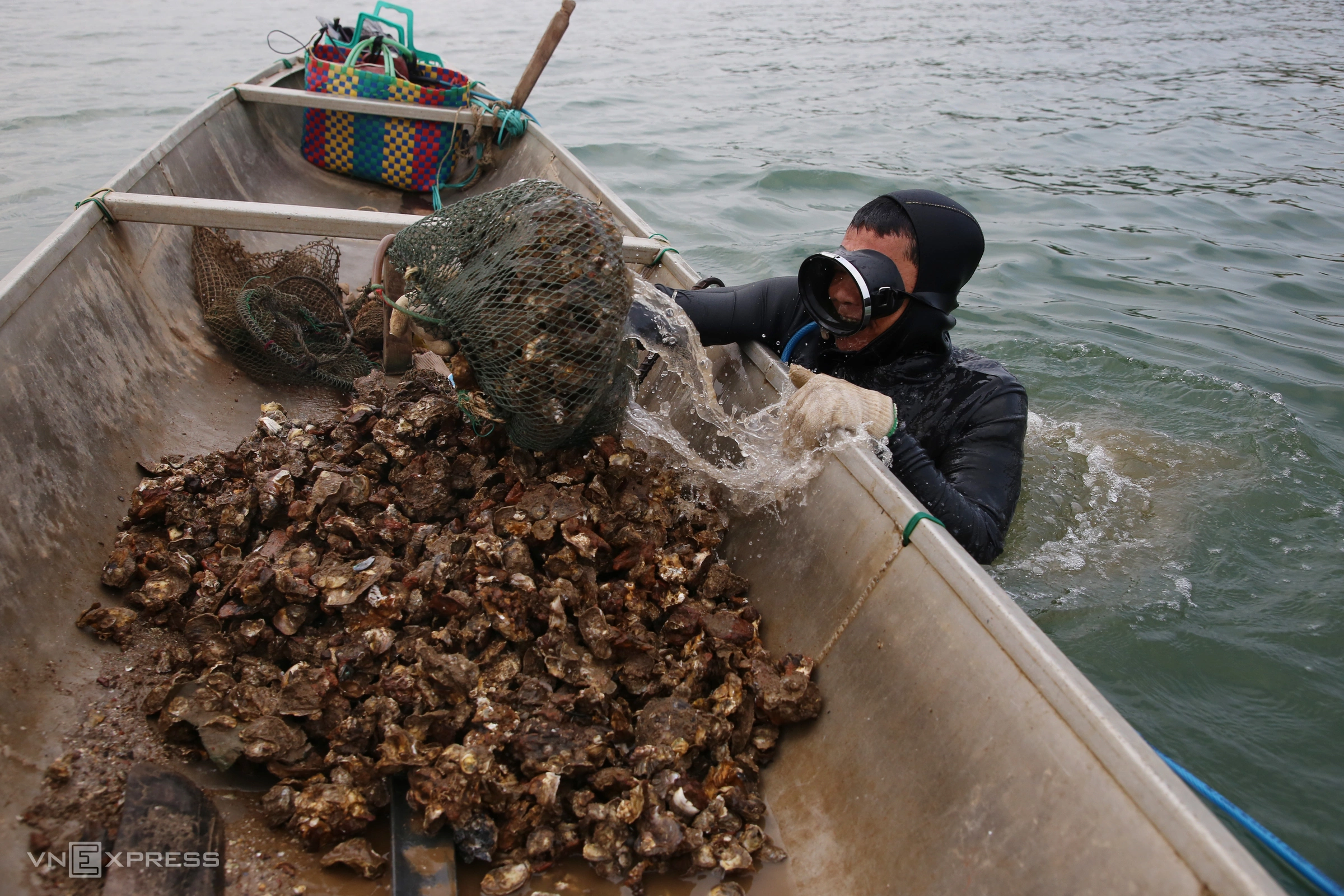
Quảng Trị – Fishermen in Quan Hau, Quang Ninh Commune dive to the bottom of the Nhat Le River with oxygen tubes on their faces to catch oysters, then bring them back to separate the meat and sell it for 120,000 VND per kilogram.
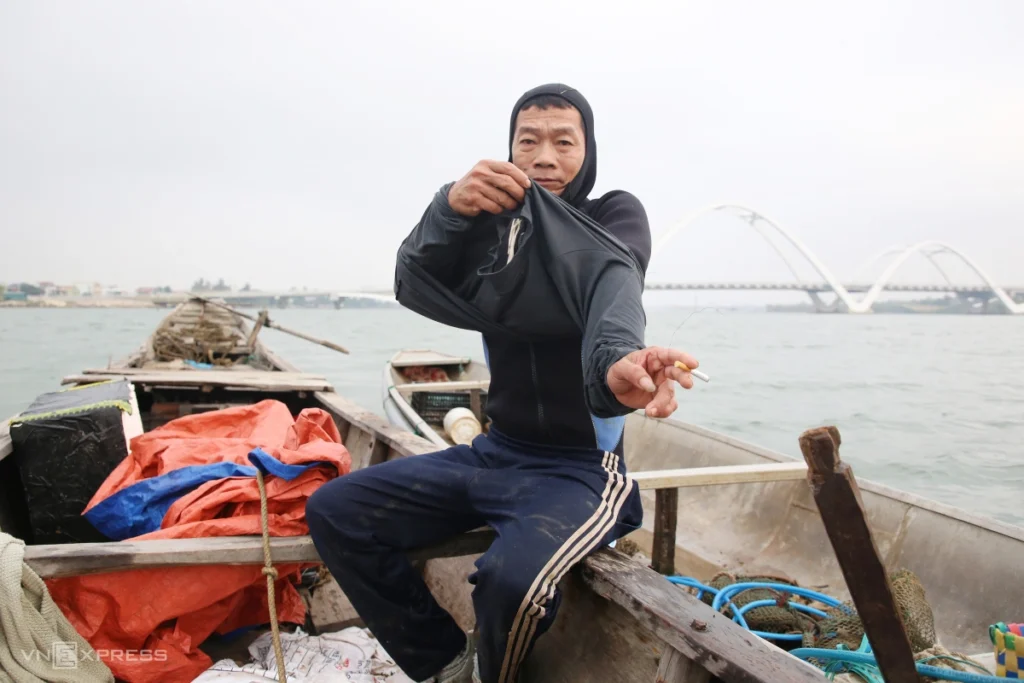
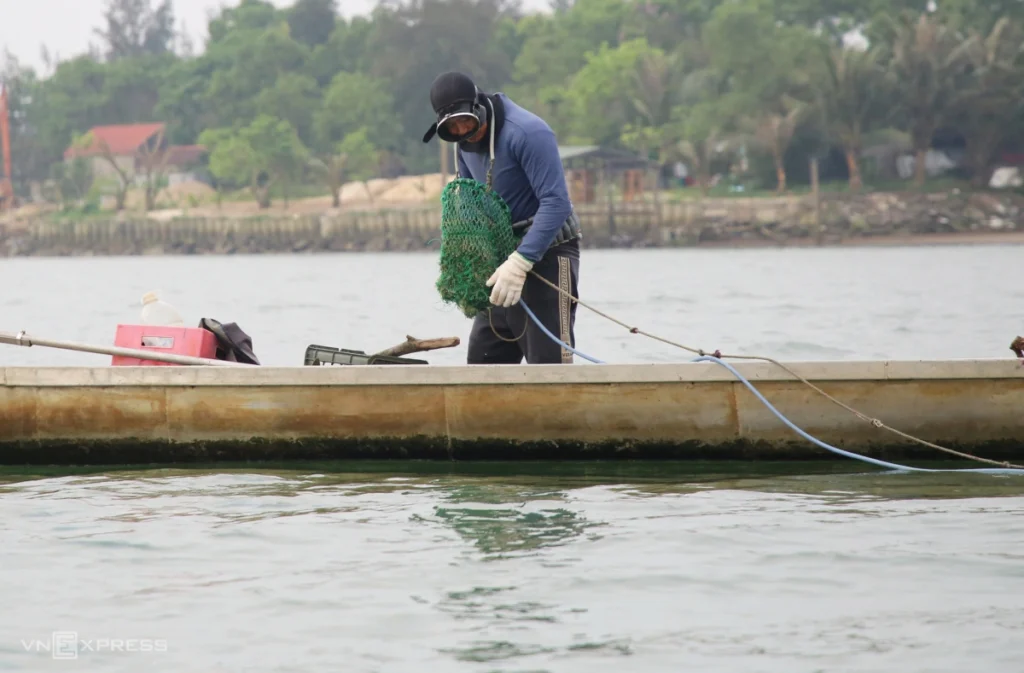
On the last days of March, Mr. Chau, 55, from Quang Ninh Commune (formerly Quang Ninh District), drove his motorboat to Nhat Le 3 Bridge, more than 6 km from the river mouth, to dive for oysters. After more than 20 minutes leaving the riverside dock near his house, he anchored the boat in the middle of the river, where the rocky riverbed provides a rich habitat for oysters.
Currently, there are about 10 people in Quan Hau working as oyster divers. Each person owns a boat and equipment including a specialized diving suit, diving goggles, and an air compressor that supplies oxygen while diving underwater.
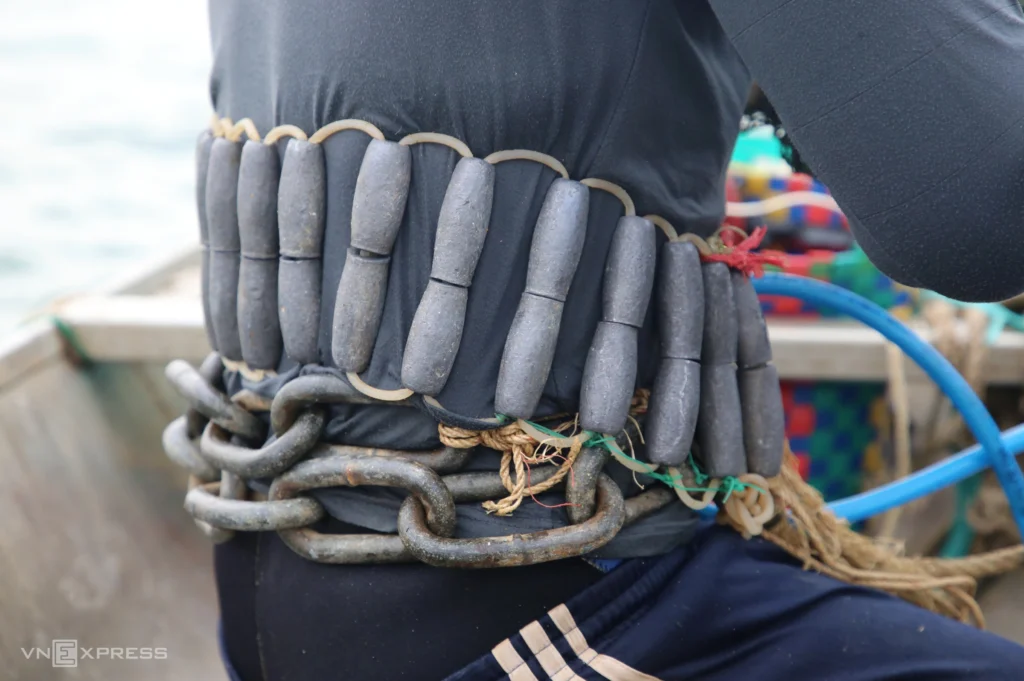
Before going underwater, Chau ties lead weights and chains weighing nearly 20 kg around his waist to keep his body stable in the strong current. “Compared to sea diving, the weights worn around the body must be heavier because the river current is much stronger,” said the man who has spent 30 years catching oysters at the bottom of the river.
Because oyster shells are extremely sharp, divers always wear protective gloves. Even so, during work they are still cut on their hands and feet many times by the oysters.
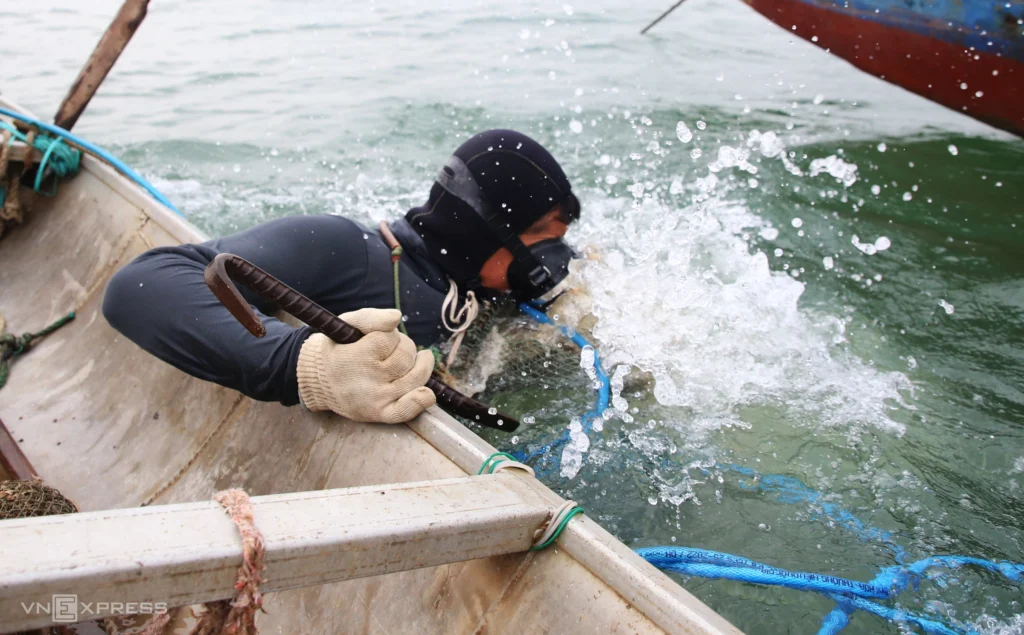
After putting on specialized clothing to keep warm, the divers wear goggles to prevent water from entering their eyes and to help them observe the riverbed, which is 5 to 10 meters deep. They hold the oxygen tube in their mouths, jump into the river, and slowly sink down until only the air hose floating on the surface and bubbles rising upward can be seen.
Oysters cling very tightly to rocks, so divers must use an iron bar about 40 cm long, bent at both ends, to pry them off.
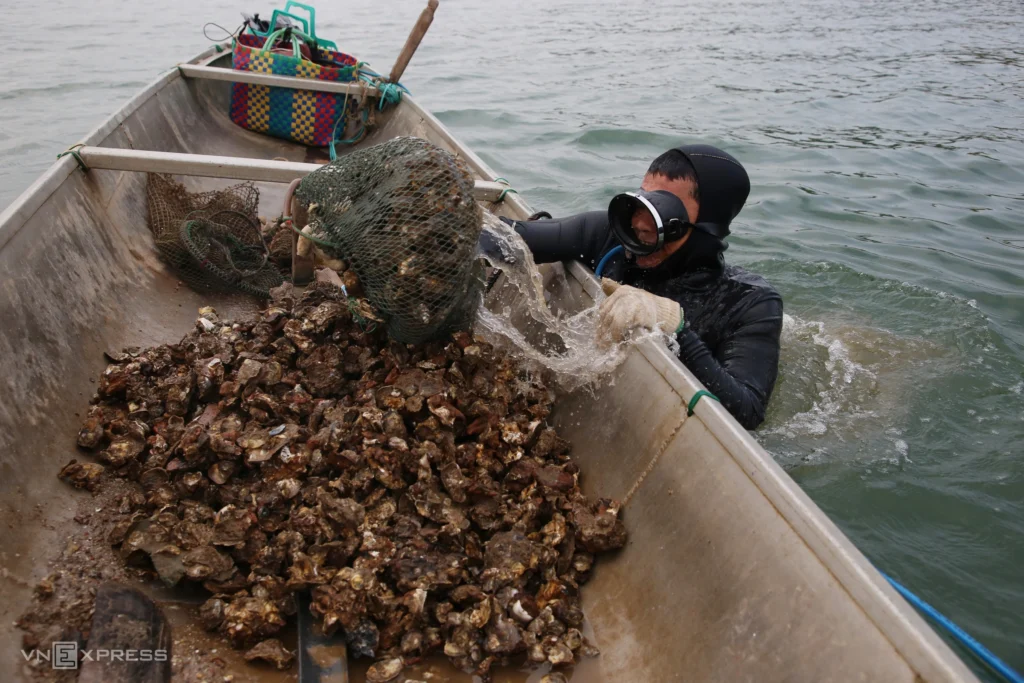
After about 20 minutes underwater, when the bag is full of oysters, Chau surfaces, empties the catch into the boat, and continues diving again. “Divers only work when the temperature is above 15 degrees Celsius. If the water is too cold or during floods when the water becomes muddy and the riverbed cannot be seen, we have to stop,” he explained.
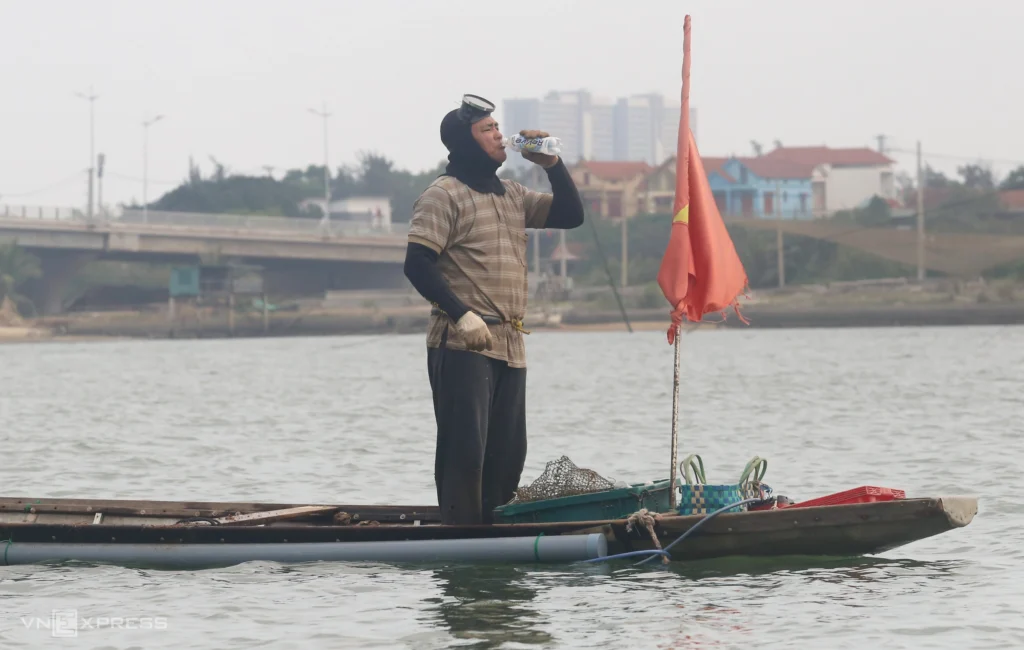
Not far away, Le Van Thang, 50, climbed back onto his boat after nearly an hour submerged in the water to drink some water and rest for 10 minutes before continuing his work.
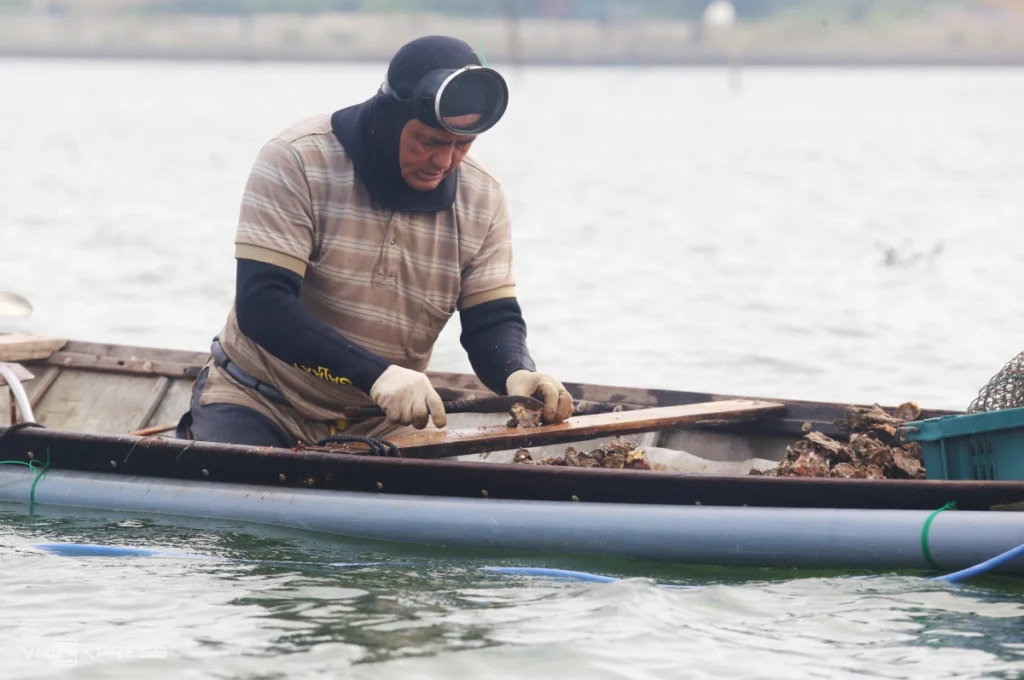
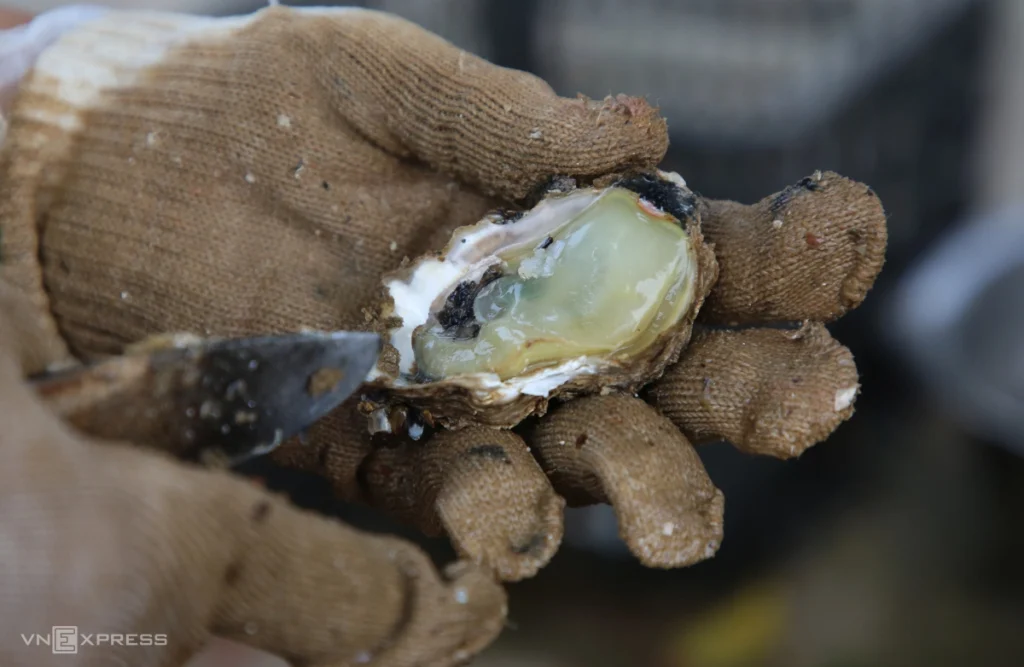
He took the opportunity to separate the oysters from the rocks. Strong currents make diving harder, but they also help wash away muddy water, making it easier to spot oysters. When diving, each person must stay apart from the others; if they are too close, the stirred-up water becomes cloudy and nothing can be seen, Mr. Thang said.
After five hours of work, Chau collected a pile of oysters mixed with rocks filling the boat. He estimated that after separating the meat, he would get about 10 kg of oyster meat. After deducting expenses and paying workers to separate the meat, he earns around 700,000 VND.
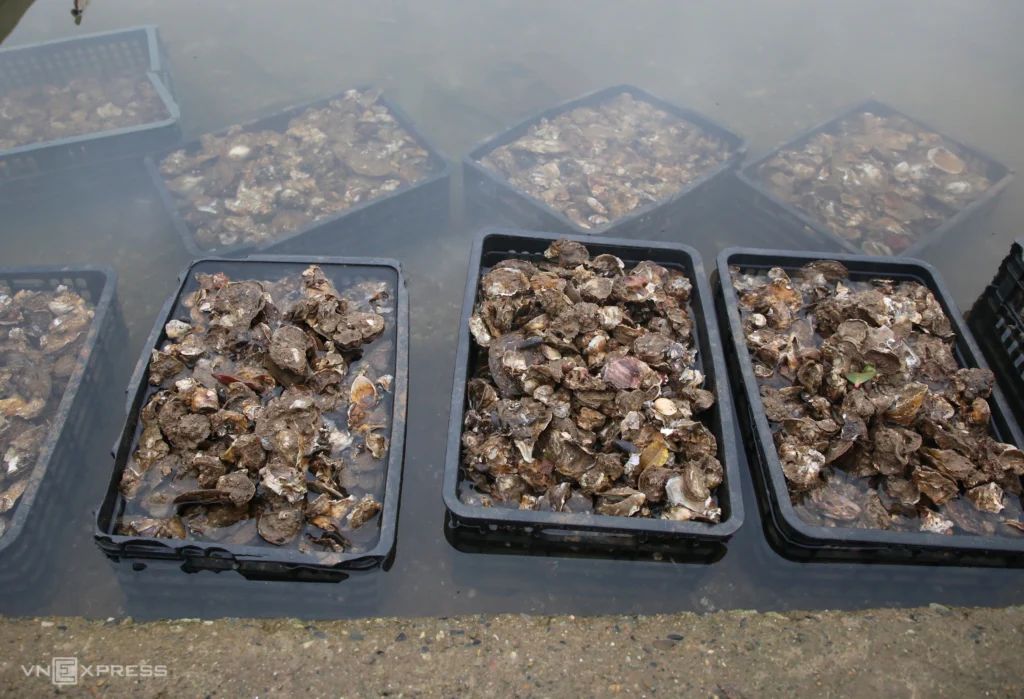
The oysters harvested from the river are placed in mesh bags or baskets and soaked underwater for a full day and night so they can release sand and dirt before being brought ashore for the meat to be separated.
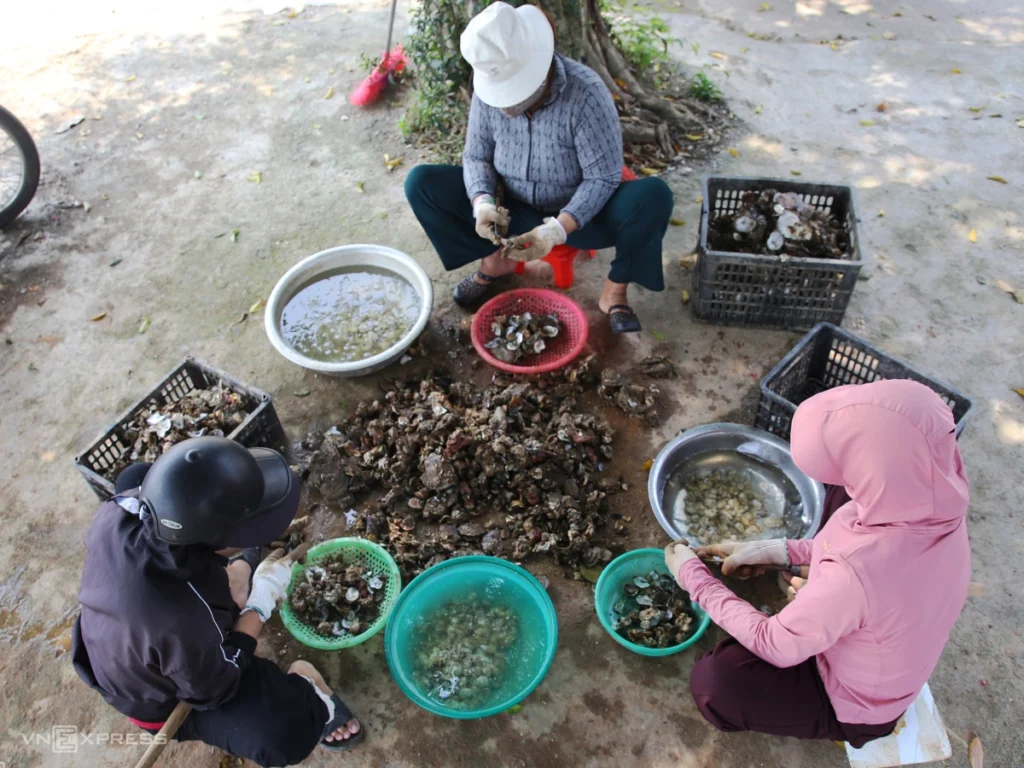
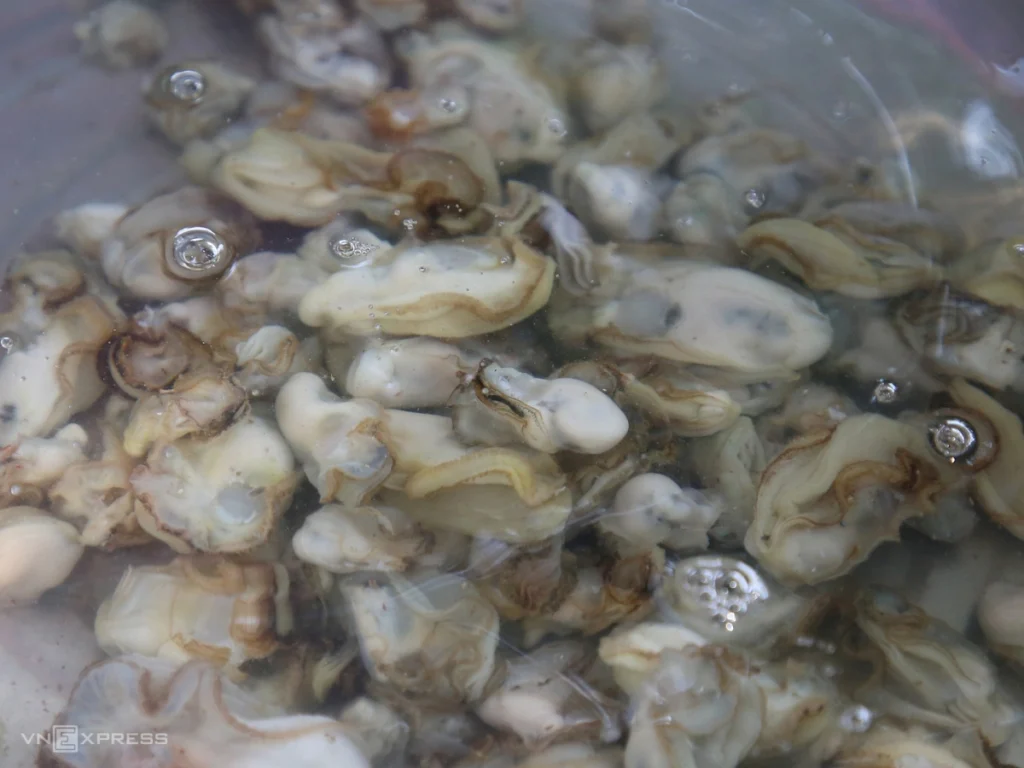
After being separated, the oyster meat is washed clean and soaked in water, then sold for about 120,000 VND per kilogram. Wild oysters are usually 20,000 VND more expensive per kilogram than farmed oysters. Oysters can be prepared in many dishes such as stir-fried oysters, oyster porridge, grilled oysters, or oyster salad.
Oysters are soft-bodied mollusks with two shells, belonging to the same family as clams, cockles, snails, and mussels. They live in coastal areas, rocky reefs, or river mouths. They usually attach themselves to surfaces such as rocky reefs and bridge pillars, feeding on plankton and small organisms found in mud, sand, and seawater. Oysters are also a popular type of seafood, known for their delicious, sweet, and nutritious meat.
Source: https://vnexpress.net/lan-bat-hau-duoi-day-song-nhat-le-5055918.html
WORD BANK:
dive /daɪv/ [B1] (v): lặn
diver /ˈdaɪ.vɚ/ [B1] (n): thợ lặn
commune /ˈkɑː.mjuːn/ (n): xã
oyster /ˈɔɪ.stɚ/ (n): hàu
formerly /ˈfɔːr.mɚ.li/ [B2] (adv): trước đây
district /ˈdɪs.trɪkt/ [B1] (n): huyện
riverside dock /ˈrɪv.ɚ.saɪd dɑːk/ (n): bến sông
anchor /ˈæŋ.kɚ/ (v, n): thả neo; mỏ neo
rocky riverbed /ˈrɑː.ki ˈrɪv.ɚ.bed/ (n): đáy sông nhiều đá
habitat /ˈhæb.ɪ.tæt/ [B2] (n): môi trường sống
specialized /ˈspeʃ.ə.laɪzd/ [B2] (adj): chuyên dụng
diving suit /ˈdaɪ.vɪŋ suːt/ (n): đồ lặn
diving goggles /ˈdaɪ.vɪŋ ˈɡɑː.ɡəlz/ (n): kính lặn
air compressor /er kəmˈpres.ɚ/ (n): máy nén khí
tie sth /taɪ/ [A2] (v): buộc cái gì
lead /led/ (n): chì
weight /weɪt/ [A2] (n): vật nặng; trọng lượng
chain /tʃeɪn/ [B1] (n): dây xích
current /ˈkɝː.ənt/ [B2] (n): dòng nước chảy
air hose /er hoʊz/ (n): ống dẫn khí
float /floʊt/ [B1] (n): phao
bubble /ˈbʌb.əl/ [B1] (n): bong bóng
cling to sb/sth /klɪŋ/ [C1] (v): bám vào ai/cái gì
iron bar /ˈaɪ.ɚn bɑːr/ (n): thanh sắt
bent /bent/ (adj): bị uốn cong
end /end/ (n): đầu
pry sth off /praɪ ɔːf/ (v): cạy cái gì ra
muddy /ˈmʌd.i/ [B1] (adj): đục ngầu; đầy bùn
submerge /səbˈmɝːdʒ/ [C1] (v): chìm xuống nước
wash away sth /wɑːʃ əˈweɪ/ (v): cuốn trôi cái gì
spot sth /spɑːt/ [B2] (v): phát hiện cái gì
stir sth up /stɝː ʌp/ (v): khuấy động cái gì lên
pile /paɪl/ [B2] (n): đống
deduct sth /dɪˈdʌkt/ [B2] (v): khấu trừ cái gì
expense /ɪkˈspens/ [B2] (n): chi phí
soak /soʊk/ (v): ngâm
ashore /əˈʃɔːr/ (adv): lên bờ
farmed /fɑːrmd/ (adj): được nuôi trồng
porridge /ˈpɔːr.ɪdʒ/ (n): cháo
mollusk /ˈmɑː.ləsk/ (n): động vật thân mềm
clam /klæm/ (n): ngao
cockle /ˈkɑː.kəl/ (n): sò
mussel /ˈmʌs.əl/ (n): con trai, con vẹm
rocky reef /ˈrɑː.ki riːf/ (n): rạn đá
bridge pillar /brɪdʒ ˈpɪl.ɚ/ (n): trụ cầu
feed on sth /fiːd ɑːn/ [B2] (v): ăn, sống nhờ vào cái gì
plankton /ˈplæŋk.tən/ (n): sinh vật phù du
ỦNG HỘ READ TO LEAD!
Chào bạn! Có thể bạn chưa biết, Read to Lead là một trang giáo dục phi lợi nhuận với mục đích góp phần phát triển cộng đồng người học tiếng Anh tại Việt Nam. Chúng tôi không yêu cầu người đọc phải trả bất kỳ chi phí nào để sử dụng các sản phẩm của mình để mọi người đều có cơ hội học tập tốt hơn. Tuy nhiên, nếu bạn có thể, chúng tôi mong nhận được sự hỗ trợ tài chính từ bạn để duy trì hoạt động của trang và phát triển các sản phẩm mới.
Bạn có thể ủng hộ chúng tôi qua 1 trong 2 cách dưới đây.
– Cách 1: Chuyển tiền qua tài khoản Momo.
Số điện thoại 0947.886.865 (Chủ tài khoản: Nguyễn Tiến Trung)
Nội dung chuyển tiền: Ủng hộ Read to Lead
hoặc
– Cách 2: Chuyển tiền qua tài khoản ngân hàng.
Ngân hàng VIB chi nhánh Hải Phòng
Số tài khoản: 012704060048394 (Chủ tài khoản: Nguyễn Tiến Trung)
Nội dung chuyển tiền: Ủng hộ Read to Lead
Lớp luyện thi IELTS online
Bạn đang có nhu cầu thi chứng chỉ IELTS cho đầu vào đại học, đi du học, xin việc hay xin cư trú và đang phân vân chưa biết học ở đâu?
Nếu bạn đang tìm kiếm dịch vụ luyện thi IELTS online với giáo viên uy tín và chất lượng, cũng như học phí phải chăng, thì thầy Trung và Cô Thủy (Admin và dịch giả chính của Read to Lead) có thể là một lựa chọn phù hợp dành cho bạn.
Hãy liên hệ (nhắn tin) tới trang Facebook cá nhân của mình (https://www.facebook.com/nguyen.trung.509) để tìm hiểu về lớp học và được tư vấn cũng như được học thử nha!


