


[Reading level: B2 – Upper Intermediate]
In Oman, there is a dish that people may have to wait up to two days to enjoy. The meat is not cooked on a stove or in a conventional oven. Instead, it is wrapped tightly and placed in an underground oven. This special dish is called Shuwa, one of Oman’s most famous traditional dishes.
Shuwa is particularly popular during major festivals such as Eid al-Fitr and Eid al-Adha. Depending on the family and region, Omanis may use lamb, goat, beef, or even camel meat. The meat is carefully marinated in a mixture of spices, with each family often having its own recipe. Common ingredients include coriander, cumin, turmeric, cardamom, garlic, chilli, vinegar, and tamarind.
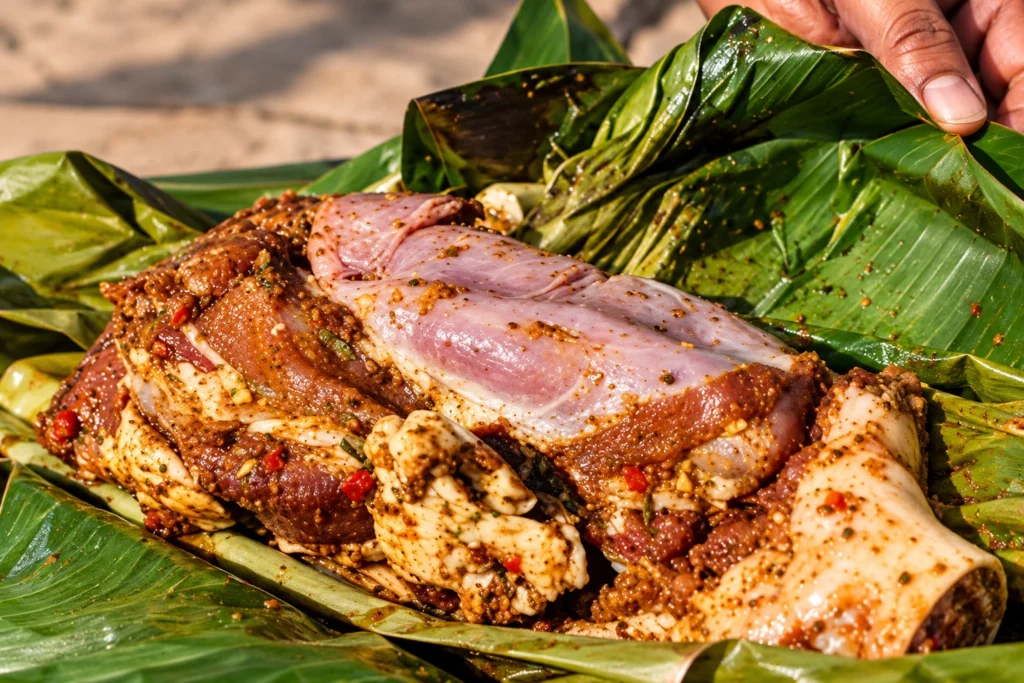
After absorbing the spices, large pieces of meat are wrapped in banana or palm leaves and then placed inside bags woven from palm leaves. The leaves help retain moisture, protect the meat from direct heat, and add extra aroma during the cooking process.
The most distinctive part of the process is the traditional oven known as a tanoor. It is a pit built underground. Wood is burned inside until only glowing embers remain. The packages of meat are then quickly lowered into the pit, and the opening is sealed with a lid and soil or mud. The sealed pit retains heat extremely well, allowing the meat to continue cooking slowly for many hours even after the original fire has gone out.
But why did Omanis come up with such an elaborate way of cooking?
The answer may lie partly in the living conditions of Oman in the past. In an arid environment, where fuel was limited and modern cooking facilities did not yet exist, keeping a large fire burning continuously for dozens of hours was not a convenient way to cook.
The underground oven solved the problem in a clever way: wood was burned once to generate a large amount of heat, which was then trapped in an enclosed space underground and left to do the rest of the work.
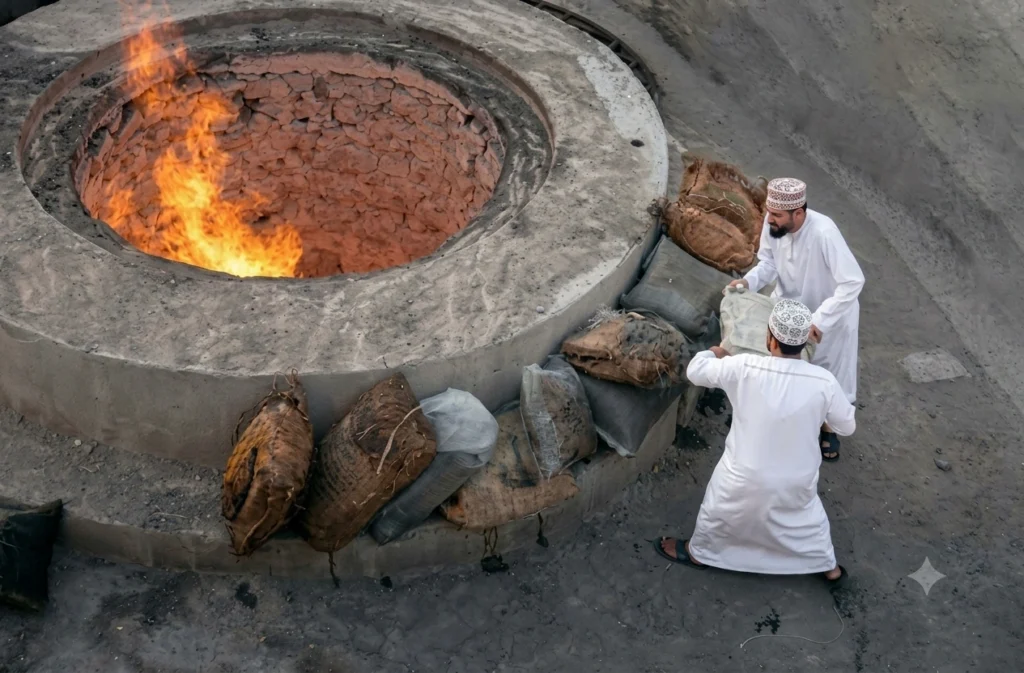
Instead of constantly standing by the fire and adding more wood, people could place a large amount of meat inside the tanoor, seal the pit, and leave the meat to cook on its own for many hours. A single tanoor could even serve an entire neighbourhood. Today, in some villages, hundreds of packages of meat from different families can still be placed in the same underground oven.
And then people wait.
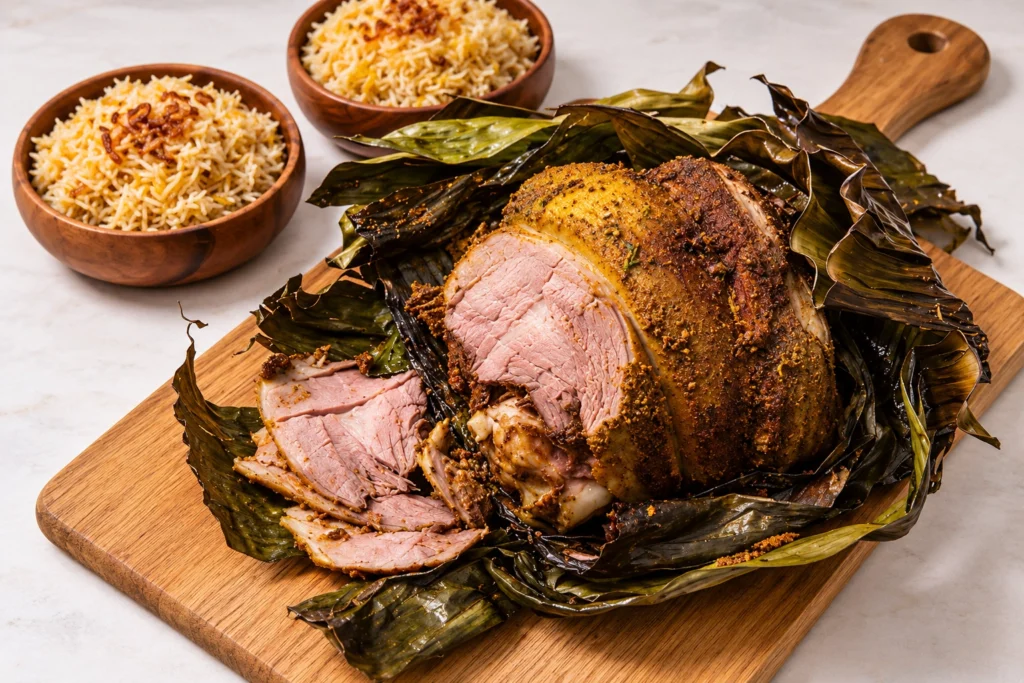
In some places, the tanoor is opened after around 12–24 hours; elsewhere, the meat is left underground until the second or third day of Eid before being taken out. The heat trapped underground cooks the meat very slowly. When the package is finally opened, the meat has become tender, juicy, and easy to pull away from the bone, while the spices have penetrated deep into every piece.
Interestingly, Omanis today no longer need to cook meat this way. Meat can easily be prepared in a modern electric oven. Chefs have even developed simpler versions that allow people to make Shuwa at home without digging a pit or having their own tanoor.
Yet on important occasions, many Omani communities still maintain this traditional cooking method.
This is because what they are preserving is not only the flavour of the meat, but also the feeling of doing something together.
During Eid, families prepare their meat and spices, while people in the community prepare the tanoor, gather firewood, and light the fire. Each family marks its package of meat before bringing it to the communal oven. Once the tanoor is ready, everyone gathers around the pit and quickly lowers the packages inside before the opening is sealed. In the village of Al Kharasen, a communal tanoor can hold around 280–300 packages of meat at a time.
Then comes the waiting.
But this does not mean spending two days simply sitting around and watching the pit. Eid is traditionally a time for family and community: people pray, visit relatives and friends, exchange greetings, share food, gather together, and take part in traditional activities. In some areas, there are also folk dances, traditional songs, and other community activities. Meanwhile, the Shuwa continues to cook quietly underground.
When it is finally time to open the tanoor, people gather together again. The packages of meat are pulled out one by one and returned to each family. Some accounts describe people eagerly waiting for the moment when the pit is opened, as it is one of the most anticipated moments of the Eid holiday.
Perhaps this is why Shuwa has survived for hundreds of years, even though Omanis today have many faster and more convenient ways of cooking.
If the only goal were to cook a piece of meat, two days would clearly be far too long. But if the purpose is also for families and neighbours to prepare together, wait together, open the oven together, and finally sit down and eat together, then those two days become an important part of the dish itself.
WORD BANK:
stove /stoʊv/ (n): bếp
conventional oven /kənˈven.ʃən.əl ˈʌv.ən/ (n): lò nướng thông thường
wrap /ræp/ [B2] (v): gói, bọc
tightly /ˈtaɪt.li/ [B2] (adv): chặt, kín
underground /ˌʌn.dɚˈɡraʊnd/ [B1] (adv/adj): dưới lòng đất, ngầm
particularly /pɚˈtɪk.jə.lɚ.li/ [B1] (adv): đặc biệt là
lamb /læm/ (n): thịt cừu; cừu non
goat /ɡoʊt/ (n): dê; thịt dê
camel /ˈkæm.əl/ (n): lạc đà
marinate /ˈmer.ə.neɪt/ (v): ướp (thịt, thực phẩm)
spice /spaɪs/ [B1] (n): gia vị
recipe /ˈres.ə.pi/ [B1] (n): công thức nấu ăn
coriander /ˌkɔːr.iˈæn.dɚ/ (n): rau mùi, hạt rau mùi
cumin /ˈkʌm.ɪn/ (n): thì là Ai Cập
turmeric /ˈtɝː.mɚ.ɪk/ (n): nghệ
cardamom /ˈkɑːr.də.məm/ (n): bạch đậu khấu
vinegar /ˈvɪn.ə.ɡɚ/ (n): giấm
tamarind /ˈtæm.ə.rɪnd/ (n): me
palm leaf /ˈpɑːm liːf/ (n): lá cọ
weave (pp: woven) /wiːv/ /ˈwoʊ.vən/ (v): đan, dệt
retain moisture /rɪˈteɪn ˈmɔɪs.tʃɚ/ [C1] (phrase): giữ độ ẩm, giữ nước
aroma /əˈroʊ.mə/ (n): hương thơm
distinctive /dɪˈstɪŋk.tɪv/ [C1] (adj): đặc trưng, khác biệt dễ nhận thấy
pit /pɪt/ (n): hố
glowing ember /ˈɡloʊ.ɪŋ ˈem.bɚ/ (n): than hồng
sealed /siːld/ (adj): được bịt kín, được đậy kín
lid /lɪd/ (n): nắp
mud /mʌd/ (n): bùn, đất bùn
(fire) go out /ɡoʊ aʊt/ (phr v): (lửa) tắt
come up with sth /kʌm ʌp/ [B2] (phr v): nghĩ ra, nảy ra (ý tưởng, giải pháp)
elaborate /ɪˈlæb.ɚ.ət/ [C1] (adj): phức tạp, cầu kỳ
arid /ˈer.ɪd/ (adj): khô cằn, khô hạn
trap /træp/ [B2] (v): giữ lại, giữ bên trong
enclosed space /ɪnˈkloʊzd speɪs/ (n): không gian kín
tender /ˈten.dɚ/ (adj): mềm, dễ cắt/nhai (thịt)
juicy /ˈdʒuː.si/ (adj): mọng nước, mềm mọng
pull away from sth /pʊl əˈweɪ/ (phr v): tách ra, rời ra khỏi cái gì
penetrate deep into sth /ˈpen.ə.treɪt/ [C1] (v): thấm sâu, xuyên sâu vào cái gì
Omanis /oʊˈmɑː.niz/ (n): người Oman
chef /ʃef/ [B1] (n): đầu bếp
communal /kəˈmjuː.nəl/ [C1] (adj): mang tính cộng đồng, dùng chung
pray /preɪ/ [B1] (v): cầu nguyện
greeting /ˈɡriː.t̬ɪŋ/ [B1] (n): lời chào
folk /foʊk/ (adj): dân gian, truyền thống
account /əˈkaʊnt/ [C1] (n): câu chuyện, lời kể, bản tường thuật
eager /ˈiː.ɡɚ/ (adv): háo hức
anticipated /ænˈtɪs.ə.peɪ.t̬ɪd/ (adj): được mong chờ, được trông đợi
ỦNG HỘ READ TO LEAD!
Chào bạn! Có thể bạn chưa biết, Read to Lead là một trang giáo dục phi lợi nhuận với mục đích góp phần phát triển cộng đồng người học tiếng Anh tại Việt Nam. Chúng tôi không yêu cầu người đọc phải trả bất kỳ chi phí nào để sử dụng các sản phẩm của mình để mọi người đều có cơ hội học tập tốt hơn. Tuy nhiên, nếu bạn có thể, chúng tôi mong nhận được sự hỗ trợ tài chính từ bạn để duy trì hoạt động của trang và phát triển các sản phẩm mới.
Bạn có thể ủng hộ chúng tôi qua 1 trong 2 cách dưới đây.
– Cách 1: Chuyển tiền qua tài khoản Momo.
Số điện thoại 0947.886.865 (Chủ tài khoản: Nguyễn Tiến Trung)
Nội dung chuyển tiền: Ủng hộ Read to Lead
hoặc
– Cách 2: Chuyển tiền qua tài khoản ngân hàng.
Ngân hàng VIB chi nhánh Hải Phòng
Số tài khoản: 012704060048394 (Chủ tài khoản: Nguyễn Tiến Trung)
Nội dung chuyển tiền: Ủng hộ Read to Lead
Lớp luyện thi IELTS online
Bạn đang có nhu cầu thi chứng chỉ IELTS cho đầu vào đại học, đi du học, xin việc hay xin cư trú và đang phân vân chưa biết học ở đâu?
Nếu bạn đang tìm kiếm dịch vụ luyện thi IELTS online với giáo viên uy tín và chất lượng, cũng như học phí phải chăng, thì lớp học online của thầy Trung (Admin và dịch giả chính của Read to Lead) có thể là một lựa chọn phù hợp dành cho bạn.
Hãy liên hệ (nhắn tin) tới trang Facebook cá nhân của mình (https://www.facebook.com/nguyen.trung.509) để tìm hiểu về lớp học và được tư vấn cũng như được học thử nha!


