


[Reading level: B2 – Upper Intermediate]
When people think of Do Son, many immediately picture the sea, long sandy beaches, and one of Hai Phong’s most famous festivals: the Do Son Buffalo Fighting Festival.
Every year, on the ninth day of the eighth lunar month, local people and visitors gather in Do Son to watch the “buffalo lords” enter the arena. However, behind these fierce fights lies a long-standing tradition closely connected with the beliefs, way of life, and hopes of the local coastal community.
A festival with a history of hundreds of years
No one knows exactly when the Do Son Buffalo Fighting Festival began. According to information released when the festival was recognized as National Intangible Cultural Heritage, it is believed to have first appeared nearly 1,000 years ago, around the reign of King Ly Thanh Tong. After going through many historical changes, the festival was interrupted for a period before being revived in 1990.

The origins of the festival are also explained through several different legends. One of the best-known stories is associated with Điểm Tước Đại Vương, a deity highly respected by the people of Do Son.
According to legend, long ago, someone passing by the temple dedicated to Điểm Tước Đại Vương saw two buffaloes fighting each other. When the animals noticed the person, they ran into the sea. From then on, local people began organizing buffalo fights and selecting a strong buffalo to offer as a sacrifice to the deity.
Another legend connects the festival with Bà Đế and the worship of the Water Deity among ancient fishing communities. Regardless of which story is used to explain its origins, the festival clearly reflects the spiritual life of the people of Do Son: they depend on the sea for their livelihood, respect the deities of the sea, and pray for protection whenever they set out to sea.
More than just buffalo fighting
The name “Buffalo Fighting Festival” may lead many people to think that the fights themselves make up the entire festival. In fact, the ceremonial part contains many layers of long-standing religious and cultural significance.
Traditional rituals begin in the early days of the eighth lunar month. They include incense-offering ceremonies, rituals to worship the deities, and, in particular, the water procession – an important ritual associated with Nghè Temple.
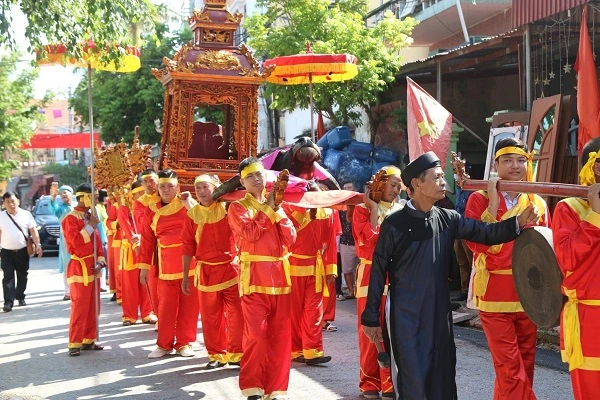
Sacred water is carried back to communal houses and temples for worship. The ritual expresses people’s hopes for favorable weather, peace, and prosperity. It also reflects the distinctive character of a community whose life has long been closely connected with the sea and nature.
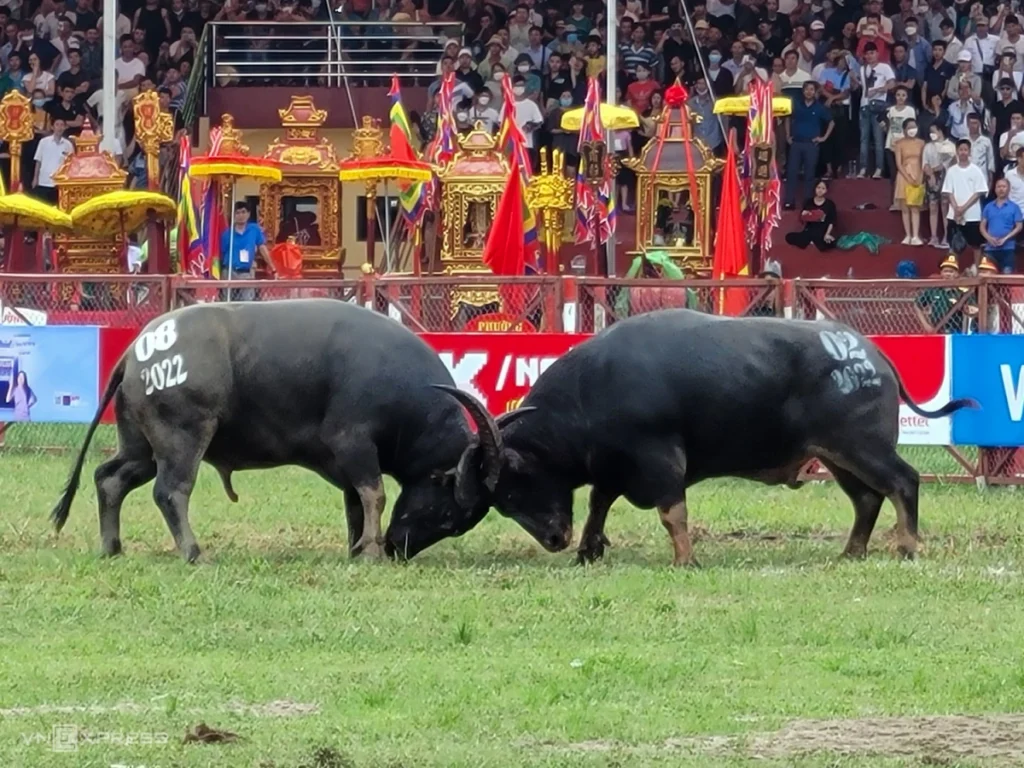
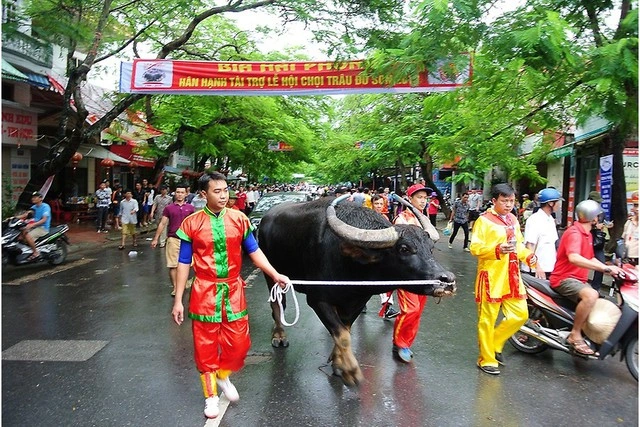
Before the day of the competition, the buffaloes take part in a ceremony at the village communal house. From that moment on, they are no longer simply called “buffaloes” but are respectfully referred to by local people as “ông trâu”, literally “buffalo lords.” They become representatives of the community, carrying with them the beliefs and hopes of local people.
A major festival for Do Son residents
The morning of the ninth day of the eighth lunar month marks the most eagerly awaited part of the festival.
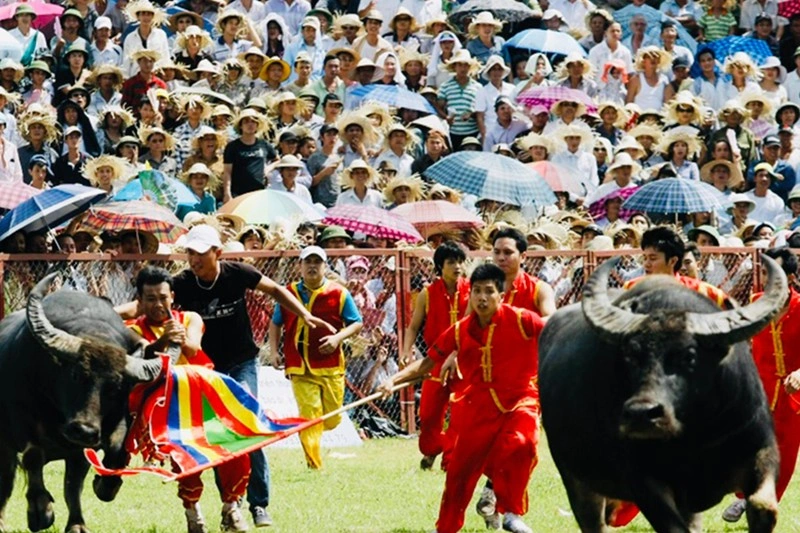
Amid festival flags, beating drums, and cheering crowds, the “buffalo lords” are led into the arena. Some fights may end very quickly, while others involve long and fierce struggles. The strength, speed, and unexpected attacks of the buffaloes create the distinctive character of the festival.
However, for local people, winning or losing is not everything.
According to tradition, after the festival ends, both the winning and losing buffaloes are sacrificed as offerings to the deities. In the past, people believed that the village whose buffalo won would enjoy good fortune, while those who ate the meat of the fighting buffaloes could also receive good luck from the festival.
This practice shows that buffalo fighting in Do Son has never simply been a competition between animals. It forms part of a much larger system of rituals involving the worship of deities, sacrifice, and prayers for divine protection.
A blend of agricultural and coastal cultures
One distinctive feature of the Do Son Buffalo Fighting Festival is its combination of the agricultural culture of the northern plains and the culture of coastal communities.
The buffalo has long been a familiar symbol of wet-rice agriculture. In Do Son, however, this animal has become part of a system of beliefs associated with the Water Deity and the lives of people who make their living from the sea.
This seemingly contrasting combination gives the festival its unique identity. It carries the influence of the agricultural civilization of northern Vietnam while also reflecting the uncertain and sometimes dangerous lives of fishing communities that constantly face the waves and the sea.
Behind the powerful fights, therefore, lies a very simple hope: calm seas, favorable weather, the safe return of fishermen, and a prosperous life.
A cultural heritage of Hai Phong
On December 27, 2012, the Do Son Buffalo Fighting Festival was included by the Ministry of Culture, Sports and Tourism in the list of National Intangible Cultural Heritage.
Today, the festival belongs not only to the local community of Do Son but has also become one of the most prominent cultural symbols of Hai Phong. Every festival season, it attracts tens of thousands of local people and visitors, while also helping promote Do Son as a distinctive cultural and tourist destination in Vietnam’s port city.
Over the centuries, some rituals may have been adjusted to suit modern life, but their essential values remain: the community’s beliefs, its close connection with the sea, and its hopes for a peaceful and prosperous life.
Perhaps this is why, for the people of Do Son, buffalo fighting has never simply been about two buffaloes entering an arena to fight.
It is also a story of people, the sea, and a tradition passed down from one generation to the next.
Source: haiphongnews.gov.vn
WORD BANK:
lunar /ˈluː.nɚ/ (adj): thuộc về Mặt Trăng; thuộc âm lịch
arena /əˈriː.nə/ (n): đấu trường
behind sth lie sth /laɪ/ (v): đằng sau cái gì là/có cái gì
long-standing /ˌlɑːŋˈstæn.dɪŋ/ [C1] (adj): lâu đời; tồn tại từ lâu
coastal /ˈkoʊ.stəl/ [B1] (adj): thuộc ven biển
intangible /ɪnˈtæn.dʒə.bəl/ (adj): phi vật thể; vô hình
cultural heritage /ˌkʌl.tʃɚ.əl ˈher.ɪ.t̬ɪdʒ/ (n): di sản văn hóa
reign /reɪn/ (n): triều đại; thời kỳ trị vì
interrupt /ˌɪn.t̬əˈrʌpt/ [B1] (v): làm gián đoạn
revive /rɪˈvaɪv/ [C2] (v): khôi phục; làm sống lại
deity /ˈdiː.ə.t̬i/ (n): vị thần; thần linh
pass by /pæs baɪ/ (phr v): đi ngang qua
dedicated to sb /ˈded.ə.keɪ.t̬ɪd/ [C1] (adj): dành riêng cho; được lập/xây dựng để tưởng nhớ hoặc tôn thờ ai
sacrifice /ˈsæk.rə.faɪs/ [C1] (v): hiến tế; dâng tế thần
worship /ˈwɝː.ʃɪp/ [C1] (v): thờ cúng; tôn thờ
regardless of /rɪˈɡɑːrd.ləs/ [C1] (prep): bất kể; không kể đến
spiritual life /ˈspɪr.ə.tʃu.əl laɪf/ (n): đời sống tinh thần
livelihood /ˈlaɪv.li.hʊd/ [C1] (n): sinh kế; kế sinh nhai
set out to sea /set aʊt tə siː/ (phr): ra khơi
make up sth /meɪk ʌp/ [B2] (phr v): tạo nên; cấu thành cái gì
ceremonial part /ˌser.əˈmoʊ.ni.əl pɑːrt/ (n): phần lễ (của một lễ hội)
ritual /ˈrɪtʃ.u.əl/ [C2] (n): nghi lễ
incense-offering ceremony /ˈɪn.sens ˌɑː.fɚ.ɪŋ ˈser.ə.moʊ.ni/ (n): lễ dâng hương
procession /prəˈseʃ.ən/ [C2] (n): đám rước; lễ rước
sacred water /ˈseɪ.krɪd ˈwɑː.t̬ɚ/ (n): nước thiêng
communal house /kəˈmjuː.nəl haʊs/ (n): đình làng
favorable weather /ˈfeɪ.vɚ.ə.bəl ˈweð.ɚ/ (n): thời tiết thuận lợi; mưa thuận gió hòa
prosperity /prɑːˈsper.ə.t̬i/ [C1] (n): sự thịnh vượng; sung túc
distinctive /dɪˈstɪŋk.tɪv/ [C1] (adj): đặc trưng; khác biệt
eagerly awaited /ˈiː.ɡɚ.li əˈweɪ.t̬ɪd/ (adj): được háo hức mong chờ
amid /əˈmɪd/ [C1] (prep): giữa; trong bối cảnh
cheering /ˈtʃɪr.ɪŋ/ (n): tiếng reo hò, cổ vũ
fierce struggle /fɪrs ˈstrʌɡ.əl/ (n): cuộc đấu/cuộc giằng co quyết liệt
offering /ˈɑː.fɚ.ɪŋ/ [C1] (n): lễ vật; vật dâng cúng
good fortune /ˌɡʊd ˈfɔːr.tʃuːn/ (n): may mắn; vận may
divine /dɪˈvaɪn/ [C2] (adj): thuộc về thần linh; thiêng liêng
divine protection /dɪˈvaɪn prəˈtek.ʃən/ (n): sự bảo trợ, che chở của thần linh
plain /pleɪn/ [B1] (n): đồng bằng
wet-rice agriculture /ˌwet raɪs ˈæɡ.rə.kʌl.tʃɚ/ (n): nền nông nghiệp lúa nước
seemingly contrasting /ˈsiː.mɪŋ.li kənˈtræs.tɪŋ/ (adj): tưởng chừng đối lập; có vẻ tương phản
prosperous /ˈprɑː.spɚ.əs/ [C1] (adj): thịnh vượng; sung túc
prominent /ˈprɑː.mə.nənt/ [C1] (adj): nổi bật; đáng chú ý
adjust /əˈdʒʌst/ [B2] (v): điều chỉnh; thay đổi cho phù hợp
pass down /pæs daʊn/ (phr v): truyền lại cho thế hệ sau
ỦNG HỘ READ TO LEAD!
Chào bạn! Có thể bạn chưa biết, Read to Lead là một trang giáo dục phi lợi nhuận với mục đích góp phần phát triển cộng đồng người học tiếng Anh tại Việt Nam. Chúng tôi không yêu cầu người đọc phải trả bất kỳ chi phí nào để sử dụng các sản phẩm của mình để mọi người đều có cơ hội học tập tốt hơn. Tuy nhiên, nếu bạn có thể, chúng tôi mong nhận được sự hỗ trợ tài chính từ bạn để duy trì hoạt động của trang và phát triển các sản phẩm mới.
Bạn có thể ủng hộ chúng tôi qua 1 trong 2 cách dưới đây.
– Cách 1: Chuyển tiền qua tài khoản Momo.
Số điện thoại 0947.886.865 (Chủ tài khoản: Nguyễn Tiến Trung)
Nội dung chuyển tiền: Ủng hộ Read to Lead
hoặc
– Cách 2: Chuyển tiền qua tài khoản ngân hàng.
Ngân hàng VIB chi nhánh Hải Phòng
Số tài khoản: 012704060048394 (Chủ tài khoản: Nguyễn Tiến Trung)
Nội dung chuyển tiền: Ủng hộ Read to Lead
Lớp luyện thi IELTS online
Bạn đang có nhu cầu thi chứng chỉ IELTS cho đầu vào đại học, đi du học, xin việc hay xin cư trú và đang phân vân chưa biết học ở đâu?
Nếu bạn đang tìm kiếm dịch vụ luyện thi IELTS online với giáo viên uy tín và chất lượng, cũng như học phí phải chăng, thì lớp học online của thầy Trung (Admin và dịch giả chính của Read to Lead) có thể là một lựa chọn phù hợp dành cho bạn.
Hãy liên hệ (nhắn tin) tới trang Facebook cá nhân của mình (https://www.facebook.com/nguyen.trung.509) để tìm hiểu về lớp học và được tư vấn cũng như được học thử nha!


