


[Reading level: B2 – Upper Intermediate]
Constipation is quite common and sometimes does not require overly complicated measures to improve. Eating enough fiber, drinking enough water, exercising regularly, and developing proper toilet habits can all help the gut function more effectively.
Add foods that support bowel movements
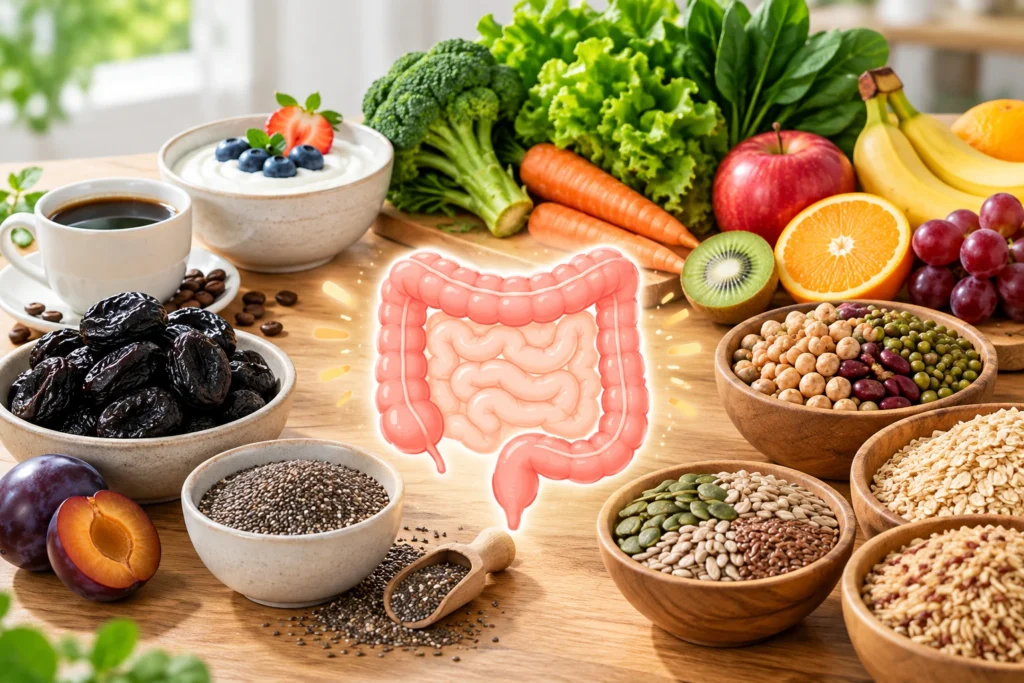
Prunes and prune juice have long been used as a natural way to help relieve constipation. Prunes contain sorbitol – a type of sugar alcohol that can retain water in the intestines – as well as fiber, which can help soften stools and make them easier to pass.
Chia seeds are also a good source of fiber. When soaked in water, chia seeds absorb liquid and form a gel-like substance. Adding them to the diet, along with drinking enough water, can help increase the bulk and softness of stools.
Some people also notice that coffee makes them want to go to the toilet shortly after drinking it. Coffee can stimulate activity in the colon in some people, although the degree of response varies from person to person.
In addition, the diet should include plenty of fiber-rich foods such as vegetables, fruits, legumes, seeds, and whole grains. Fiber helps increase stool bulk and supports the movement of waste through the digestive tract. However, when increasing fiber intake, it is also important to drink enough water; otherwise, constipation may become even more uncomfortable for some people.
Fermented foods or foods containing probiotics, such as yogurt, kefir, and certain fermented vegetables, can also help maintain a healthy balance of gut bacteria. Some studies suggest that probiotics may help improve the frequency of bowel movements in people with constipation, although their effectiveness depends on the bacterial strain and the individual.
Exercise to “wake up” your gut
Exercise does not necessarily have to be intense. Walking, cycling, yoga, and other suitable forms of physical activity can all support digestive function.
Regular physical activity keeps the body active and may help waste move through the intestines more efficiently. This is also why people with a sedentary lifestyle are often encouraged to increase their physical activity when they experience constipation.
Exercise can also help reduce stress. This is important because the brain and the gut are closely connected; prolonged stress can affect digestive function in some people.
Pay attention to your position when using the toilet
Sitting on a modern toilet is not always the most favorable position for having a bowel movement. Placing a small stool under the feet so that the knees are higher than the hips can create a position similar to squatting, making bowel movements easier for some people.
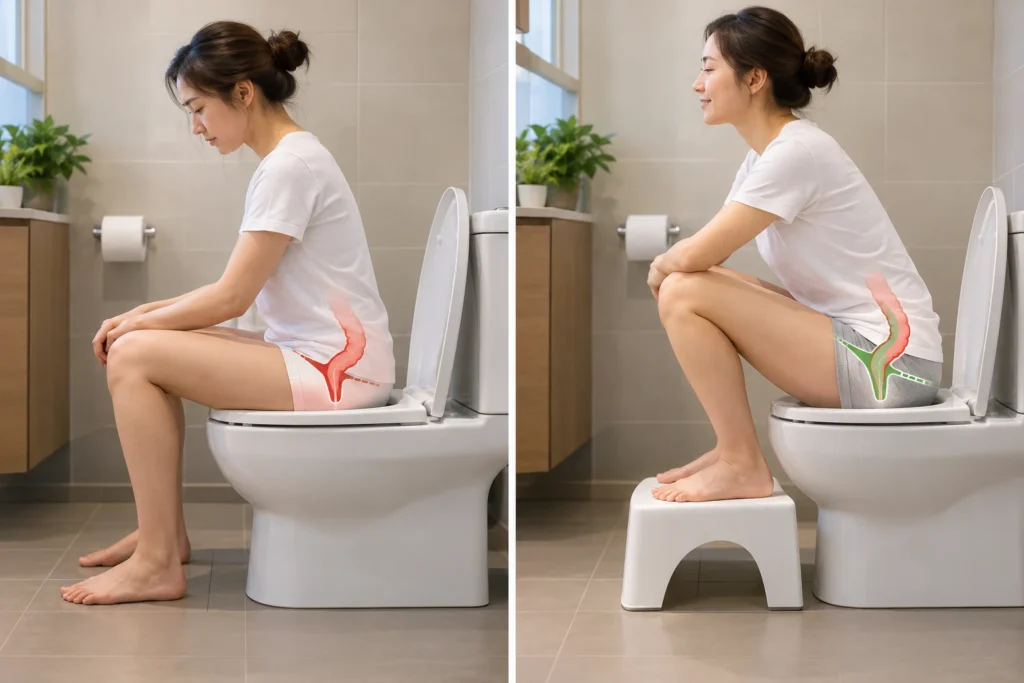
In addition, people should avoid regularly holding in the urge to have a bowel movement. When the body signals the need to use the toilet but this urge is repeatedly ignored, developing a regular bowel habit may become more difficult.
Getting enough sleep also helps care for your gut
Sleep and the digestive system have a two-way relationship. Not getting enough sleep or having an irregular sleep schedule can affect the body’s circadian rhythm, hormones, and digestive function. Some studies have also found a link between sleep disturbances and gut problems, including constipation.
Therefore, maintaining a relatively regular sleep schedule and getting enough sleep not only help the body recover but also contribute to creating favorable conditions for the digestive system to function normally.
Daily habits are what matter
There is no single food or drink that can solve every case of constipation. Instead, the gut generally benefits more from an overall healthy lifestyle: eating a variety of fiber-rich foods, drinking enough water, exercising regularly, getting enough sleep, and not delaying the urge to use the toilet.
If constipation persists, frequently returns, or is accompanied by symptoms such as severe abdominal pain, blood in the stool, unexplained weight loss, or prolonged changes in bowel habits, the person should see a doctor to determine the cause rather than relying solely on home remedies.
Source: vnexpress.net
WORD BANK:
constipation /ˌkɑːn.stəˈpeɪ.ʃən/ (n): táo bón
overly complicated /ˈoʊ.vɚ.li ˈkɑːm.plə.keɪ.t̬ɪd/ (adj): quá phức tạp
fiber /ˈfaɪ.bɚ/ (n): chất xơ
bowel movement /ˈbaʊ.əl ˌmuːv.mənt/ (n): nhu động ruộtviệc đại tiện
proper /ˈprɑː.pɚ/ [B1] (adj): đúng, phù hợp
gut /ɡʌt/ [C2] (n): đường ruột; ruột
prunes /pruːnz/ (n): mận khô
prune juice /ˈpruːn ˌdʒuːs/ (n): nước ép mận khô
retain /rɪˈteɪn/ [C1] (v): giữ lại
intestine /ɪnˈtes.tɪn/ (n): ruột
stool /stuːl/ (n): phân
chia seed /ˈtʃiː.ə ˌsiːd/ (n): hạt chia
soak /soʊk/ [B2] (v): ngâm
gel-like /ˈdʒel.laɪk/ (adj): giống dạng gel
substance /ˈsʌb.stəns/ [B2] (n): chất
bulk /bʌlk/ [C1] (n): khối lượng, độ lớn
shortly after … /ˈʃɔːrt.li/ [B2] (adv): ngay sau…, không lâu sau…
colon /ˈkoʊ.lən/ (n): đại tràng
vary from person to person /ˈver.i/ (v): khác nhau tùy từng người
legume /ˈleɡ.juːm/ (n): cây họ đậu; các loại đậu
whole grain /ˌhoʊl ˈɡreɪn/ (n): ngũ cốc nguyên hạt
digestive tract /daɪˈdʒes.tɪv ˌtrækt/ (n): đường tiêu hóa
intake /ˈɪn.teɪk/ (n): lượng tiêu thụ, lượng hấp thụ
fermented /fɚˈmen.t̬ɪd/ (adj): được lên men
probiotic /ˌproʊ.baɪˈɑː.t̬ɪk/ (adj/n): có chứa lợi khuẩn; lợi khuẩn
kefir /kəˈfɪr/ (n): kefir, sữa lên men kefir
gut bacteria /ˈɡʌt bækˌtɪr.i.ə/ (n): vi khuẩn đường ruột
frequency /ˈfriː.kwən.si/ [B2] (n): tần suất
strain /streɪn/ [C2] (v): rặn, cố sức
intense /ɪnˈtens/ [B2] (adj): mạnh, dữ dội
sedentary lifestyle /ˈsed.ən.ter.i ˌlaɪf.staɪl/ (n): lối sống ít vận động
prolonged /prəˈlɑːŋd/ [C1] (adj): kéo dài
favorable /ˈfeɪ.vɚ.ə.bəl/ [C1] (adj): thuận lợi, có lợi
small stool /ˌsmɔːl ˈstuːl/ (n): ghế đẩu nhỏ, ghế kê chân nhỏ
knee /niː/ [A2] (n): đầu gối
hip /hɪp/ [B2] (n): hông
squat /skwɑːt/ (v): ngồi xổm
the urge to do sth /ɝːdʒ/ [C1] (n): cảm giác thôi thúc, buồn muốn làm gì
circadian rhythm /sɝːˈkeɪ.di.ən ˌrɪð.əm/ (n): nhịp sinh học ngày đêm
fiber-rich /ˈfaɪ.bɚˌrɪtʃ/ (adj): giàu chất xơ
delay sth /dɪˈleɪ/ [B1] (v): trì hoãn, làm chậm cái gì
persist /pɚˈsɪst/ [C1] (v): kéo dài, tiếp diễn
accompanied by sth /əˈkʌm.pə.nid/ [B2] (adj): đi kèm với cái gì
severe /səˈvɪr/ [B2] (adj): nghiêm trọng, dữ dội
abdominal pain /æbˈdɑː.mə.nəl ˌpeɪn/ (n): đau bụng
solely /ˈsoʊl.li/ [C1] (adv): chỉ, hoàn toàn chỉ
home remedy /ˌhoʊm ˈrem.ə.di/ (n): phương pháp chữa trị tại nhà
ỦNG HỘ READ TO LEAD!
Chào bạn! Có thể bạn chưa biết, Read to Lead là một trang giáo dục phi lợi nhuận với mục đích góp phần phát triển cộng đồng người học tiếng Anh tại Việt Nam. Chúng tôi không yêu cầu người đọc phải trả bất kỳ chi phí nào để sử dụng các sản phẩm của mình để mọi người đều có cơ hội học tập tốt hơn. Tuy nhiên, nếu bạn có thể, chúng tôi mong nhận được sự hỗ trợ tài chính từ bạn để duy trì hoạt động của trang và phát triển các sản phẩm mới.
Bạn có thể ủng hộ chúng tôi qua 1 trong 2 cách dưới đây.
– Cách 1: Chuyển tiền qua tài khoản Momo.
Số điện thoại 0947.886.865 (Chủ tài khoản: Nguyễn Tiến Trung)
Nội dung chuyển tiền: Ủng hộ Read to Lead
hoặc
– Cách 2: Chuyển tiền qua tài khoản ngân hàng.
Ngân hàng VIB chi nhánh Hải Phòng
Số tài khoản: 012704060048394 (Chủ tài khoản: Nguyễn Tiến Trung)
Nội dung chuyển tiền: Ủng hộ Read to Lead
Lớp luyện thi IELTS online
Bạn đang có nhu cầu thi chứng chỉ IELTS cho đầu vào đại học, đi du học, xin việc hay xin cư trú và đang phân vân chưa biết học ở đâu?
Nếu bạn đang tìm kiếm dịch vụ luyện thi IELTS online với giáo viên uy tín và chất lượng, cũng như học phí phải chăng, thì lớp học online của thầy Trung (Admin và dịch giả chính của Read to Lead) có thể là một lựa chọn phù hợp dành cho bạn.
Hãy liên hệ (nhắn tin) tới trang Facebook cá nhân của mình (https://www.facebook.com/nguyen.trung.509) để tìm hiểu về lớp học và được tư vấn cũng như được học thử nha!


