



[Reading level: B2 – Upper Intermediate]
This morning, you woke up and ate breakfast. Around noon, you probably had lunch. And tonight, you will sit down for dinner. You did not question it. You never have. You have always considered it a natural part of life.
But here is something few people realize: Eating three meals a day is not a biological law. No doctor has ever prescribed that humans must eat exactly three meals a day, and our ancestors did not always eat this way. In fact, the habit of eating breakfast, lunch, and dinner is the result of thousands of years of changes in culture, religion, work, and social life.
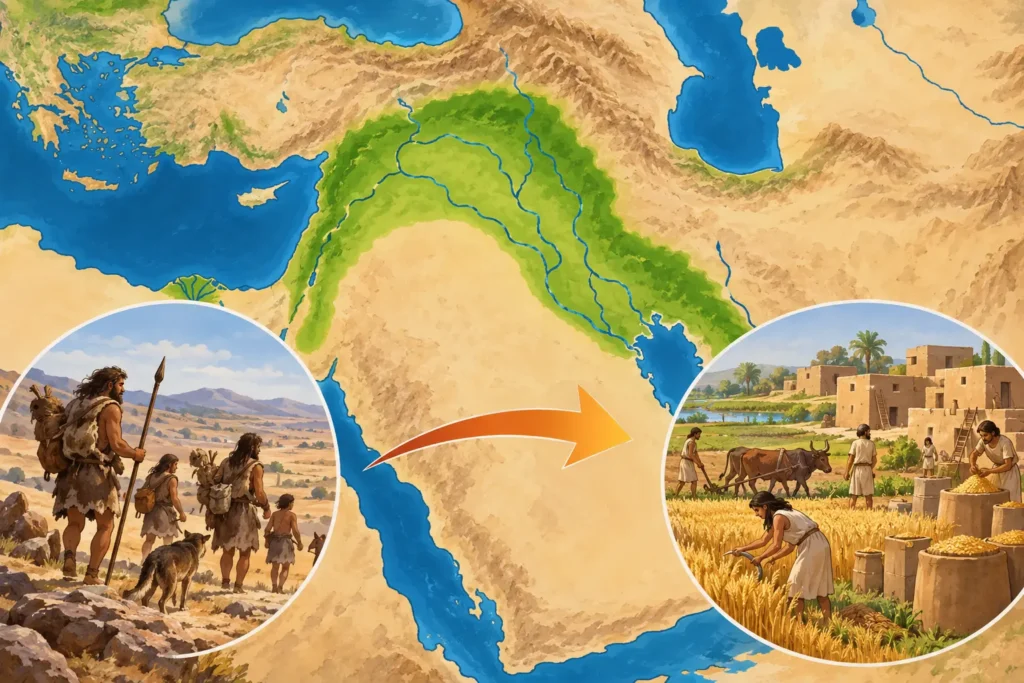
Around 23,000 years ago, at a site now known as Ohalo II, on the shores of the Sea of Galilee in Israel, archaeologists discovered traces of hunter-gatherer communities. Around ancient hearths were the remains of various seeds, nuts, and bones from birds, fish, and small animals.
The people who lived there did not eat three meals a day. They did not even have fixed mealtimes. They ate whenever food was available. On days when hunting was successful, they ate their fill, but on other days, they went hungry. For them, eating was not an activity that followed a schedule. It depended on what nature provided.
Around 10,000 BCE, the emergence of agriculture in the Fertile Crescent of Western Asia transformed human life. For the first time, many communities could produce and store their own food instead of constantly moving around in search of it. Permanent settlements formed, cooking became more elaborate, and meals gradually became more communal. However, eating three meals a day had still not become the norm.
Ancient Egyptians typically ate two meals: a light morning meal of bread and beer, and a more hearty meal later in the day. The ancient Greeks had eating habits somewhat similar to ours today, with a small breakfast, a midday meal, and an evening meal, although not everyone ate all three. Meanwhile, the Romans placed particular importance on their main meal, called cena. During certain periods, eating too frequently was even regarded as a sign of gluttony.
So how did the habit of eating three meals a day actually develop?
One of the earliest large institutions to adopt a structured eating schedule was the British Royal Navy. From the early modern period, meals for sailors were arranged at specific times to fit the routines of life aboard ships. Those performing demanding physical work needed a regular supply of energy, while organizing communal meals also required a clear schedule.
However, the most significant turning point came with the Industrial Revolution, which began in Britain around 1760. Before that, most Europeans worked in agriculture, following rhythms shaped by the seasons and natural daylight. But as factories emerged, millions of people began working fixed shifts. They had to arrive on time, take breaks during their shifts, and finish work according to bells or clocks.
A convenient eating schedule gradually became widespread: breakfast before work, lunch during the break, and dinner after the working day. Three meals a day was not a scientific discovery. It was a way of organizing daily life that suited industrial society.
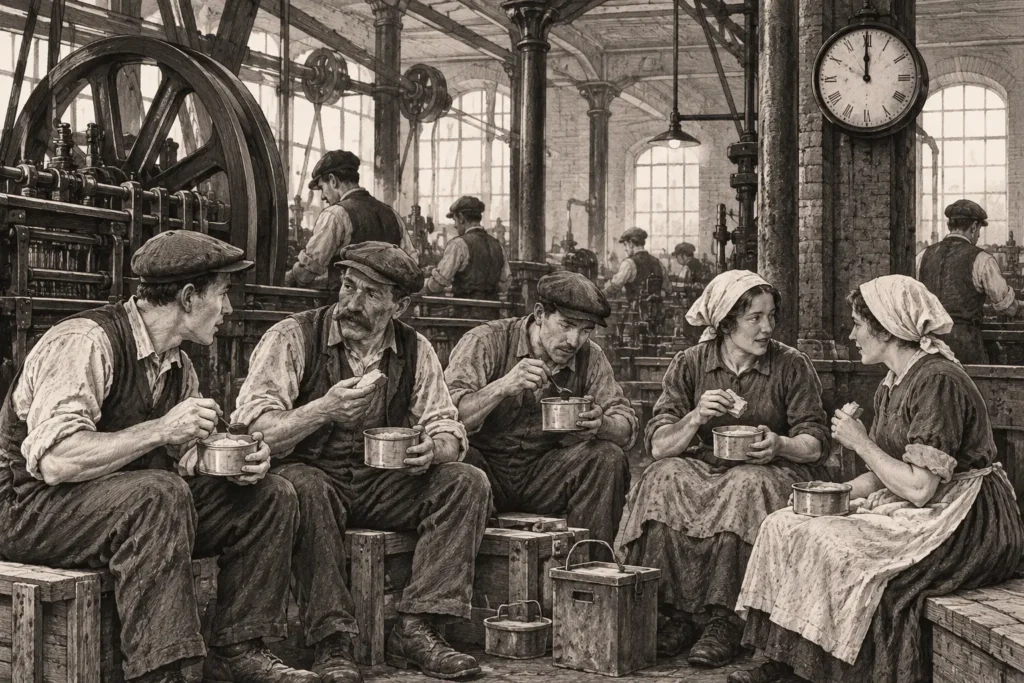
During this process, the roles of individual meals also changed considerably. Previously, the main meal in many European communities was eaten around midday. But as workers spent most of their daylight hours in factories and artificial lighting became increasingly common, the main meal gradually shifted to the evening. Breakfast also became more important for those who had to work for many hours at a time.
In the early 20th century, the food industry further reinforced this habit. One prominent figure was John Harvey Kellogg, who played an important role in the development of cornflakes. During the early decades of the 20th century, cereal companies launched extensive advertising campaigns, helping popularize the message that breakfast was the most important meal of the day. This message was not based solely on nutritional science. It also served a commercial purpose: encouraging consumers to develop the habit of eating breakfast every morning.

After all these historical changes, one important question remains: Is the human body actually designed to eat exactly three times a day?
The answer is not necessarily.
Our bodies operate according to a roughly 24-hour circadian rhythm, which influences hunger, insulin sensitivity, and metabolism. Numerous studies have shown that the body generally processes glucose more efficiently during the day than late at night. Hormones involved in hunger and satiety are also influenced by circadian rhythms and eating habits. When you regularly eat at a particular time, your body can gradually adapt and begin sending hunger signals before that time arrives.
This suggests that the number of meals is not the only factor determining a healthy diet. Two, three, or even four meals a day can all be appropriate, depending on a person’s energy needs, health condition, food quality, and meal timing.
However, the history of three meals a day is not just a story about nutrition or work. For thousands of years, humans have gathered around fires, shared food, and built social relationships. Today, family meals still serve a similar purpose, providing opportunities for people to talk, strengthen their bonds, and show care for one another.
So why do we eat three meals a day? Because sailors needed clear eating schedules. Because factory workers needed predictable breaks. Because industrial society organized life around the clock. Because food companies turned breakfast into a huge commercial market. And because the human body has the ability to adapt to eating habits repeated day after day.
Three meals a day is not a law of nature, but neither is it a completely random habit. It is the result of thousands of years in which culture, religion, labor, commerce, and biology have interacted, gradually shaping the way humans live and eat.
Tonight, you will probably sit down for dinner as usual, just like billions of other people around the world. But now you know that behind this seemingly simple habit lies a historical story spanning thousands of years.
WORD BANK:
biological law /ˌbaɪ.əˈlɑː.dʒɪ.kəl lɑː/ (n): quy luật sinh học
prescribe /prɪˈskraɪb/ [C1] (v): kê đơn, chỉ định
archaeologist /ˌɑːr.kiˈɑː.lə.dʒɪst/ (n): nhà khảo cổ học
hunter-gatherer /ˌhʌn.t̬ɚˈɡæð.ɚ.ɚ/ (n): người săn bắt hái lượm
hearth /hɑːrθ/ (n): bếp lửa, khu vực quanh bếp lửa
remains /rɪˈmeɪnz/ (n): những gì còn sót lại, di tích
eat one’s fill /iːt wʌnz fɪl/ (v): ăn no, ăn thỏa thích
emergence /ɪˈmɝː.dʒəns/ [C1] (n): sự xuất hiện, sự hình thành
fertile /ˈfɝː.t̬əl/ [C1] (adj): màu mỡ, phì nhiêu
crescent /ˈkres.ənt/ (n): hình lưỡi liềm
permanent /ˈpɝː.mə.nənt/ [B2] (adj): lâu dài, vĩnh viễn
settlement /ˈset̬.əl.mənt/ [B2] (n): khu định cư
elaborate /ɪˈlæb.ɚ.ət/ [C2] (adj): cầu kỳ, công phu, phức tạp
communal /kəˈmjuː.nəl/ (adj): chung, thuộc cộng đồng
norm /nɔːrm/ [B2] (n): chuẩn mực, thông lệ
hearty /ˈhɑːr.t̬i/ (adj): thịnh soạn, no nê
gluttony /ˈɡlʌt̬.ən.i/ (n): thói tham ăn, sự ăn uống quá độ
adopt /əˈdɑːpt/ [B2] (v): áp dụng, tiếp nhận
sailor /ˈseɪ.lɚ/ [B1] (n): thủy thủ
routine /ruːˈtiːn/ [B1] (n): thói quen, lịch trình thường lệ
aboard /əˈbɔːrd/ [C1] (adv/prep): trên tàu, trên phương tiện vận tải
turning point /ˈtɝː.nɪŋ pɔɪnt/ (n): bước ngoặt
the Industrial Revolution /ði ɪnˌdʌs.tri.əl ˌrev.əˈluː.ʃən/ (n): cuộc Cách mạng Công nghiệp
rhythm /ˈrɪð.əm/ [B2] (n): nhịp điệu, nhịp sinh hoạt
fixed shift /fɪkst ʃɪft/ (n): ca làm việc cố định
artificial lighting /ˌɑːr.t̬əˈfɪʃ.əl ˈlaɪ.t̬ɪŋ/ (n): ánh sáng nhân tạo, hệ thống chiếu sáng nhân tạo
prominent /ˈprɑː.mə.nənt/ [C1] (adj): nổi bật, có ảnh hưởng lớn
figure /ˈfɪɡ.jɚ/ [B2] (n): nhân vật
cornflake /ˈkɔːrn.fleɪk/ (n): miếng ngũ cốc làm từ ngô
cereal /ˈsɪr.i.əl/ [B1] (n): ngũ cốc, thực phẩm ngũ cốc ăn sáng
popularize /ˈpɑː.pjə.lə.raɪz/ (v): phổ biến, làm cho trở nên phổ biến
solely /ˈsoʊl.li/ [C1] (adv): chỉ, duy nhất
nutritional science /nuːˈtrɪʃ.ən.əl ˈsaɪ.əns/ (n): khoa học dinh dưỡng
not necessarily /nɑːt ˌnes.əˈser.ə.li/ (adv): không nhất thiết
circadian rhythm /sɝːˈkeɪ.di.ən ˈrɪð.əm/ (n): nhịp sinh học 24 giờ
insulin sensitivity /ˈɪn.sə.lɪn ˌsen.səˈtɪv.ə.t̬i/ (n): độ nhạy insulin, khả năng đáp ứng với insulin
metabolism /məˈtæb.ə.lɪ.zəm/ (n): quá trình trao đổi chất
adapt /əˈdæpt/ [B2] (v): thích nghi, điều chỉnh cho phù hợp
appropriate /əˈproʊ.pri.ət/ [B2] (adj): phù hợp, thích hợp
ỦNG HỘ READ TO LEAD!
Chào bạn! Có thể bạn chưa biết, Read to Lead là một trang giáo dục phi lợi nhuận với mục đích góp phần phát triển cộng đồng người học tiếng Anh tại Việt Nam. Chúng tôi không yêu cầu người đọc phải trả bất kỳ chi phí nào để sử dụng các sản phẩm của mình để mọi người đều có cơ hội học tập tốt hơn. Tuy nhiên, nếu bạn có thể, chúng tôi mong nhận được sự hỗ trợ tài chính từ bạn để duy trì hoạt động của trang và phát triển các sản phẩm mới.
Bạn có thể ủng hộ chúng tôi qua 1 trong 2 cách dưới đây.
– Cách 1: Chuyển tiền qua tài khoản Momo.
Số điện thoại 0947.886.865 (Chủ tài khoản: Nguyễn Tiến Trung)
Nội dung chuyển tiền: Ủng hộ Read to Lead
hoặc
– Cách 2: Chuyển tiền qua tài khoản ngân hàng.
Ngân hàng VIB chi nhánh Hải Phòng
Số tài khoản: 012704060048394 (Chủ tài khoản: Nguyễn Tiến Trung)
Nội dung chuyển tiền: Ủng hộ Read to Lead
Lớp luyện thi IELTS online
Bạn đang có nhu cầu thi chứng chỉ IELTS cho đầu vào đại học, đi du học, xin việc hay xin cư trú và đang phân vân chưa biết học ở đâu?
Nếu bạn đang tìm kiếm dịch vụ luyện thi IELTS online với giáo viên uy tín và chất lượng, cũng như học phí phải chăng, thì lớp học online của thầy Trung (Admin và dịch giả chính của Read to Lead) có thể là một lựa chọn phù hợp dành cho bạn.
Hãy liên hệ (nhắn tin) tới trang Facebook cá nhân của mình (https://www.facebook.com/nguyen.trung.509) để tìm hiểu về lớp học và được tư vấn cũng như được học thử nha!


