


[Reading level: B2 – Upper Intermediate]
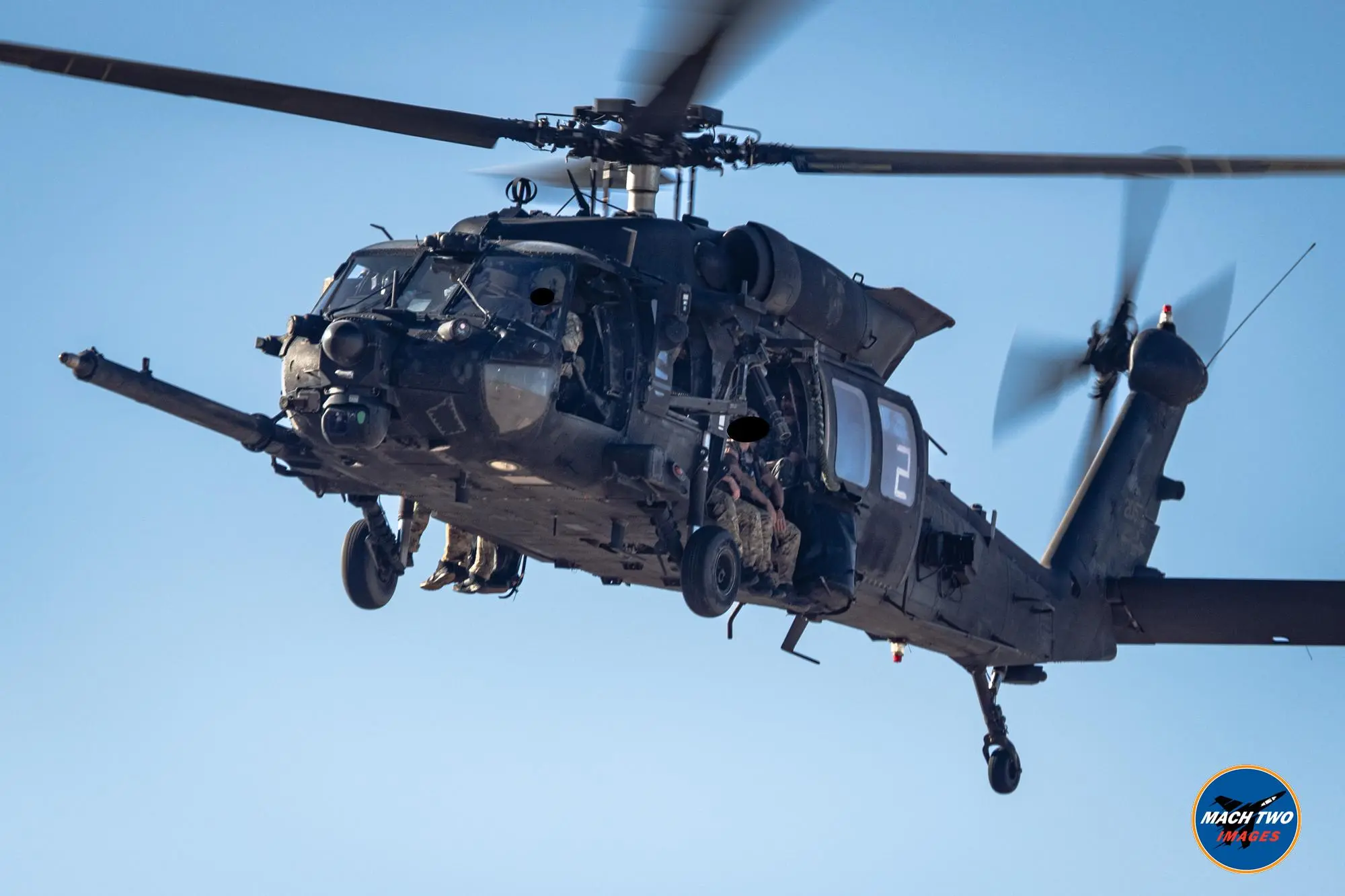
If you’ve ever watched war or military movies, you may have noticed that in many scenes, military helicopters often fly with their doors wide open. This isn’t done just to “look cool” or for cinematic effect — there are actually many practical technical and tactical reasons behind it.
Military helicopters began to be widely used during World War II, but their role truly became essential during the Korean War (1950–1953) and especially the Vietnam War (1955–1975). During this period, models like the Bell UH-1 “Huey” became battlefield icons thanks to their high mobility — capable of carrying troops, weapons, and evacuating the wounded from areas where fixed-wing aircraft could not land. Since then, helicopters have become an indispensable part of most armed forces around the world.
However, during their use, one major problem arose — soldiers often suffered from heat exhaustion and sunstroke inside the helicopter cabin. Because the aircraft’s body is made of metal and often operates in tropical or desert environments, the temperature inside can become extremely high, especially when carrying many soldiers and heavy equipment. The trapped air made soldiers dehydrated, exhausted, and in some cases even faint during flight.
For that reason, flying with the doors open was not only a tactical decision but also a practical solution for ventilation and cooling. The open doors allow air to circulate freely, reduce heat, and make the cabin more breathable — a crucial factor during long flights or operations in harsh climates such as Southeast Asia, the Middle East, or Africa. And it turns out that this seemingly temporary measure brought many benefits.
Beyond improving ventilation, open doors also enhance mobility and combat readiness. Soldiers can get in and out quickly, gunners have a wider field of vision, and it becomes easier to perform missions such as supply drops, rescue operations, or fast-rope insertions. In fact, some modern military helicopters are even designed without side doors entirely, reducing weight, expanding visibility, and optimizing space for troops and gunners to move and operate efficiently.
Of course, many people wonder: don’t soldiers risk falling out of the helicopter? The answer is no, because there are strict safety measures in place. When flying in open cabins, soldiers are secured with safety tethers or harnesses attached directly to the helicopter’s frame. During missions, they wear tactical vests equipped with carabiners to clip into anchor points. Gunners and observers are seated on rotating chairs with their own safety belts, allowing free movement while ensuring maximum protection. Furthermore, pilots and crew strictly follow pre-flight safety checks, ensuring that no personnel, weapons, or equipment can fall out during flight.
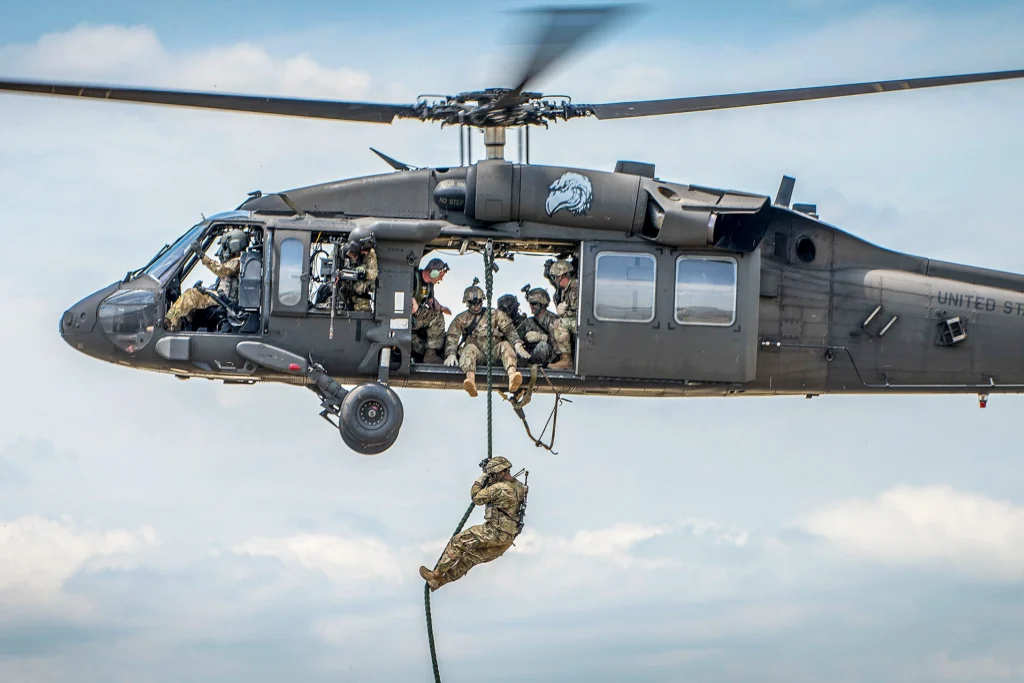
Therefore, the image of military helicopters flying with open doors is not just a familiar “action” scene in movies — it represents the flexibility, mobility, and adaptability of modern armed forces.
WORD BANK:
cinematic effect /ˌsɪn.əˈmæt̬.ɪk ɪˈfekt/ (n): hiệu ứng điện ảnh
tactical /ˈtæk.tɪ.kəl/ [C1] (adj): mang tính chiến thuật
battlefield /ˈbæt̬.əl.fiːld/ (n): chiến trường
icon /ˈaɪ.kɑːn/ [C1] (n): biểu tượng
mobility /moʊˈbɪl.ə.t̬i/ [C1] (n): tính cơ động
troop /truːp/ [B2] (n): binh lính, quân đội
evacuate /ɪˈvæk.ju.eɪt/ [B2] (v): sơ tán
wounded /ˈwuːn.dɪd/ [C1] (adj): bị thương (do vũ khí)
fixed-wing aircraft /ˌfɪkst.wɪŋ ˈer.kræft/ (n): máy bay cánh cố định
indispensable /ˌɪn.dɪˈspen.sə.bəl/ [C1] (adj): không thể thiếu
arise /əˈraɪz/ [C1] (v): phát sinh, nảy sinh
heat exhaustion /ˈhiːt ɪɡˌzɑːs.tʃən/ (n): kiệt sức vì nóng
sunstroke /ˈsʌn.stroʊk/ (n): say nắng
cabin /ˈkæb.ɪn/ [B2] (n): khoang (máy bay, tàu, xe)
tropical /ˈtrɑː.pɪ.kəl/ [B2] (adj): nhiệt đới
trap /træp/ [B2] (v): giữ, mắc kẹt
dehydrate /ˌdiː.haɪˈdreɪt/ [C1] (v): mất nước
exhausted /ɪɡˈzɑː.stɪd/ [B1] (adj): kiệt sức
faint /feɪnt/ [B2] (v): ngất xỉu
ventilation /ˌven.t̬əlˈeɪ.ʃən/ [C1] (n): thông gió
circulate /ˈsɝː.kjə.leɪt/ [C1] (v): lưu thông, tuần hoàn
breathable /ˈbriː.ðə.bəl/ (adj): thoáng khí, có thể hít thở được
harsh climate /hɑːrʃ ˈklaɪ.mət/ (n): khí hậu khắc nghiệt
it turns out /ɪt tɝːnz aʊt/ (phr): hóa ra là
seemingly /ˈsiː.mɪŋ.li/ [C1] (adv): có vẻ, dường như
temporary /ˈtem.pə.rer.i/ [B2] (adj): tạm thời
combat readiness /ˈkɑːm.bæt ˈred.i.nəs/ (n): khả năng sẵn sàng chiến đấu
supply drop /səˈplaɪ drɑːp/ (n): thả tiếp tế
rescue operation /ˈres.kjuː ˌɑː.pəˈreɪ.ʃən/ (n): chiến dịch cứu hộ
fast-rope insertion /fæst roʊp ɪnˈsɝː.ʃən/ (n): đổ bộ bằng dây
optimize sth /ˈɑːp.tə.maɪz/ [C1] (v): tối ưu hóa
strict /strɪkt/ [B2] (adj): nghiêm ngặt
safety measures /ˈseɪf.ti ˈmeʒ.ɚz/ (n): biện pháp an toàn
in place /ɪn pleɪs/ (phr): đã được thiết lập, sẵn sàng
secure sth /sɪˈkjʊr/ (v): cố định, bảo đảm
tether /ˈteð.ɚ/ (n): dây buộc
harness /ˈhɑːr.nəs/ (n): dây an toàn, đai bảo hộ
frame /freɪm/ (n): khung
carabiner /ˌker.əˈbiː.nɚ/ (n): móc khóa leo núi
clip into sth /klɪp ˈɪn.tuː/ (v): móc/ghim vào cái gì
anchor point /ˈæŋ.kɚ pɔɪnt/ (n): điểm neo cố định
rotating chair /roʊˈteɪ.t̬ɪŋ tʃer/ (n): ghế xoay
safety belt /ˈseɪf.ti belt/ (n): dây an toàn
crew /kruː/ [B2] (n): phi hành đoàn, đội
personnel /ˌpɝː.səˈnel/ [C1] (n): nhân sự, quân nhân
flexibility /ˌflek.səˈbɪl.ə.t̬i/ [B2] (n): tính linh hoạt
adaptability /əˌdæp.təˈbɪl.ə.t̬i/ [C1] (n): khả năng thích ứng
ỦNG HỘ READ TO LEAD!
Chào bạn! Có thể bạn chưa biết, Read to Lead là một trang giáo dục phi lợi nhuận với mục đích góp phần phát triển cộng đồng người học tiếng Anh tại Việt Nam. Chúng tôi không yêu cầu người đọc phải trả bất kỳ chi phí nào để sử dụng các sản phẩm của mình để mọi người đều có cơ hội học tập tốt hơn. Tuy nhiên, nếu bạn có thể, chúng tôi mong nhận được sự hỗ trợ tài chính từ bạn để duy trì hoạt động của trang và phát triển các sản phẩm mới.
Bạn có thể ủng hộ chúng tôi qua 1 trong 2 cách dưới đây.
– Cách 1: Chuyển tiền qua tài khoản Momo.
Số điện thoại 0947.886.865 (Chủ tài khoản: Nguyễn Tiến Trung)
Nội dung chuyển tiền: Ủng hộ Read to Lead
hoặc
– Cách 2: Chuyển tiền qua tài khoản ngân hàng.
Ngân hàng VIB chi nhánh Hải Phòng
Số tài khoản: 012704060048394 (Chủ tài khoản: Nguyễn Tiến Trung)
Nội dung chuyển tiền: Ủng hộ Read to Lead
Lớp luyện thi IELTS online
Bạn đang có nhu cầu thi chứng chỉ IELTS cho đầu vào đại học, đi du học, xin việc hay xin cư trú và đang phân vân chưa biết học ở đâu?
Nếu bạn đang tìm kiếm dịch vụ luyện thi IELTS online với giáo viên uy tín và chất lượng, cũng như học phí phải chăng, thì thầy Trung và Cô Thủy (Admin và dịch giả chính của Read to Lead) có thể là một lựa chọn phù hợp dành cho bạn.
Hãy liên hệ (nhắn tin) tới trang Facebook cá nhân của mình (https://www.facebook.com/nguyen.trung.509) để tìm hiểu về lớp học và được tư vấn cũng như được học thử nha!


