


[Reading level: B2 – Upper Intermediate]
There was a time, before the world became filled with touchscreen smartphones that all looked more or less the same, when mobile phones came in a colorful and creative variety of designs. Some were as small as TV remote controls, while others could slide sideways or vertically, rotate their screens, or even come with QWERTY keyboards.
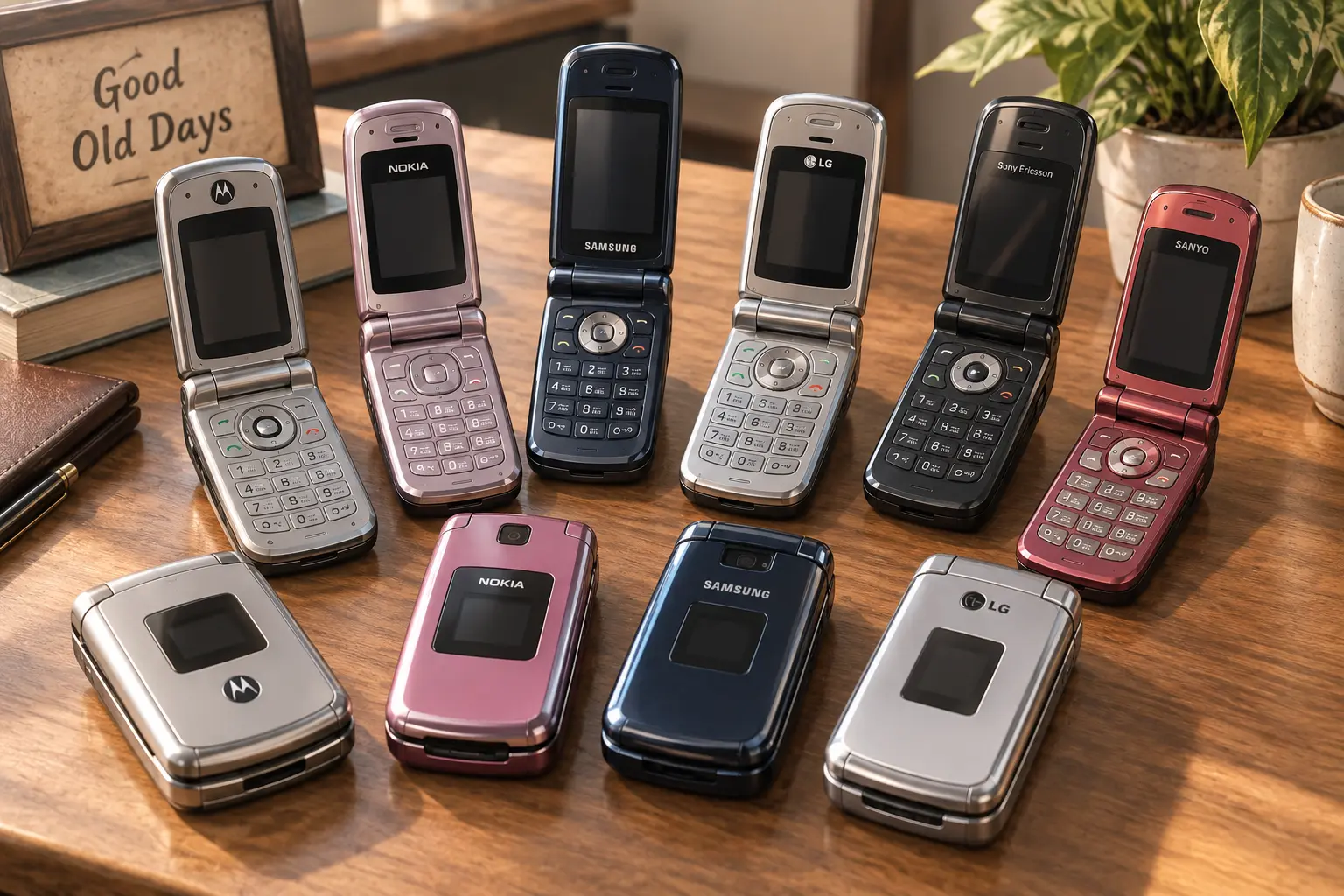
But if we had to choose one of the most iconic designs of the late 1990s and the 2000s, the flip phone would certainly be among the most noticeable.
Those who once used this type of phone probably still remember the special feeling: the phone rang, you took it out of your pocket, flipped it open with a “click,” and held it to your ear. When the conversation was over, there was no need to look for the end-call button. You simply flipped the phone shut.
It was a seemingly simple action, yet it fascinated hundreds of millions of people.
A solution to a simple problem
To understand why flip phones appeared, we need to go back to a time when mobile phones were still relatively basic.
A phone at the time had to fit many components into a single body: the earpiece at the top, the screen in the middle, the numeric keypad below, and the microphone near the bottom. Inside, there also had to be room for a circuit board, battery, and antenna.
The structure of the human face also created a fairly fixed requirement: the earpiece needed to be close to the ear, while the microphone had to be relatively close to the mouth. The keypad could not be too small either, because users still needed to press the buttons with their fingers. As a result, many bar-style phones at the time were quite long.
This created a paradox: when using a phone, people wanted it to be long enough; but when putting it in their pocket, they wanted it to be as short as possible.
Flip phones solved this problem in a very simple way: when the phone was not in use, it could simply be folded in half. A phone could be around 14–15 cm long when opened, but only about half that length when closed.
More compact and better protected
The flip-phone design had another major advantage: the body of the phone itself became a protective cover for the screen and keypad.
Phones at the time did not have large screens made of toughened glass like today’s smartphones. If a bar-style phone was placed in a pocket together with keys or other hard objects, its screen could easily become scratched.
Users also often accidentally pressed buttons while carrying their phones in their pockets. If they forgot to lock the keypad, the phone could open menus, enter numbers, or even call someone by accident.
Flip phones solved both problems. When the phone was closed, the screen and keypad were safely covered. Answering and ending calls also became very natural: flip it open to answer and flip it shut to end the call.
Not just convenient, but also fashionable
However, convenience alone was not enough to turn flip phones into an icon. Another reason so many people loved them was the experience of using them.

In the 2000s, scenes of someone taking a phone out of their pocket, flipping it open with one hand, talking, and then snapping it shut often appeared in movies. A simple action suddenly became part of a person’s style.
Many people even practiced opening their phones with their thumbs or with a flick of the wrist. It may sound a little funny today, but at the time, a phone was not merely a communication device. It was also an accessory that expressed someone’s personality.
Motorola Razr V3 – An icon of its time
One of the models that best represented the golden age of flip phones was the Motorola Razr V3.
The phone stood out because of its remarkably thin body compared with many other phones of the time. The name “Razr,” inspired by the word razor, also suggested its thin and sharp design.
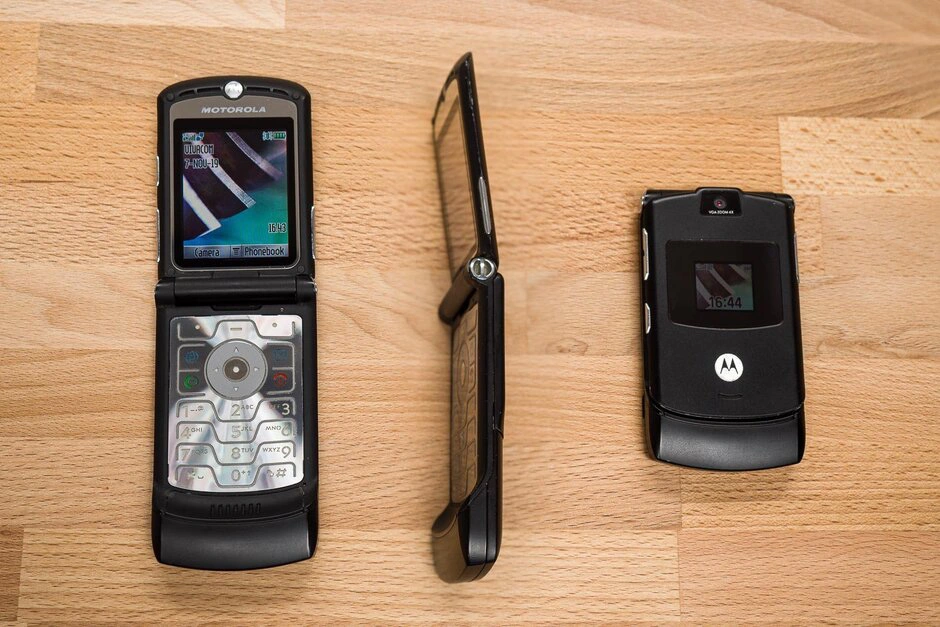
Its body featured many metal components; its keypad had a distinctive design; and it was available in a variety of colors. The Razr V3 also appeared in the hands of many celebrities, helping transform the mobile phone from a communication device into a fashion accessory.
Flip phones also gradually came with small external screens. These allowed users to check the time, battery level, messages, or the identity of an incoming caller without opening the phone.
Why did flip phones disappear?
The dominance of flip phones began to come to an end when large touchscreens became the central feature of mobile phones.
The flip-phone design worked extremely well when phones were mainly used for calling and texting: the upper half contained the screen, while the lower half contained the keypad.
But when people began using their phones to read the news, browse the web, view photos and videos, use social media and maps, or play games, the physical keypad started taking up too much valuable space.
The iPhone, followed by Android smartphones, was a game changer. Users gradually came to prefer one large screen, with a virtual keyboard appearing only when needed.
Physical keypads disappeared, and many other buttons disappeared with them. Mobile phones gradually took on the familiar form we know today: a rectangular sheet of glass.
Within just a few years, flip phones that had once been extremely fashionable suddenly became symbols of a bygone era.
WORD BANK:
filled with sth /fɪld wɪð/ (adj): chứa đầy, tràn ngập cái gì
touchscreen /ˈtʌtʃ.skriːn/ (n): màn hình cảm ứng
come in a variety of /kʌm ɪn ə vəˈraɪ.ə.t̬i əv/ (phr): có nhiều loại, kiểu, hình thức khác nhau
remote control /rɪˌmoʊt kənˈtroʊl/ (n): điều khiển từ xa
slide sideways /slaɪd ˈsaɪd.weɪz/ (v): trượt sang ngang
vertically /ˈvɝː.t̬ə.kəl.i/ (adv): theo chiều dọc
rotate /ˈroʊ.teɪt/ [B2] (v): xoay, quay
flip phone /ˈflɪp ˌfoʊn/ (n): điện thoại nắp gập
flip /flɪp/ [C1] (v): lật, bật, gập nhanh
fascinate sb /ˈfæs.ən.eɪt/ [B2] (v): làm ai say mê, cuốn hút
relatively /ˈrel.ə.t̬ɪv.li/ [B2] (adv): tương đối
fit sth into sth /fɪt ˈɪn.tuː/ (v): đặt, lắp, nhét cái gì vừa vào cái gì
component /kəmˈpoʊ.nənt/ [B2] (n): bộ phận, thành phần
earpiece /ˈɪr.piːs/ (n): bộ phận nghe, tai nghe
numeric keypad /nuːˈmer.ɪk ˈkiː.pæd/ (n): bàn phím số
circuit board /ˈsɝː.kɪt ˌbɔːrd/ (n): bảng mạch
antenna /ænˈten.ə/ (n): ăng-ten
fairly /ˈfer.li/ [B1] (adv): khá, tương đối
bar-style /ˈbɑːr ˌstaɪl/ (adj): dạng thanh, kiểu dáng thanh
paradox /ˈper.ə.dɑːks/ [C1] (n): nghịch lý
fold /foʊld/ [B1] (v): gập, gấp
protective cover /prəˈtek.tɪv ˈkʌv.ɚ/ (n): lớp/vỏ bảo vệ
toughened glass /ˈtʌf.ənd ˈɡlæs/ (n): kính cường lực
scratched /skrætʃt/ (adj): bị trầy xước
accidentally /ˌæk.səˈden.t̬əl.i/ [B2] (adv): vô tình, tình cờ
by accident /baɪ ˈæk.sə.dənt/ [B1] (adv): vô tình, tình cờ
icon /ˈaɪ.kɑːn/ [B2] (n): biểu tượng
snap sth shut /snæp ʃʌt/ (v): đóng, gập cái gì lại nhanh với tiếng “tách”
thumb /θʌm/ [B1] (n): ngón tay cái
flick /flɪk/ (v): bật, gạt hoặc búng nhanh
wrist /rɪst/ [B1] (n): cổ tay
merely /ˈmɪr.li/ [C1] (adv): chỉ, đơn thuần
accessory /əkˈses.ɚ.i/ [B2] (n): phụ kiện
the golden age /ðə ˈɡoʊl.dən eɪdʒ/ (n): thời kỳ hoàng kim
stand out /stænd aʊt/ [B2] (v): nổi bật
razor /ˈreɪ.zɚ/ (n): dao cạo
celebrity /səˈleb.rə.t̬i/ [B1] (n): người nổi tiếng
identity /aɪˈden.t̬ə.t̬i/ [B2] (n): bản sắc, danh tính
dominance /ˈdɑː.mə.nəns/ [C1] (n): sự thống trị, vị thế áp đảo
come to an end /kʌm tuː ən end/ (phr): kết thúc, đi đến hồi kết
browse /braʊz/ [B2] (v): duyệt, lướt (Internet, trang web)
take up sth /teɪk ʌp/ [B2] (v): chiếm (không gian, thời gian)
a game changer /ə ˈɡeɪm ˌtʃeɪn.dʒɚ/ (n): yếu tố tạo ra thay đổi lớn, thứ làm thay đổi cuộc chơi
virtual /ˈvɝː.tʃu.əl/ [B2] (adj): ảo
take on a/the form /teɪk ɑːn ə ðə fɔːrm/ (phr): mang, có hình thức/hình dạng
rectangular /rekˈtæŋ.ɡjə.lɚ/ (adj): hình chữ nhật
a bygone era /ə ˈbaɪ.ɡɑːn ˈer.ə/ (n): một thời đại đã qua
ỦNG HỘ READ TO LEAD!
Chào bạn! Có thể bạn chưa biết, Read to Lead là một trang giáo dục phi lợi nhuận với mục đích góp phần phát triển cộng đồng người học tiếng Anh tại Việt Nam. Chúng tôi không yêu cầu người đọc phải trả bất kỳ chi phí nào để sử dụng các sản phẩm của mình để mọi người đều có cơ hội học tập tốt hơn. Tuy nhiên, nếu bạn có thể, chúng tôi mong nhận được sự hỗ trợ tài chính từ bạn để duy trì hoạt động của trang và phát triển các sản phẩm mới.
Bạn có thể ủng hộ chúng tôi qua 1 trong 2 cách dưới đây.
– Cách 1: Chuyển tiền qua tài khoản Momo.
Số điện thoại 0947.886.865 (Chủ tài khoản: Nguyễn Tiến Trung)
Nội dung chuyển tiền: Ủng hộ Read to Lead
hoặc
– Cách 2: Chuyển tiền qua tài khoản ngân hàng.
Ngân hàng VIB chi nhánh Hải Phòng
Số tài khoản: 012704060048394 (Chủ tài khoản: Nguyễn Tiến Trung)
Nội dung chuyển tiền: Ủng hộ Read to Lead
Lớp luyện thi IELTS online
Bạn đang có nhu cầu thi chứng chỉ IELTS cho đầu vào đại học, đi du học, xin việc hay xin cư trú và đang phân vân chưa biết học ở đâu?
Nếu bạn đang tìm kiếm dịch vụ luyện thi IELTS online với giáo viên uy tín và chất lượng, cũng như học phí phải chăng, thì lớp học online của thầy Trung (Admin và dịch giả chính của Read to Lead) có thể là một lựa chọn phù hợp dành cho bạn.
Hãy liên hệ (nhắn tin) tới trang Facebook cá nhân của mình (https://www.facebook.com/nguyen.trung.509) để tìm hiểu về lớp học và được tư vấn cũng như được học thử nha!


