


[Reading level: C1 – Advanced]
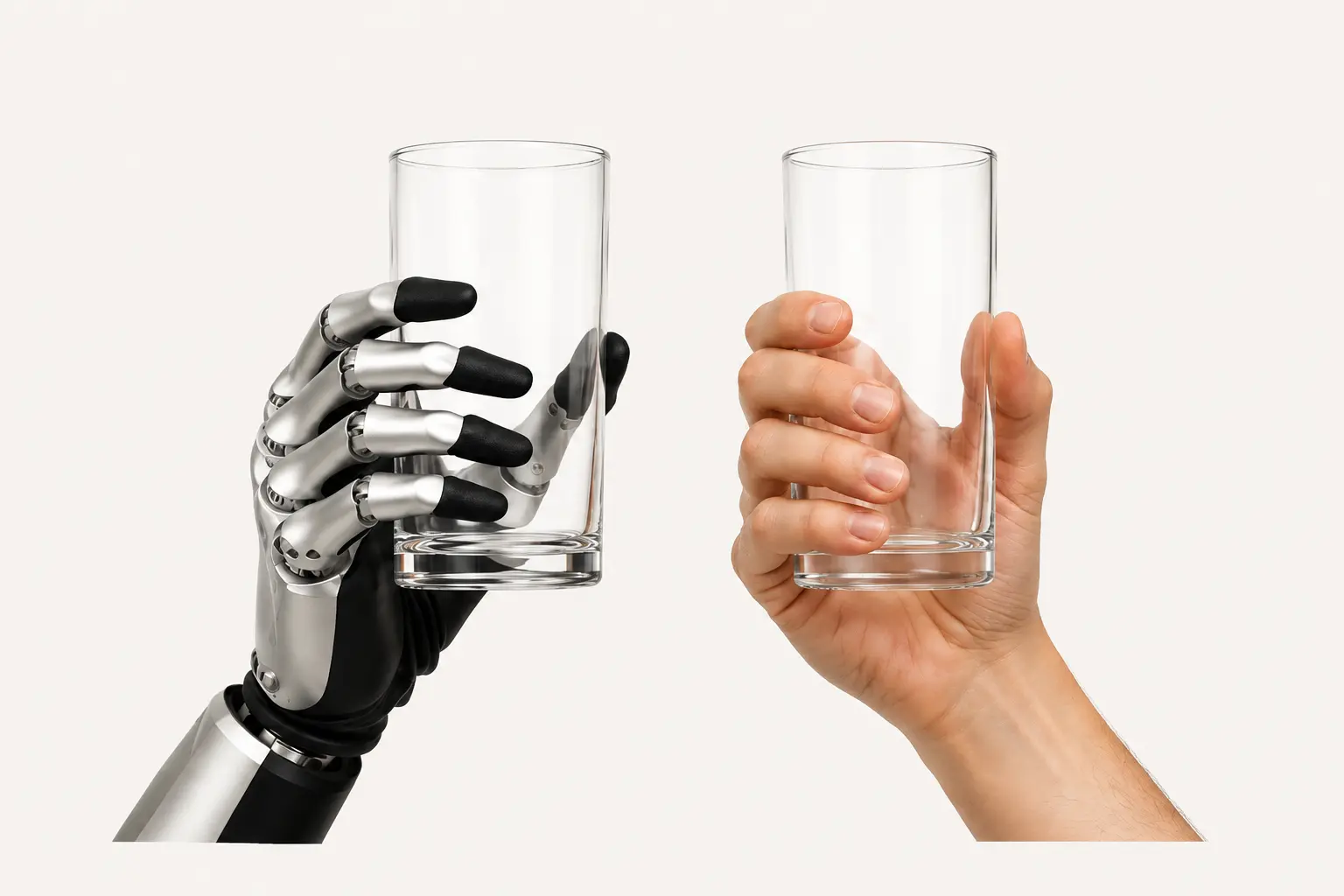
Humanoid robots are advancing at an unprecedented pace. In just a few years, they have evolved from machines that could only walk slowly into robots capable of running, climbing stairs, maintaining their balance after strong impacts, carrying heavy loads, folding clothes, and working in factories. Tesla, Figure AI, Boston Dynamics, Agility Robotics, and many Chinese technology companies are all racing to bring humanoid robots into everyday life.
Looking at these achievements, many people assume that the greatest challenge is teaching robots to walk like humans. However, engineers in the field tend to give a different answer: the hardest part is building a pair of hands.
During Tesla’s latest earnings call, Elon Musk spent considerable time talking about this very issue.
“The human hand is a miracle of creation. The more we study the human hand, the more we realize just how extraordinary it is. It’s not simply about the symmetry created by the thumb. The details of how it works are astonishingly sophisticated. The closer you look, the more amazed you become. Optimus will have human-level dexterity—and then superhuman capabilities.”
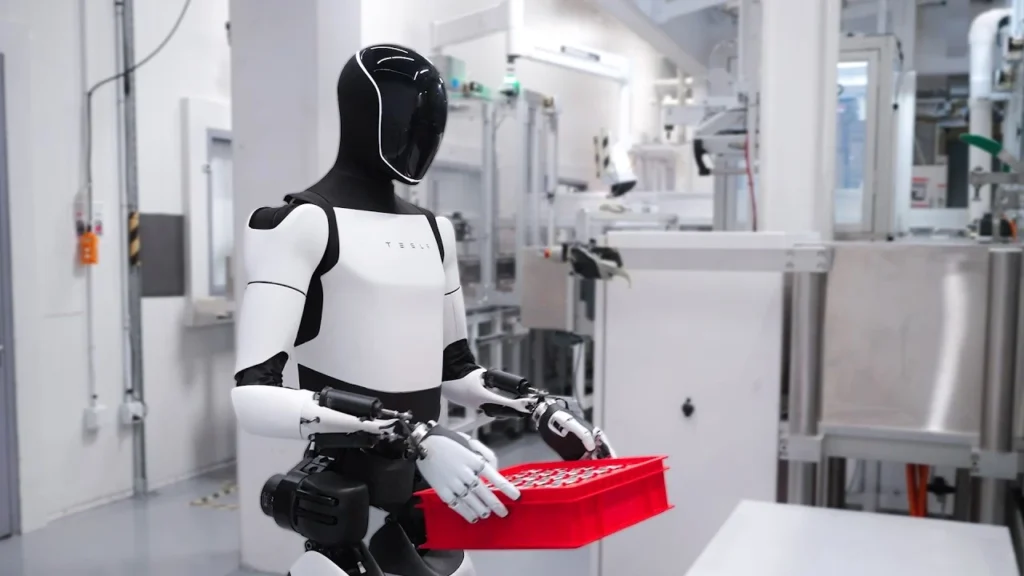
According to Musk, the hands and forearms are by far the most difficult parts of developing the Optimus robot.
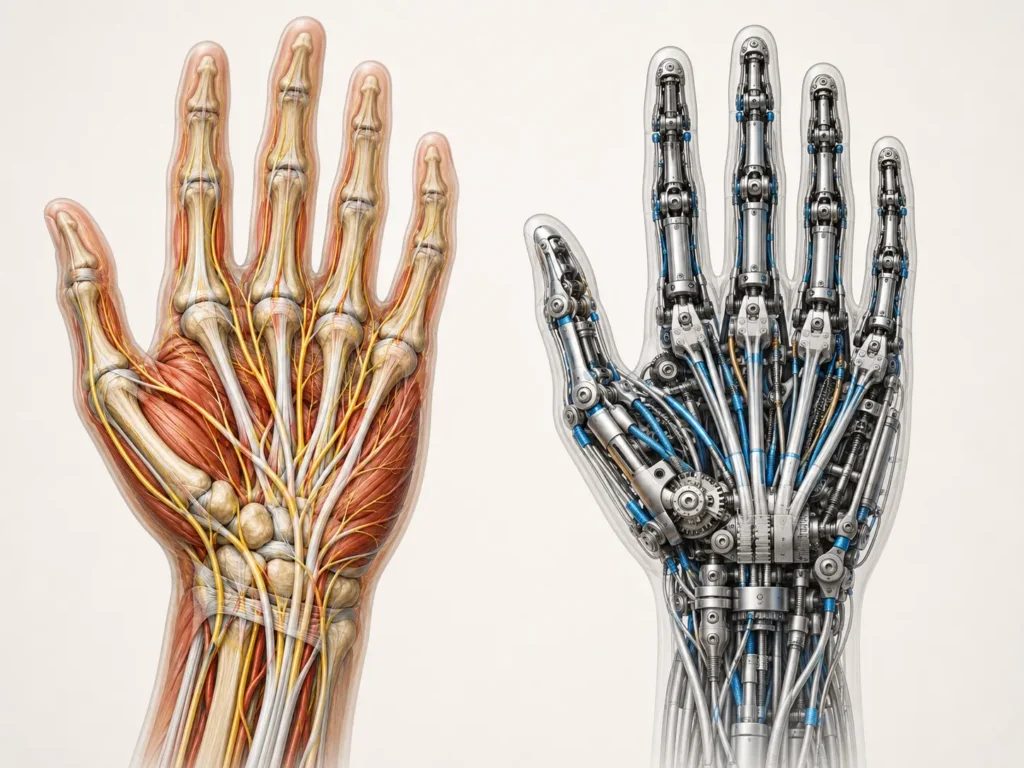
This is not surprising when we look at the structure of the human hand. Although each hand is only about 20 centimeters long, it contains 27 bones, 29 joints, more than 30 muscles, and an extraordinarily complex network of tendons and nerves. Most importantly, the thumb can oppose the other four fingers, giving humans a gripping ability that very few animals possess.
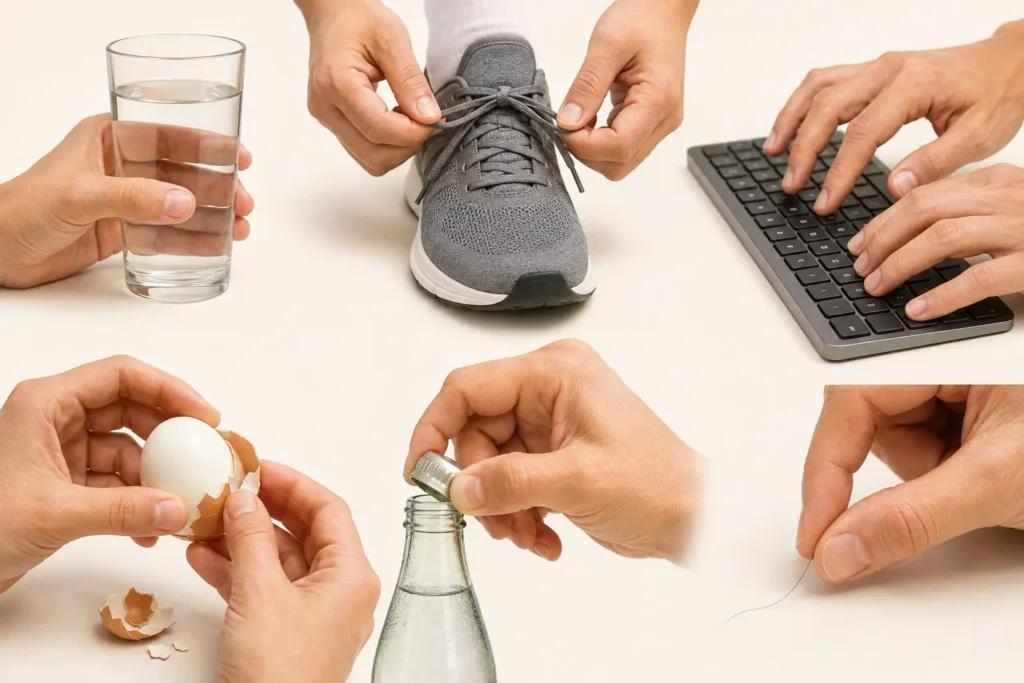
Humans use their hands so naturally that we rarely appreciate just how complex they are. Within only a few minutes, we can hold a glass cup, tie our shoelaces, type on a keyboard, peel an egg, unscrew a bottle cap, or pick up a single strand of hair from a table. Every object differs in shape, weight, and stiffness, yet our hands automatically adjust their grip with almost no conscious thought.
For robots, however, each of these actions presents an entirely different engineering problem. Dozens of tiny motors must fit inside an extremely limited space while remaining powerful enough, precise enough, and durable enough. Designing the transmission mechanism alone is already a major challenge.
The difficulty does not end there—it also lies in touch. Human fingertips contain thousands of tactile receptors that can detect pressure, temperature, texture, and slippage almost instantly. When holding an egg, we instinctively know exactly how gently to squeeze it so that it neither breaks nor slips from our hands. To enable a robot to do the same, engineers must integrate hundreds of tactile sensors together with artificial intelligence systems capable of processing enormous amounts of data in real time.
The real world is also far more complicated than a factory environment. Industrial robots perform efficiently because every component is identical and always located in exactly the same position. But in everyday life, no two shirts wrinkle in exactly the same way, no two bananas have exactly the same curve, and no two plastic bags have exactly the same shape. Robots must constantly observe their surroundings, predict contact points, and adjust their gripping force for every different object. This remains one of the most difficult challenges in modern robotics.
For this reason, although robots and artificial intelligence are expected to replace many repetitive jobs in the future, there are still quite a few professions that do not need to worry in the near term. These are jobs that require the dexterity of human hands combined with human judgment.
Surgeons and dentists must perform procedures with millimeter-level precision. Electricians, maintenance technicians, and auto mechanics constantly face situations that cannot be programmed in advance. Professional chefs rely on both vision and touch to understand food. Tailors, hairstylists, and artisans who craft jewelry, watches, or handmade products all depend on delicate hand movements that robots today still cannot fully replicate. Even caring for patients or elderly people requires gentleness, flexibility, and the ability to adapt to unexpected situations—qualities that machines are still far from achieving.
This does not mean that these professions will never be replaced by robots. Technology will undoubtedly continue to advance and become an increasingly powerful tool for assisting human workers. However, before robots can truly do everything humans can, they must overcome their greatest challenge: developing hands that are intelligent and dexterous enough to interact with the real world.
Perhaps that is why Elon Musk called the human hand “a miracle of creation.” Robots may soon surpass humans in strength, speed, and computational ability, but recreating the extraordinary sophistication of the human hand—the result of millions of years of evolution—remains a goal that the entire robotics industry continues to pursue relentlessly.
Source: Business Insider
WORD BANK:
humanoid robot /ˈhjuː.mə.nɔɪd ˈroʊ.bɑːt/ (n): robot hình người
at a(n) … pace /æt ə … peɪs/ (phr): với tốc độ…
unprecedented /ʌnˈpres.ə.den.t̬ɪd/ [C2] (adj): chưa từng có
evolve /ɪˈvɑːlv/ [B2] (v): tiến hóa; phát triển dần
evolution /ˌev.əˈluː.ʃən/ [B2] (n): sự tiến hóa; quá trình phát triển
fold /foʊld/ [B1] (n): lần, gấp (dùng để chỉ mức tăng)
earnings call /ˈɝː.nɪŋz kɑːl/ (n): cuộc họp công bố và thảo luận kết quả kinh doanh
miracle /ˈmɪr.ə.kəl/ [B2] (n): điều kỳ diệu
extraordinary /ɪkˈstrɔːr.dən.er.i/ [B2] (adj): phi thường
symmetry /ˈsɪm.ə.tri/ (n): sự đối xứng
thumb /θʌm/ [B1] (n): ngón tay cái
astonishingly /əˈstɑː.nɪ.ʃɪŋ.li/ (adv): một cách đáng kinh ngạc
sophisticated /səˈfɪs.tə.keɪ.t̬ɪd/ [B2] (adj): tinh vi; phức tạp
dexterity /dekˈster.ə.t̬i/ (n): sự khéo léo
dexterous /ˈdek.strəs/ (adj): khéo léo
forearm /ˈfɔːr.ɑːrm/ (n): cẳng tay
joint /dʒɔɪnt/ [B2] (n): khớp
tendon /ˈten.dən/ (n): gân
nerve /nɝːv/ [B2] (n): dây thần kinh
grip /ɡrɪp/ [B2] (n): khả năng hoặc cách cầm, nắm
gripping ability /ˈɡrɪp.ɪŋ əˌbɪl.ə.t̬i/ (n): khả năng cầm nắm
appreciate sth /əˈpriː.ʃi.eɪt/ [B2] (v): hiểu rõ; nhận thức đầy đủ giá trị của cái gì
tie shoelaces /taɪ ˈʃuːˌleɪ.sɪz/ (v): buộc dây giày
peel /piːl/ [B2] (v): bóc; gọt vỏ
unscrew /ʌnˈskruː/ (v): tháo ra bằng cách vặn
bottle cap /ˈbɑː.t̬əl kæp/ (n): nắp chai
strand /strænd/ [C2] (n): sợi
stiffness /ˈstɪf.nəs/ (n): độ cứng
conscious thought /ˈkɑːn.ʃəs θɑːt/ (n): suy nghĩ có ý thức
engineering /ˌen.dʒəˈnɪr.ɪŋ/ [B1] (n): ngành kỹ thuật; hoạt động thiết kế và chế tạo
precise /prɪˈsaɪs/ [B2] (adj): chính xác
durable /ˈdʊr.ə.bəl/ [C2] (adj): bền
transmission mechanism /trænzˈmɪʃ.ən ˈmek.ə.nɪ.zəm/ (n): cơ cấu truyền động
touch /tʌtʃ/ [B1] (n): xúc giác; cảm giác khi chạm
tactile /ˈtæk.təl/ (adj): thuộc về xúc giác
receptor /rɪˈsep.tɚ/ (n): thụ thể
slip /slɪp/ [B1] (v): trượt; tuột
slippage /ˈslɪp.ɪdʒ/ (n): sự trượt; độ trượt
instinctively /ɪnˈstɪŋk.tɪv.li/ (adv): theo bản năng
squeeze /skwiːz/ [B2] (v): bóp; siết
integrate /ˈɪn.t̬ə.ɡreɪt/ [B2] (v): tích hợp
sensor /ˈsen.sɚ/ [B2] (n): cảm biến
component /kəmˈpoʊ.nənt/ [B2] (n): bộ phận; thành phần
identical /aɪˈden.t̬ə.kəl/ [B2] (adj): giống hệt nhau
wrinkle /ˈrɪŋ.kəl/ [B2] (n): nếp nhăn
curve /kɝːv/ [B2] (n): đường cong
contact point /ˈkɑːn.tækt pɔɪnt/ (n): điểm tiếp xúc
robotic /roʊˈbɑː.t̬ɪk/ (adj): thuộc về robot; được thực hiện bằng robot
repetitive /rɪˈpet̬.ə.t̬ɪv/ (adj): lặp đi lặp lại
judgment /ˈdʒʌdʒ.mənt/ [B2] (n): khả năng phán đoán
surgeon /ˈsɝː.dʒən/ [B2] (n): bác sĩ phẫu thuật
dentist /ˈden.t̬ɪst/ [A2] (n): nha sĩ
procedure /prəˈsiː.dʒɚ/ [B2] (n): thủ thuật; quy trình
millimeter-level precision /ˈmɪl.əˌmiː.t̬ɚ ˌlev.əl prɪˈsɪʒ.ən/ (n): độ chính xác đến từng milimét
maintenance technician /ˈmeɪn.tən.əns tekˈnɪʃ.ən/ (n): kỹ thuật viên bảo trì
auto mechanic /ˈɑː.t̬oʊ məˈkæn.ɪk/ (n): thợ sửa ô tô
chef /ʃef/ [A2] (n): đầu bếp
tailor /ˈteɪ.lɚ/ (n): thợ may
artisan /ˈɑːr.t̬ə.zən/ (n): thợ thủ công
craft sth /kræft/ (v): chế tác cái gì
delicate /ˈdel.ə.kət/ [B2] (adj): tinh xảo; dễ hư hỏng
gentleness /ˈdʒen.təl.nəs/ (n): sự nhẹ nhàng
flexibility /ˌflek.səˈbɪl.ə.t̬i/ [C1] (n): tính linh hoạt
undoubtedly /ʌnˈdaʊ.t̬ɪd.li/ [C1] (adv): chắc chắn; không còn nghi ngờ gì
assist /əˈsɪst/ [B1] (v): hỗ trợ
surpass /sɚˈpæs/ [C2] (v): vượt qua
computational ability /ˌkɑːm.pjəˈteɪ.ʃən.əl əˌbɪl.ə.t̬i/ (n): khả năng tính toán
relentlessly /rɪˈlent.ləs.li/ (adv): không ngừng nghỉ
ỦNG HỘ READ TO LEAD!
Chào bạn! Có thể bạn chưa biết, Read to Lead là một trang giáo dục phi lợi nhuận với mục đích góp phần phát triển cộng đồng người học tiếng Anh tại Việt Nam. Chúng tôi không yêu cầu người đọc phải trả bất kỳ chi phí nào để sử dụng các sản phẩm của mình để mọi người đều có cơ hội học tập tốt hơn. Tuy nhiên, nếu bạn có thể, chúng tôi mong nhận được sự hỗ trợ tài chính từ bạn để duy trì hoạt động của trang và phát triển các sản phẩm mới.
Bạn có thể ủng hộ chúng tôi qua 1 trong 2 cách dưới đây.
– Cách 1: Chuyển tiền qua tài khoản Momo.
Số điện thoại 0947.886.865 (Chủ tài khoản: Nguyễn Tiến Trung)
Nội dung chuyển tiền: Ủng hộ Read to Lead
hoặc
– Cách 2: Chuyển tiền qua tài khoản ngân hàng.
Ngân hàng VIB chi nhánh Hải Phòng
Số tài khoản: 012704060048394 (Chủ tài khoản: Nguyễn Tiến Trung)
Nội dung chuyển tiền: Ủng hộ Read to Lead
Lớp luyện thi IELTS online
Bạn đang có nhu cầu thi chứng chỉ IELTS cho đầu vào đại học, đi du học, xin việc hay xin cư trú và đang phân vân chưa biết học ở đâu?
Nếu bạn đang tìm kiếm dịch vụ luyện thi IELTS online với giáo viên uy tín và chất lượng, cũng như học phí phải chăng, thì lớp học online của thầy Trung (Admin và dịch giả chính của Read to Lead) có thể là một lựa chọn phù hợp dành cho bạn.
Hãy liên hệ (nhắn tin) tới trang Facebook cá nhân của mình (https://www.facebook.com/nguyen.trung.509) để tìm hiểu về lớp học và được tư vấn cũng như được học thử nha!


bài báo hữu quá ạ
Cám ơn bạn ^^